
The story of the outdoor display market is not a singular, linear march toward a single dominant technology. Instead, it’s a narrative of a vibrant and persistent technological bifurcation. On one side stands Light Emitting Diode (LED) technology, a force that has reshaped urban landscapes and become synonymous with large-scale outdoor advertising. On the other is Liquid Crystal Display (LCD), a workhorse technology more often associated with indoor screens, yet which maintains a steadfast and growing niche in specific outdoor applications. This dual-path evolution is not a sign of market inefficiency, but a clear signal of diverse user needs. While LED has captured the crown for billboards and mega-screens, LCD-based solutions, championed by innovators like Risingstar Technologies, are carving out their own dominion. The competition lies not in a quest for universal supremacy, but in the precise alignment of technological strength with distinct application scenarios and user psychology.

LED’s Reign: The Undisputed King of the Billboard
The dominance of Light Emitting Diode (LED) displays in the outdoor advertising arena is not an accident of history; it is a direct consequence of their inherent technical properties perfectly matching the core requirements of the medium. The fundamental advantage is self-emission. In an LED display, each pixel is an individual light source. This architecture delivers unparalleled brightness—easily exceeding 5000 nits under direct sunlight—ensuring all-day visibility and graphical punch. This native brightness eliminates dependency on external backlighting, a critical weakness of other technologies in bright environments.
Beyond brightness, the modular nature of LED panels is revolutionary. Panels can be seamlessly tiled to create virtually any size or shape—from massive curved screens enveloping building facades to complex 3D installations. This modularity solves the logistical nightmare of deploying giant, monolithic screens. Durability completes the triad of advantages. LEDs boast exceptional longevity—often surpassing 100,000 hours before significant brightness degradation—and can operate reliably across extreme temperature ranges, from icy winters to scorching summers. This translates to lower total cost of ownership for advertisers despite a higher initial capital expenditure. Furthermore, the superior color saturation and high refresh rates of modern LED screens produce vibrant, dynamic content that is purpose-built to seize attention in fleeting moments from a distracted, moving audience.
Risingstar's Niche: Inside the Minds of LCD Adherents
While LED lights up the skylines of metropolises, a parallel market thrives where different values hold sway. Risingstar Technologies’ staunch advocacy for outdoor-hardened LCD solutions illuminates a distinct, and often overlooked, user profile. Their clients are not in the business of visual shock and awe from 500 meters away. Their success lies in precision targeting and contextual relevance.
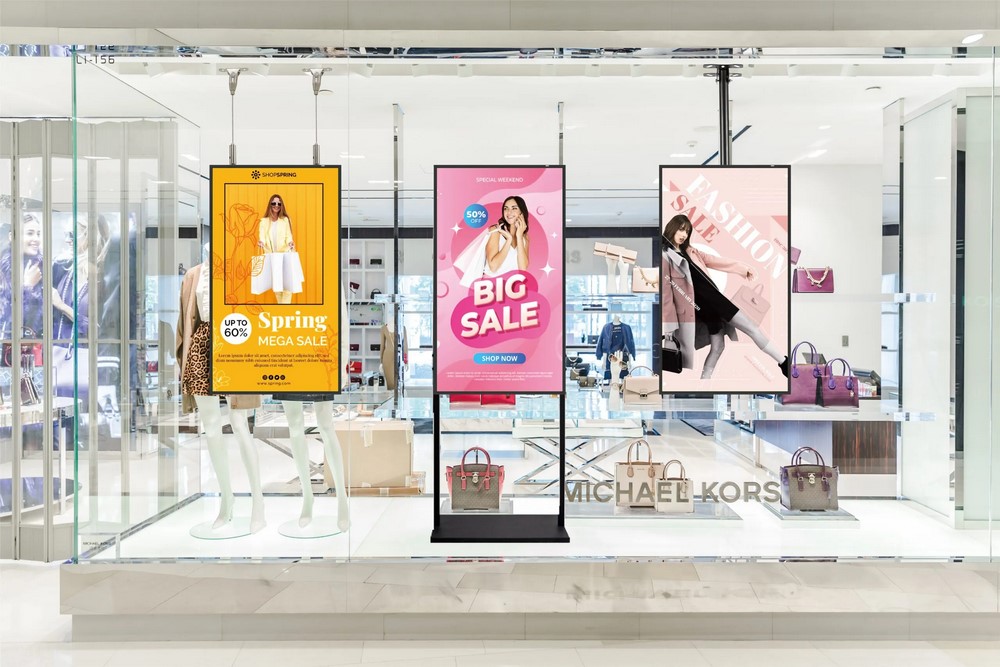
The primary user segment is high-end retail and hospitality. Luxury boutiques, boutique hotels, and gourmet restaurants utilize sleek, slim-profile Risingstar LCD displays integrated into architectural facades or window spaces. For them, the display is an extension of the brand’s aesthetic—a tool for high-definition brand storytelling and immersive product showcases that demand cinematic image quality, not stadium-level visibility. The second major segment is corporate and institutional campuses. Think corporate headquarters, research parks, and university squares. Here, the need is for high-information-density signage: detailed wayfinding, event schedules, data dashboards, and announcements. These applications require prolonged, comfortable viewing of text and detailed graphics at close to medium range—a scenario where the pixel-perfect clarity and high pixel density of LCDs excel.
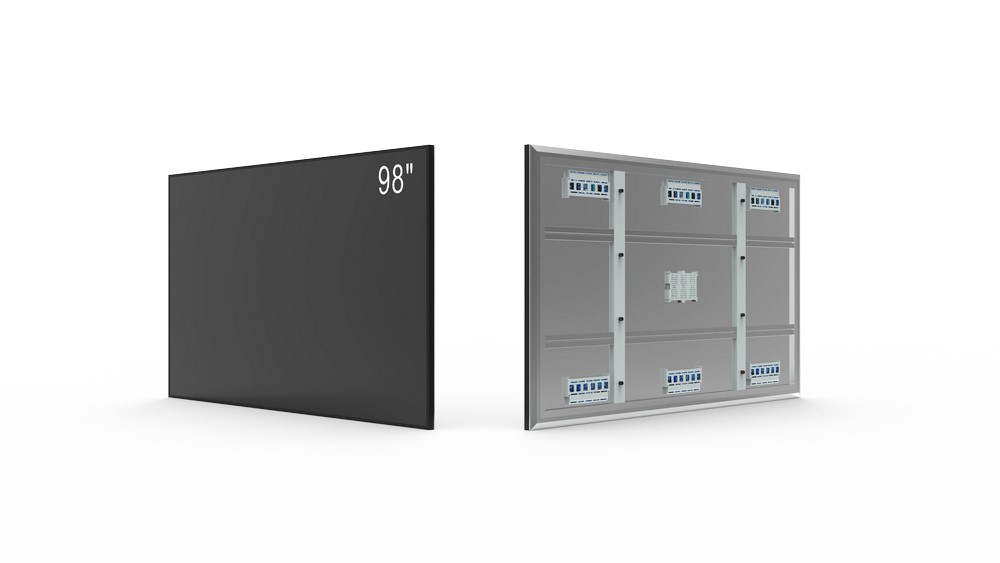
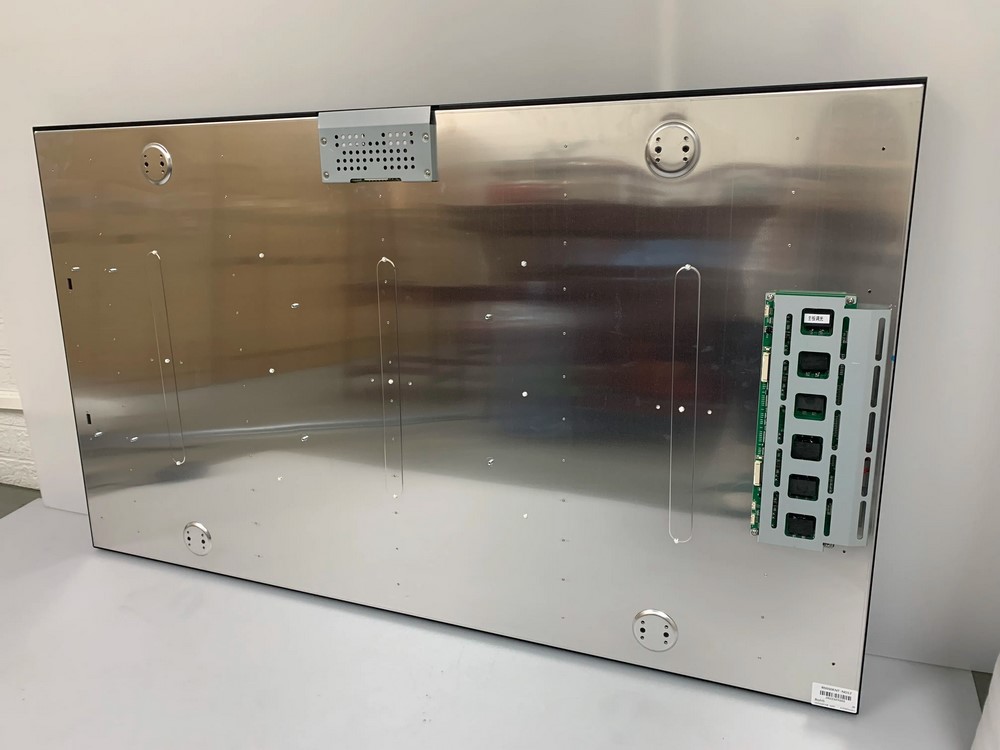
Why do these clients choose LCD despite its perceived outdoor weakness? The answers lie in cost, quality, and design. For smaller screen sizes (under 150 inches), a high-brightness LCD offers drastically lower initial investment than an equivalent-resolution LED screen. More critically, off-the-shelf corporate and creative content, from high-budget commercials to PowerPoint presentations, is mastered for RGB pixel grids. When displayed on an LCD, this content appears sharp, with perfect geometric accuracy and no pixel gap visibility. For brands obsessed with image fidelity, this is non-negotiable. LCD’s sleek, monolithic form factor also allows for seamless, flush mounting that aligns with premium architectural design in a way that modular LED cabinets often cannot. For these users, the “advertising” is not about shouting the loudest; it’s about speaking with the most elegant clarity.
The Technical Crossroads: LCD vs. LED
Choosing between LCD and LED for an outdoor installation is a fundamental trade-off, a balancing act between core performance parameters. The following breakdown clarifies their distinct profiles:
Parameter | LED Display | LCD Display |
|---|---|---|
Brightness | Superior. Native self-emission allows for ultra-high brightness (5,000-10,000+ nits), defeating direct sunlight. | Challenged. Relies on a powerful backlight. Specialized outdoor models achieve high brightness (2,500-5,000 nits), but can struggle with glare. |
Lifetime | Very High. Individual LEDs degrade slowly, with typical lifespan >100,000 hours to 50% brightness. | Moderate. Backlight (especially LEDs in the unit) and liquid crystal degrade faster. Lifespan typically 50,000-70,000 hours. |
Image Quality | High Impact. Excellent color gamut and contrast for dynamic content. Pixel gaps visible at close range. | Exceptional Detail. High pixel density ensures flawless text and image sharpness. No pixel gaps, superior for detailed graphics. |
Energy Consumption | Variable. Lower for dark-content (pixels off). Can be very high for full-white screens. Local dimming improves efficiency. | Consistently High. The powerful, always-on backlight leads to relatively stable, high power draw regardless of content. |
Viewing Angle | Excellent. Maintains color and brightness over very wide angles (often 160°+). | Narrower. Color and contrast shift significantly at wider angles, especially for older panels. |
Cost (Initial) | Very High. Cost scales directly with size and resolution. Lower cost-per-area for very large screens. | Lower (for smaller sizes). Significantly more affordable for screens under 150”, competitive up to ~200”. |
Form Factor & Design | Modular & Flexible. Can create curved, irregular shapes. Cabinet depth can be substantial. | Sleek & Monolithic. Thin, uniform profile ideal for architectural integration. Limited to flat or slightly curved designs. |
Primary Outdoor Arena | Large-scale advertising, stadiums, architectural landmarks. | Retail storefronts, corporate/institutional digital signage, transportation hubs (indoor-outdoor transition zones). |
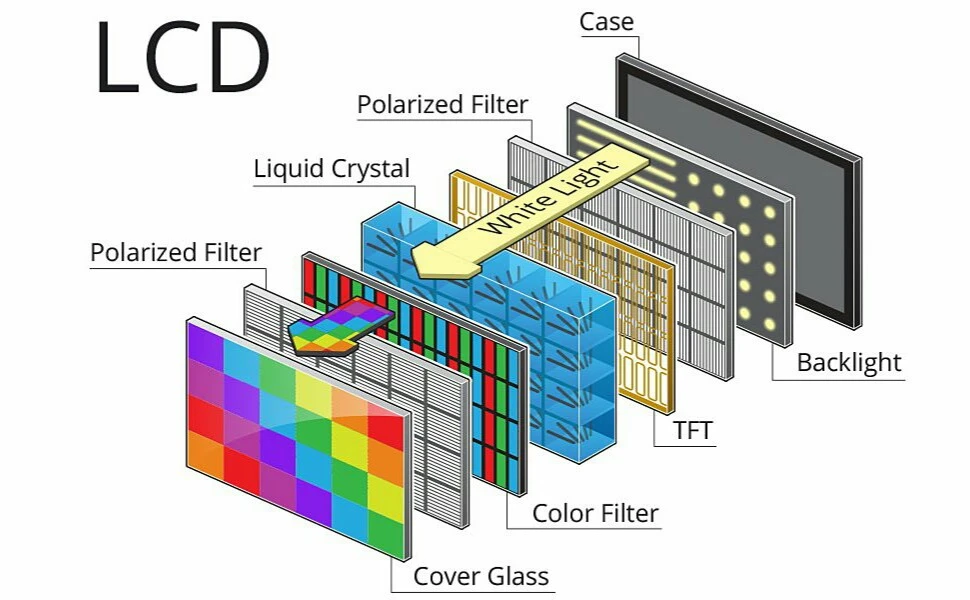
Risingstar's Engineering Counterplay: Taming the LCD Trilemma
For LCD technology to claim a robust position outdoors, it must overcome a notorious trilemma: inadequate brightness, heat fragility, and energy inefficiency. Risingstar’s strategy is not to reinvent the LCD panel itself, but to engineer a comprehensive ecosystem that hardens every component around it.
The brightness challenge is tackled through a multi-layered optical stack. At its core is a high-output, direct-LED backlight system, pushing luminance to 4,500+ nits. But raw power isn’t enough. Risingstar integrates a custom-designed, high-transmittance optical bonding process. By laminating the LCD panel directly to the protective cover glass with a specialized optical adhesive, internal reflections are drastically minimized. This bonding step, combined with a premium anti-reflective (AR) and anti-glare (AG) surface treatment on the outer glass, ensures that a greater percentage of the generated light reaches the viewer’s eyes instead of being scattered or lost. The result is a perceived brightness that is significantly higher than the raw backlight spec would suggest, making the screen readable even in harsh, angled sunlight.
Heat is the silent killer of outdoor electronics. Continuous high-brightness operation turns the backlight and LCD panel into a heat source. Risingstar’s thermal management departs from traditional fan-based cooling. A passive, liquid-based heat pipe system is embedded into the display’s rear chassis. This system efficiently draws heat away from critical components, spreading it across a large, aluminum-alloy heat-sink cabinet that acts as a giant radiator. This fanless design is crucial for two reasons: it eliminates a primary point of failure (dust-clogged fans) and it allows for a fully sealed, IP66-rated or higher enclosure. The display is effectively impervious to rain, dust, salt spray, and insects, ensuring reliability in coastal or industrial environments where traditional displays falter.
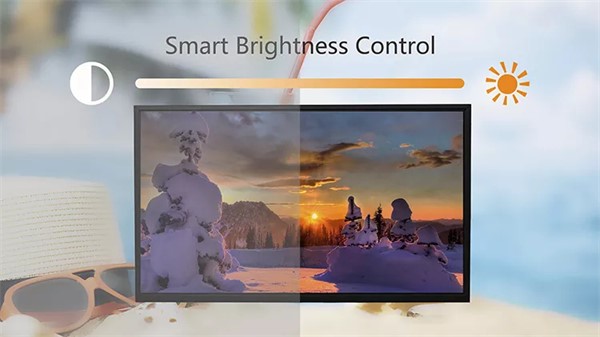
Energy consumption is addressed through intelligent hardware-software integration. The backlight is divided into hundreds of individually controllable zones. An integrated ambient light sensor feeds real-time data to a proprietary algorithm that dynamically adjusts not only the overall backlight intensity but also dims specific zones corresponding to dark areas of the on-screen content (Local Dimming). During daytime peak brightness, the system runs at full capability. At dusk or on overcast days, it scales back precisely. At night, it can drop to a minimal, power-saving “vigil” mode that maintains visibility for passersby at a fraction of the daytime power draw. This intelligent dimming, combined with the inherent efficiency of modern LED backlight drivers, can slash average energy use by 40-60% compared to a fixed-brightness outdoor LCD. For corporate clients with sustainability targets, this is a decisive advantage.
Conclusion: A Market Defined by Boundaries, Not Conquest
The trajectory of outdoor display technology is not converging on a single point; it is diverging along lines of application specificity. LED has firmly and deservedly established its kingdom over vast territories where scale, brightness, and visual impact are non-negotiable currencies. Its future lies in ever-higher resolutions, finer pixel pitches for closer viewing, and more creative form factors.
Conversely, LCD’s dominion, fortified by companies like Risingstar, is the realm of precision, context, and economic accessibility for targeted communication. Its future growth is not in challenging LED in its core strongholds, but in deepening its penetration into the vast market of “semi-outdoor” and premium communication spaces where design and content fidelity rule. As both technologies continue to advance—LED becoming more affordable and refined, LCD becoming more robust and efficient—their respective orbits become clearer.
The market, in its wisdom, supports this dual-path model. For the brand wishing to dominate the skyline, LED’s brilliance is the answer. For the institution wishing to engage an audience at the entrance with crisp, authoritative clarity, LCD offers a compelling alternative. In the end, dominance in outdoor displays is not a title held by one technology, but a condition defined by the perfect alignment of a solution with a user’s deepest needs. Both LED and LCD are on their own paths to achieving exactly that.