Why Does Brightness Matter for Outdoor Displays?
Standard screens typically feature 250 to 350 nits, which look washed out or completely black under direct sunlight. To achieve "Sunlight Readable" status, a display must overcome the ambient light intensity of the sun, which can exceed 10,000 foot-candles. This is where High Brightness Display (HBD) technology becomes essential for industrial and commercial success.
Understanding the Unit of Measurement: Nits
A "Nit" is a unit of measurement for luminance—specifically, one candela per square meter ($1 cd/m^2$). In practical terms, to maintain visibility in different environments, you need to target these specific brightness levels:
Indoor Office: 300 nits is sufficient.
Semi-Outdoor (Shaded): <span>500 - 800 nits</span> required.
Direct Sunlight: <span>1000 - 2500+ nits</span> required for clear visibility.
Key Technologies Behind High-Bright Screens
Achieving high brightness isn't just about cranking up the backlight. Professional HBD solutions, like the ones developed by RisingStar, involve complex engineering:
Advanced LED Backlighting: Using high-efficiency LED strings that produce massive light output with significantly lower power consumption.
Thermal Management (Hi-TNI): Specialized cooling systems and High TNI (110°C) panels to prevent the "Blackening Defect" when liquid crystals overheat under intense solar radiation.
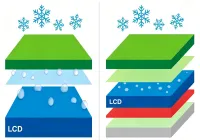
Optical Bonding: Reducing air gaps between the LCD panel and the cover glass to minimize internal reflection and drastically increase contrast ratios.
Conclusion
Selecting the right high-brightness solution ensures your message is seen, no matter how harsh the environment. Whether for EV charging stations, marine navigation, or outdoor digital signage, brightness is the essential bridge between your data and the user.