
Passenger Information
Display Solutions
OEM/ODM PID display hardware for railway and metro networks — platform departure boards, ticket machines, wayfinding, platform-edge strips, and onboard route line.
Since 2009
Transit PID manufacturing
500–5,000 nits
Calibrated per station zone
4,000 m²
ISO 9001 facility
8h · 10 days
Quote / sample build
Built for networks, not for showrooms.
A metro line runs 80 to 200 displays across environments that share nothing but a timetable. We engineer the hardware that keeps all of them readable, online, and serviceable.
Matched to the zone
Brightness, sealing, and panel technology are specified per location — an underground platform board and a street-level entrance totem are not the same product.
Form factor that fits
Standard 16:9 won't fit a platform-screen-door header or a carriage ceiling. We cut and re-drive stretch-bar panels from full Tier-1 glass.
Specified to survive
Screw-lock connectors, thread-locked fasteners, EPDM gaskets, and in-house optical bonding — because the failure mode that returns a display is rarely brightness.
PID applications across the station and the carriage
Every point on the passenger journey needs a different display.
In-Station
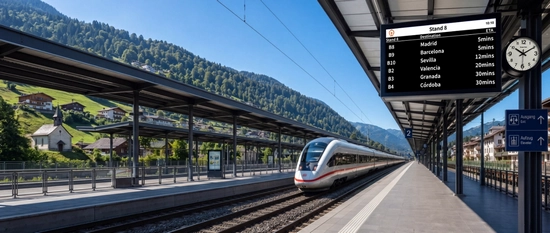
1 · Platform Departure Board
Mounted on the platform edge or under the canopy. A passenger has three seconds to scan, find the train, and pick a platform.
43"–55" standard · 28"–37" stretch bar · 1,000–5,000 nits
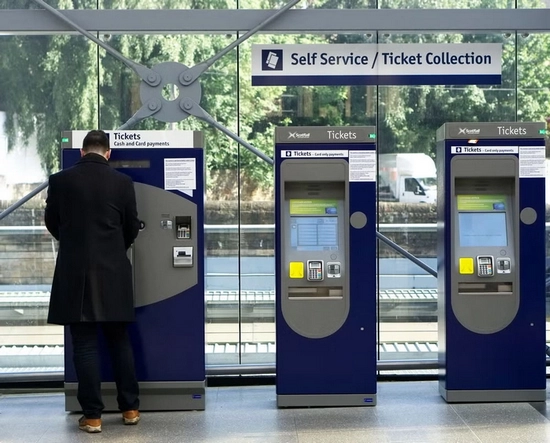
2 · Ticket Vending Machine
Handles 4,000+ transactions a day with wet hands or gloved fingers. Touch must register accurately in both.
19"–27" PCAP touch · 500–3,000 nits · Glove-mode firmware
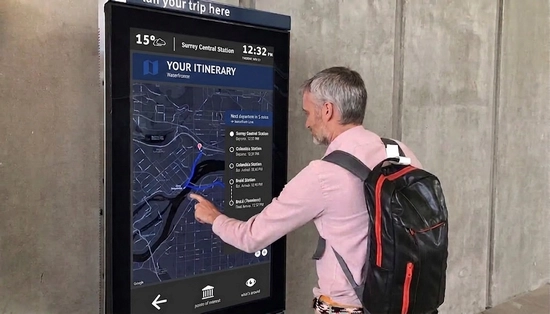
3 · Wayfinding Terminal
Longer sessions, map pinch-to-zoom, multi-language. The display must handle smooth gestures and meet accessibility contrast.
32"–43" PCAP touch · 1,500–2,500 nits · Slim 25–35mm depth
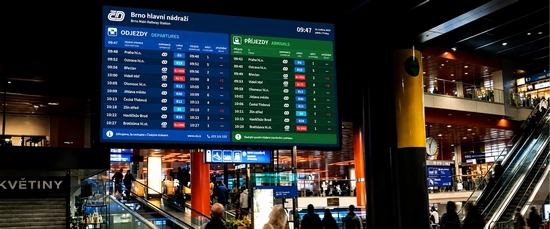
4 · Concourse Information Wall
High on a departure-hall wall, running departure times, service alerts, and emergency notices in a multi-zone layout.
65"–86" 4K UHD · 2,500–3,000 nits · Metal chassis heat sink
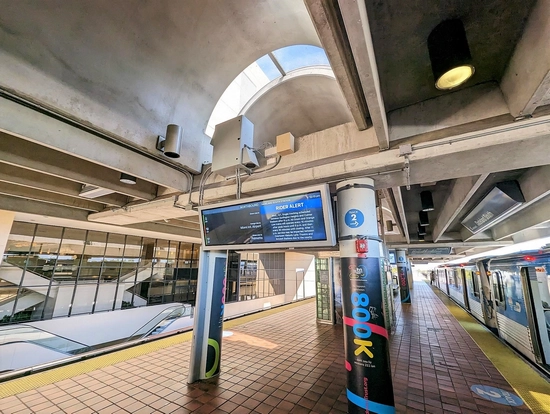
5 · Platform Edge Strip
The narrowest display in the station — a slot along the platform edge, 150–200 mm tall max. Stretch-bar is the only answer.
28"–49" stretch bar · 3840×360 to 3840×540 · ~90mm tall
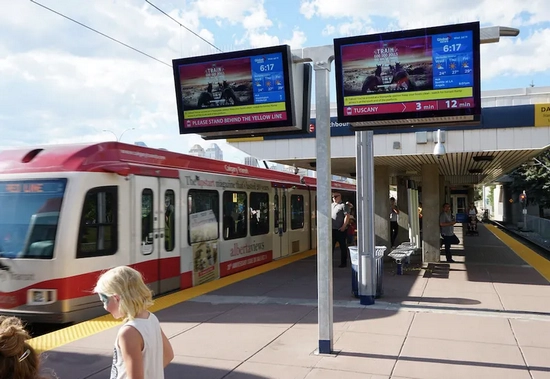
6 · Station Entrance Totem
The street-facing identifier — faces 100,000+ lux of midday sun, monsoon rain, and vandalism. The harshest zone.
43"–65" · 2,500–5,000 nits · IP65/66 · IK10 · Solar-resilient
Onboard / In-Carriage
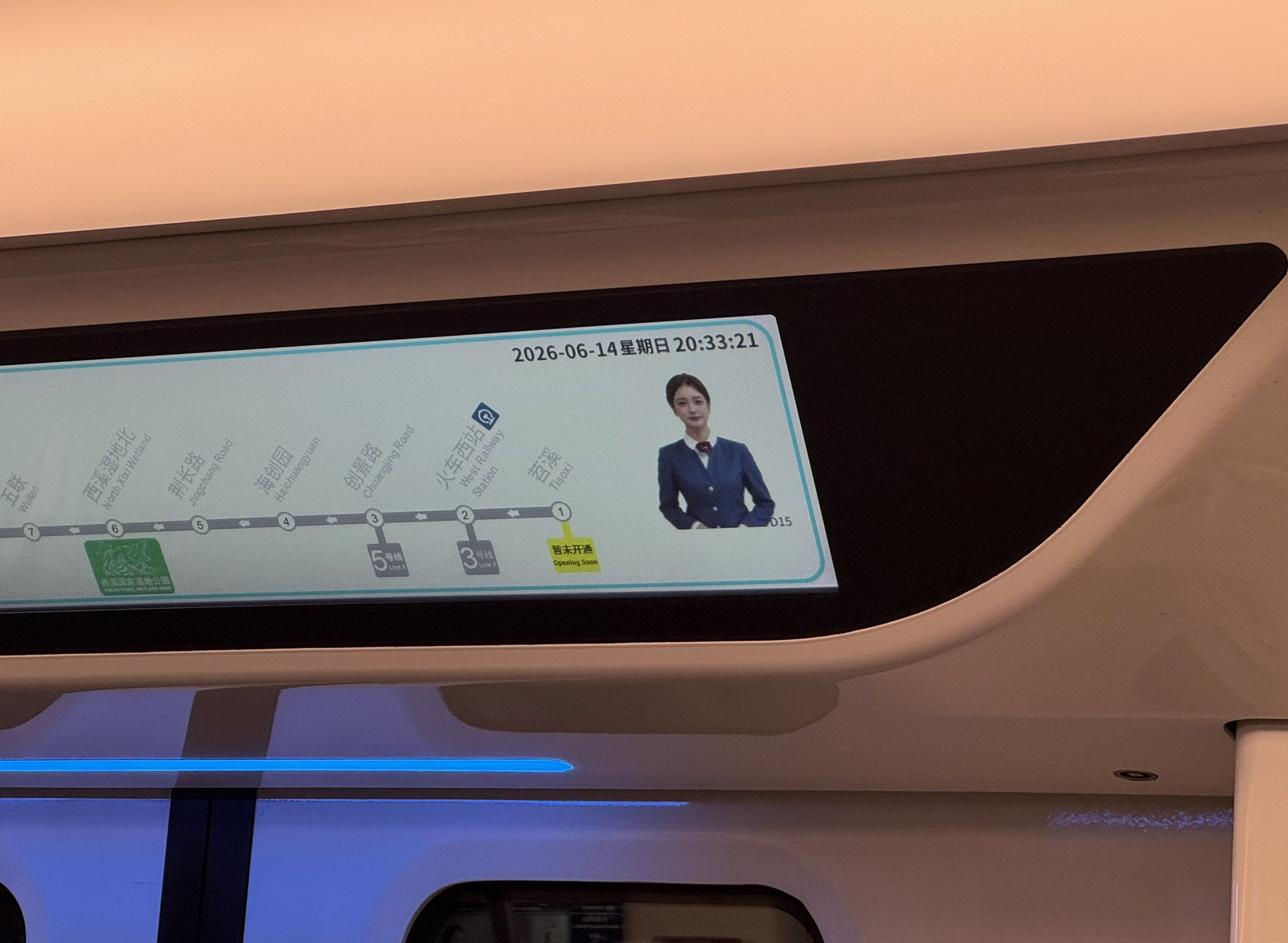
7 · Ceiling Dynamic Route Line
Mounted centre-ceiling, showing the next three stops as a left-to-right line. Curved carriage roofs mean a rectangular monitor won't fit.
Stretch bar · contour-cut · 700–1,500 nits · Rolling-stock vibration rated
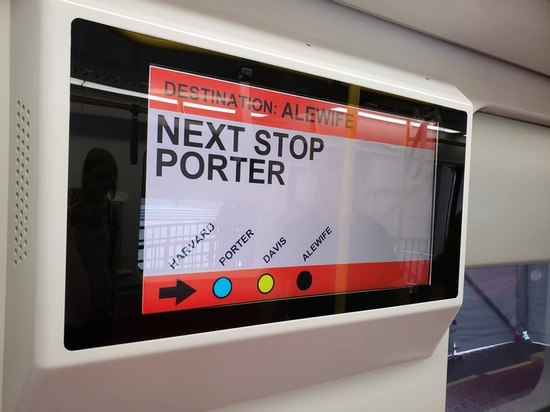
8 · Door-Side / Side Panel
Above the door or along the sidewall — a narrow curved surface showing next-stop, transfer, and emergency messaging.
Narrow stretch bar · slim bezel · 700–1,500 nits · Anti-glare
Custom Hardware Solutions
Engineered to your exact specifications — mechanical housing, environmental conditions, and deployment goals.
Talk to an ExpertDisplay Solutions for Every Deployment
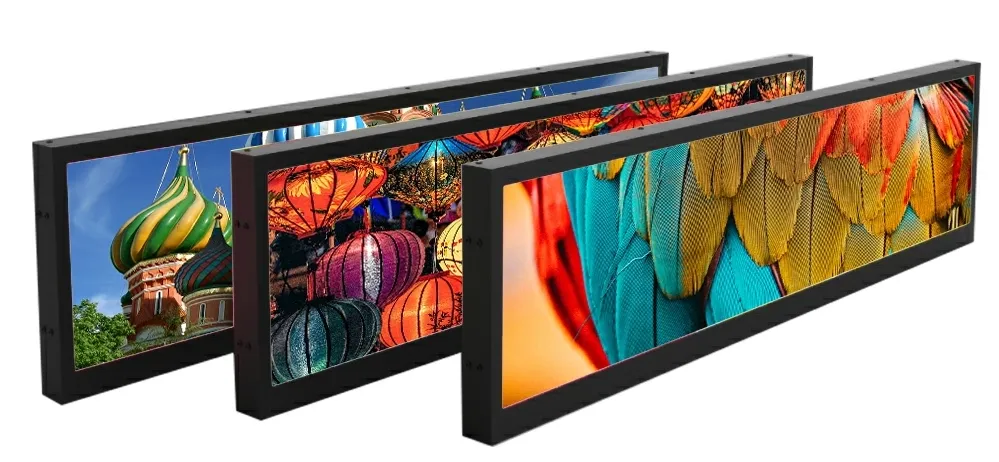
Stretched Bar LCD Display
28"–88" stretch panels for platform edges, ceiling routes, and carriage interiors
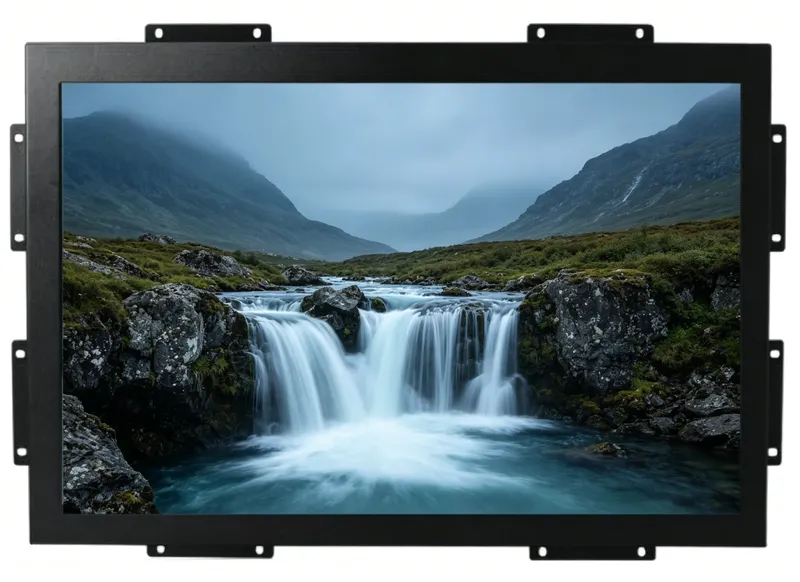
Open Frame Monitor
7"–65" PCAP touch modules for TVMs, wayfinding kiosks, and custom enclosures
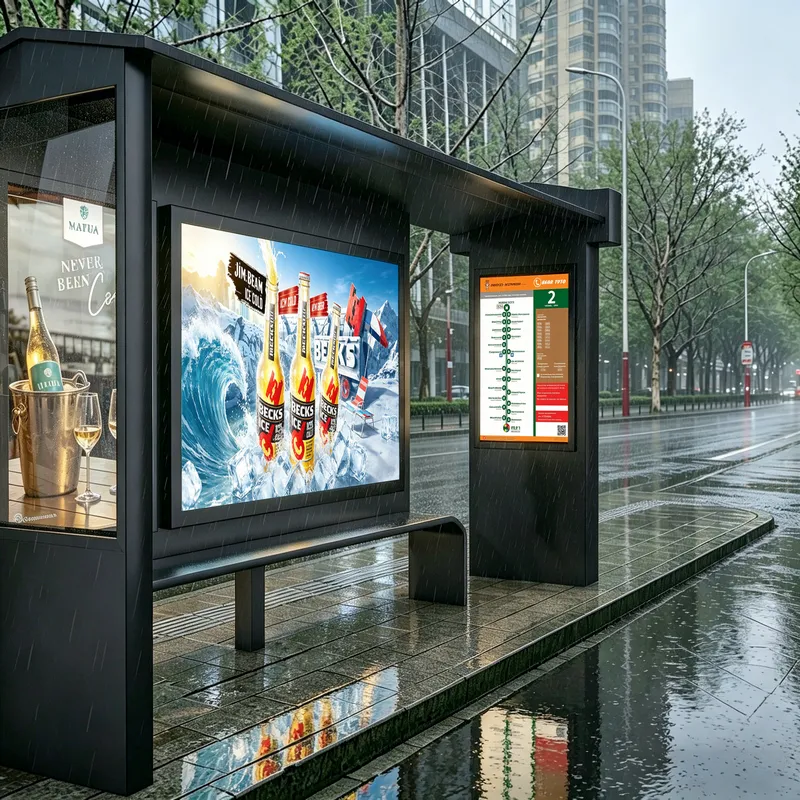
Outdoor Waterproof Display
IP65/IP66 sealed signage for entrance totems and street-level installations
Pre-Installed Operating Systems
A PID display is a node on a station-wide network. Standard LVDS, eDP, HDMI, and Ethernet interfaces support plug-and-play integration with major PIS platforms.
Windows
7/10/11 IoT
Linux
Ubuntu/Debian
Android
11–14
Dual RJ45 with HDMI loop-through allows daisy-chain across a platform. RS-232 supports centralized remote management.
One ISO 9001 facility, end to end
From a 4,000 m² ISO 9001-certified facility in Shenzhen — with a Class 10,000 cleanroom, 100% factory inspection, and 72-hour high-temperature aging.
Need Help Finding the Right Fit?
From prototyping to deployment, our experts are here to help you specify the right display.
Frequently Asked Questions
It depends on location. Underground platforms and concourses need 1,000 to 1,500 nits. Semi-outdoor covered entrances need 1,500 to 2,500 nits. Fully exposed street-level entrances need 2,500 to 5,000 nits with solar-resilient panels. All high-brightness units must include ambient light sensors for 24/7 dimming to prevent light pollution and protect driver sightlines.
Standard 16:9 panels do not fit the physical constraints of a transit environment. Platform-screen-door headers, ceiling route lines, and carriage interiors are narrow horizontal slots. Stretch-bar panels with custom ratios (1920x360, 3840x360, 1920x720, 2880x480) are cut and re-driven from full Tier-1 glass, so they inherit the same brightness, lifespan, and color uniformity as the standard panel they were cut from.
Standard liquid crystal clears at roughly 70 to 80 degrees Celsius. Direct solar loading pushes a sun-exposed entrance totem past that surface temperature, causing irreversible blackening defects. Solar-resilient panels raise the liquid-crystal clearing point to 110 degrees or above, paired with passive chassis cooling or heat-pipe dissipation. This is mandatory for any PID display exposed to direct solar radiation.
IP65/IP66 is the minimum for front-side protection against high-pressure cleaning and monsoon rain. IK10 (20-joule impact) is mandatory for any ground-level or within-reach installation to withstand vandalism. All sealed IP-rated enclosures must include industrial-grade breather vents to equalize pressure and prevent internal condensation.
Every passing train sends a low-frequency shockwave through the station structure. Over months, friction-only connectors walk loose, solder joints crack, and chassis fasteners back out. The minimum specification is screw-lock HDMI/USB/DC connectors, through-hole board mounting for all external connectors, thread-locking compound on every chassis fastener, and EPDM vibration-dampening gaskets at the panel-to-enclosure interface.
Yes. Standard LVDS, eDP, HDMI, and Ethernet interfaces support plug-and-play integration with major PIS platforms including Siemens, Alstom, and Thales without custom adapters. Dual RJ45 with HDMI loop-through enables daisy-chain across a platform, and RS-232 supports centralized remote management across dozens of units.
MOQ is one unit for samples. Custom samples are built, tested, and shipped within 10 working days, with a technical response within 8 hours of enquiry. Volume production runs at 15 to 25 working day lead time, with batch-to-batch traceability. We support both low-quantity prototyping and high-volume deployment.
We offer flexible warranty options from 1 to 5 years. As an OEM/ODM manufacturer, we provide highly customizable warranty plans for network-scale deployments. We offer 24/7 technical support via WhatsApp and email, remote troubleshooting, and long-term spare parts availability. We commit to 3 to 5 year model availability with stable mechanical dimensions and electrical pinouts.