
2025 Outdoor High Brightness Display Industry Report
Published by RisingStar Industrial Display Research Institute (RIDRI)
Release: Q1 2025
Executive Summary
The outdoor high brightness display sector is entering a period of structural expansion, underpinned by global investments in transportation modernization, EV charging infrastructure, digitalized fuel retail networks, and smart city deployments. In 2025, the market is projected to reach USD 8.7 billion, exhibiting a robust CAGR of 14.2% from 2024 to 2028.
Growth is largely driven by rising requirements for sunlight-readable, industrial-grade LCD systems, typically operating between 2500 and 5000 nits, enhanced thermal management architectures, and long-lifecycle designs suited for high-duty, mission-critical outdoor environments.
RisingStar contributes to this industry transformation through advancements in high-efficiency direct-lit backlight engines, lightweight aluminum thermal structures, ultra-wide stretched aspect ratios, wide-temperature reliability, and 50,000-hour operational lifetime engineering for harsh outdoor conditions.
1. Market Overview
1.1 Industry Definition & Scope
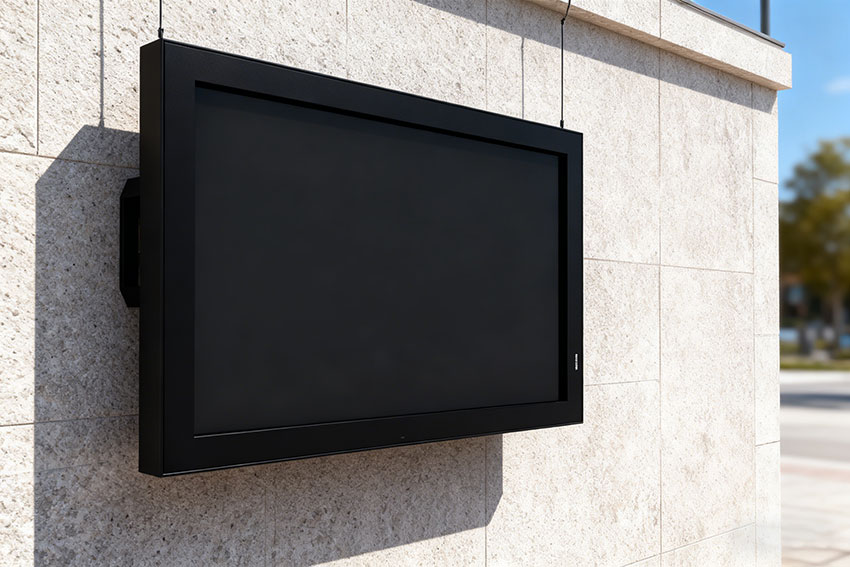
For the purposes of this report, Outdoor High Brightness Displays refer to LCD/TFT display systems engineered with:
Brightness ≥ 1500 nits, typically 2500–5000 nits
Complete sunlight readability under >100,000 lux ambient conditions
Industrial-grade thermal, environmental, and structural durability
Continuous service in transportation, energy infrastructure, retail, and municipal systems
This category encompasses:
Outdoor DOOH signage
High brightness LCD modules
Passenger Information Displays (PID)
EV charger HMI terminals
Fuel dispenser displays
Retail window-facing digital signage
Outdoor smart terminals and kiosks
1.2 Market Scale (2025)
Consolidated estimates from multiple international data sources (including Omdia, IHS Markit, and Frost & Sullivan) reflect the following market distribution:
| Region | 2025 Market Size (USD) | Projected CAGR (2024–2028) |
|---|---|---|
| Europe | 2.45B | 13.8% |
| North America | 2.12B | 12.3% |
| APAC | 3.62B | 16.9% |
| Middle East | 0.51B | 10.7% |
Europe’s demand is reinforced by EU-supported EV charger expansion, rail modernization, and large-scale retail digitization initiatives.
2. Technology Trends (2025)
2.1 Elevation of Brightness Standards
Deployments exposed to direct sunlight now commonly require:
2500–3500 nits for semi-outdoor
3500–5000 nits for full outdoor visibility
Enhanced anti-glare/anti-reflection treatments
2025 brightness distribution trends:
1500–2500 nits: 32%
2500–3500 nits: 41%
3500–5000 nits: 27% (fastest-growing segment)
RisingStar’s direct-lit modules deliver up to 5000 nits while maintaining industry-leading thermal efficiency.
2.2 Thermal Architecture as a Key Differentiator
Outdoor displays are heat-limited systems due to solar loading, enclosure constraints, and continuous operation. Consequently, 2025 designs emphasize:
High-conductivity lightweight aluminum frames
Optimized LED density and drive efficiency
Thermal simulation-driven layout engineering
Heat pipe and vapor chamber integration
Predictive thermal aging control
RisingStar’s engineering reduces total heat load by 18–27%, enabling higher luminance without accelerated degradation.
2.3 Environmental & Mechanical Engineering Standards
To ensure long lifecycle operation, outdoor systems increasingly adopt:
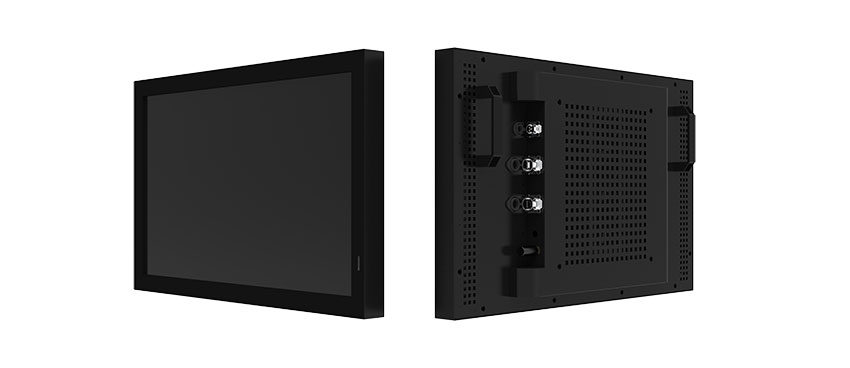
IP65–IP66 sealed structures
UV-resistant optical bonding
IK08 impact protection
Condensation control
Automatic environmental brightness regulation
RisingStar implements full-lamination OCA bonding and multi-layer environmental protection for high-exposure installations.
2.4 Rise of Ultra-Wide / Stretched Aspect Ratios
Ultra-wide displays (e.g., 1920×360, 1920×540, 3840×600) are expanding rapidly due to:
Higher content utilization
Compatibility with narrow industrial enclosures
Adoption in transportation PIDs, fuel pumps, EV chargers
Lower TCO due to reduced power and thermal footprint
2.5 Power Efficiency & Sustainability Requirements
Europe’s evolving energy regulations and ESG frameworks accelerate demand for low-power, high-efficiency display systems.
RisingStar’s next-generation backlight systems achieve:
20–30% power reduction
Lower thermal density
Prolonged 50,000+ hour lifespan
3. Application Landscape
3.1 EV Charging Infrastructure
The EU projects 3 million public EV chargers by 2030, positioning high-brightness displays as critical HMI components.
Key requirements:
Full IP sealing
1500–3500 nits readability
Wide-temperature performance (−20°C to +70°C)
Anti-vandal protection
RisingStar supplies industrial-grade LCD modules for multiple European Tier-1 EV charger manufacturers.
3.2 Digital Fuel Pump Systems
The digital transformation of fuel retail is accelerating, with outdoor pump displays showing a 21.4% CAGR globally.
Operational demands include:
Explosion-safe housing
High-noon visibility
Continuous 24/7 operation
Low maintenance cycles
RisingStar’s 3000–5000 nits modules are integrated into next-generation fuel dispensers in Europe and the Middle East.
3.3 Passenger Information Displays (PID)
Modernized rail, bus, metro, and airport systems rely on high-reliability outdoor signage.
PID trends in 2025:
Ultra-bright luminance
Extended operating temperatures
Ultra-wide aspect ratios
Enhanced anti-reflection contrast
RisingStar’s 32:9 and stretched high-brightness solutions are deployed across multiple transportation authorities.
3.4 Outdoor DOOH & Retail
Outdoor digital signage deployment continues expanding across:
Window displays
Transit kiosks
Outdoor advertising networks
Outdoor TVs
Key performance requirements include:
3000–5000 nits luminance, anti-glare surfaces, high color saturation, and long-life LED technology.
4. Industry Challenges (2025)
A synthesis of research identifies four structural challenges:
4.1 Thermal Stress & Solar Radiation
High-brightness systems face accelerated component aging without advanced thermal mitigation.
4.2 Energy Efficiency Regulation
Stricter EU/UK guidelines are reshaping design requirements for outdoor signage and public information systems.
4.3 Reliability & Lifecycle Expectations
End-users increasingly demand:
50,000+ hours lifetime
7×24 continuous operation
Minimal annual maintenance
4.4 Supply Chain Dependencies
Volatility in TFT-LCD panel supply from global Tier-1 manufacturers (BOE, AUO, Innolux) continues to influence pricing cycles.
5. Competitive Landscape
Major Market Participants
Samsung
LG Display
BOE
AUO
DynaScan
Litemax
RisingStar (high-brightness industrial LCD specialist)
RisingStar Competitive Positioning
| Capability | RisingStar Strength |
|---|---|
| Peak Brightness | Up to 5000 nits |
| Power Efficiency | Optimized, low-power direct-lit engines |
| Reliability | −20°C to +70°C validated performance |
| Environmental Protection | Full sealing, anti-UV, anti-condensation |
| Lifecycle | >50,000 hours |
| Mechanical Engineering | Lightweight aluminum, slim-profile designs |
| Product Coverage | 15–86" + complete ultra-stretch portfolio |
RisingStar’s footprint across EV infrastructure, transportation, fuel retail, and smart retail supports rapid brand elevation within the industrial display ecosystem.
6. Market Forecast (2025–2028)
| Year | Market Size (USD) | YoY Growth |
|---|---|---|
| 2025 | 8.7B | – |
| 2026 | 9.9B | 13.8% |
| 2027 | 11.2B | 13.2% |
| 2028 | 12.8B | 14.3% |
High-brightness industrial LCDs are expected to remain the most resilient growth sector within outdoor display technologies.

7. Strategic Recommendations for Integrators & OEMs
To ensure optimal lifecycle performance, OEMs should prioritize:
✔ Brightness ≥ 3000 nits for full outdoor visibility
✔ Predictive thermal design and low TDP architecture
✔ Wide-temperature industrial-grade components
✔ Optical bonding for contrast and anti-reflection
✔ IP65/IP66 environmental sealing for Europe and North America
✔ Proven 7×24 reliability with ≥50,000-hour lifetime certification
RisingStar provides end-to-end solutions aligned with these technical demands.
Conclusion
The outdoor high brightness display industry is transitioning from traditional digital signage to a broader role as a foundational digital interface for emerging infrastructures—EV mobility, energy retail, transportation systems, and smart city platforms.
High-efficiency, ultra-bright LCD modules engineered with:
3000–5000 nits luminance,
low-power backlight architectures,
robust thermal systems,
extended temperature reliability, and
fully sealed industrial enclosures,
will shape the next wave of outdoor digital interaction.
RisingStar remains committed to advancing high-brightness industrial LCD technologies and supporting global integrators with reliable, high-performance outdoor display solutions.