
Outdoor digital display technology has evolved from a nice-to-have visual accessory into a foundational component of modern smart infrastructure. Whether powering EV charging stations, gas pump interfaces, transit information systems, or smart city wayfinding networks, these displays must perform reliably under conditions that would quickly destroy standard consumer screens. This guide examines the technical requirements, vertical applications, and procurement strategies that B2B decision-makers need to understand when deploying outdoor digital display solutions for mission-critical projects.
Understanding Outdoor Digital Display Requirements
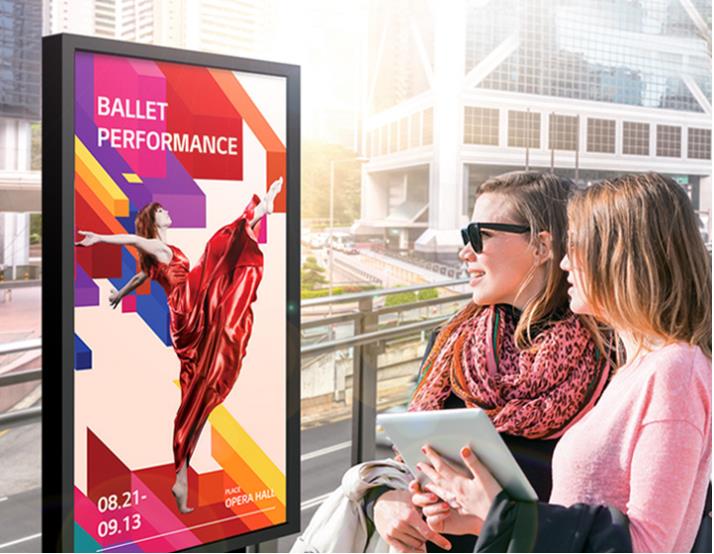
An outdoor digital display in a B2B context is rarely a standalone unit—it functions as an integrated interface within a larger system. Unlike consumer displays designed for controlled indoor environments, outdoor digital display solutions must withstand direct sunlight, extreme temperature fluctuations, chemical exposure, vibration, and potential vandalism. The engineering requirements are substantially different from standard commercial signage.
The core specifications that define a true outdoor digital display include brightness levels of 1,000–5,000 nits for sunlight readability, operating temperature ranges spanning -20°C to 70°C, and IP65/IP66 protection ratings against water, dust, and salt spray. These parameters are not optional enhancements—they represent the baseline requirements for 24/7 reliable operation in exposed environments.
Core Technologies: Engineering the Future of Outdoor Digital Displays
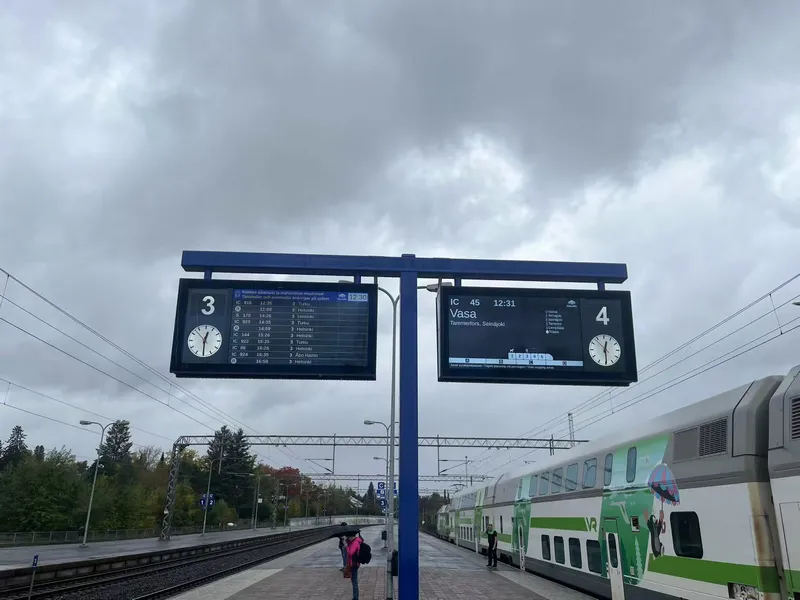
RisingStar solutions are engineered to transcend the limitations of conventional screen technology. Whether powering smart city networks or high-traffic transit hubs, an outdoor digital display must serve as a high-performance interface that remains vibrant 24/7. Our technical architecture focuses on three pillars of engineering excellence:
High-Luminance Penetration and Sunlight Readability
To ensure content is legible under direct, high-noon solar conditions, RisingStar utilizes advanced LED backlight architectures that deliver 2,500–5,000 nits of brightness. This extreme luminance ensures a high contrast ratio and crystal-clear playback, even when ambient light reaches 100,000 lux. Integrated ambient light sensors further optimize performance by synchronizing brightness with environmental conditions, ensuring optimal visibility while maximizing energy efficiency.
For direct sunlight applications, we recommend our RS550ENT-N25 series rated at 2,500-4,000 nits, or the RS650HNX01-A01-BK for 65" installations requiring up to 5,000 nits.
Solar-Resilient Thermal Stability
One of the most critical engineering feats in outdoor display design is preventing "blackening defects"—a failure mode common in standard LCDs when panel surfaces are exposed to intense solar radiation. RisingStar® modules utilize industrial Hi-Tni (High-Temperature Nematic) panels. This technology allows the liquid crystal layer to remain stable under extreme thermal stress, ensuring consistent performance in tropical deserts or high-albedo urban environments without image distortion.
Infrastructure-Grade IP Protection
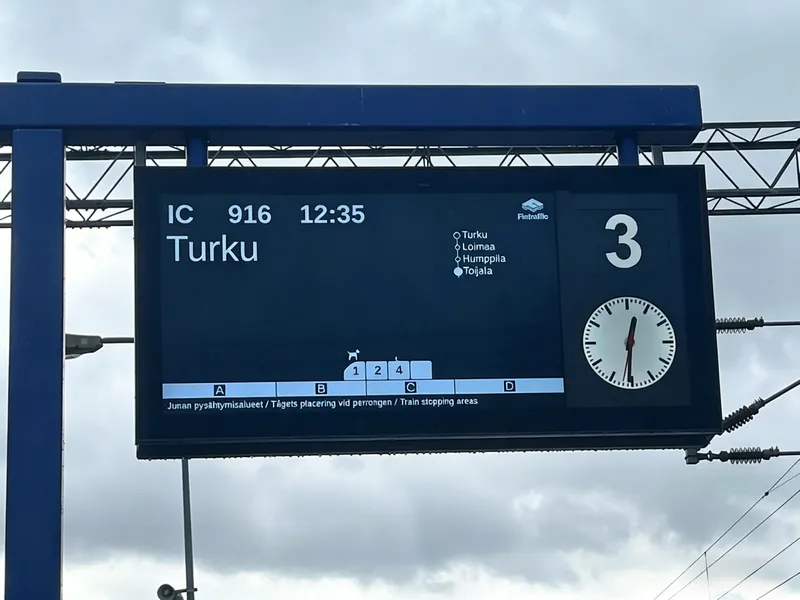
Our Outdoor Waterproof Digital Signage is encased in a fully-sealed, IP65/IP66-rated fortress. Engineered with corrosion-resistant aluminum or 304/316 stainless steel, these enclosures provide a rugged barrier against heavy rain, dust, and corrosive salt spray. This system-level durability enables reliable 24/7 operation across a wide temperature range from -20°C to 70°C.
For coastal or harsh environments, our RS320HNX02D05 and RS490HNX02D05 series offer IP65 ratings with corrosion-resistant aluminum housings, ideal for parking lots and open-air installations.
Integration Over Installation: The Engineering Approach
A professional outdoor digital display is an integrated system, not simply a screen mounted in a housing. For applications like EV charging stations or gas pumps, the display must fit seamlessly into the host equipment, requiring slim bezel-free open-frame designs and specific connectivity standards such as LVDS or eDP that consumer-grade screens lack.
RisingStar brings 17 years of experience in OEM/ODM customization for global infrastructure projects. This expertise enables the company to deliver displays that integrate directly into third-party equipment rather than requiring aftermarket enclosures. The open-frame approach reduces overall system cost, improves aesthetic integration, and enhances thermal performance by eliminating the air gap between display and housing.
Vertical Case Study: EV Charging and Fuel Automation Excellence
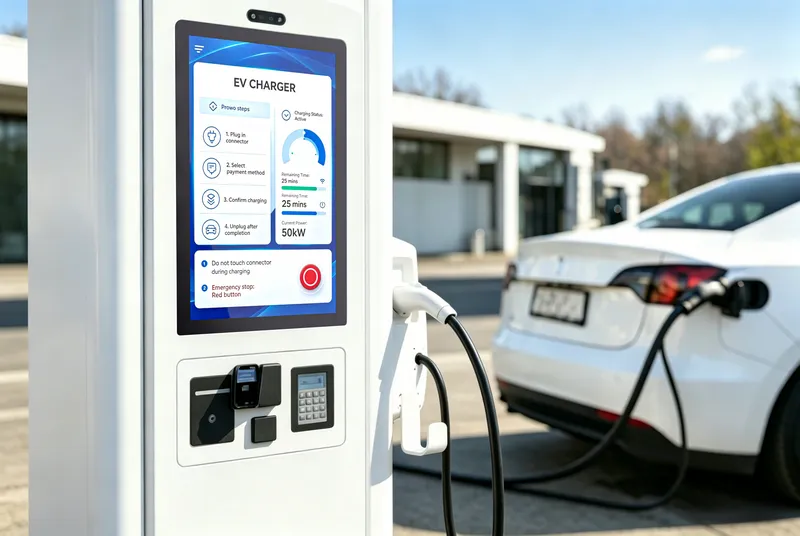
For EV charging (EVSE) and automated fuel dispensers, an outdoor digital display serves as the primary transaction interface. We utilize a system-level engineering approach to ensure 100% uptime in these high-exposure environments:
All-Weather Interactive Touch: Advanced PCAP (Projected Capacitive) touch technology allows for seamless interaction even with gloves or wet hands, ensuring reliability during rain or snow.
Solar-Resilient Display Modules: Utilizing Hi-Tni industrial panels ensures the display remains functional under intense heat and direct solar loading, preventing surface blackening during the hottest summer peaks.
Seamless Protocol Support: Powered by Android/Linux platforms, our systems support OCPP 1.6/2.0 integration, facilitating QR payments and real-time network status updates.
Popular models for EVSE integration include the RS133HAN-GE10 (13.3") and RS2151B0-NE10 (21.5"), featuring slim bezel-free open-frame designs for flush-mount integration into custom charger housings.
Key specifications for EV charging applications:
Brightness: 1,000–5,000 nits with auto-brightness adjustment
Operating temperature: -20°C to 70°C
Protection: IP65 rated
Interface support: LVDS, eDP, OCPP
Panel technology: Industrial-grade Hi-Tni
Vertical Case Study: Infrastructure-Grade Transit PIDS
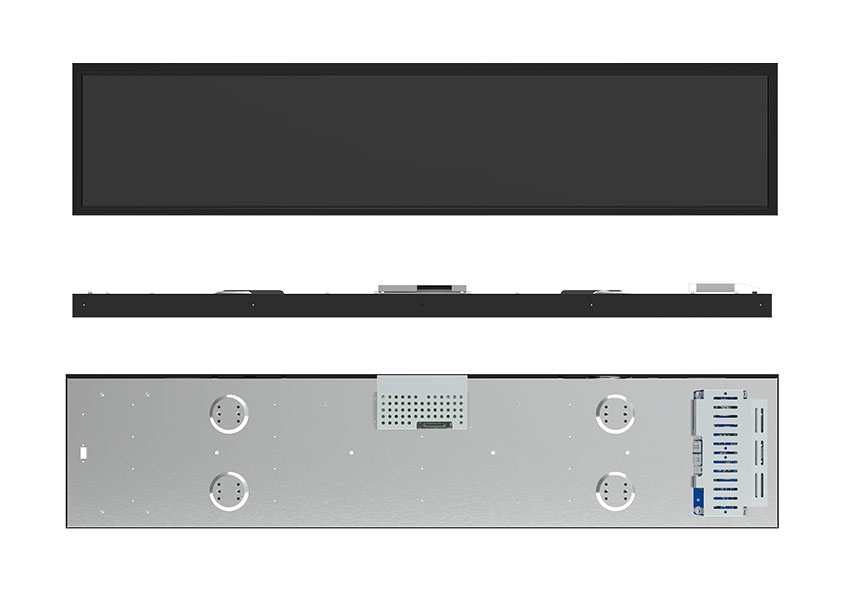
Public transit environments require unmatched reliability and specialized form factors. Digital displays in stations and bus shelters must withstand high vibration and public access:
Ultra-Wide Stretch Technology: Our RS430IVN-GD30 (43") and RS370IVN-NE05 (37") stretch bar displays are precision-engineered for the narrow spaces of metro platforms and bus shelters.
Impact and Abrasion Protection: Certified IK10 protective glass with a 7H surface hardness provides a rugged barrier against physical impact and vandalism in public squares.
Mass Deployment Longevity: RisingStar® outdoor digital display solutions feature industrial-grade WLED backlights rated for up to 50,000 hours of continuous operation, supported by remote health monitoring and firmware management.
Maintenance and Longevity Considerations
To ensure an outdoor digital display delivers a consistent return on investment over its up to 50,000-hour industrial-grade lifespan, a proactive maintenance strategy is essential. While RisingStar® units are engineered for high-availability environments, environmental loading necessitates periodic verification of three core systems:
Thermal Management System Verification
Even with efficient passive cooling, ensuring that air intake and exhaust paths remain unobstructed is critical for preventing heat buildup. In desert or high-dust environments, we recommend a semi-annual inspection of the ventilation architecture. For complex integrated systems, our OEM/ODM customization services can include integrated thermal sensors that report real-time internal metrics to a centralized management console.
Optical Sensor Calibration
The ambient light sensor is the heart of energy-efficient outdoor digital display operation. Over time, environmental grime can accumulate on the sensor window, leading to incorrect brightness adjustments. Regular cleaning of the sensor aperture ensures the display maintains optimal sunlight readability during the day and avoids excessive power consumption at night.
Surface Protection and Cleaning
The IK10-rated tempered glass used in our Outdoor Waterproof Digital Signage provides superior protection, but salt spray or urban pollutants can film the surface, reducing effective contrast. We recommend cleaning with non-abrasive, industrial-grade glass cleaners to maintain the integrity of AG (anti-glare) or AR (anti-reflective) coatings.
Thermal Management Across Global Climates
A project deployed in Norway faces fundamentally different thermal challenges than one in Dubai. Cold-climate installations must function reliably at -20°C, while desert deployments must survive ambient temperatures approaching 50°C with direct solar loading adding additional thermal stress.
RisingStar® addresses this range with an operating specification of -20°C to 70°C—covering virtually all global deployment scenarios. The engineering approach emphasizes efficient thermal dissipation rather than relying on bulky HVAC cooling systems. High-efficiency LED backlights generate less heat than older technologies, while intelligent thermal management within the display module continuously monitors and adjusts operating parameters to prevent overheating.
This approach delivers several advantages: reduced power consumption (eliminating the need for large cooling systems), smaller overall installation footprints, and more reliable operation in environments where HVAC maintenance would be impractical or expensive.
The Tier-1 Trust Factor: Partner Selection
For mission-critical infrastructure projects, the reliability of the display supplier is as important as the display specifications themselves. Component sourcing directly impacts long-term availability and quality consistency.
RisingStar maintains authorized partnerships with Tier-1 panel manufacturers including LG Display, AUO, BOE, Innolux, and Tianma. These relationships ensure Grade A+ panel quality via 100% factory inspection—the same panels used by major consumer brands but sourced directly with full quality verification. Direct relationships with panel makers also ensure long-term supply stability, critical for projects that may require replacement units five or ten years after initial deployment.
Factory capabilities that matter for project timelines:
Quote response within 8 hours
Sample delivery within 10 working days
100% factory inspection with 72-hour high-temperature aging
ISO 9001 certified facility with Class 10,000 cleanroom assembly
These capabilities are particularly important for engineers working on tight project timelines where procurement delays can cascade into installation problems.
FAQ
Q: What brightness level do I need for outdoor deployment?
A: Brightness requirements depend on installation location. Shaded or semi-outdoor environments typically need 1,000–2,500 nits. Direct sunlight applications require 3,000–5,000 nits. All outdoor displays should include ambient light sensors for automatic brightness adjustment.
Q: What does Hi-Tni panel technology mean for outdoor use?
A: Hi-Tni (high-temperature nematic) technology prevents "blackening defects" that occur when standard LCD panels are exposed to intense solar radiation. Panels with this technology remain clear under extreme thermal stress, ensuring reliable operation during hot summer conditions.
Q: What IP rating is appropriate for my application?
A: IP65 provides solid protection against rain and dust for most outdoor installations. IP66 is recommended for applications with intense water exposure or coastal environments where salt spray is present. Both ratings are suitable for 24/7 outdoor operation.
Q: How long do outdoor digital displays last?
A: Industrial-grade backlights are rated for up to 50,000 hours of continuous operation. Under typical use (12–16 hours daily), this translates to 8–10 years of reliable service. Actual lifespan depends on environmental conditions and maintenance practices.
Q: Can you provide custom sizes or configurations?
A: Yes, RisingStar offers full OEM/ODM customization including custom sizes (7"–100"), brightness levels (500–5,000 nits), touch integration, housing materials (aluminum or stainless steel), and system integration (Android/Linux).
Q: What quality certifications do you hold?
A: RisingStar maintains ISO 9001 certification along with CE, FCC, RoHS, and UL compliance. All units undergo 100% factory inspection with 72-hour high-temperature aging before shipment.

