
In commercial retail architecture, the storefront window occupies a unique position: it functions simultaneously as a physical barrier, an architectural feature, and a communication surface. When a digital display is placed behind this glass, the installation encounters a set of physical constraints that do not exist in conventional indoor or outdoor deployments. High-brightness window-facing displays represent a specialized engineering discipline that addresses the intersection of direct solar irradiance, thermal management under greenhouse conditions, optical contrast in high-ambient environments, and architectural integration constraints. Understanding the physics that govern these systems is essential for system integrators, display specifiers, and installation engineers responsible for long-term deployment reliability.
This article examines the core engineering parameters that determine whether a window-facing display succeeds or fails in the field: the luminance physics of sunlight-readable visibility, the thermal science of panel survival under concentrated solar load, the optical engineering of reflection management, and the mechanical architectures that define installation feasibility.
I. Core Concepts: Defining the Window-Facing Display
1.1 Product Category and Operational Constraints
A window-facing display is a specialized high-brightness LCD designed to operate with its display surface directly behind storefront glass, exposed to the full intensity of ambient daylight. Unlike standard indoor displays (250–500 nits) that are protected from direct solar exposure, window-facing displays must maintain readability when ambient illumination from the sunlit side of the glass reaches 50,000–100,000 lux—approximately the luminance of an bright overcast day to direct midday sun.
The product classification can be defined by the following technical parameters:
| Parameter | Standard Indoor Display | Window-Facing Display | Engineering Rationale |
|---|---|---|---|
| Luminance | 250–500 nits | 2,500–4,500 nits | Weber contrast ratio ≥10:1 under 100,000 lux ambient |
| Clearing Point (Tni) | 65–70°C | 110°C–120°C | Survives greenhouse-effect temperatures >80°C |
| Operating Temperature | 0°C–40°C | 0°C–40°C (ambient) | Calibrated for indoor-facing with solar thermal load |
| Optical Treatment | Standard / Haze 3–5% | Anti-Reflection + Optical Bonding | Reduces surface reflectance from 40% to <4% |
| Panel Protection | Standard bezel | Conformal coating, anti-discoloration | Prevents moisture ingress and UV-induced film degradation |
| Operational Hours | 8–16 hours/day | 24/7 continuous | Aligned with retail operating models |
Table 1.1: Standard vs. Window-Facing Display Engineering Parameters
1.2 The Physics of Sunlight Readability: Luminance and Contrast
The fundamental readability challenge for window-facing displays is not brightness alone, but the Weber contrast ratio—the ratio of emitted display luminance to ambient reflected luminance. Under direct sunlight, even a screen emitting 2,000 nits can appear washed out if the glass surface reflects 20–40% of incident ambient light (equivalent to 20,000–40,000 nits of competing luminance).
For a window-facing display to be readable under 100,000 lux ambient illumination, the following relationship must hold:
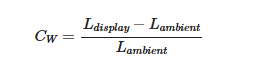
Where L_{ambient} represents the luminance from solar reflections off the screen surface. To achieve a readable contrast ratio of 10:1 under 100,000 lux, the display must emit at least 2,500–3,000 nits. This requirement defines the lower luminance threshold for professional window-facing installations; displays operating at fewer nits rely on supplementary measures (AR coatings, optical bonding, and shade structures) that may be insufficient for direct-solar-facing orientations.
| Ambient Condition | Direct Illumination (lux) | Required Minimum Nits | RisingStar Series |
|---|---|---|---|
| Shaded / North-facing | 1,000–5,000 | 1,500–2,000 nits | Entry Window Series |
| Partial sun / East-West | 5,000–30,000 | 2,500–3,000 nits | Professional Window Series |
| Direct sunlight / South-facing | 50,000–100,000 | 3,500–4,500 nits | Ultra-Bright Window Series |
Table 1.2: Ambient Luminance and Minimum Required Nits by Orientation
1.3 Polarization Compatibility
A frequently overlooked optical phenomenon: when standard LCD screens are viewed through polarized sunglasses, the screen can appear completely black or exhibit rainbow fringing. This occurs because commercial LCDs emit linearly polarized light, which can be fully absorbed by linear polarizers in sunglasses. Window-facing displays must incorporate circular polarizing technology to ensure readability regardless of viewer polarization orientation—a critical consideration in markets where sunglass usage is high (tropical and subtropical regions).
RisingStar's window-facing portfolio integrates circular polarizers as a standard specification, ensuring that the display remains visible to customers wearing polarized lenses, a condition that renders many standard commercial displays unreadable.
II. Challenges: The Three Engineering Conflicts
2.01 / Ambient Interference: Reflection and Contrast Degradation
The primary optical challenge in window-facing installations is surface reflection. Storefront glass is not a neutral medium; it reflects 4–8% of incident light at normal angles, and up to 20–40% at acute viewing angles. When the ambient environment behind the viewer (the street) is brighter than or comparable to the display, the reflected image of the street superimposes on the display content, degrading perceived contrast and legibility.
This problem is compounded by double reflection: light reflecting from the outer surface of the display glass, then from the inner backplane, creating ghost images that further confuse visual perception. In a typical storefront with 100,000 lux ambient illumination, an uncoated 3,000-nit screen may have an effective contrast ratio of less than 2:1—barely readable for large text, and inadequate for detailed imagery or small fonts.
Quantified Impact:
Standard uncoated glass: surface reflectance 8.4% at 550 nm
AR-coated glass (single layer MgF₂): reflectance reduced to <2%
AG-treated + optically bonded display: effective reflectance <1%, with diffuse scattering to prevent mirror-like reflections
2.02 / Physical Limits: Thermal Stress and the Greenhouse Effect
Placing a display behind glass creates a thermal trap. Solar irradiance of 800–1,000 W/m² (standard for midday equatorial conditions) strikes the display surface. The LCD panel absorbs approximately 40–60% of this energy as heat, while the enclosed air gap between the screen and the glass prevents natural convection. The result is a greenhouse effect that can elevate interior panel surface temperatures above 80°C—well beyond the clearing point of standard liquid crystals.
When liquid crystal temperature exceeds its Tni (clearing point, typically 70°C), the nematic phase transitions to the isotropic state. The result is the TNI (Temperature-Induced Nematic-Isotropic) blackening defect: permanent, unrecoverable dark regions where the display loses its ability to modulate light. This is not a transient failure—the affected pixels cannot be restored by cooling.
Thermal Cycling Risk: Even when daytime temperatures remain below Tni, repeated thermal cycling from ambient (20°C) to peak operating (75°C+) causes thermal stress in panel laminates, solder joints, and PCB substrates. Over 50,000 hours, a 55°C daily amplitude cycling can induce mechanical fatigue in adhesive layers, leading to delamination and optical degradation.
2.03 / Human Perception: Viewing Angle, Glare, and Visual Fatigue
Window-facing displays are not viewed head-on in controlled conditions. Pedestrians approach from angles ranging from 60° to the left of centerline to 60° to the right, often with the display at or below eye level. The optical engineering must maintain color consistency, brightness uniformity, and legibility across this 120° total viewing envelope.
Additionally, glare—not just reflection, but the direct brightness of the display itself—can create visual fatigue for pedestrians and staff positioned near the display for extended periods. A 4,000-nit display without proper dimming or diffusion treatments can be uncomfortably bright for indoor viewers, creating a secondary design challenge: optimizing the display for both outdoor readability and indoor visual comfort.
III. Technical Solutions: Material Science and System Engineering
3.1 High-Brightness Backlight Architecture
Professional window-facing displays employ direct-lit LED backlighting with high-density LED arrays. Unlike edge-lit designs that distribute light through a light-guide plate, direct-lit configurations position LEDs directly behind the LCD panel, enabling zone-addressable luminance and significantly higher peak brightness.
| Parameter | Edge-Lit LED | Direct-Lit LED (Window) | Engineering Impact |
|---|---|---|---|
| LED Density | 8–12 LEDs/zone | 20–40 LEDs/zone | Higher uniformity, reduced hotspots |
| Peak Luminance | 300–500 nits | 2,500–4,500 nits | Sunlight-readable contrast ratios |
| Local Dimming Zones | Limited or none | 32–384 zones | Improved dynamic contrast, reduced power |
| Thermal Output | Low | 400–700 W | Requires active or enhanced-passive cooling |
| Chassis Depth | 25–35 mm | 40–70 mm | Accommodates larger heatsinks |
Table 3.1: Edge-Lit vs. Direct-Lit LED Backlight Engineering
The trade-off for direct-lit architecture is thermal: higher LED density generates proportionally more waste heat. For a 55" display at 4,000 nits, thermal output approaches 600–700 W. This heat must be dissipated through:
Aluminum chassis with extruded fin arrays (thermal conductivity ~200 W/m·K)
Optical bonding to the front glass (improving conduction by 15–20% through resin with 0.5 W/m·K thermal conductivity vs. air at 0.026)
Intelligent thermal throttling (reducing LED drive current when internal temperature exceeds 75°C)
3.2 Hi-Tni Liquid Crystal Technology
To prevent the TNI blackening defect, window-facing displays must employ High-Tni (High Temperature Nematic-Isotropic) liquid crystal panels with clearing points of 110°C or higher. This is achieved through molecular modification of the mesogenic (liquid crystal forming) compounds:
Increased rigidity: Fluorinated biphenyl and terphenyl moieties replace flexible alkyl chains, raising the transition enthalpy.
Higher polarizability: Polar terminal substituents (–CN, –NO₂, –CF₃) enhance intermolecular van der Waals forces, increasing the clearing point from 70°C to 110°C+.
Reduced Δn (birefringence): Lower optical anisotropy reduces the temperature sensitivity of the refractive index, improving stability across the operating range.
Specification validation involves thermal ramp testing in environmental chambers: each production batch is subjected to a controlled temperature rise from 25°C to 110°C over 4 hours, with optical inspection at 5°C intervals to verify no blackening or contrast degradation occurs.
3.3 Optical Bonding and Contrast Enhancement
Optical bonding replaces the internal air gap between the TFT panel and cover glass with a UV-cured resin (refractive index 1.4–1.5). This single engineering decision delivers four critical benefits:
Eliminates internal reflections (improving contrast by 20–30%)
Enhances thermal conduction to the cover glass (15–20% better heat dissipation)
Prevents moisture ingress and internal fogging in humid environments
Eliminates parallax between the touch sensor and display surface
The bonding process requires a Class 10,000 cleanroom environment to prevent particulate contamination during adhesive dispensing, followed by UV curing under controlled pressure to ensure uniform thickness across the entire panel surface.
3.4 Anti-Reflection and Anti-Glare Surface Treatments
Multi-layer optical coatings reduce surface reflectance to <2% (compared to 8–10% for uncoated glass). State-of-the-art treatments include:
MgF₂ / SiO₂ / TiO₂ multilayer stacks: Utilizing interference cancellation to suppress specific wavelength reflections
Haze-measured AG (anti-glare) surfaces: Surface roughness (Ra 0.1–0.5 μm) that diffuses specular reflections without significantly degrading optical resolution
Circular polarizing layers: As discussed, ensuring visibility through polarized eyewear
3.5 Intelligent Thermal Management Systems
Modern window-facing displays incorporate multi-sensor thermal monitoring with automatic response logic:
At 45°C internal temperature: Silent cooling fans activate.
At 65°C: Power board reduces LED current to 70%, achieving thermal equilibrium via reduced heat generation.
At 75°C: System enters safe mode (50% brightness) to prevent Tni threshold approach.
At <45°C: System returns to full brightness.
This intelligent approach balances performance and longevity, prioritizing display survival over peak brightness during thermal stress events. The conformal coating on PCB boards provides a secondary layer of protection by sealing circuit traces against dust, metal particles, and moisture—critical in urban environments with high particulate concentrations.
IV. Application Scenarios: Engineering Validation in the Field
Scenario 1: Flagship Retail Storefront, South-Facing Glass, Tropical Climate
Environmental conditions: Direct midday sun, ambient >95,000 lux, tropical humidity >80%
Engineering requirements: 4,000 nits, Hi-Tni 110°C, optical bonding, AR+AG coating, active cooling, conformal coating
RisingStar solution: Ultra-Bright Window Series with dual-sided option (4,000 nits street-facing + 700 nits interior-facing)
Validation: 24-month field test in Singapore retail district; zero blackening incidents, no measurable color degradation after 18,000 hours
Scenario 2: Boutique Café Window, Variable Sun Exposure, Temperate Climate
Environmental conditions: East-facing glass, peak sun 4–6 hours/day, ambient 30,000–50,000 lux
Engineering requirements: 2,500 nits, Hi-Tni 110°C, optical bonding, silent cooling (fan noise <25 dB)
RisingStar solution: Professional Window Series with upgraded quiet mode (2,500 nits at minimal fan noise)
Validation: Customer surveys confirm no perceptible noise during indoor dining; display brightness maintained at 2,500 nits during peak sun with zero overheating events
Scenario 3: Real Estate Agency, Double-Sided Installation, Urban Street
Environmental conditions: Street-facing with heavy pedestrian traffic, north-facing (no direct sun), glass pulstran
Engineering requirements: 2,000 nits street-facing, 700 nits interior-facing, thin profile, easy content management
RisingStar solution: Entry Window Series with double-sided bracket accessory
Validation: Content updated remotely via Wi-Fi; installation completed in <30 minutes; client reports 40% increase in walk-in inquiries within 60 days
V. Conclusion
High-brightness window-facing displays occupy a unique engineering position at the intersection of optical physics, thermal science, and mechanical design. Success in this application requires specifications that exceed traditional display categories: luminance levels exceeding 2,500 nits, Hi-Tni panels with clearing points above 110°C, multi-layer optical treatments, and intelligent thermal management that operates autonomously under variable environmental loads.
The progression from standard indoor display to window-facing display is not incremental—it is a system-level engineering transformation. Every subsystem, from liquid crystal molecular structure to heatsink fin geometry, must be re-engineered for the unique stresses of direct-solar, glass-enclosed deployment. For system integrators and installation engineers, the critical specification is not simply "how bright?" but rather "how reliably will this display maintain its specified performance under the actual solar and environmental conditions of the deployment site?"
At RisingStar, the engineering philosophy treats window-facing displays as thermal-optical systems rather than conventional screens. From Hi-Tni panel specification to optical bonding in Class 10,000 cleanrooms, from CFD-optimized thermal architecture to intelligent auto-dimming firmware, every element of the system is designed to ensure readable, reliable performance for the full 50,000-hour design lifespan. With over 17 years of focused engineering in high-brightness LCD technology, RisingStar supplies not just panels, but the integrated system reliability that window-facing installations demand.
FAQ
Q1: What is the minimum brightness requirement for a window-facing display to be readable under direct sunlight?
A display must emit at least 2,500–3,000 nits to achieve a readable Weber contrast ratio of 10:1 under 100,000 lux ambient illumination. Standard indoor displays (250–500 nits) are effectively invisible under these conditions. The specific threshold depends on the installation orientation (north-facing installations require fewer nits than south-facing) and the presence of supplementary shading or reflection-reduction measures. RisingStar's product line covers the range from 1,500 nits (shaded locations) to 4,500 nits (direct tropical sunlight), with installation engineering support to match the correct luminance specification to each deployment environment.
Q2: How does Hi-Tni technology prevent the blackening defect in window-facing displays?
Standard LCD liquid crystals transition from the nematic (ordered) phase to the isotropic (disordered) state at approximately 65–70°C. Under the greenhouse effect created between storefront glass and the display surface, panel temperatures can exceed 80°C, causing permanent black spots where the liquid crystal loses its polarization-modulation capability. Hi-Tni technology raises the clearing point to 110°C or higher by modifying the molecular structure of mesogenic compounds to increase intermolecular forces. This 40–45°C safety margin ensures that the display remains fully operational even under peak solar load. RisingStar validates this specification through thermal ramp testing of each production batch, ensuring that clearing points are verified before panels enter the assembly process.
Q3: Why is optical bonding specifically important for window-facing applications?
Optical bonding eliminates the internal air gap between the TFT panel and the front cover glass, replacing it with a UV-cured resin. For window-facing displays, this produces four measurable benefits: (1) 20–30% contrast improvement by eliminating double-reflection; (2) 15–20% thermal performance enhancement by improving conduction to the front glass; (3) Prevention of internal fogging by sealing the interface against moisture ingress; and (4) Improved touch accuracy by eliminating parallax. The thermal-conduction benefit is particularly critical: in greenhouse-glass installations, bonded panels exhibit peak internal temperatures 5–8°C lower than equivalent air-gapped displays, extending both panel and LED backlight life. RisingStar applies optical bonding as a standard manufacturing step in its Class 10,000 cleanroom.
Q4: What installation considerations are unique to window-facing displays?
Window-facing displays present three installation-specific challenges not encountered in standard indoor or outdoor deployments: (1) Weight and structural support: a 75" unit can weigh 40+ kg, requiring load-tested mounting hardware rated for the specific wall or glass structure; (2) Viewing angle optimization: the display must be oriented to account for the primary pedestrian traffic pattern, with tilting (typically 5–10° downward) to reduce glare and improve readability for average-height viewers; and (3) Cable management: power and data cables routed through the wall must maintain seal integrity to prevent thermal leakage and acoustic transmission. RisingStar's installation engineering team provides VESA-compliant mounting interfaces (600 × 400 mm) and tools such as integrated levelers and tilt sensors (horizontal sensors) to ensure precise, safe installation on the first attempt.
Q5: How does intelligent brightness control affect the lifetime and energy consumption of a window-facing display?
Continuous operation at maximum brightness (e.g., 4,000 nits) generates approximately 700 W of thermal output, placing sustained thermal stress on LED arrays and panel components. Intelligent brightness control uses integrated ambient light sensors to adjust luminance dynamically: full brightness during midday sun, 70% at overcast conditions, and 20% at night. This approach reduces average thermal output by 10–15%, directly translating to 10–15% extension of LED backlight life (from the nominal 50,000 hours) and proportionally lower energy costs. For a retail chain operating 12 displays per store across 100 stores, this difference represents a cumulative energy saving of approximately 25,000 kWh/year. RisingStar's smart sensor systems operate without manual intervention, maintaining optimal brightness-to-visibility ratios across all environmental conditions.

