
For LCD displays, brightness are always related to the size. Smaller LCD displays typically have lower brightness standards, while larger LCD displays have higher brightness standards. This is because large-sized LCDs require more backlight to cover a larger area, thereby achieving higher brightness. For LED, its brightness depends on the magnitude of the current, because the LED screen itself is a light source. Whether it is a 1 square meter or 100 square meter LED screen, its brightness will not change due to the area under the same current size.
The advantages of LCD include resolution and contrast, making images clearer. They are usually more energy-efficient than LEDs, have lower radiation indicators, and can often display more information and details in limited sizes. But in terms of brightness, LCD cannot surpass LED, even us, the RisingStar can only provide you with an LCD with a maximum brightness of 5000 nits.
The advantages of LED lie in its high brightness, fast response speed, and easy to maintain. LED display screens can be extended freely and seamlessly spliced together. However, the disadvantages of LED include relatively low resolution, easy dead light, and high brightness that may cause glare during long-term viewing. In limited size, LED can provide less information and details.
On trains or Metros, LCD screens can be used to display detailed information such as platform waiting information and train route maps. These pieces of information usually contain a lot of details and require high resolution to ensure that necessary information is clear and visible.
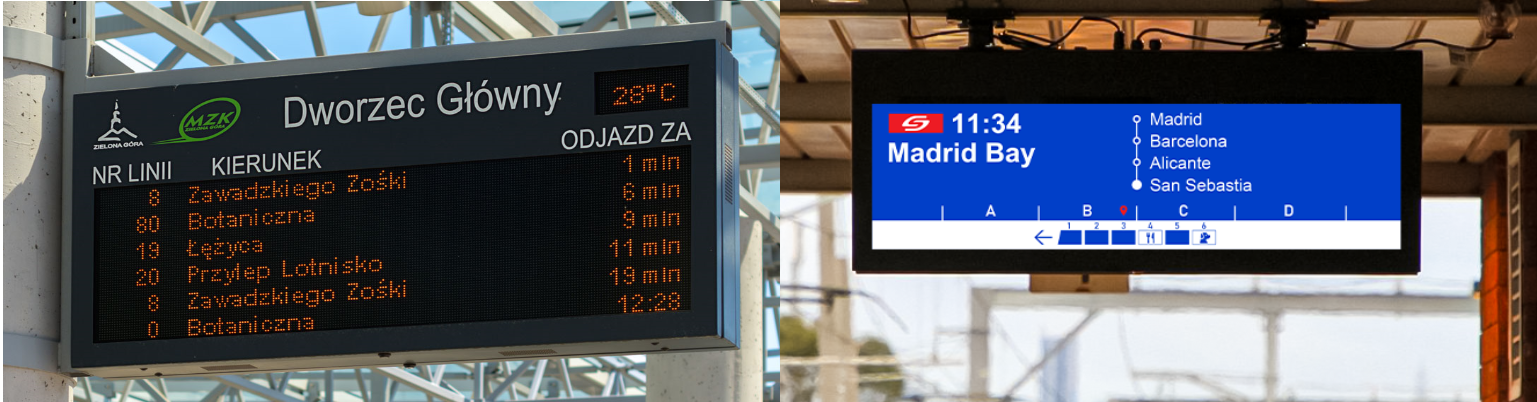
LED screens are suitable for displaying concise but important signs such as train or bus numbers, carriage numbers, and safety reminders. These pieces of information require high brightness and quick updates to ensure clear visibility under various lighting conditions, the higher brightness of LED is suitable for these works.
The use of electronic identification and route maps can greatly improve the flexibility and efficiency of trains. Compared with traditional physical identification, electronic identification allows trains to undertake more routes through simple digital modifications without repainting or renovating. This flexibility not only reduces costs, but also improves the operational efficiency of trains.
Also, the digital signs can update the passenger information in real-time, passengers can know exactly where are they while the train/bus is running on the way.