
Sunlight Readable
Display Technology.
Purpose-built for 100,000 lux direct sunlight. In-house optical bonding, Hi-TNI panels, and smart thermal management deliver 500�?,000 nits of mission-critical readability �?without bulky HVAC systems.
-
Hi-TNI LCD panels stable up to 110°C �?zero isotropic failure
-
Optical bonding reduces glare by 80% and prevents condensation
-
Peak luminance 5,000 nits with auto-dimming ALS
-
Operating range -20°C to 70°C enclosure, -30°C to 110°C panel
Partners
The Problem
The Physics of Outdoor Display Failures
Three physical phenomena conspire to destroy outdoor display readability. Understanding them is the first step to engineering a solution that survives.
Sunlight Washout
Direct sunlight delivers up to 100,000 lux ambient illuminance �?roughly 300 times brighter than a typical office. A standard 300�?00 nit indoor display produces a contrast ratio below 3:1 under these conditions, rendering all content invisible.
Insufficient luminance (cd/m²) cannot overcome ambient light reflected from the display surface. Standard backlight architectures are thermally limited to ~500 nits.
Read full breakdown �?Solar-Induced Blackening
When direct infrared and ultraviolet radiation heats the LC layer beyond its clearing point (TNI), liquid crystal molecules transition from an ordered nematic phase to a disordered isotropic phase. The panel turns irreversibly black. Standard TN and IPS panels exhibit clearing points at 70�?0°C.
Standard LC compounds lack thermal stability. Internal enclosure temperatures can reach 90�?20°C under direct sun, permanently destroying display function without Hi-TNI panels.
Read full breakdown �?Condensation & Fogging
Air-gapped displays create an internal cavity where moisture accumulates during rapid temperature drops. When the dew point is reached, condensation forms on the inner surface of the cover glass, causing fog, light scattering, and eventual corrosion of PCB traces and ribbon connectors.
The air gap between LCD cell and cover glass acts as a moisture reservoir. Traditional desiccants are insufficient for sealed enclosures with wide thermal cycling (-20°C to 70°C).
Read full breakdown �?Why It Matters
Standard vs. Sunlight Readable Displays
Not all outdoor displays are created equal. Here's how a purpose-built sunlight readable display outperforms standard industrial panels.
| Spec | Standard | RisingLCD |
|---|---|---|
| Luminance | 300�?00 nits | 1,000�?,000 nits |
| Contrast in Sun | < 3:1 | > 5:1 |
| Clearing Point | 70�?0°C | 110°C |
| Glare | None | 80% reduced |
| Condensation | Desiccant | OCR/OCA |
| Temp Range | 0�?0°C | -20�?0°C |
| LED Life | ~30k hrs | 50k+ hrs |
The Solution
Core Technologies That Guarantee Readability
Three proprietary engineering capabilities �?each addressing a specific failure mode �?combine to deliver displays that perform where others fail.
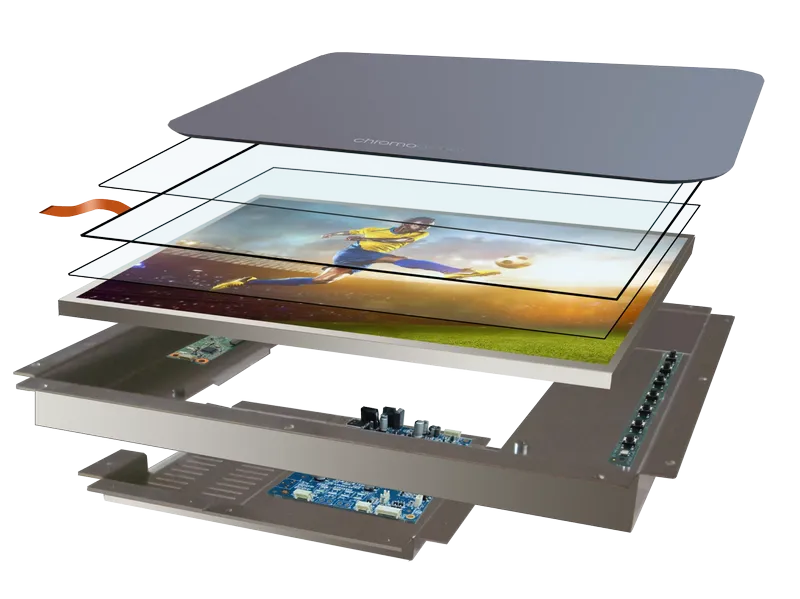
In-House Optical Bonding
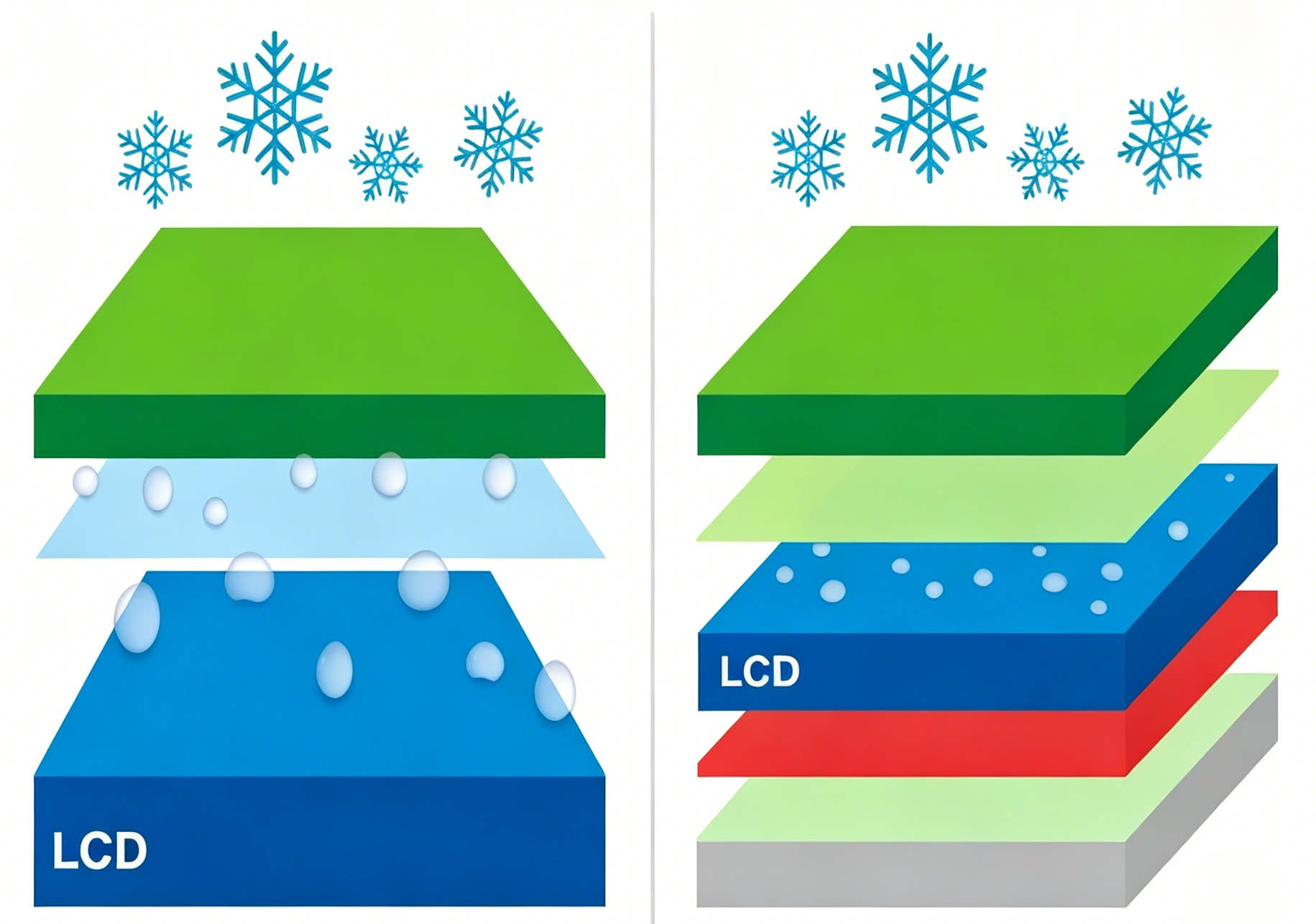
Optical bonding laminates an OCR (Optically Clear Resin) or OCA (Optically Clear Adhesive) layer between the LCD cell and cover glass, permanently eliminating the air gap. Performed in our Class 10,000 cleanroom.
Glare Reduction: 80%
Removing two air gaps eliminates up to 8% total internal reflection, improving contrast ratio by up to 300%.
Fog Prevention
Eliminating the air cavity removes the space where moisture condenses. The OCR/OCA compound is hydrophobic and chemically inert.
Structural Reinforcement
Bonded assemblies improve IK impact resistance and eliminate air-gap vibration rattle, critical for transit and industrial deployments.
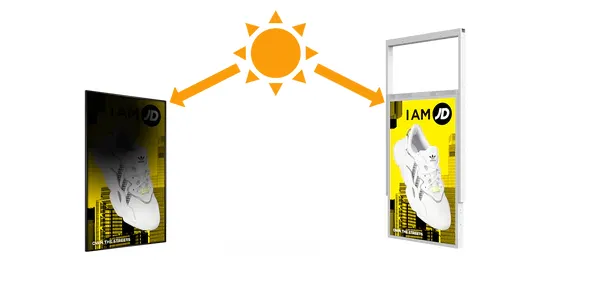
Hi-TNI Liquid Crystal Panels
Standard liquid crystal compounds undergo isotropic phase transition at 70�?0°C �?well below the internal temperature of a sun-exposed enclosure. Hi-TNI panels use proprietary LC mixtures with elevated clearing points, maintaining molecular alignment up to 110°C.
Extended Nematic Range
Operating range of -20°C to 70°C (enclosure), with Hi-TNI panel clearing point at 110°C �?compared to the standard 0°C to 50°C range of conventional IPS/TN panels.
No Active Cooling Required
Eliminates HVAC dependency, reducing system complexity, maintenance cost, and power consumption. Passive aluminum heat sinks suffice for most installations.
Recovery After Thermal Cycling
Unlike standard panels that suffer permanent damage after isotropic failure, Hi-TNI panels recover full optical performance after temperature drops.
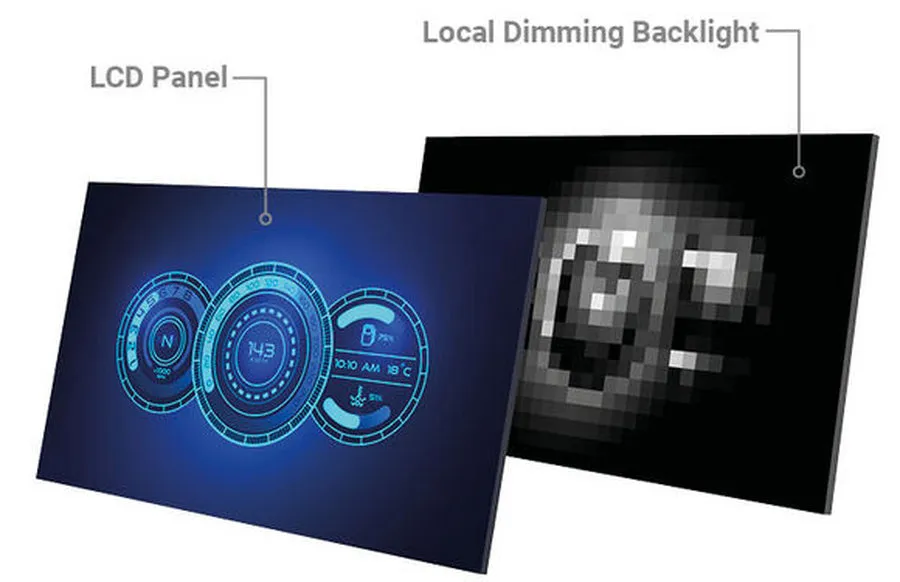
Auto-Dimming ALS & LED Driving
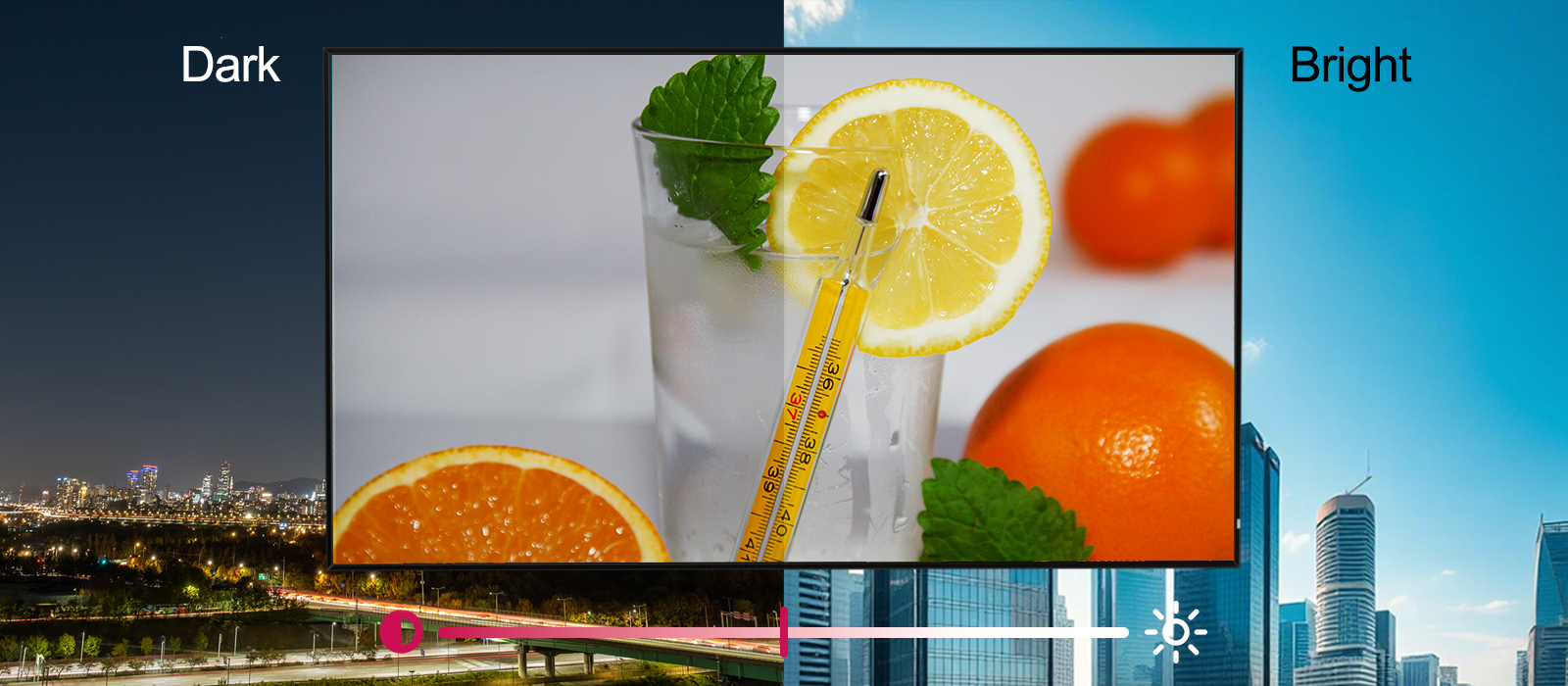
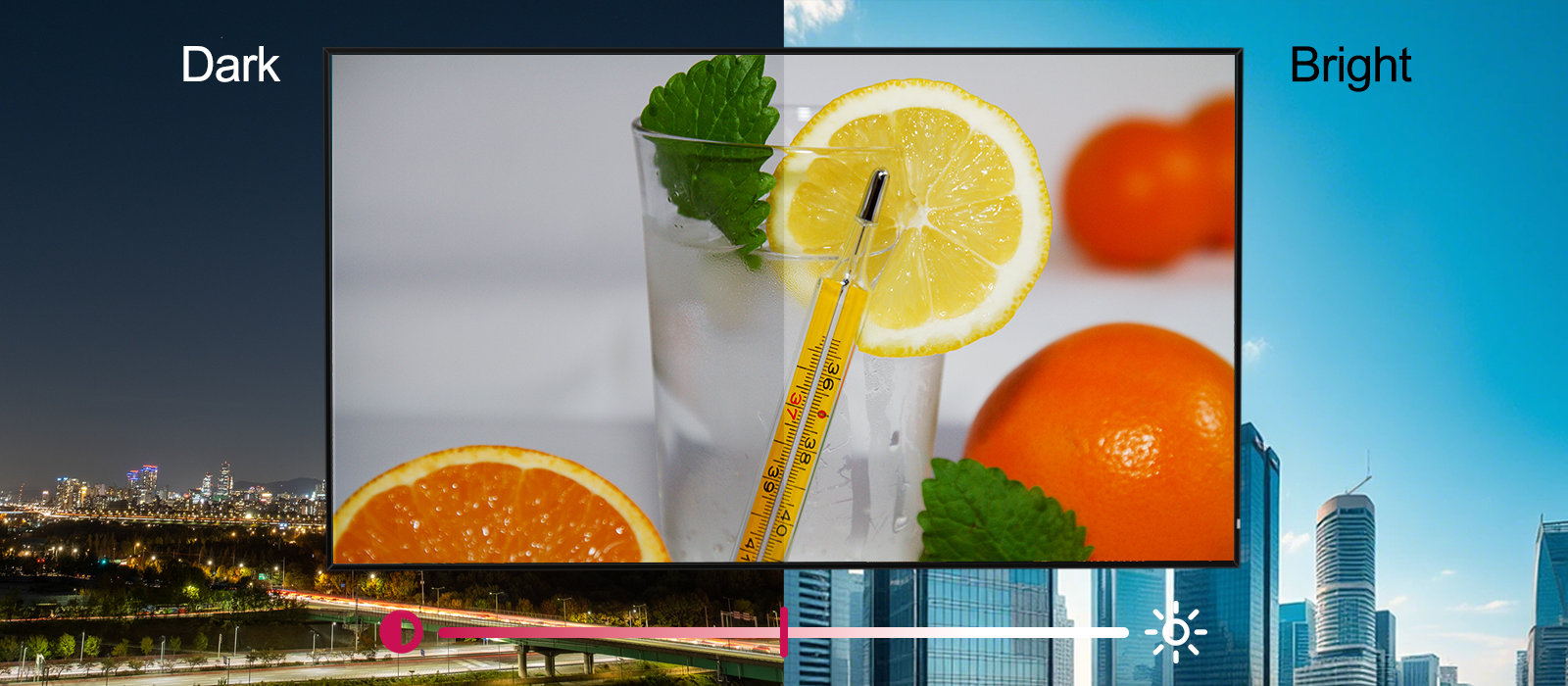
Industrial-grade ambient light sensors (ALS) continuously measure lux levels and dynamically adjust backlight luminance via PWM (Pulse Width Modulation) LED driving. This ensures optimal readability while extending panel lifespan.
Dynamic Brightness Curve
Backlight scales from 50 nits (night) to 5,000 nits (peak sun) along a logarithmic curve matching human visual perception. Transition time <200ms.
Energy Efficiency & Light Pollution Compliance
Auto-dimming reduces average power draw by 40�?0%. Night dimming complies with municipal light pollution ordinances for street-facing DOOH and transit displays.
LED Lifespan Extension
Reducing average drive current extends LED backlight life from ~30,000 hours to 50,000+ hours, critical for 24/7 mission-critical installations.
Deployment Scenarios
Industry-Specific Applications
Each vertical imposes unique environmental constraints. Our sunlight readable display solutions are configured to meet the specific demands of your deployment scenario.
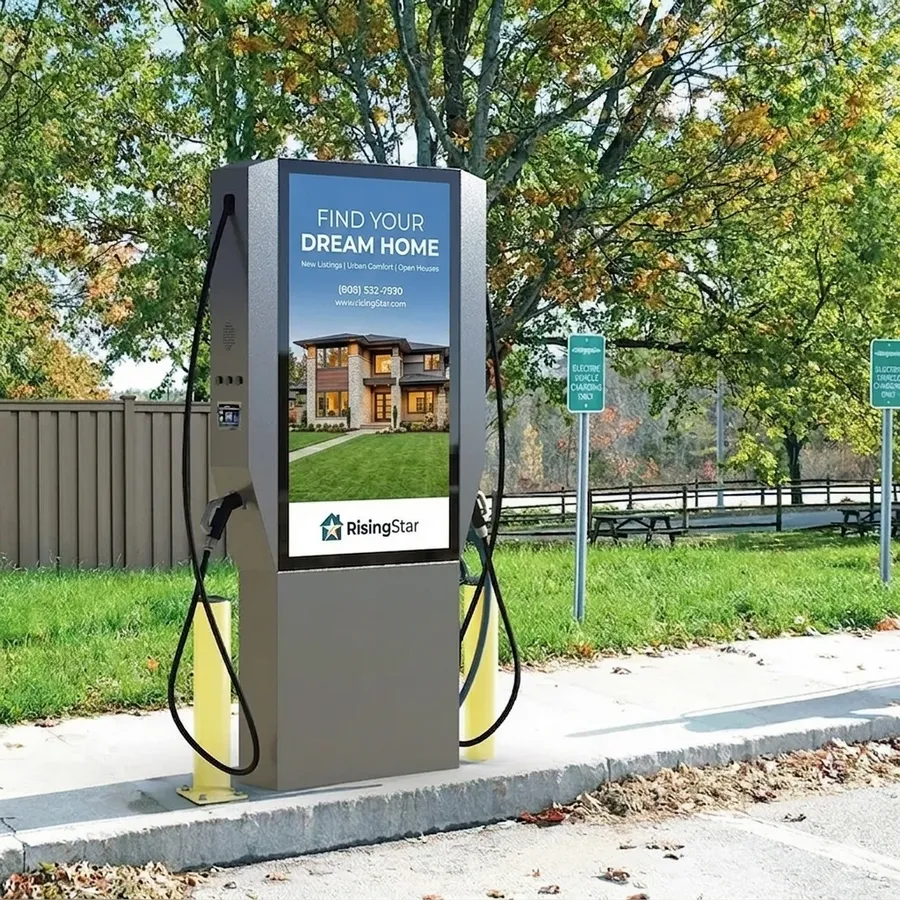
EV Charging Stations
Engineered for extreme environments, our sunlight readable display solutions ensure zero screen blackening. While the enclosure and PCAP systems operate flawlessly from -20°C to 70°C, the core Hi-TNI LCD panel handles direct solar loads up to 110°C.
Explore EV Solutions �?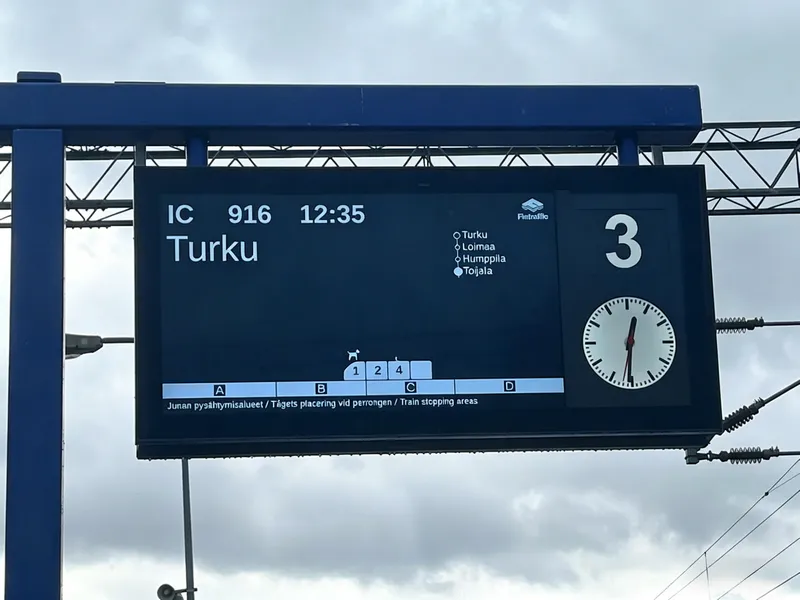
Public Transportation & PIDS
24/7 reliability under continuous vibration, dust, and thermal cycling. Ruggedized metal chassis meets railway (EN 50155) standards. Custom stretch/bar formats (16:3, 32:9) for overhead bus shelter and platform-mounted sunlight readable display installations.
Explore Transit Solutions �?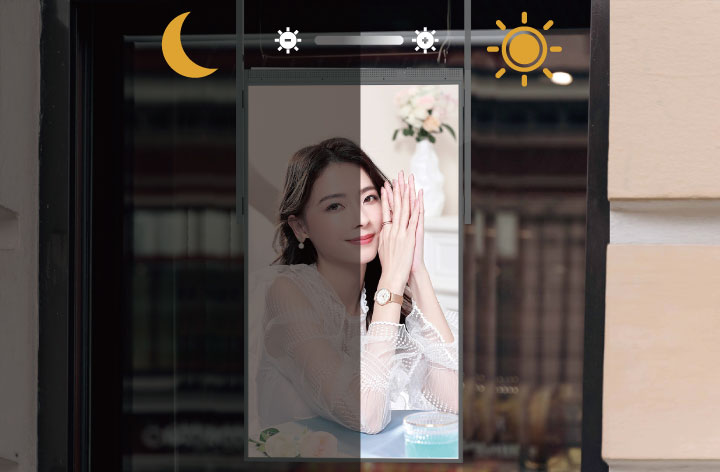
Retail Window & DOOH
Our sunlight readable display overcomes double-glazed glass reflections and direct sunlight. QWP (Quarter Wave Plate) technology ensures full visibility through polarized sunglasses. Auto-dimming ALS complies with urban light pollution ordinances.
Explore Retail Solutions �?Manufacturing Capability
Hardware Specifications & Prototyping
From rapid prototyping to volume production, our ISO 9001 certified facility delivers precision-manufactured display solutions.
Class 10,000 Cleanroom
In-house optical bonding under ISO Class 7 controlled environment. Particle count <352,000/m³ ensures zero-defect lamination.
ISO 9001 Certified
Full traceability from component sourcing through final QC. Every display undergoes 72-hour high-temperature aging and environmental cycle testing.
10-Day Prototyping
Fully functional, optically bonded prototypes delivered in as fast as 10 business days for real-world evaluation and thermal validation.
Standard Module Sizes
We maintain inventory and production tooling for the most frequently specified industrial display dimensions. Each size is available with high-brightness backlight options and optical bonding.
Custom sizes, aspect ratios, and stretch/bar formats available upon request. Contact our engineering team for mechanical drawings and interface specifications.
Integration Quick-Start
-
1Select your target size and brightness tier (500 / 1,500 / 3,000 / 5,000 nits)
-
2Specify interface (LVDS / eDP / HDMI / DP), touch type, and enclosure requirements
-
3Receive a 3D mechanical drawing and optical simulation within 48 hours
-
4Approve the prototype �?mass production begins in 3�? weeks
Technical FAQ
Frequently Asked Questions
Precise technical answers to common integration and specification questions.
What is the difference between IP65 and IP66?
IP65 enclosures are dust-tight and protected against low-pressure water jets from any direction. IP66 adds protection against powerful water jets and heavy seas. For coastal or marine deployments, IP66 or higher is recommended. Both ratings require gasket-sealed I/O connectors and conformal-coated PCBs to prevent corrosion in humid environments.
How do nits correlate to outdoor readability?
Nits (cd/m²) measure luminance. Indoor displays operate at 250�?50 nits. Direct sunlight delivers approximately 100,000 lux ambient, requiring 1,000+ nits for legibility and 2,500�?,000 nits for full-color vibrancy. Below 1,000 nits, contrast ratio degrades below 3:1, rendering content unreadable under direct solar load.
What is isotropic failure in LCD panels?
Isotropic failure occurs when liquid crystal temperature exceeds the clearing point, causing molecules to lose orientation and the panel to turn black. Standard TN/IPS panels fail at 70�?0°C. Hi-TNI (High Transition Nematic Isotropic) panels use specialized LC mixtures stable up to 110°C, preventing solar-induced blackening in direct-sun applications.
How does optical bonding reduce glare?
Optical bonding fills the air gap between the LCD cell and cover glass with OCR (Optically Clear Resin) or OCA (Optically Clear Adhesive). This eliminates internal reflections that cause 80% of glare, improves contrast by up to 300%, and prevents moisture condensation inside the display by removing the air cavity where fogging occurs.
What is QWP polarized glass?
Quarter Wave Plate (QWP) film converts linearly polarized light into circularly polarized light. Standard LCDs appear black when viewed through polarized sunglasses due to crossed polarizers. QWP-equipped displays remain visible at all polarization angles, making them essential for retail window and DOOH installations targeting pedestrian traffic wearing sunglasses.
End-to-End Factory Customization
From concept to mass production, we provide end-to-end customization for your specific project requirements.
Requirements
Define your exact specifications: size, luminance (cd/m²), interfaces (LVDS/eDP/HDMI), touch type, and ruggedness levels. Our engineers provide thermal and mechanical consultation.
Rapid Prototyping
Get a fully functional, optically bonded prototype delivered in as fast as 10 business days for real-world evaluation and thermal validation.
Validation Testing
Every design undergoes rigorous 72-hour high-temperature aging and extreme environmental cycle tests to ensure zero-defect reliability in the field.
Mass Production
Scalable manufacturing in our ISO 9001 certified, dust-free cleanroom facility, ensuring consistent quality from the first unit to the thousandth.
Quick Assessment
Find Your Ideal Configuration
Answer a few questions to identify the right sunlight readable display for your project.
1. Exposed to direct sunlight?
2. Need blackening prevention >80°C?
3. Need PCAP touch?
4. Mounted behind glass (DOOH)?
5. Brightness tier?
Recommended
Get Consultation �?Need a Custom Engineering Solution?
Whether you need a standard module or a fully customized sunlight readable display system with optical bonding, enclosure design, and interface integration �?our engineering team responds within 8 hours.
Submit Your Project Brief
Include your target size, nits, touch requirements, and environmental conditions.
Related Insights
Technical articles and case studies on sunlight readable display solutions.
Articles
Ready to Deploy?
Consult with our technical team for customized sunlight-readable solutions.
Contact an Engineer