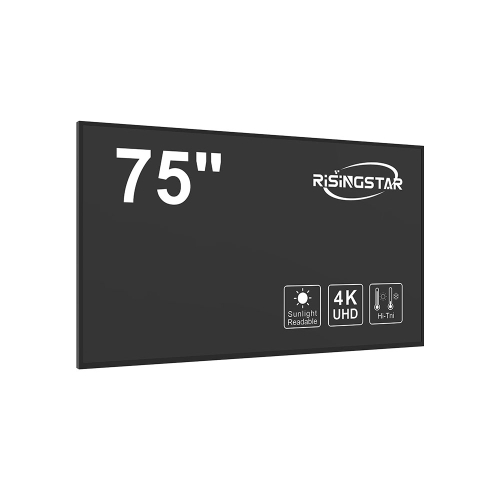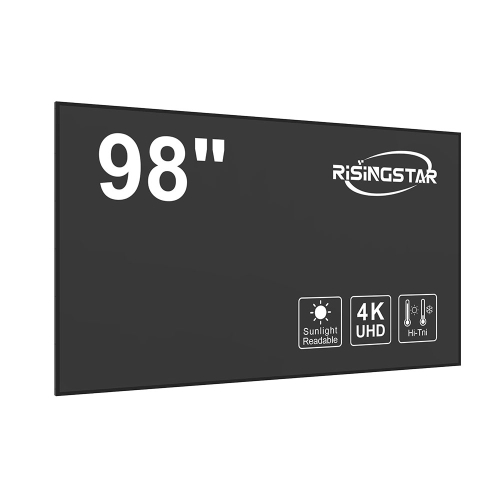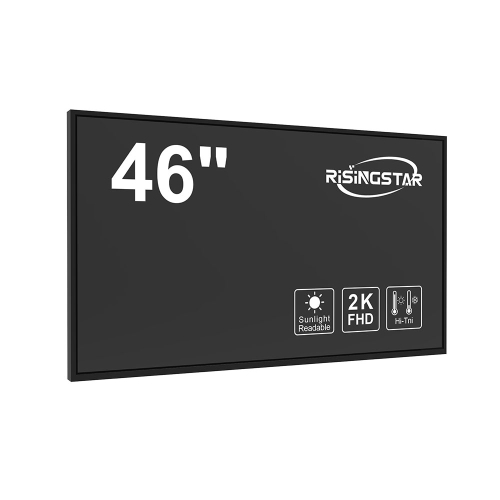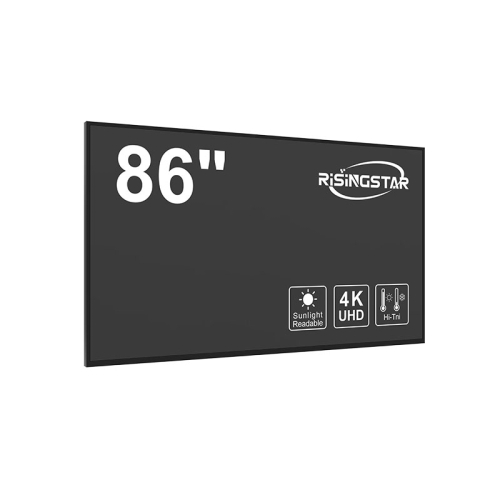
Whether it’s a giant advertisement in a city square, a traffic information screen along a highway, or a digital navigation board in a large mall, harsh sunlight represents the most severe test for any display.
The ability of a screen to clearly and accurately present a brand’s signature red or the fine textures of a product under the high noon sun directly determines the effectiveness of commercial communication and the value of advertising investment. This is not just about brightness (nits); it depends on a critical technical indicator—Color Gamut in a professional High Brightness Display.
"At Risingstar, our high-brightness display solutions are engineered specifically to bridge this gap. By integrating proprietary structural designs with advanced thermal management, we ensure our panels maintain peak performance even in the most demanding thermal and light conditions."
Color gamut defines the range and richness of colors a display can reproduce. In high-brightness commercial scenarios, maintaining a wide and stable color gamut is the watershed between "barely visible" and "视觉震撼" (visually stunning). It is the technical foundation for enhancing brand image and ensuring information accuracy. This article focuses on specialized outdoor and high brightness display, systematically analyzing the challenges they face and the corresponding technical solutions.
Commercial Color Gamut: Standards
| Standard | Application | Performance |
|---|---|---|
| sRGB | Internet & Basic Info | Baseline benchmark |
| DCI-P3 | Digital Cinema / Branding | Superior red/green saturation |
| Rec. 2020 | Ultra-HD / Professional | Ultimate color pursuit |
However, when commercial displays are deployed outdoors, they face a fundamental physical conflict: brightness enhancement leads to color saturation dilution.
The Siege of Strong Light: Three Core Challenges
Ambient Interference
Glare creates a reflection layer on the screen surface, acting like a gray "filter" that washes out purity.
Physical Limits
Reinforced LCD architecture remains the most reliable route for continuous 1000+ nits outdoor use.
Human Perception
Specific "daylight vision" color correction is needed to maintain perceived vividness.
Safeguarding Color: Technical Solutions
Solution 1: Optical Surface Treatment
Anti-Reflection (AR) Coatings: By depositing multi-layer dielectric films, surface reflectance can be reduced below 4%.
Anti-Glare (AG) & Anti-Fingerprint (AF): AG scatters direct light while AF coatings provide protection.
Risingstar Advantage: Customized high-efficiency LED arrays and Full Array Local Dimming (FALD), ensuring vibrant colors at up to 5000 nits.
Solution 2: Advanced Backlighting
Mini-LED & Quantum Dot (QD): Independent dimming zones and pure wavelength converters covering 95%+ DCI-P3 gamut.
Solution 3: Color Management
3D LUT Calibration: Hardware-level calibration ensures color consistency across all environmental conditions.
Outdoor Signage
Requires 5000+ nits with AR/AG coatings and IP65 protection.
Traffic Control
Reliability and accuracy are paramount. Focus on MTBF metrics.