
Travelers arrive at a major railway station. They need to find the correct platform, purchase a ticket, and locate the waiting area — all within a few minutes. Three different kiosks serve them along the way: a wayfinding directory at the entrance, a self-service ticketing machine in the concourse, and a digital departure board on the platform. Each serves a different function and each places different demands on the display hardware.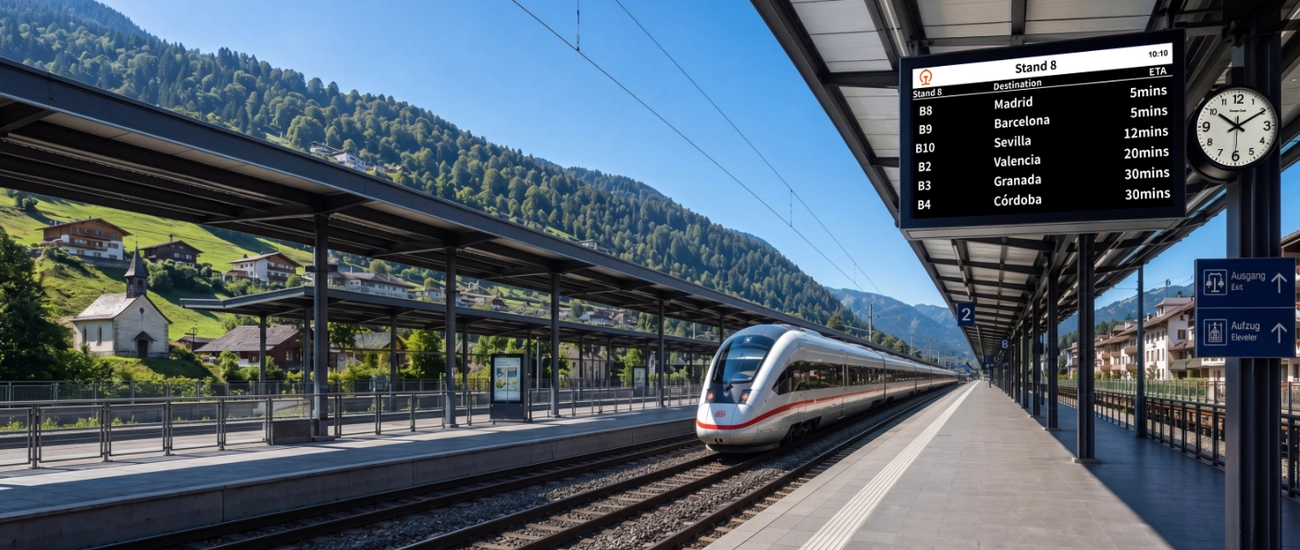
Railway stations are among the most demanding environments for public kiosks. They combine high foot traffic, variable lighting from underground concourses to glass-roofed atriums to open platforms, and continuous operation from early morning to late night.
Wayfinding and Directory Kiosks
Wayfinding kiosks are the first screen a visitor encounters. Located at station entrances, concourse intersections, and transfer points, they provide station maps, platform assignments, departure times, and directions to facilities. The user interaction is typically brief — a glance at the map, a search for a destination, then moving on. A railway station wayfinding kiosk must be readable from a standing position at a glance, which makes display brightness and viewing angle critical.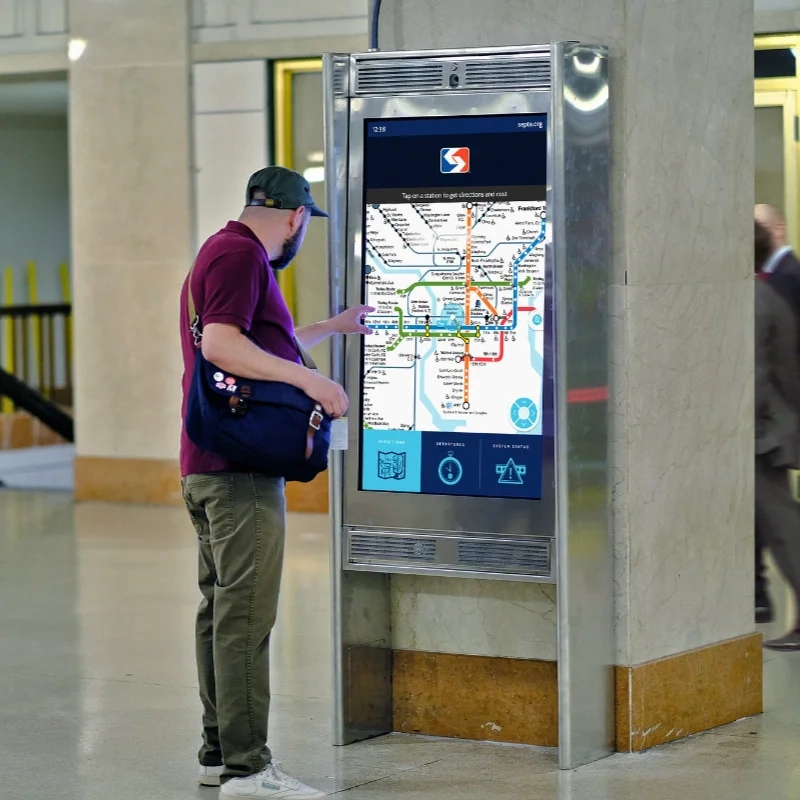
These kiosks are installed in a range of lighting conditions. At a covered entrance or concourse, the ambient light is 500 to 1,500 lux depending on station lighting and the display needs 800 to 1,200 nits. At a glass-roofed atrium in direct sun, the ambient light can reach 30,000 to 100,000 lux and the display needs 1,500 nits or higher with anti-reflective glass and optical bonding. In shaded or overcast conditions, the same atrium may drop to 2,000 to 5,000 lux.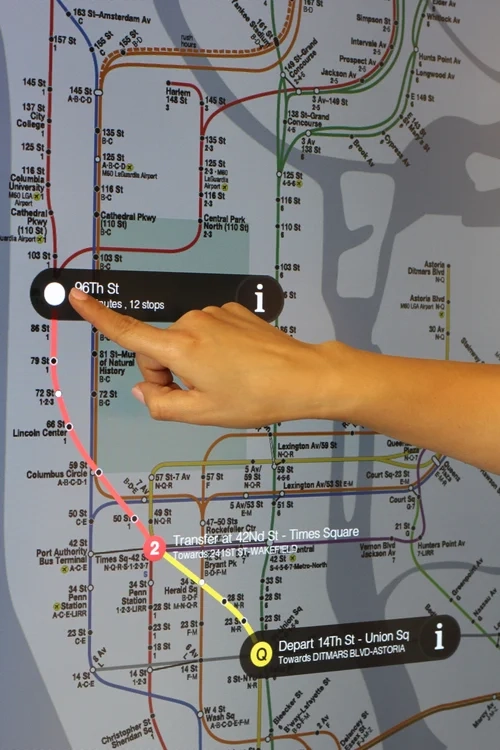
The touch sensor must respond reliably to quick, single-handed interactions. PCAP touch with firmware tuned for fast tap response and accidental touch rejection suits this use case.
Self-Service Ticketing Machines
Ticketing kiosks handle financial transactions. The user selects a destination, chooses a fare, inserts payment, and collects a ticket. These interactions are longer and require precise touch accuracy. A mis-tap that selects the wrong station or fare class creates a customer service issue.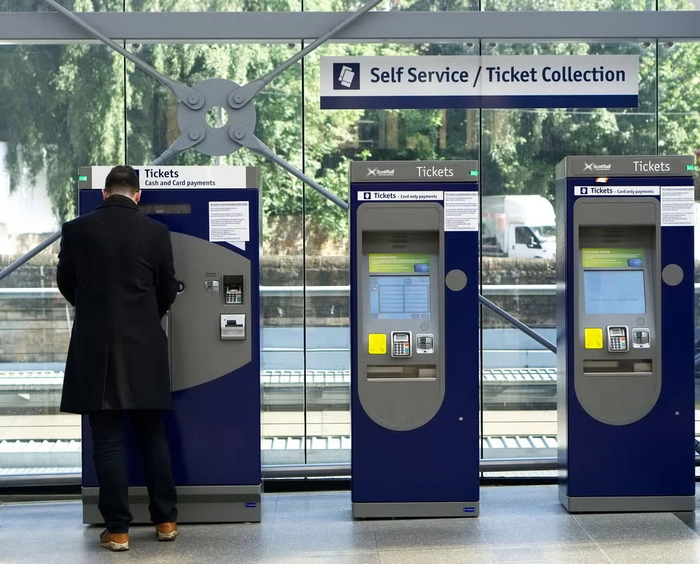
Ticketing machines are typically located in station concourses and ticket halls where lighting is controlled. The display needs 500 to 800 nits for indoor locations. Higher brightness is unnecessary at arm's length.
The touch requirements for ticketing are more demanding than for wayfinding. The PCAP sensor must register accurately through winter gloves and reject phantom touches from rain or moisture on the screen surface. The cover glass must withstand repeated tapping in the same locations — fare selection buttons and payment confirmation zones see the highest use.
Ticketing machines also require IK10-rated glass per IEC 62262 for vandal resistance. A ticket machine is a high-value target for attempted theft or damage, and the display is the most vulnerable component. IK10 tempered glass with optical bonding provides impact protection while maintaining touch sensitivity.
Platform Information and Advertising Displays
Platform information displays and advertising screens serve a different purpose from wayfinding and ticketing kiosks. They are viewed from a distance rather than interacted with directly. Passengers scan departure boards from 5 to 20 meters away to find their train. Advertising displays compete for attention in the station environment.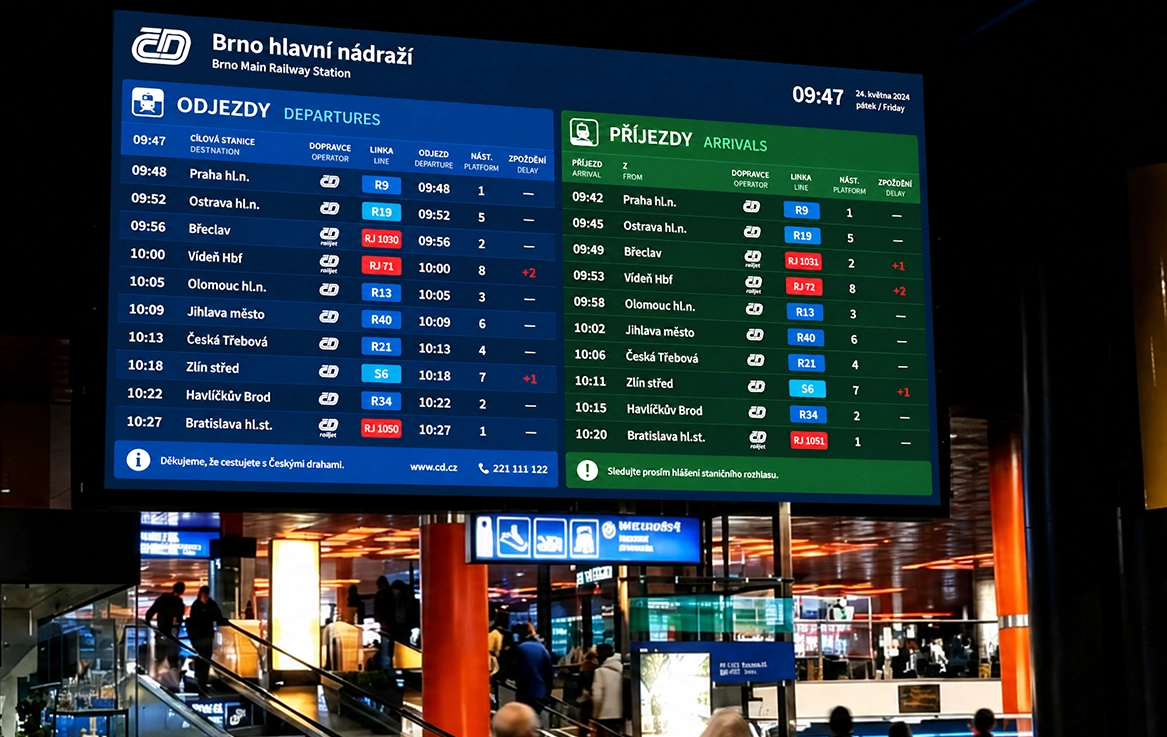
These displays require higher brightness than interactive kiosks because they are viewed from farther away and must overcome ambient light from station lighting, glass roofs, and open platform areas. For indoor concourse locations, 1,000 to 1,500 nits is appropriate. For semi-outdoor platforms under a canopy, 1,500 to 2,500 nits with optical bonding and anti-reflective glass is needed.
Platform displays also face environmental challenges beyond brightness: train-induced air turbulence, reflective surfaces from nearby metal fixtures, and proximity to fare gates. These factors make optical bonding and robust sealing essential for long-term reliability.
Advertising displays in railway stations often operate on a revenue model — the station operator sells advertising space to brands. The display must maintain consistent brightness and color across all units in the network. Brightness drift between adjacent displays is immediately noticeable and reduces the perceived value of the advertising inventory.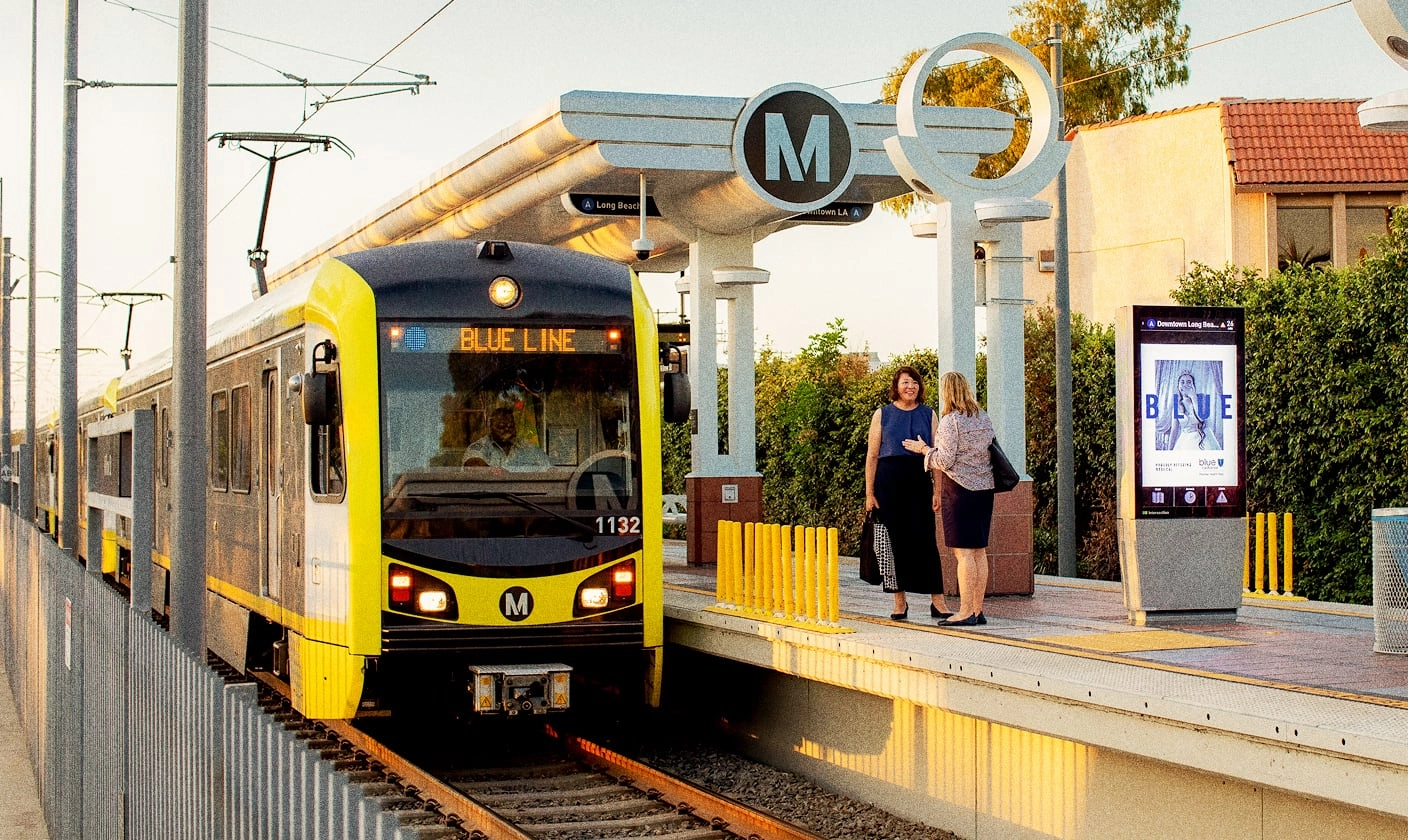
Display Specifications for Railway Station Kiosks
The table below summarizes the recommended specifications for each kiosk type in a railway station environment. All ratings per IEC 62262 (impact) and EN 60529 (ingress protection).
| Requirement | Wayfinding Kiosk | Ticketing Machine | Platform/Advertising Display |
|---|---|---|---|
| Typical location | Concourse, entrance hall | Ticket hall, concourse | Platform, concourse wall |
| Brightness | 500–1,200 nits | 500–800 nits | 1,000–2,500 nits |
| Touch | PCAP, fast tap | PCAP, glove mode + wet-hand | Non-touch (viewing only) |
| Impact protection | IK08 | IK10 | IK08–IK10 |
| IP rating (front) | IP54 | IP54–IP65 | IP54–IP65 |
| Optical bonding | Recommended | Recommended | Required for outdoor |
| Operating temp | –20°C to +70°C | –20°C to +70°C | –20°C to +70°C |
Brightness requirements differ by station zone. A kiosk in an underground concourse needs less brightness than one near a glass facade. The recommended approach is to specify the display for the brightest environment it will encounter and use auto-dimming to reduce brightness in lower light — for example, 2,500 nits peak with auto-dim down to 500 nits at night.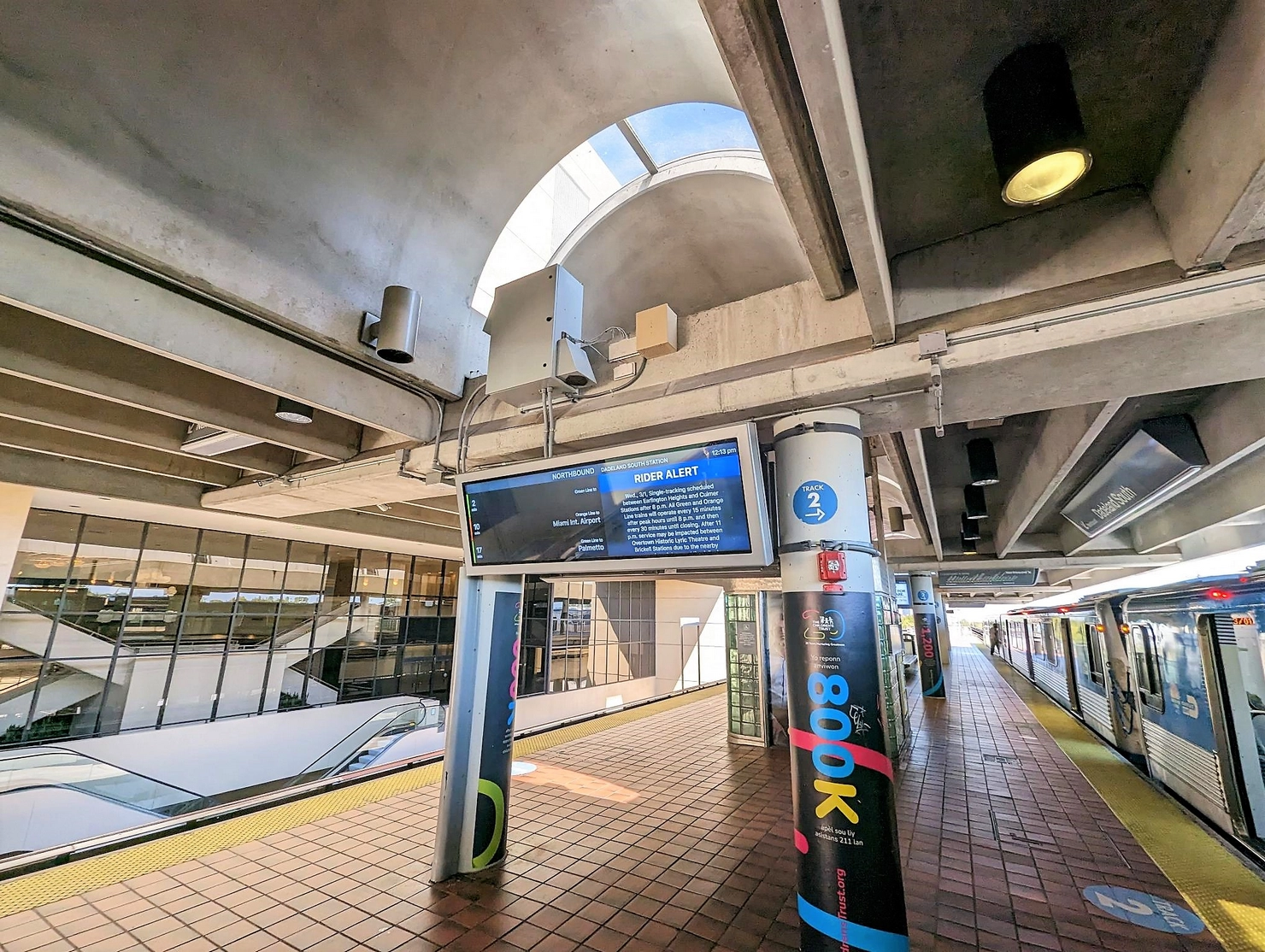
All displays in public railway stations benefit from optical bonding. Bonding eliminates the air gap between the LCD panel and the cover glass, reducing internal reflections and preventing condensation fog. For ticketing machines that handle frequent touch interaction, bonding also improves touch accuracy by eliminating parallax error between the glass surface and the displayed content.
Sourcing from a Direct Manufacturer
As a direct manufacturer of industrial display solutions, we build railway station kiosk displays from 7 to 110 inches with brightness from 500 to 5,000 nits, PCAP touch with glove and wet-hand firmware, IP65/IP66 sealing, and IK10 glass. Per IEC 62262 and EN 60529 standards. Every unit undergoes 100 percent factory inspection and a 72-hour burn-in before shipment. ISO 9001 certified.
Engineering reference notes available on request, without obligation: site-specific lux mapping for new concourses or platform extensions, PCAP glove-mode tuning notes for cold-climate stations, faregate and PIDS-adjacency integration briefs, and OEM / ODM reference designs across 21.5″ to 110″. Send an outline of your deployment and an engineering contact will respond with the relevant materials.
Browse our high brightness display product line or railway station kiosk display solutions to discuss your station kiosk requirements.

