
 English
 Deutsch
 Français
 Español
 Italiano
 한국어
한국어
 日本語
日本語
 Português
 Suomi
Suomi
 Dansk
Dansk
 Polski
The platform edge is where passenger information meets its hardest physical test. Inside a single station you can have three completely different lighting environments within a few meters of each other: a sheltered underground platform at 200–500 lux, a canopy-covered stretch swinging between shadow and glare, and an open-air platform end under 100,000+ lux of direct sun. A platform display has to stay legible, stay online, and stay unbroken — 24/7, through rain, salt spray, thermal cycling, and a train arriving every three minutes.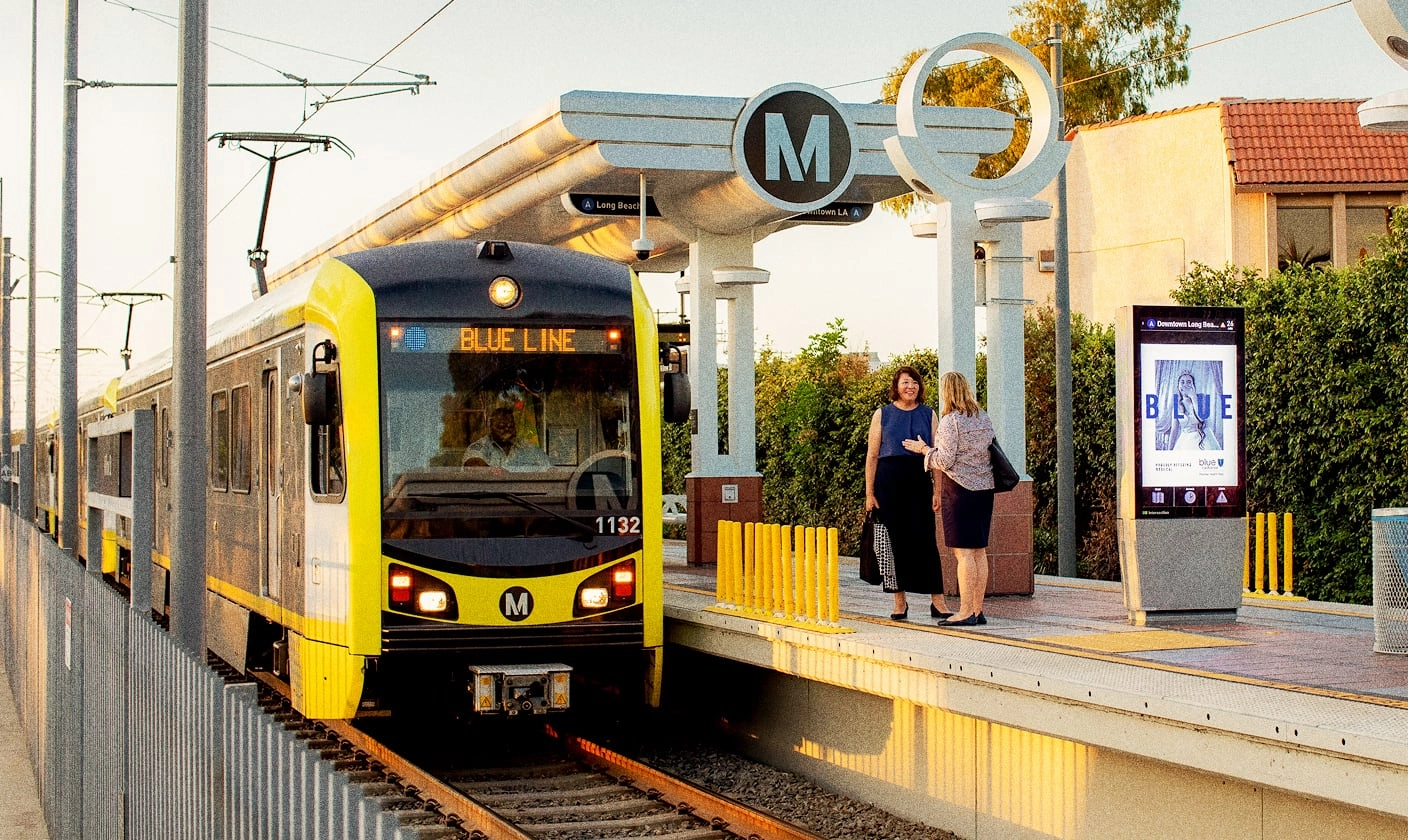
The Platform Environment: Three Light Zones
Before picking a panel, map the station into light zones. The mistake most specifiers make is using a single brightness level for the whole platform.
Zone A — Fully indoor (underground platforms, covered concourses): 200–500 lux. Panels here need 1,000–1,500 nits but still run 24/7 through dust, humidity, and vibration. A standard 16:9 monitor is the wrong shape for the narrow mounting slots built decades before flat panels existed.
Zone B — Semi-outdoor (canopy-covered platforms, glass-roof sections): Daytime glare, thermal swing, and condensation risk. Target 1,500–2,500 nits with optical bonding and AR coating. Night-time drops to 300–500 nits via ambient-light sensing.
Zone C — Fully outdoor (open-air platform ends, entrance totems): 100,000+ lux direct sun, rain, and vandalism. This is the 2,500–5,000 nits zone with IP65/IP66 sealing, IK10 glass, and Hi-Tni panels.
The biggest cost driver is the gap between Zone A and Zone C — roughly a 20× brightness difference in raw lux and a 2–4× difference in nits once you account for reflection and contrast.
Three Platform Display Types
Platform Departure Boards
Mounted 2.0–2.5 m up on structural beams, these show next-train, destination, and platform number. Overhead mounting keeps them readable from anywhere on the platform and out of reach of ground-level impact.
Semi-outdoor canopy units: 1,500–2,500 nits + optical bonding + AR coating; auto-dim to 300–500 nits at night
Underground units: 1,000–1,500 nits stretch-bar (1920×360–540) to fit low ceilings; 178° IPS viewing
Open-air ends: 2,500–5,000 nits, IP65 front, IK10 glass
Platform Edge Strips
Running along the platform edge or under the canopy, these ultra-wide bars show 4–6 route lines in a 150–200 mm height slot that a 16:9 panel cannot fill. Native stretch-bar ratios (1920×360, 3840×360, 1920×540) use 100% of active pixels — cropping a 16:9 panel wastes 60–80% of the backlight and deepens the chassis to 40–60 mm.
Covered edge: 28″–37″ stretch, 1,000–1,500 nits, IP54
Open edge: 43″–49″ stretch, 2,500–4,000 nits, IP65/IP66, optical bonding mandatory
Mechanical notes: a longitudinal stiffener rib prevents bowing; mount points every 200–300 mm; an aluminum backplate conducts heat along the chassis; EPDM anti-vibration pads absorb the low-frequency shock of passing trains while sealing against moisture.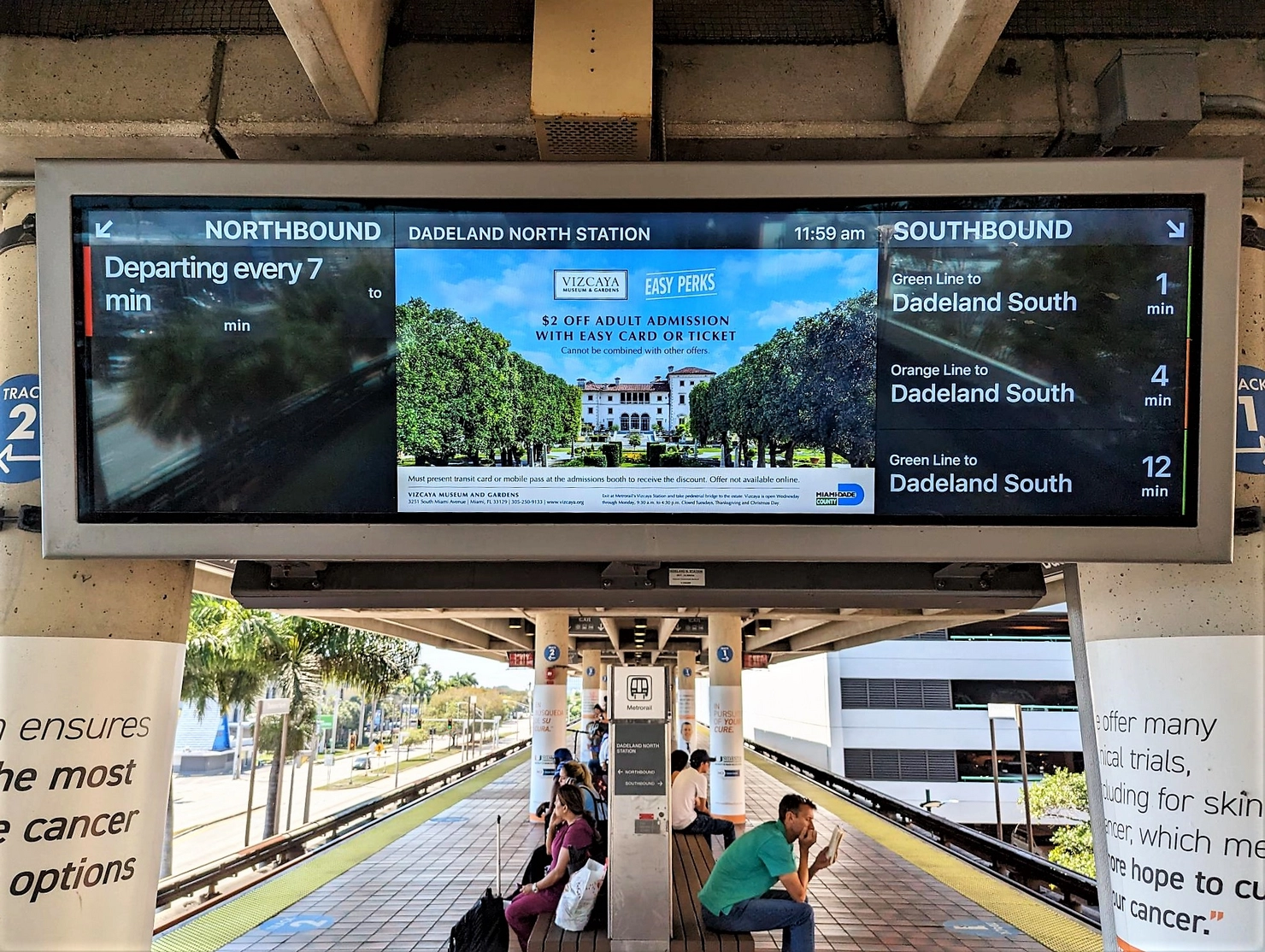
Open-Air Platform Ends and Entrance Totems
Street-level, fully exposed. Require 2,500–5,000 nits, IP65/IP66, IK10 (4–6 mm tempered glass), and Hi-Tni panels with a clearing point ≥110°C so the liquid crystal never blackens under sustained solar load. Stretch-bar ratios fill the narrow vertical face of a totem without the pixel waste of a 16:9 crop.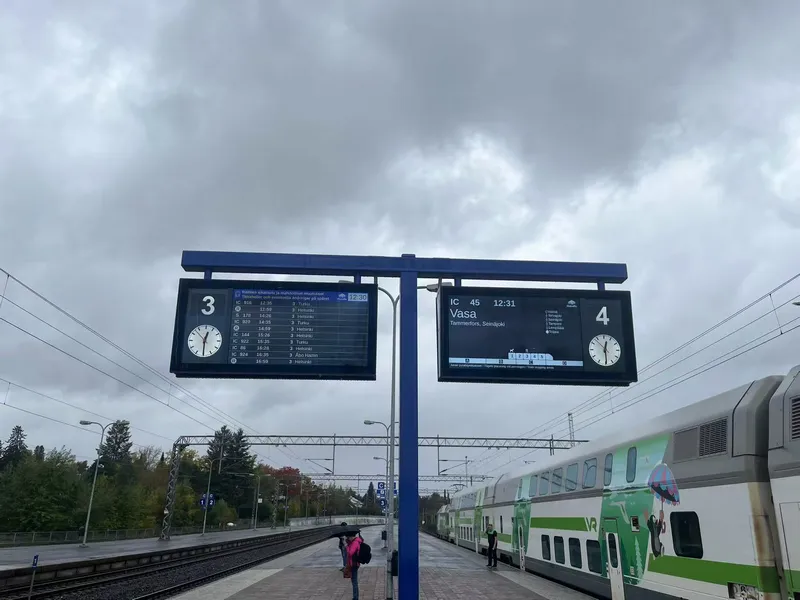
The Specs That Actually Matter
| Parameter | Zone A (indoor) | Zone B (semi-outdoor) | Zone C (open-air) |
|---|---|---|---|
| Form factor | Stretch bar 1920×360–540 | Stretch bar / 43″–55″ | 43″–65″ + stretch bar |
| Brightness | 1,000–1,500 nits | 1,500–2,500 nits | 2,500–5,000 nits |
| Panel | IPS / ADS | IPS + AG coating | Hi-Tni |
| Optical bonding | Recommended | Recommended | Required |
| Front seal | IP54 | IP65 | IP65 / IP66 + EPDM |
| Impact | IK08 | IK10 | IK10 |
| Operating temp | 0°C to +50°C | –20°C to +70°C | –20°C to +70°C |
| Auto-dimming | Optional | Recommended | Required |
| Backlight life | up to 50,000 hrs | up to 50,000 hrs | up to 50,000 hrs |
Hi-Tni is non-negotiable in Zone C. A standard LCD blackens permanently at roughly 70–80°C panel temperature — routinely exceeded under direct sun. Hi-Tni liquid crystal raises the clearing point to ≥110°C. The –20°C to +70°C range for outdoor zones covers most climate deployments.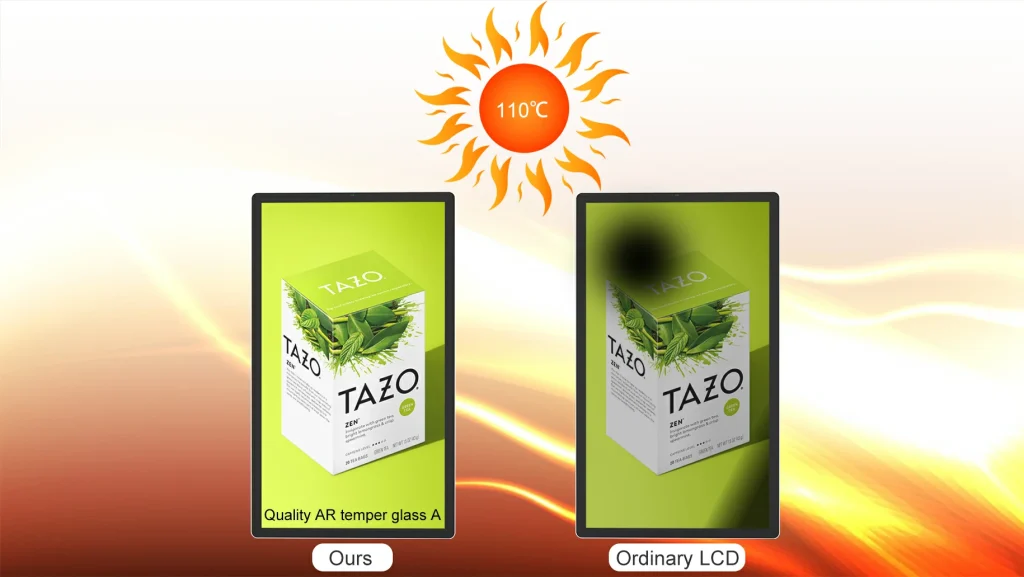
Optical bonding is what makes brightness usable. Without it, the air gap between cover glass and panel reflects 4–8% of ambient light back at the viewer — exactly the glare that washes a 3,000-nit screen into invisibility. Bonding (OCA or OCR) drops surface reflection below 1% and prevents internal condensation fog during humidity swings.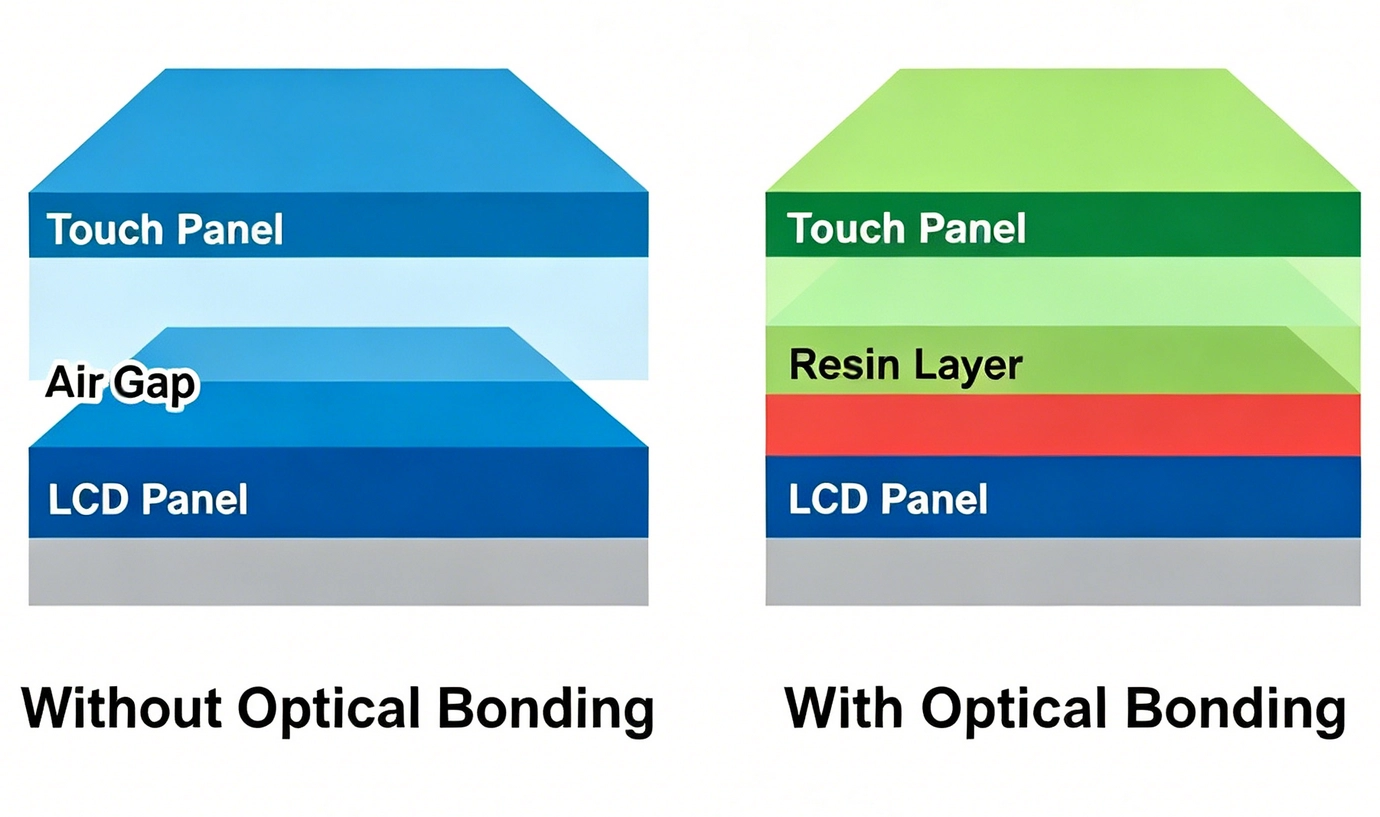
Vibration-proof the I/O. Trains arrive every 3 minutes. A friction-lock connector works loose after roughly 20,000 cycles. Use screw-locked connectors, through-hole PCB, thread-locking compound, and EPDM gaskets as the baseline. Optical bonding also prevents internal condensation.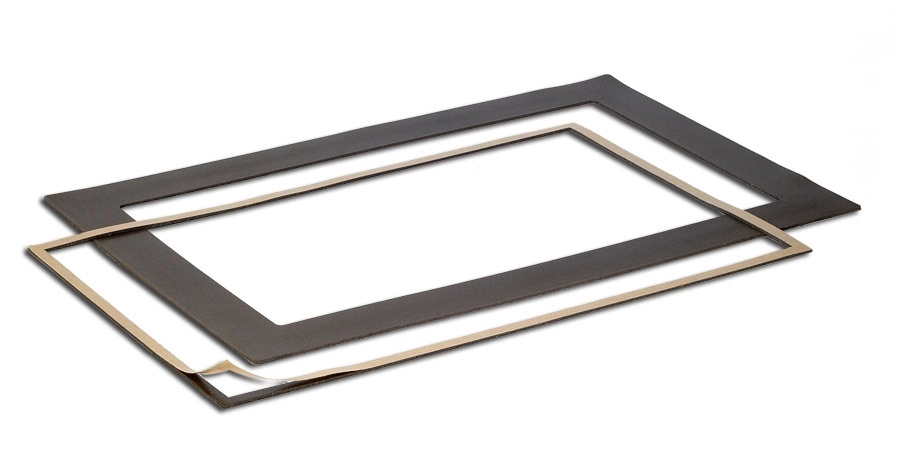
Four Failures That Kill Platform Deployments
Solar blackening — using a standard panel in Zone C. Fix: Hi-Tni (≥110°C clearing).
Condensation fog — sealed housing without optical bonding. Fix: optical bonding.
Connector loosening — friction-lock I/O on a vibrating structure. Fix: screw-lock + thread-lock.
Reflection washout — high nits but no AR/AG and no bonding. Fix: AR/AG + OCA/OCR bonding.
Platform Display Hardware from a Dedicated Manufacturer
Operating a 4,000 m² ISO 9001-certified facility since 2009, we build rail platform display hardware as a system:
Range: Stretch bar from 28″ to 49″, standard formats from 43″ to 65″ — 500–5,000 nits factory-calibrated
Panels: Industrial Hi-Tni (≥110°C clearing), IPS/ADS, OCA/OCR optical bonding, AR/AG surface
Enclosure: IP65/IP66 sealed, IK10 tempered glass, aluminum chassis as heat sink
Certifications: CE, RoHS, FCC. IP65/IP66 per IEC 60529, IK10 per IEC 62262
Interfaces: LVDS / eDP / HDMI / Ethernet, screw-lock I/O
Supply: 3–5 year product-life commitment, sample in 10 working days, bulk in 15–25
Need a spec that survives your worst station? Explore RisingStar's sunlight-readable display solutions or view the full industrial display product range to start a configuration review.