
 English
 Deutsch
 Français
 Español
 Italiano
 한국어
한국어
 日本語
日本語
 Português
 Suomi
Suomi
 Dansk
Dansk
 Polski
Matched to the zone
Brightness, sealing, and panel technology are specified per location — an underground platform board and a street-level entrance totem are not the same product.
OEM/ODM PID display hardware for railway and metro networks — platform departure boards, ticket machines, wayfinding, platform-edge strips, and onboard route line. Stretch bar and standard LCDs, 500 to 5,000 nits, IP65/66, -20°C to 70°C.
Talk to an Engineer Explore ApplicationsA metro line runs 80 to 200 displays across environments that share nothing but a timetable. We engineer the hardware that keeps all of them readable, online, and serviceable — for the life of the project.
Brightness, sealing, and panel technology are specified per location — an underground platform board and a street-level entrance totem are not the same product.
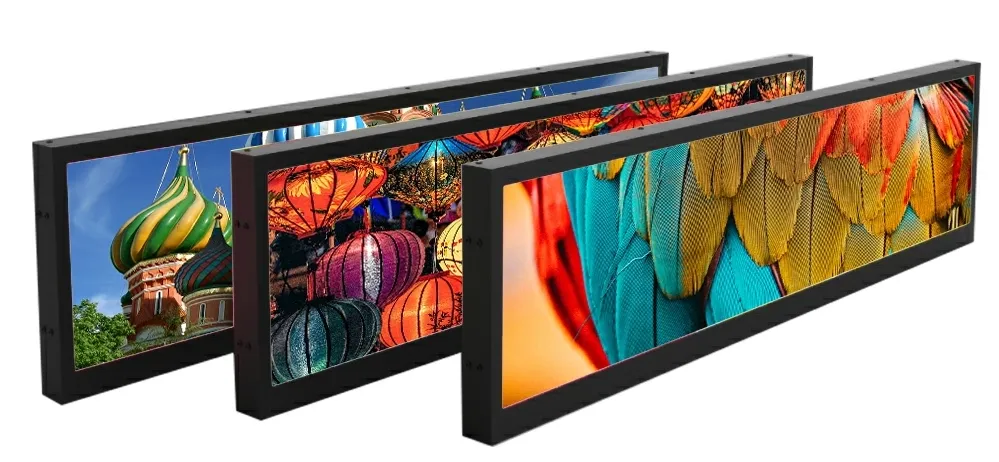
Standard 16:9 won't fit a platform-screen-door header or a carriage ceiling. We cut and re-drive stretch-bar panels from full Tier-1 glass — not cropped 16:9 units.
Screw-lock connectors, thread-locked fasteners, EPDM gaskets, and in-house optical bonding — because the failure mode that returns a display is rarely brightness. It's vibration, fogging, and seal breakdown.
Eight deployment points
Every point on the passenger journey needs a different display. Below is the hardware configuration we specify for each — sized, brightened, and sealed for the actual location.
Six points from the street entrance to the platform edge.
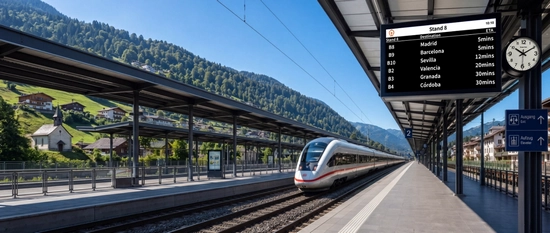
Mounted on the platform edge or under the canopy. A passenger has three seconds to scan, find the train, and pick a platform — readability is non-negotiable.
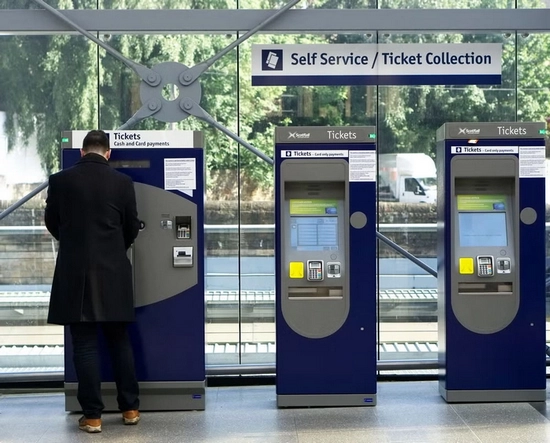
A busy TVM handles 4,000+ transactions a day, often with wet hands or gloved fingers. Touch must register accurately in both, and the panel must survive the punishment.
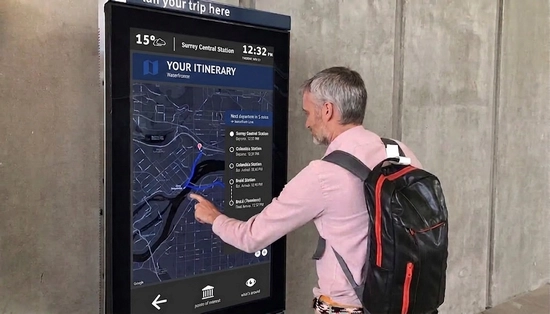
For passengers who are lost, not commuting: longer sessions, map pinch-to-zoom, multi-language. The display must handle smooth gestures and meet accessibility contrast at arm's length.
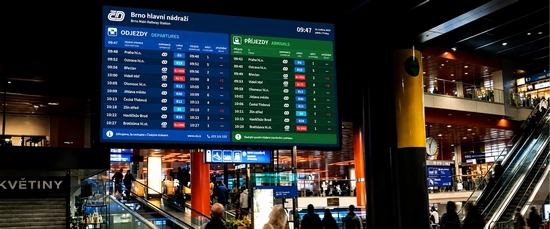
High on a departure-hall wall or ceiling-suspended, running departure times, service alerts, advertising, and emergency notices in a multi-zone layout. A brightness dip is immediately visible.
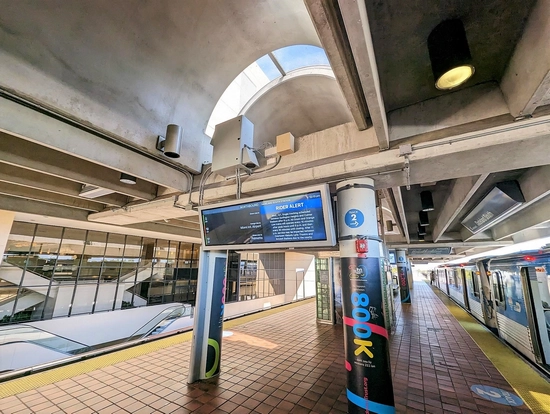
The narrowest display in the station — a slot along the platform edge or under the canopy, 150–200 mm tall max. A 16:9 panel simply does not fit. Stretch-bar is the only honest answer.
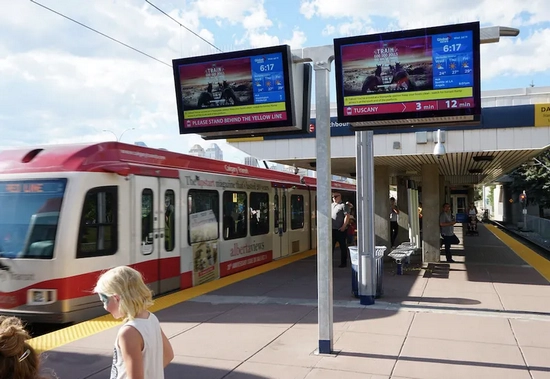
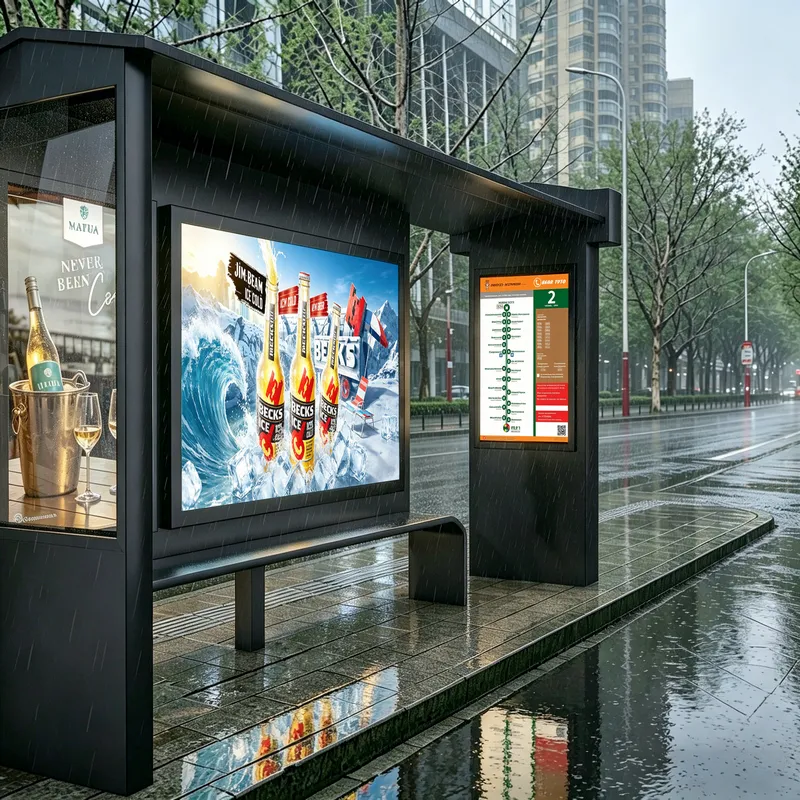
The street-facing identifier — first and last screen a passenger sees. It faces 100,000+ lux of midday sun, monsoon rain, and vandalism. This is the harshest zone in the network.
Curved interiors and narrow mounting leave no room for standard panels.
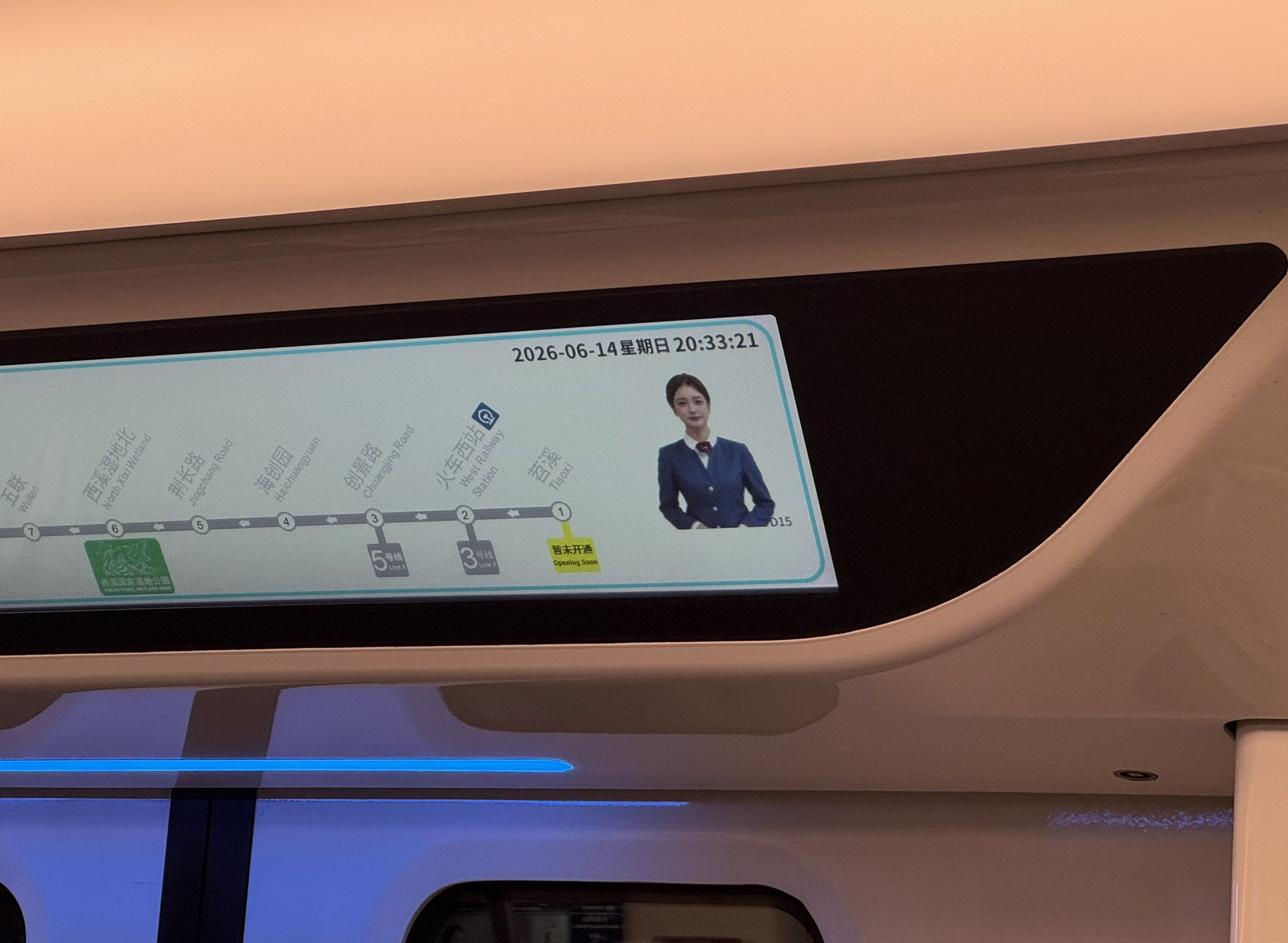
Mounted centre-ceiling, showing the next three stops as a left-to-right line the passenger reads while standing. Curved carriage roofs mean a rectangular monitor won't fit the cutout.
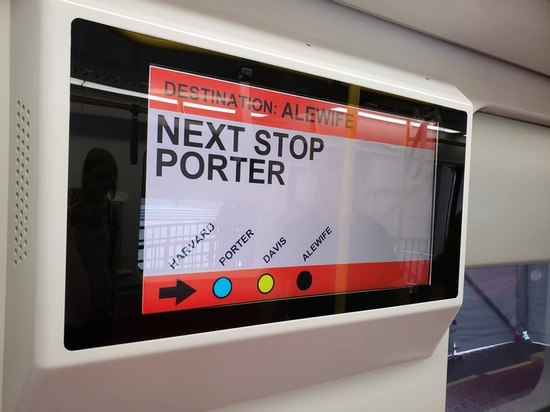
Above the door or along the sidewall — a narrow curved surface that shows next-stop, transfer, and emergency messaging. The footprint is too thin for anything but a stretch panel.
Specify by environment, not by catalog
A display engineered for an indoor mezzanine will blacken, fog, or shake loose within a single summer at a street-level entrance. Mixing zones is the most common — and most expensive — error in a PID project.
| Zone | Location | Ambient Light | Brightness Spec | Panel Technology | Primary Threat |
|---|---|---|---|---|---|
| A · Fully Indoor | Underground platforms, mezzanines, ticket halls | 200–500 lux fluorescent | 1,000–1,500 nits | Standard IPS / ADS | Dust, humidity, vibration, 24/7 uptime |
| B · Semi-Outdoor | Covered entrances, vented concourses, skybridges | Variable, sun-exposed part of day | 1,500–2,500 nits | IPS + anti-glare coating | Glare, temperature swing, condensation |
| C · Fully Outdoor | Entrance totems, open-air platform ends | 100,000+ lux direct sun | 2,500–5,000 nits | Solar-resilient (≥110°C clearing point) | Solar blackening, rain, vandalism |
Standard liquid crystal clears at ~70–80°C. Solar loading pushes a sun-exposed totem past that point, causing irreversible blackening — exactly when brightness is needed most. Solar-resilient panels raise the clearing point to ≥110°C.
An unbonded display on a Zone B or C location condenses moisture between the LCD and cover glass within weeks — a haze layer no external wipe can reach. Optical bonding removes the air gap entirely and cuts reflection by ~80%.
A friction-only HDMI or USB backs out half a millimetre within ~20,000 train cycles — enough to lose signal intermittently. Screw-lock connectors, through-hole PCBs, and thread-locked fasteners are the minimum, not an upgrade.
The capabilities below are what differentiate a PID-grade display from a consumer monitor placed in a station. Each one maps to a specific field-failure mode we have engineered out.
500–5,000 nits with ambient light sensors — readable in direct sun, dimmed overnight to extend backlight life and cut energy cost across a 200-display network.
Formulated with a higher liquid-crystal clearing point (≥110°C) to prevent blackening defects under sustained solar loading — the difference between surviving a desert summer and an August RMA.
Fully sealed enclosures against heavy rain, dust, and salt spray — with EPDM gaskets and industrial breather vents to equalize pressure and prevent internal condensation.
OCA sheet or OCR liquid resin, performed inside our ISO 9001 facility — eliminates the air gap that causes fogging and cuts reflection by ~80% without adding a single nit of backlight power.
Industrial-grade stability across all global climates, from Arctic cold to desert heat — with optional PTC heating for reliable cold-start below 0°C.
Glove mode, wet-hand rejection, palm and water-drop rejection — the only touch technology that survives public-transit duty cycles on ticket machines and wayfinding kiosks.
Screw-lock HDMI/USB/DC, through-hole PCB connectors, thread-locked chassis fasteners, and EPDM dampening gaskets — standard on every transit-qualified unit.
Industrial-grade WLED backlighting rated for 24/7 continuous operation — minimal brightness drift over lifespan, with auto-dimming to push toward rated life.
LVDS, eDP, HDMI, DP, dual RJ45 with loop-through, RS-232, and external ambient-sensor ports — standard interfaces that integrate with existing PIS from Siemens, Alstom, or Thales without adapters.
Product Lines
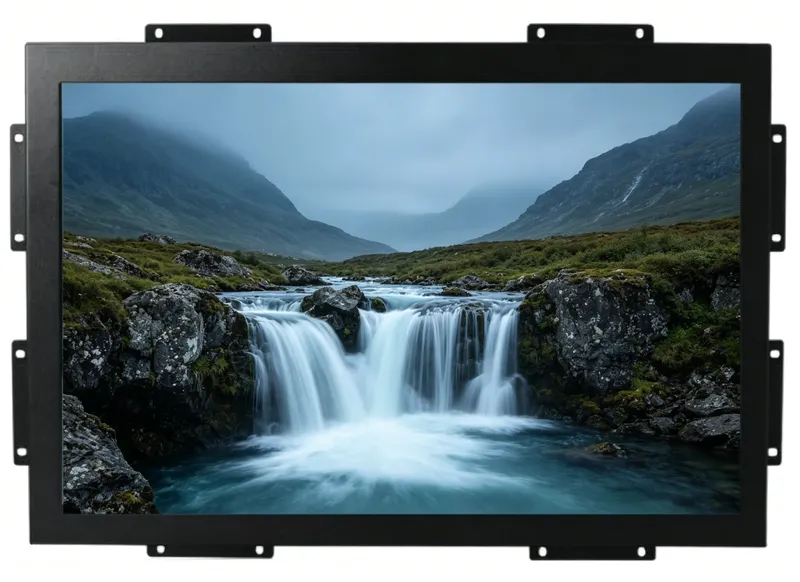
From stretch-bar panels for transit to outdoor-rated enclosures for the harshest environments.
A PID display is a node on a station-wide network, not a standalone device. Standard LVDS, eDP, HDMI, and Ethernet interfaces support plug-and-play integration with major PIS platforms — including those from Siemens, Alstom, and Thales — without custom adapters. Dual RJ45 with HDMI loop-through allows daisy-chain across a platform; RS-232 supports centralized remote management.
We can pre-install your preferred OS at the factory — Windows 7/10/11 IoT, Linux (Ubuntu / Debian), or Android 11 through 14 — with full BSP and driver support, so the unit runs the moment it arrives.
Discuss your integrationManufacturing partner
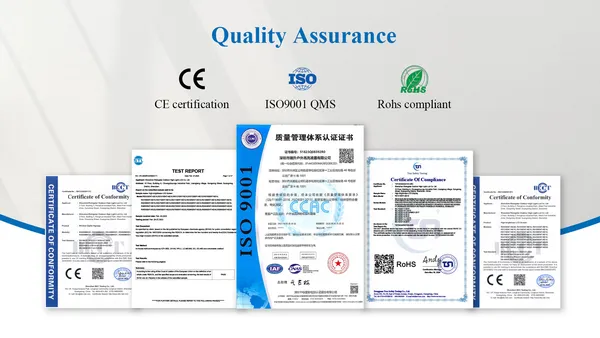
RisingStar has engineered high-brightness and stretch-bar LCD for transit PID applications since 2009. From a 4,000 m² ISO 9001-certified facility in Shenzhen — with a Class 10,000 cleanroom, 100% factory inspection, and 72-hour high-temperature aging — we configure displays for every zone a station contains.
From prototyping to deployment, our experts are here to help you specify the right display for your environment and goals.
Talk to an Expert Product CenterThe questions integrators and engineering teams ask before signing off on a transit deployment.
It depends entirely on location. Underground platforms and concourses need 1,000–1,500 nits. Semi-outdoor covered entrances need 1,500–2,500 nits. Fully exposed street-level entrances need 2,500–5,000 nits with solar-resilient panels.
Standard 16:9 panels do not fit the physical constraints of a transit environment — platform-screen-door headers, ceiling route lines, and carriage interiors are narrow horizontal slots.
Standard liquid crystal clears at roughly 70–80°C. Direct solar loading pushes a sun-exposed entrance totem past that surface temperature, causing irreversible blackening defects.
Every passing train sends a low-frequency shockwave through the station structure. Over months, friction-only connectors walk loose, solder joints crack, and chassis fasteners back out.
Yes. Standard LVDS, eDP, HDMI, and Ethernet interfaces support plug-and-play integration with major PIS platforms without custom adapters.
Please use the form to send us
detailed requirements