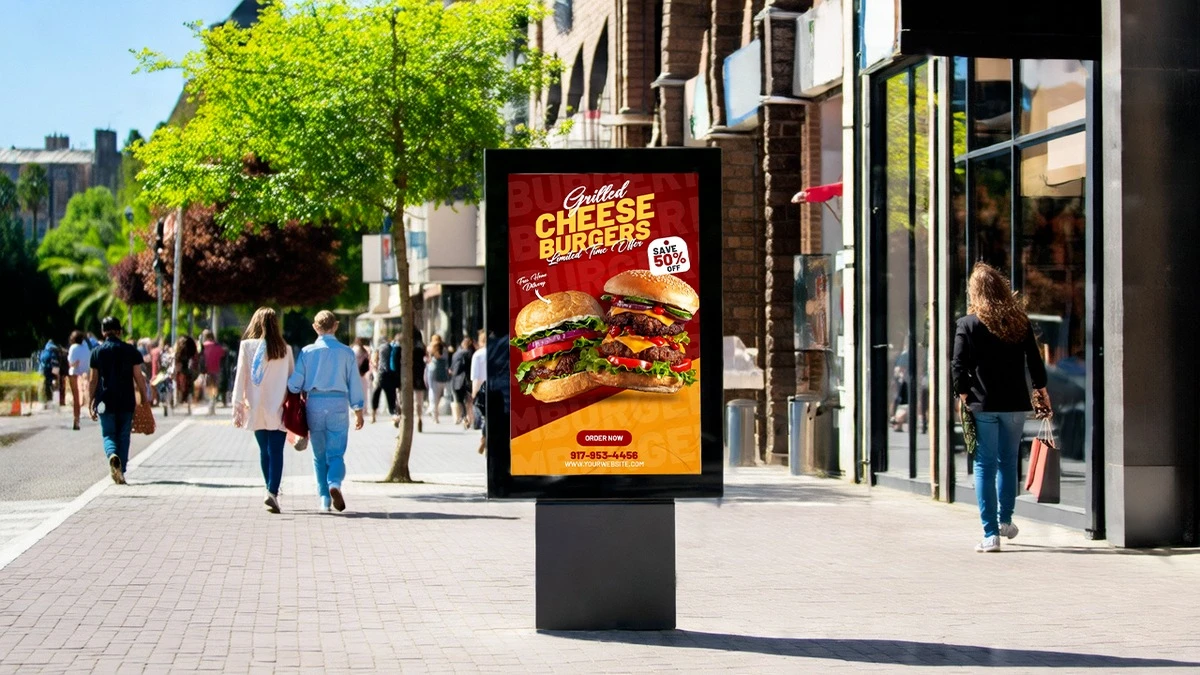
Quick answer: Two manufacturer documents from 2024 and 2025 point to four specifications buyers should verify on a window facing display: 3,000–4,000 nits with the operating mode stated, anti-discoloration evidence, polarized-sunglass behavior and slim or dual-sided construction. Both are vendor-published material. Use the figures as datasheet questions, then confirm them on the exact model.
Digital displays for retail windows changed quietly between 2024 and 2025. Screen sizes and pixel counts barely moved; what changed was the set of claims manufacturers were willing to publish and verify. Several widely repeated figures carry footnotes that change their meaning, so the catalog is worth reading in full.
The two source documents
Signal 1: what a window facing display publishes in nits
Samsung's catalog lists its Window Display series at 3,000–4,000 nits, with a footnote stating that the OMN-DS model is rated 3,000 nits outward and 1,000 nits inward for its dual-sided configuration. LG's press release describes the 75-inch XS4P at up to 4,000 nits with 3,840 × 2,160 (UHD) resolution. For fully outdoor products, the same documents give different figures: Samsung's Outdoor Display is described as greater than 3,500 nits, LG's XE3P at up to 3,500 nits and the 86-inch open-frame 86XF3SK at up to 3,300 nits. These are manufacturer ratings; neither document states the measurement method or warm-up time behind the nits figure.
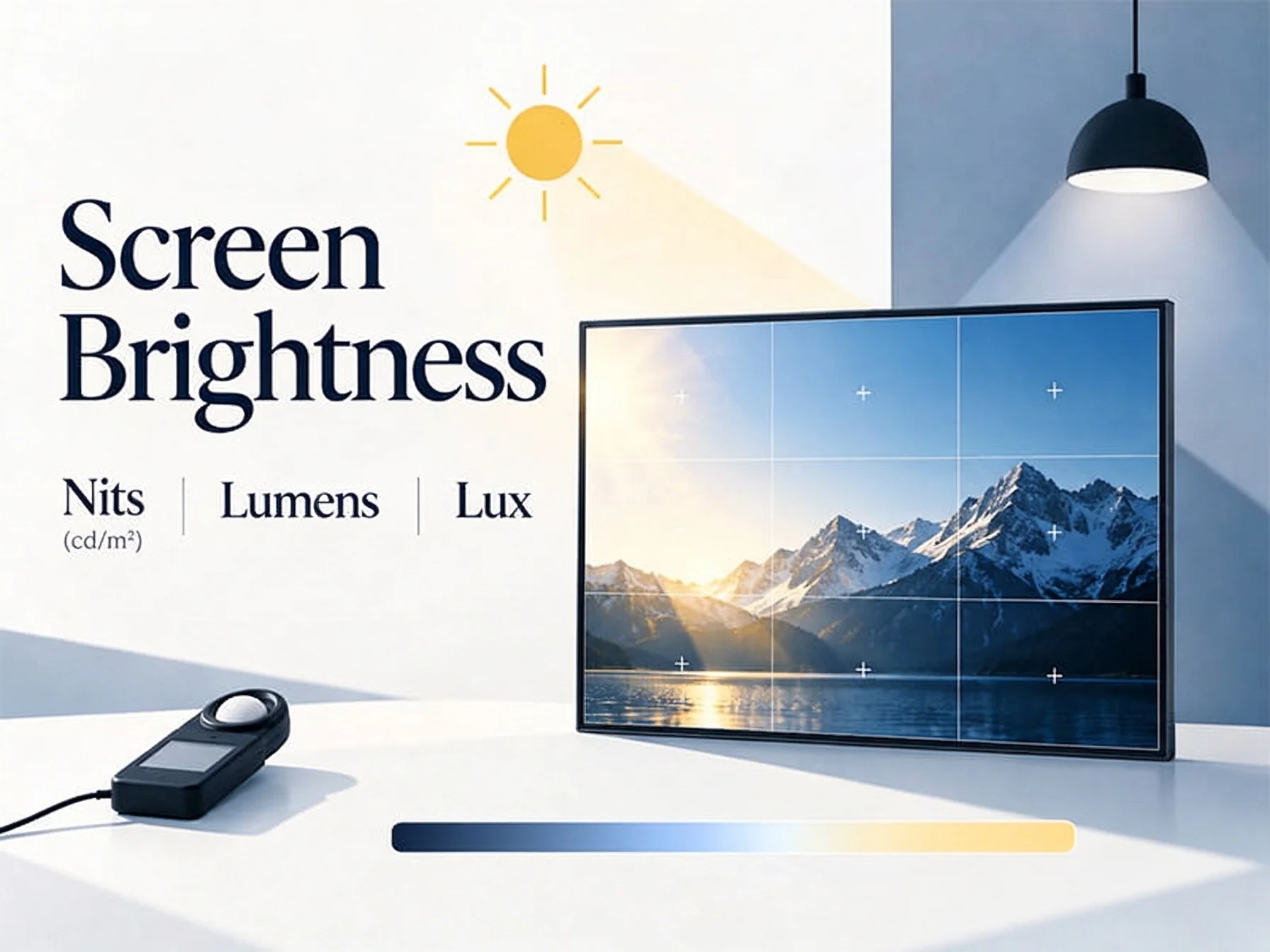
Brightness labels shift between catalogs. What a storefront specification needs is the figure paired with the operating mode that produces it: LG's quiet mode is explicitly described as operating at 2,500 nits with minimal fan noise — a lower figure than the headline 4,000 nits, and one that matters in a quiet retail interior. Panels below 1,000 nits serve shaded interiors, not sunlit glass.
Signal 2: anti-discoloration became a verifiable claim
LG's April 2025 release announces that UL Solutions independently assessed and verified LG's anti-discoloration technology, and states that LG is the first in the industry to achieve this UL verification for digital signage anti-discoloration. The release also says that prior to this there were no internationally recognized standards or testing methods for measuring resistance to screen yellowing.
For a buyer, the change is the move from an adjective to a testable property. Screen yellowing is a long-standing failure mode for a window display screen behind sunlit glass, and a claim tied to a named verification is more useful than an unquantified "UV resistant" label on a digital signage display. The verification scope applies to the products LG assessed; read it before applying the claim to any other brand.

Signal 3: polarized-sunglass readability is specified
Samsung's catalog lists "Polarized sunglass support" as a highlight for both its Outdoor and Window Display series. Its own footnote states that, due to the characteristics of tempered glass, a certain pattern may be seen when wearing polarized sunglasses. The feature is a design consideration with a known limitation.
This matters for street-facing retail because shoppers often view a window through both glass and sunglasses. A datasheet answer should describe the glass stack and polarization behavior rather than a simple yes or no.
Signal 4: slim and dual-sided structures became common design features
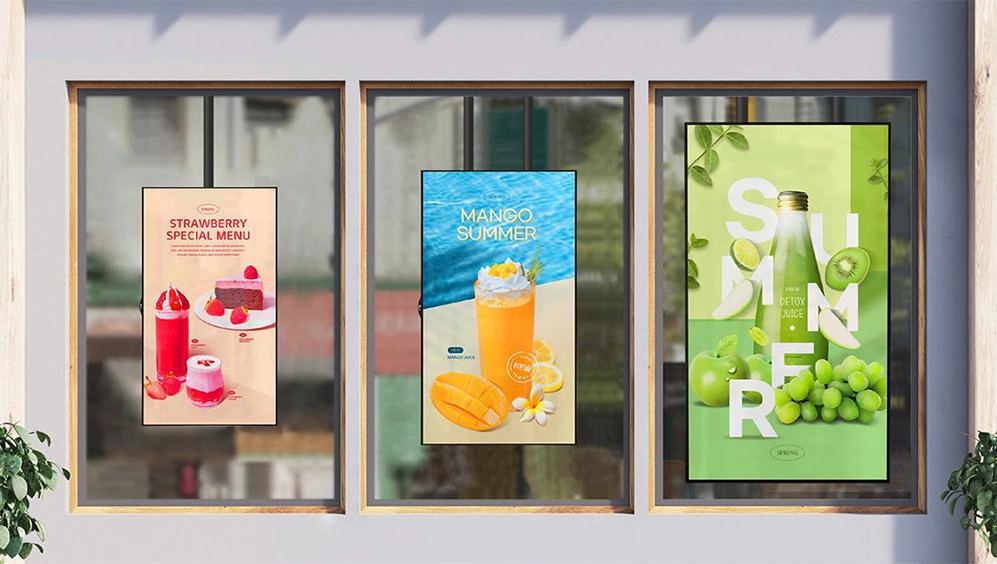
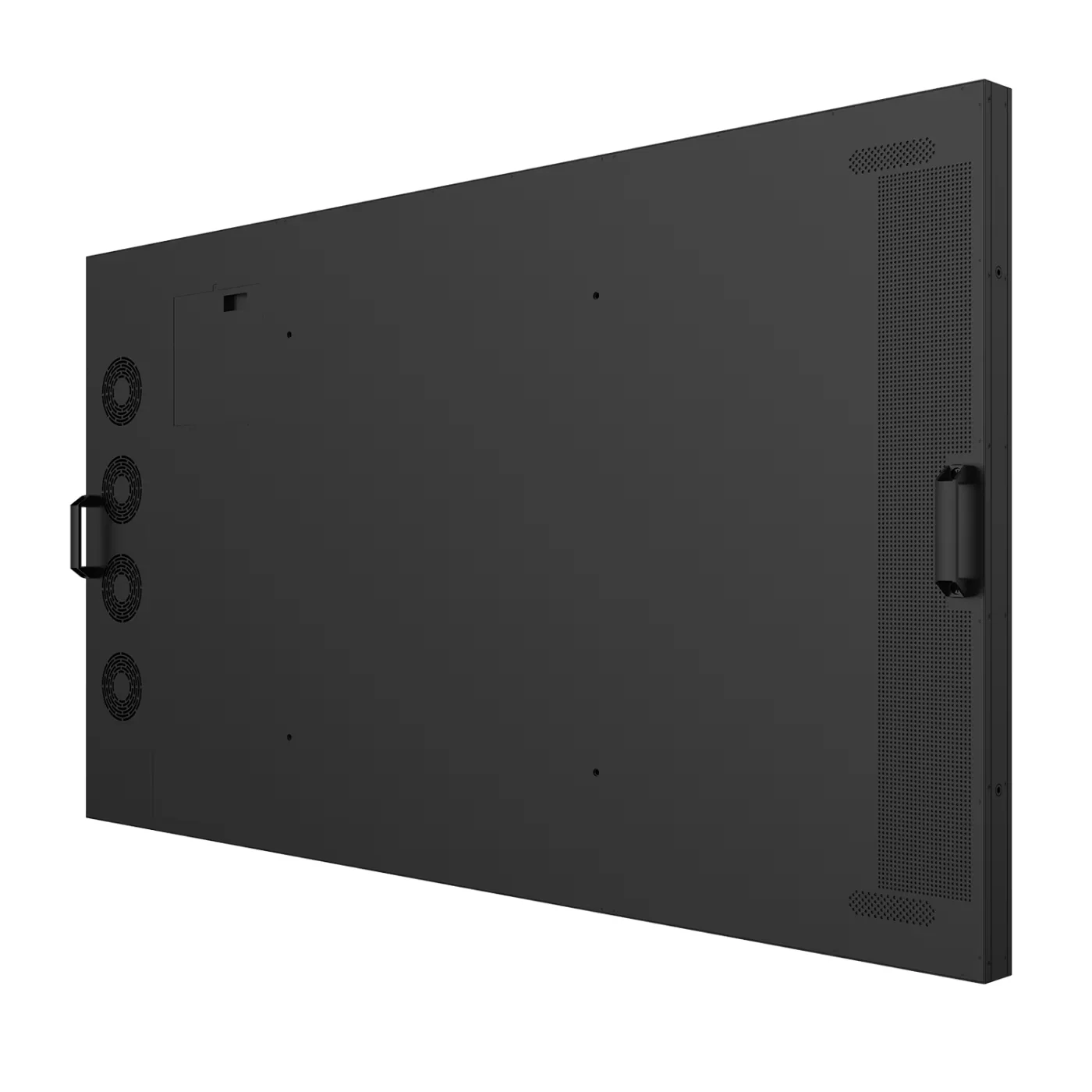
Samsung describes a slim design, a cable guide, and embedded Wi-Fi. Its dual-sided screen is available only on the OMN-DS series. LG describes the XS4P as thinner than conventional models, allowing closer installation to windows, and notes that standard UHD signage can be attached to its back so it functions as a double sided window display. LG also lists LAN daisy chain control, Wi-Fi, Bluetooth and beacon capability, and an operating range of 32–104 °F (0–40 °C).
For chains running window digital signage across many sites, these structural details often decide a project as much as brightness does: how close the unit can sit to the glass, how the cables are routed, whether an inward-facing screen can be added, and how many units one controller can manage.
What buyers should put on the checklist
- Brightness with its mode. Ask for rated nits, the operating mode, the measurement method and any quiet or auto-brightness setting.
- Anti-discoloration evidence. Ask what test or verification supports a yellowing claim, and over what duration.
- Protection wording. Samsung's catalog states that an IP56 rating under IEC 60529 does not mean the device is waterproof, and notes that its OH24B model is IP66-rated. For impact glass, ask for the IK code under IEC 62262. Request the exact code per model.
- Operating range and thermal behavior. LG gives 0–40 °C for the XS4P window-facing product; outdoor-rated products are specified over wider ranges. Confirm which envelope applies to the installation.
- Integration details. Power, mounting depth from glass, contrast ratio, interfaces (LVDS, eDP or HDMI), dimming method, content platform, remote management and dual-sided options.
Distributor catalogs file these launches under different names. A window facing LCD display, a double sided window display and a high brightness window display can all describe the same storefront project, while an outdoor digital advertising display usually refers to a different enclosure class. The figures above apply to the window-facing category; a fully outdoor display with an IP65 or IP66 enclosure is specified against a different ingress and thermal envelope. Retailers planning window facing digital signage should confirm the content platform and remote management before ordering, because those decisions outlive the hardware.
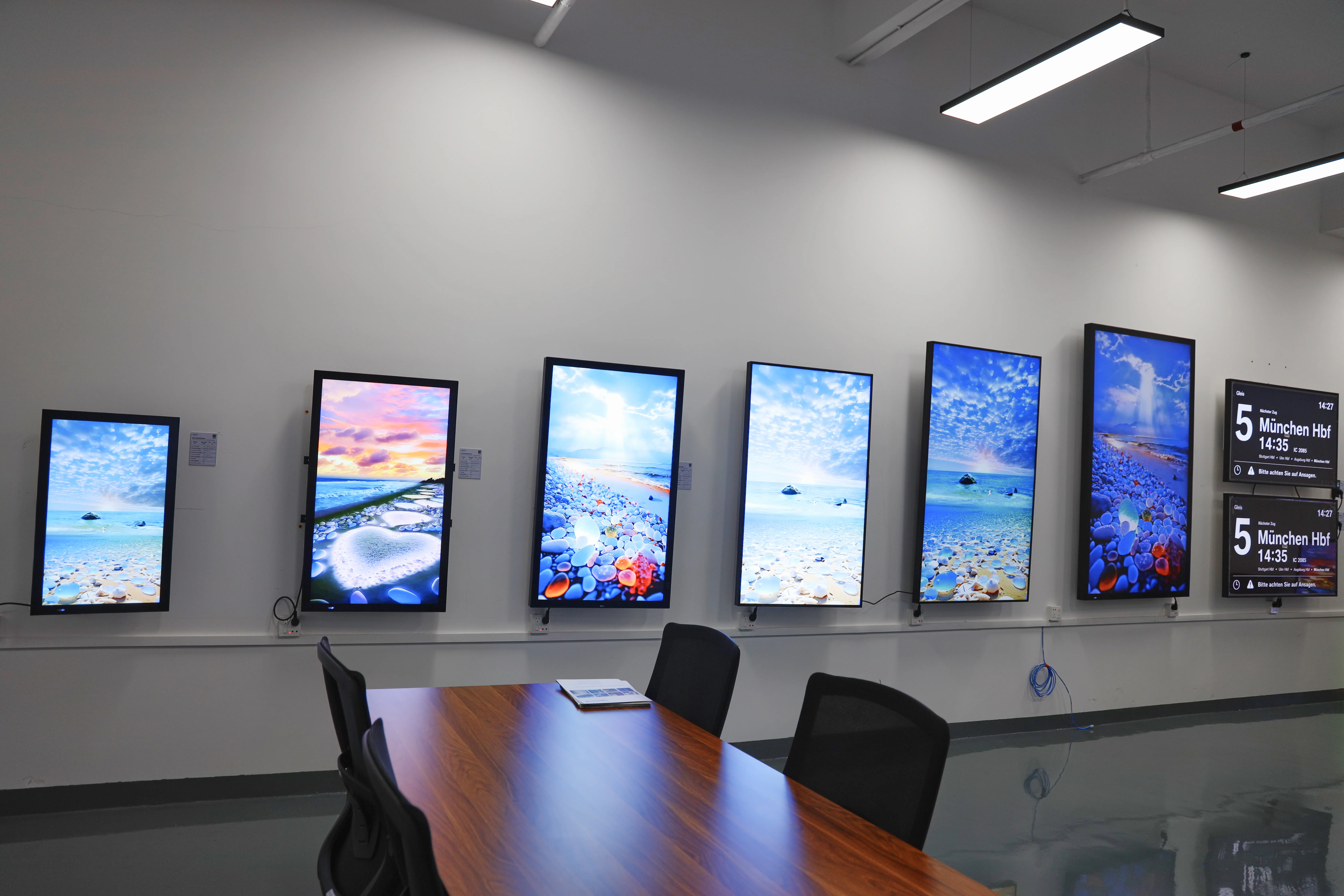
RisingStar's window-facing category covers 21.5–86 inch sizes at up to 5,000 nits, with dual-sided and open frame display options. Model datasheets state the brightness figure, the operating mode and the test conditions for each product.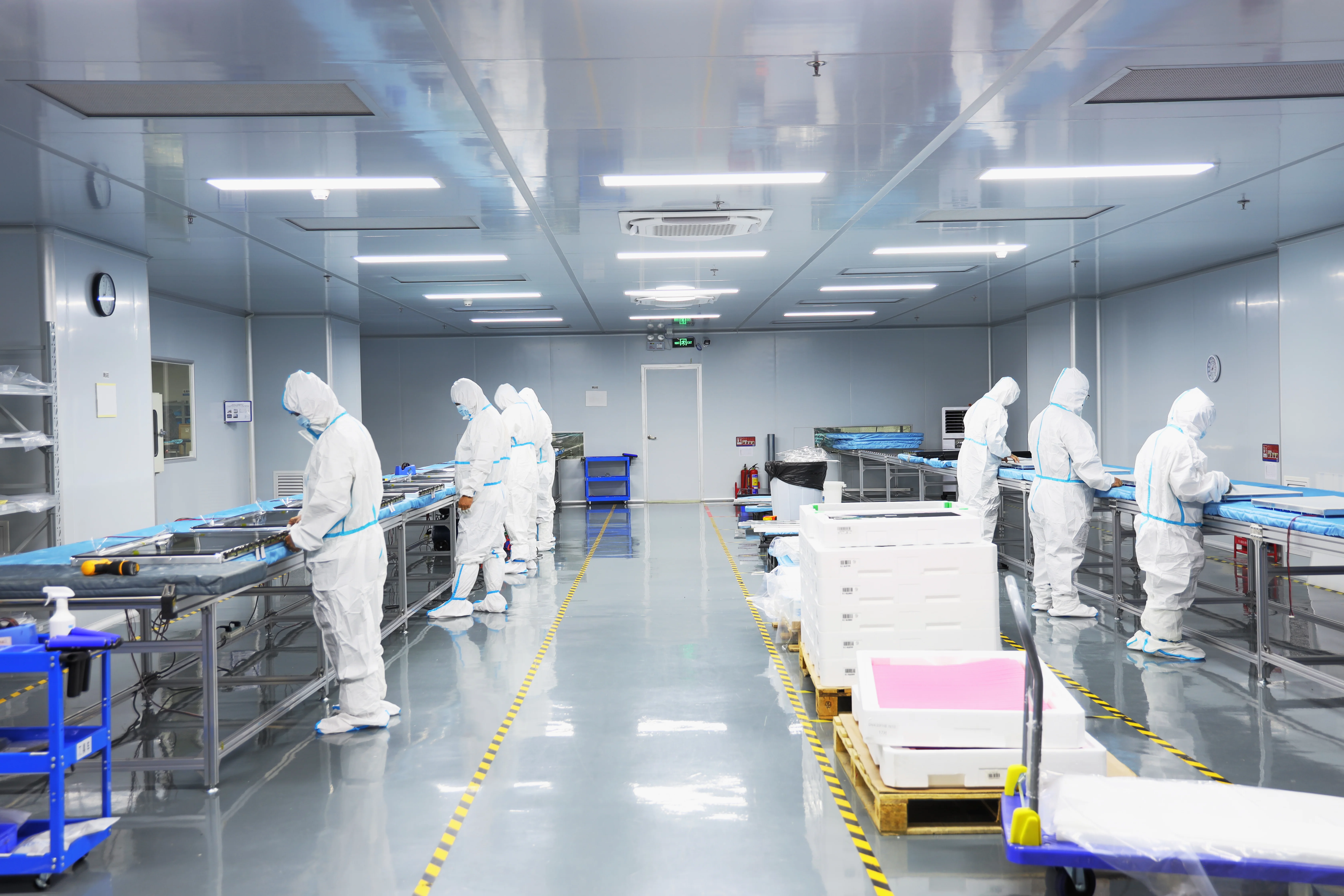
Frequently asked questions
Is 4,000 nits necessary for every retail window?
No single figure applies to every storefront. The 3,000–4,000 nits range appears in the published window-facing products cited above; the appropriate value depends on glass type, orientation, reflected daylight and viewing distance. A site survey and a model datasheet should decide it.
Does IP56 mean a display is waterproof?
No. Samsung's 2024 catalog states that an IP56 rating under IEC 60529 means protection against dust and strong jets of water with limited ingress under defined test conditions, and that IP56 does not mean the device is waterproof.
Is anti-discoloration the same as anti-blackening?
Anti-discoloration addresses yellowing of the screen over prolonged sunlight exposure. Blackening refers to a display darkening under thermal stress. LG's release discusses anti-discoloration verification; its XE3P description separately mentions thermal measures intended to address black circles.
Which document should I use to compare two vendors?
Use each vendor's current datasheet for the specific model, and check the footnotes. Press releases and catalogs explain product positioning; they do not replace model-level technical documentation.
Sources
- Samsung Electronics, "2024 Samsung Display Solutions" catalog, Outdoor Display and Window Display sections and associated footnotes (manufacturer document, 2024).
- LG Electronics USA, "LG Debuts High-Brightness Outdoor Displays Featuring Groundbreaking Anti-Discoloration Technology", press release, 29 April 2025.
- RisingStar, Window Facing Displays category page, accessed 29 October 2026.