
The EV charger on a street corner has been running for three years straight. Rain, snow, 40°C heat waves, and the occasional car bumper—its 12.1-inch screen has seen it all. When a driver plugs in and taps the payment screen, the display wakes up instantly, readable even with the afternoon sun directly behind it.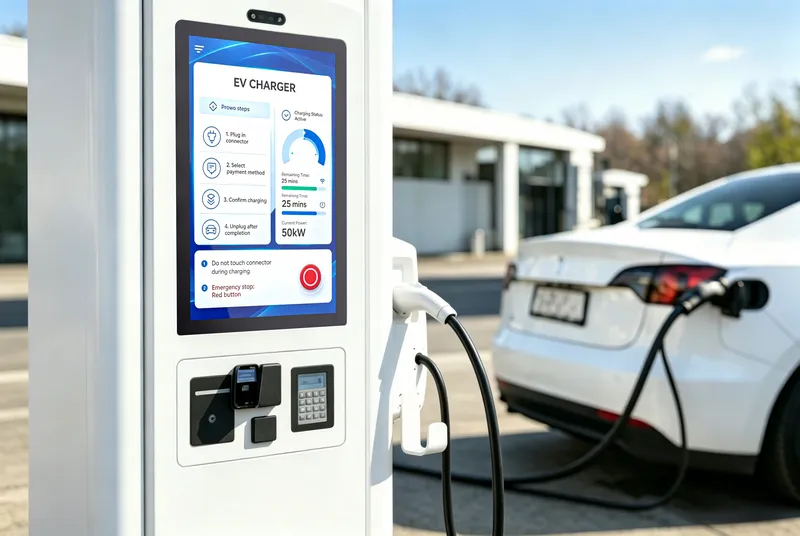
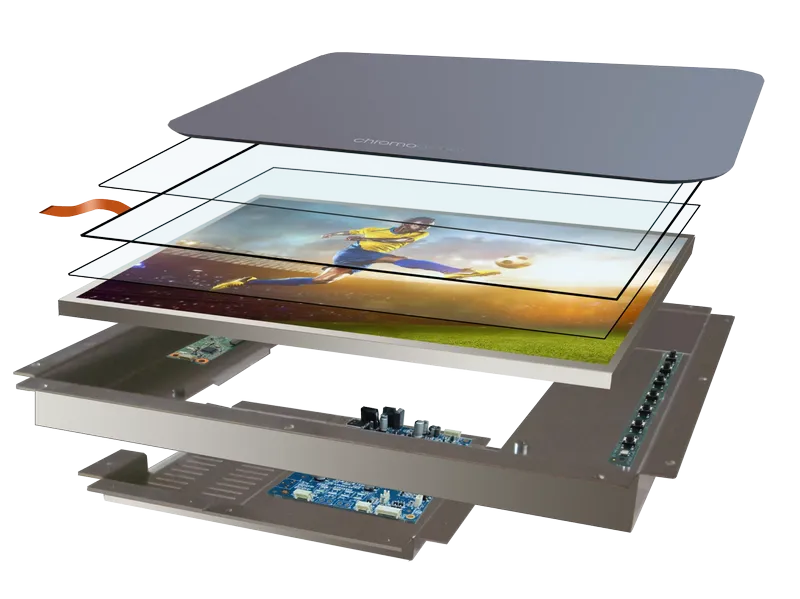
That reliability doesn't come from an off-the-shelf monitor. It comes from an open frame display built specifically for integration—no plastic housing, no desktop stand, just the LCD panel, backlight, driver board, and a metal chassis with pre-drilled mounting ears. The kiosk manufacturer controls the enclosure design, the sealing strategy, and the brand identity. The display disappears into the product.-(1).webp)
Quick Answers
What makes a 12.1 inch display truly sunlight readable? A minimum of 1,000 nits brightness combined with Hi-Tni liquid crystal technology (clearing point above 100°C) that prevents thermal blackening under direct solar radiation. Without both, the display will wash out or develop permanent dark patches within months.
Why choose an open-frame 12.1 inch display over a fully enclosed monitor? Open-frame designs give OEMs complete freedom over enclosure material and branding while simplifying front-panel IP65 sealing. The standardized mounting-ear pattern allows drop-in replacement without retooling the cabinet.
What is the single most impactful upgrade for outdoor readability? Optical bonding. A 1,000-nit optically bonded panel visually outperforms a 1,500-nit air-gap panel in direct sun—while consuming less power and generating less heat.
Why 12.1 Inches?
When you're designing an outdoor kiosk, every millimeter inside the enclosure is accounted for. The display needs to be large enough to show payment UIs, system dashboards, and route maps without forcing the user to scroll—but small enough to fit alongside the touch controller, driver board, power supply, and cabling.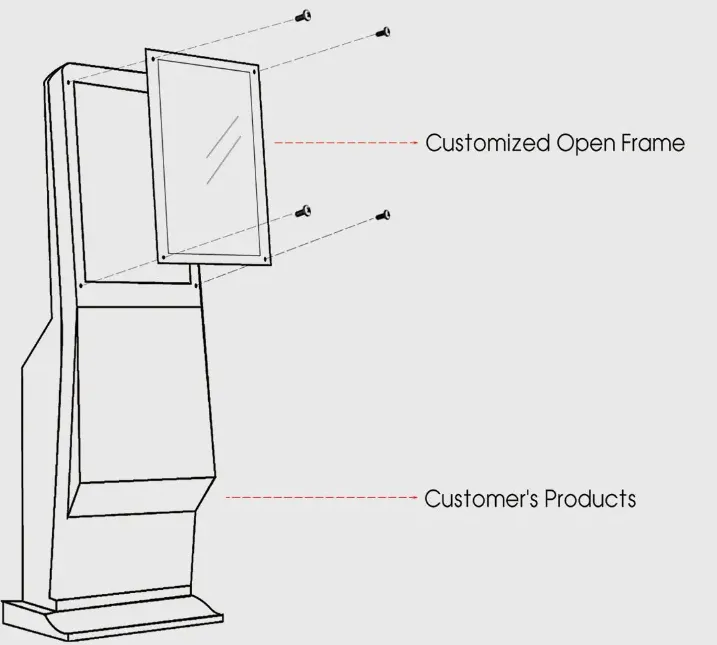
The 12.1-inch form factor hits that balance. At 1280×800 (WXGA, 16:10) or 1024×768 (XGA, 4:3), it delivers enough pixel real estate for multi-window interfaces and on-screen keyboards, yet its mechanical outline — roughly 260×204 mm with an 8.9 mm profile — fits comfortably inside EV charging pedestals, fuel dispenser cabinets, and legacy HMI enclosures.
But the real engineering challenge isn't fitting the screen. It's keeping it alive. A 12.1 Inch Sunlight Readable Display deployed outdoors survives thermal cycling from -20°C to 70°C and continuous vibration from nearby machinery or traffic. Standard 300-nit consumer panels fail on all three fronts within weeks.
Open Frame Architecture: Designed for Integration
The term "12.1" open frame display" describes a display module shipped without a decorative plastic housing. What you get is the LCD panel, LED backlight, driver board, and a structural metal bezel with pre-drilled mounting ears. For OEMs and system integrators, this is the cleanest path to a custom-branded outdoor terminal: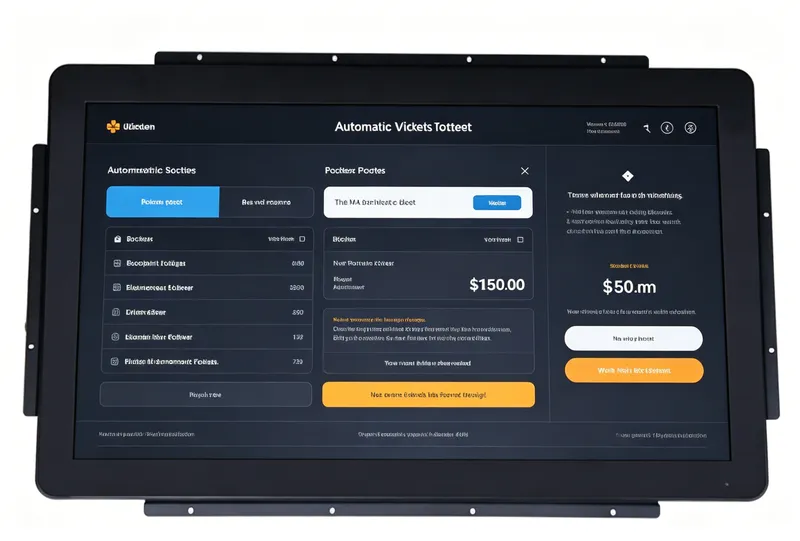
Enclosure freedom. The customer's cabinet becomes the display's bezel. Whether the final product uses 304 stainless steel for marine environments or powder-coated aluminum for smart city kiosks, the open-frame module sits behind a custom-designed front panel with uniform gasket compression.
Simplified IP65 sealing. A continuous foam gasket between the open-frame bezel and the customer's front panel creates a reliable environmental seal without secondary potting or overmolding.
Future-proof form factor. As long as the mounting-ear pattern and outline dimensions remain stable, the display can be upgraded to higher brightness or newer panel technology without modifying the cabinet tooling.
This is the architectural philosophy behind the 12.1" High Brightness Display series: a standardized mechanical platform that spans 500 to 1,500 nits and two aspect ratios, all sharing a common mounting footprint.
Model Selection Matrix: Matching Brightness to Environment
Not every outdoor installation needs 1,500 nits. An indoor-facing HMI behind a factory window might require only 500 nits, while a south-facing EV charger in Phoenix needs every lumen the backlight can deliver.
| Model | Brightness | Resolution | Aspect | Contrast | Panel Tech | Typical Deployment |
|---|---|---|---|---|---|---|
| RS121XCE-GE05 | 500 cd/m² | 1280×800 | 16:10 | 1000:1 | IPS + Hi-Tni | Factory HMI, indoor kiosk |
| RS121XCE-GE08 | 800 cd/m² | 1280×800 | 16:10 | 1000:1 | IPS + Hi-Tni | Sheltered outdoor, bus shelter |
| RS121XCE-GE10 | 1,000 cd/m² | 1280×800 | 16:10 | 1000:1 | IPS + Hi-Tni | Outdoor kiosk, EV charger |
| RS121XCE-GE12 | 1,200 cd/m² | 1280×800 | 16:10 | 1000:1 | IPS + Hi-Tni | High-ambient, marine bridge |
| RS121XCE-GE15 | 1,500 cd/m² | 1280×800 | 16:10 | 1000:1 | IPS + Hi-Tni | Full direct sun, desert |
| RS121XGE-GE10 | 1,000 cd/m² | 1024×768 | 4:3 | 800:1 | IPS + Hi-Tni | Legacy HMI replacement |
| RS121XGE-GE15 | 1,500 cd/m² | 1024×768 | 4:3 | 800:1 | IPS + Hi-Tni | Legacy 4:3 outdoor conversion |
All models share a common 20-pin LVDS interface, an operating temperature range of -20°C to 70°C, and Hi-Tni anti-blackening liquid crystal. This means a single enclosure design can accommodate multiple brightness tiers without mechanical redesign.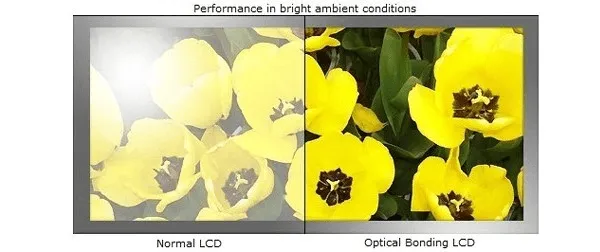
For deployment at the high end of the brightness spectrum, the RS121XCE-GE10 delivers 1,000 nits with full IPS + Hi-Tni protection. When you need to push further, the RS121ENT-GE15 combines 1,500 nits with factory optical bonding and an IP65-rated open-frame bezel, providing a single-part-number solution for direct-sun mission-critical interfaces. For a balanced mid-range option with proven field reliability, the RS121ENT-NE10 offers a cost-effective 1,000-nit configuration for volume deployments.
The Thermal Gauntlet: Why Hi-Tni and Optical Bonding Are Non-Negotiable
Outdoor display failures rarely result from a single catastrophic event. They accumulate from repeated thermal stress.
The Backlight as a Heat Source
Driving a 12.1-inch WLED backlight to 1,500 nits consumes roughly 29.4W. Without proper thermal management, the LED junction temperature rises above 85°C, accelerating lumen depreciation and shifting color temperature. The RS121XCE series uses an aluminum-core heatsink bonded directly to the LED lightbar — conducting heat to the metal chassis rather than trapping it inside the module.
Solar Loading
When a black LCD surface faces direct sun, its surface temperature reaches 85°C to 95°C. Standard liquid crystals have a clearing point (Tni) around 70°C to 85°C. When exceeded, the LC material transitions to an isotropic liquid state — the display turns black with permanent pixel damage. Hi-Tni technology prevents this. The liquid crystal formulation in the 12.1-inch series raises the Tni above 100°C, providing a 15°C to 30°C safety margin above worst-case solar loading.
Optical Bonding as a Multiplier
Optical bonding (OCA/OCR lamination) fills the air gap between the LCD cell and the cover glass with transparent silicone or acrylic resin. This serves three engineering purposes:
Eliminates internal condensation. Moisture can still ingress through the enclosure seal regardless of bonding. Bonding's primary optical benefit is eliminating the multiple air-to-glass interfaces that cause surface reflections to compound — cutting total reflection from ~8% to under 0.5%.
Increases perceived contrast by up to 300%. By matching the refractive index of the cover glass to the LC cell, surface reflections drop from approximately 4% per interface to under 0.5%. A 1,000-nit bonded panel visibly outperforms a 1,500-nit unbonded panel in direct sunlight.
Adds structural rigidity. The bonded assembly is mechanically stiffer, reducing flex-induced mura and touch-panel registration drift in high-vibration environments.
Integration Checklist for Procurement and Engineering Teams
When evaluating a 12.1-inch open-frame display for your next outdoor project, verify these five points against the supplier's datasheet: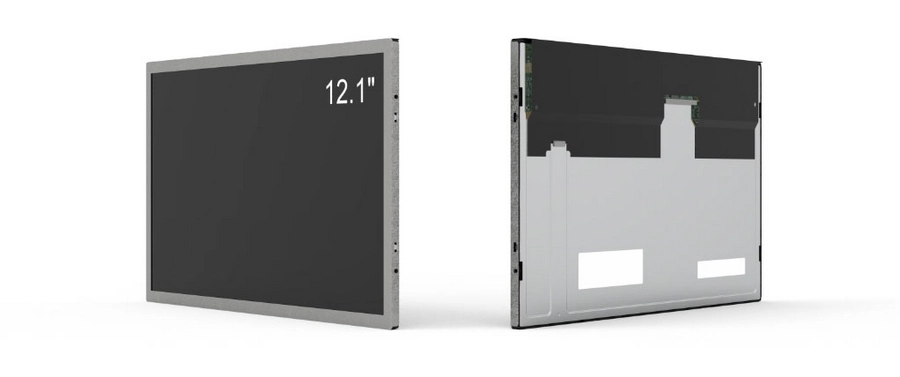
Mounting pattern compatibility. Confirm the ear-hole locations match your existing cabinet tooling. The RS121XCE and RS121XGE series share a common outline, but always verify the mechanical drawing.
Interface voltage and timing. The 20-pin LVDS interface operates at 3.3V. Ensure your system-on-module or AD board provides compatible signaling. An LVDS-to-eDP converter adds cost and a potential failure point.
Cover glass thickness. If using optical bonding, confirm the bonded stack height (panel + resin + glass) fits within your enclosure depth budget. Bonding adds roughly 1.0–1.5 mm per layer.
Touch controller firmware. Outdoor PCAP controllers must ship with wet-surface rejection and glove-detection firmware pre-loaded. Consumer-grade controllers cannot distinguish rain droplets from finger touches.
PWM dimming range. The backlight driver should support a dimming ratio of at least 1000:1. The display must reach below 200 nits at night to avoid light pollution complaints, while hitting full 1,500 nits under noon sun.
.webp)
FAQ
Q1: What brightness does a 12.1 inch sunlight readable display need?
For direct outdoor sun, 1,000 nits minimum. Semi-outdoor or shaded deployments can work with 500–800 nits. For unshaded desert, coastal, or snow-reflective environments, specify 1,500 nits with Hi-Tni protection.
Q2: What is the difference between a 12.1" open frame display and a standard monitor?
An open frame display ships without a plastic housing or desktop stand — just the panel, backlight, driver board, and metal chassis with mounting ears. It is designed for OEMs to embed into custom enclosures, kiosks, and machinery. A standard monitor is a finished consumer product with its own case and stand.
Q3: Why does a 12.1 inch outdoor display need optical bonding?
Optical bonding fills the air gap between the LCD and cover glass with refractive-index-matched adhesive. This eliminates internal condensation, cuts surface reflection from ~8% to under 0.5%, and improves thermal conduction. A 1,000-nit bonded panel effectively outperforms a 1,500-nit unbonded one in direct sun.
Q4: What is Hi-Tni and why is it critical for outdoor displays?
Hi-Tni (High Temperature Nematic) liquid crystal raises the clearing point above 100°C, versus 70–85°C for standard panels. When an LCD exceeds its clearing point under solar loading, the liquid crystal undergoes TNI blackening — permanent dark patches. Hi-Tni prevents this, providing a safety margin for sealed outdoor enclosures where internal heat buildup is unavoidable.
Q5: What interface do 12.1" open frame displays use?
All models in the series use a 20-pin LVDS interface at 3.3V signaling, compatible with standard embedded ARM and x86 single-board computers. Verify your host board's LVDS compatibility before selection.
References & Standards
All RS121XCE and RS121XGE series modules are designed and tested in accordance with:
IEC 60068-2-1 / IEC 60068-2-2 — Cold and dry heat environmental testing
IEC 60068-2-30 — Damp heat cyclic test (condensation-resistant operation)
ISO 4892-2 — Accelerated weathering for UV-exposed outdoor enclosures
Manufacturing Backing and OEM/ODM Support
RisingStar manufactures every 12.1-inch module in our 4,000 m² ISO 9001-certified facility in Shenzhen. Each unit undergoes a 72-hour burn-in test per factory QC protocol (extended thermal cycling) and 100% factory inspection before shipping. Panel sourcing from LG Display, AUO, BOE, Innolux, and Tianma ensure Grade A/A+ quality and multi-year supply stability.
We offer full OEM/ODM services: custom backlight tuning, integrated PCAP touch with glove/wet-hand firmware, optical bonding, and enclosure design support in stainless steel or aluminum. Whether you need 50 units for a pilot program or 5,000 for a nationwide smart city rollout, our engineering team provides a complete display integration package — from mechanical drawing validation to CE/FCC/RoHS certification.
Request a quote → Send your mechanical drawing to ai@risinglcd.com for a tailored configuration within 24 hours.

