
 English
 Deutsch
 Français
 Español
 Italiano
 한국어
한국어 日本语
日本语 Português
 Suomi
Suomi Dansk
Dansk Polski
I. Core Basic Principles of OLED
OLED (Organic Light-Emitting Diode) is characterized by pixel-level self-luminescence, which is essentially different from traditional LCD screens:
Each pixel of an OLED is an independently controllable micro light-emitting body. When displaying pure black, the control system can directly cut off the current supply to the corresponding pixels. The organic light-emitting materials do not generate photons when there is no current passing through, achieving true pure black without light leakage, and the contrast ratio is theoretically close to infinity.
LCD screens rely on a whole always-on backlight panel. Displaying black only blocks light through liquid crystal molecules, which cannot avoid light leakage, resulting in a grayish black display and a contrast ratio far lower than that of OLED.
II. Core Advantages and Inherent Disadvantages of OLED Screens
Core Advantages
Ultimate display performance: It has an almost infinite contrast ratio with an outstanding pure black display effect; the pixel switch has a microsecond-level response with no motion blur in dynamic images; it features an ultra-wide viewing angle close to 180°, with no obvious color shift or brightness attenuation when viewed from the side, ensuring clear information viewing from multiple angles.
Unparalleled morphological flexibility: With an extremely thin and light body, it supports flexible bending and transparent display, and can be applied to special-shaped installation scenarios such as cylinders and corners. Transparent screens can balance information display and real-scene line of sight, adapting to diverse creative designs.
Significant energy efficiency advantages: Corresponding pixels are completely turned off when displaying dark/black images. In scenarios dominated by static black backgrounds, power consumption is much lower than that of LCD screens with a constantly on backlight.
Exclusive benefits for outdoor scenarios: High contrast ratio makes traffic signs and advertising content more visible in complex light environments such as nights and tunnels, allowing drivers to clearly capture key information from a long distance; transparent screens can integrate with urban landscapes without blocking building light and original aesthetic feeling.
Inherent Disadvantages
Severe risk of screen burn-in (image retention): Organic light-emitting materials suffer from irreversible aging, and permanent image retention is highly likely when static images are displayed for a long time, which is a core pain point for outdoor commercial scenarios.
Poor environmental resistance: Organic materials are extremely sensitive to high temperatures, ultraviolet rays, water vapor/oxygen. For every 10℃ rise in temperature, the aging speed of materials doubles; ultraviolet rays directly damage the chemical bonds of organic molecules, causing the screen to turn yellow; water vapor infiltration will produce black spots that spread rapidly.
Relatively high comprehensive cost: The purchase price is usually 1.2 to 2.5 times that of LCDs of the same specification, with a more obvious gap for large-size panels. The cost of high-end QD-OLED panels is 60% to 65% higher than that of ordinary WOLED panels; additional investment in protection, heat dissipation and maintenance costs is required for outdoor scenarios, leading to a higher total cost of ownership throughout the life cycle.
Inherent contradiction between sealing and heat dissipation: The high-sealing protection of IP65/IP66 required for outdoor use can isolate water and oxygen, prevent dust and corrosion, but it will trap the heat generated by the screen during high-brightness operation, forming a "heat preservation effect" and further accelerating material aging and screen burn-in.
III. Core Problems to Be Overcome for OLED to Adapt to Outdoor Scenarios
Control of screen burn-in and material aging: Outdoor traffic signs and billboards mostly display static images for a long time, which is very likely to cause screen burn-in; at the same time, high outdoor temperatures will double the aging speed of organic materials. It is necessary to delay aging and compensate for image retention through a combination of hardware and software solutions to extend the commercial service life.
Balance between high sealing and heat dissipation: The high-level waterproof and dustproof sealing necessary for outdoor use will lead to ineffective heat dissipation of the screen during high-brightness operation. It is necessary to achieve efficient heat dissipation without damaging the sealing performance, breaking the vicious cycle of "better protection, faster aging".
Balance between visibility and service life under strong light: Extremely high peak brightness is required to ensure clear image visibility in outdoor direct light environments, while high-brightness operation will aggravate heating and material aging. It is necessary to balance brightness performance and screen service life.
Improvement of extreme environmental resistance: It is necessary to solve the problems of screen yellowing and material degradation caused by ultraviolet radiation, circuit corrosion by coastal salt spray/acid gas in industrial areas, and working stability under a wide temperature range of high and low temperatures.
Controllable total life cycle cost: It is necessary to balance the initial purchase cost and the later maintenance and replacement cost, solve the problems of short screen service life and high maintenance frequency in outdoor scenarios, and ensure the payback period of commercial projects.
IV. Technological Breakthroughs and Exclusive Competitive Advantages of RisingStar

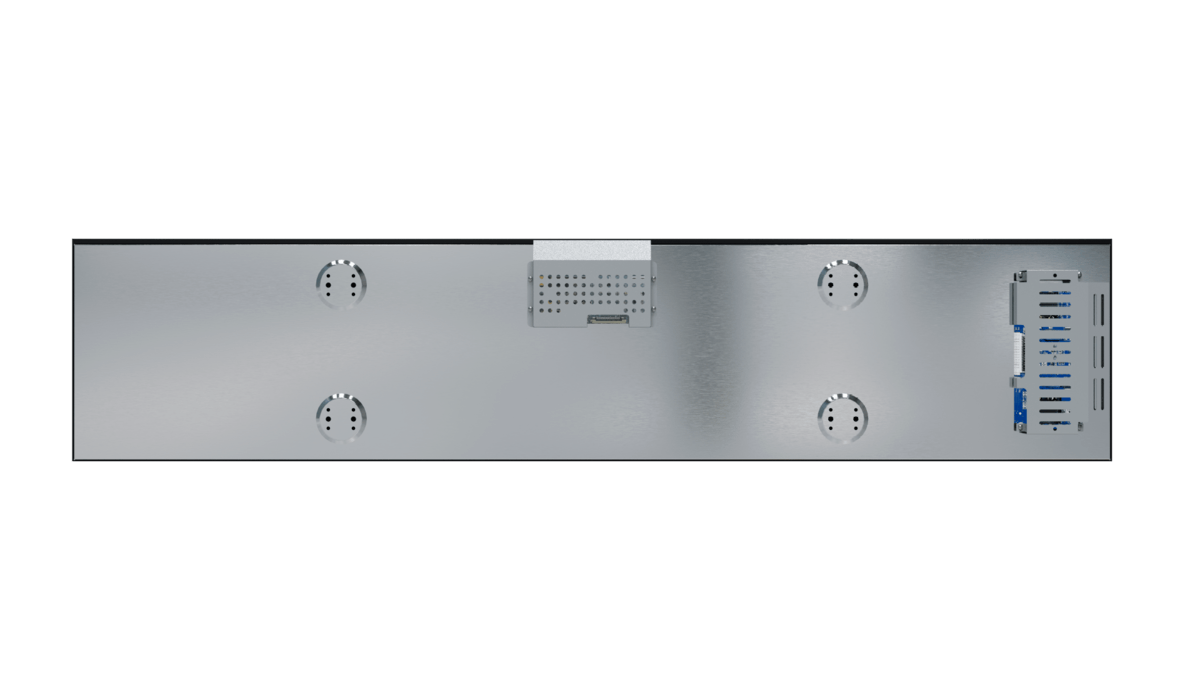
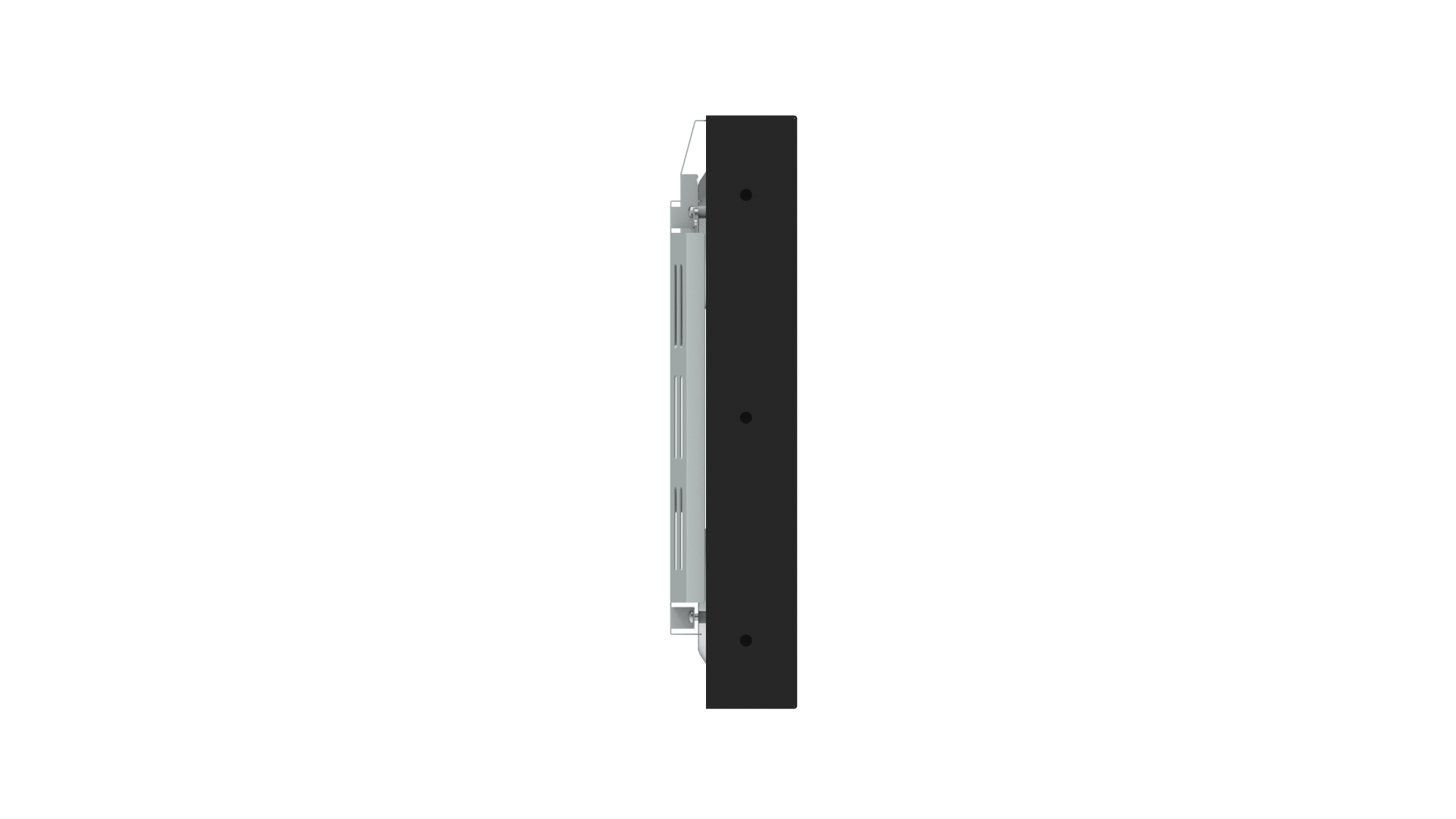
Core Technological Breakthroughs Targeting Outdoor Pain Points
Instead of relying on a single sealing technology,RisingStar has systematically overcome the core problems of OLED outdoor application through a systematic project integrating full lamination, dynamic temperature control, structural heat dissipation and software compensation:
Enhanced full lamination technology: A special vacuum optical adhesive is filled between the OLED panel and the external protective glass to completely eliminate the air layer, which not only prevents internal water vapor condensation and fogging, but also opens up the heat conduction path from the panel to the outer glass, greatly improving heat dissipation efficiency.
Industrial-grade thermal management system: An aluminum alloy high thermal conductivity back shell is adopted as an integrated heat dissipation structure, with a built-in high-precision temperature control sensor that can dynamically adjust current and brightness according to the real-time temperature of the screen. It sacrifices a tiny amount of visual brightness in exchange for the service life protection of organic materials, fundamentally solving the problem of heat accumulation after sealing.
Material optimization for outdoor special use: Industrial-grade wide-temperature organic materials are screened to greatly expand the normal operating temperature range of the screen; an AR anti-reflection + UV anti-ultraviolet double coating is integrated on the outer glass, which not only blocks ultraviolet rays to avoid screen yellowing and degradation, but also improves image visibility in strong light environments.
Customized anti-image retention driving solution: A dedicated pixel compensation circuit is integrated, and a custom driver board enforces regular maintenance tasks, automatically running the "pixel cleaning" program at night or during non-peak operation periods to repair tiny charge residues generated by high-load operation during the day, greatly reducing the risk of screen burn-in caused by static images.
Core Competitive Advantages
At present, many manufacturers in the industry have laid out OLED outdoor screen products, butRisingStar has achieved industry-leading performance breakthroughs: its outdoor OLED screens can reach a maximum peak brightness of 5000 nits, far exceeding the industry's conventional level. At the same time, it can perfectly solve the core outdoor pain points such as heat dissipation, rain and explosion proof, and high temperature resistance, realizing the balance between ultra-high brightness and high environmental reliability, and forming a differentiated core competitiveness.