
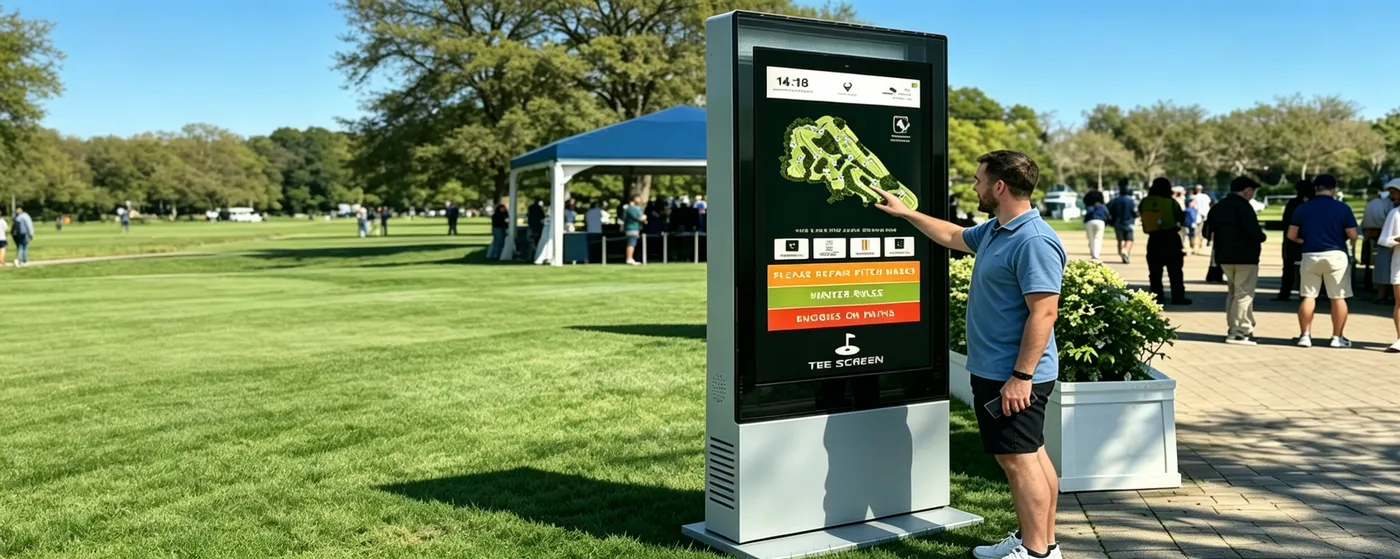
Sunlight Readable
Display Models
33 Production Models, 10.1" to 98".
Factory-direct 500 to 4,500 nits panels with optical bonding and Hi-TNI polarizers. Every model is available as a bare panel or a fully sealed outdoor enclosure.
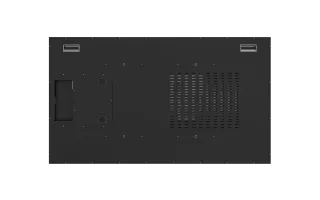
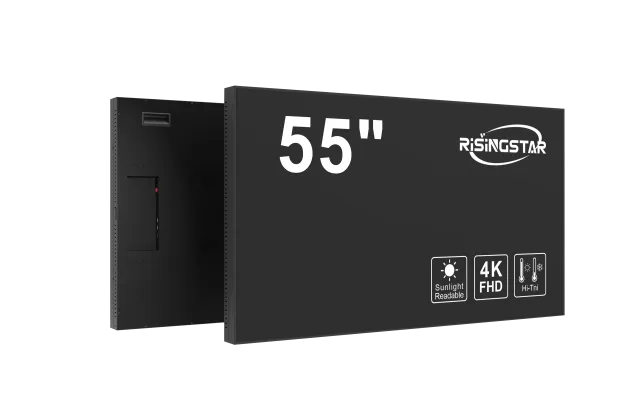 RS550FNW01-A01-LD 55" 2500 Nits UHD LCD Panel
- 55"
- 2500 nits
- 1300:1
- -20°C ~ 70°C
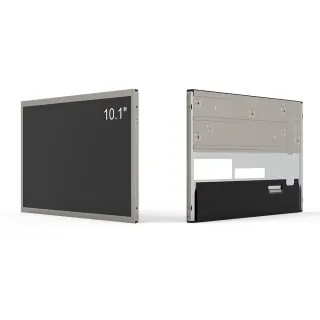
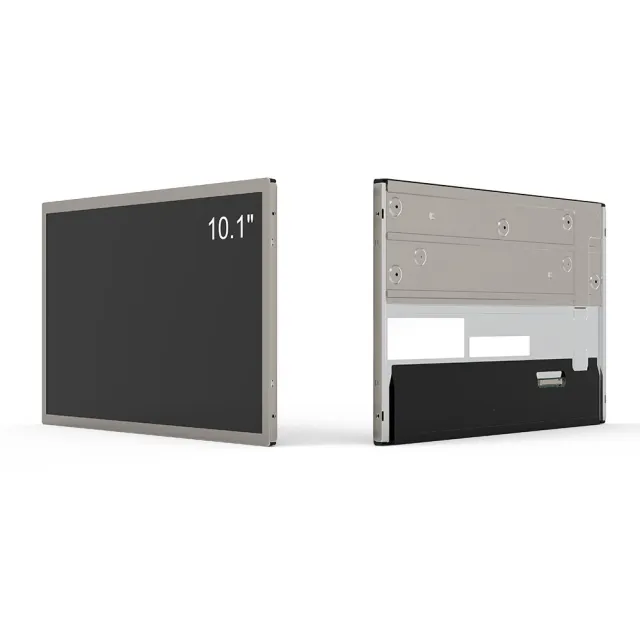 RS101ENT-N10 10.1" 1000 Nits Sunlight Readable Display
- 10.1"
- 1000 nits
- 1200:1
- -20°C ~ 70°C
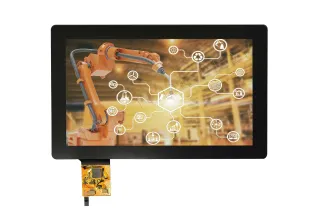

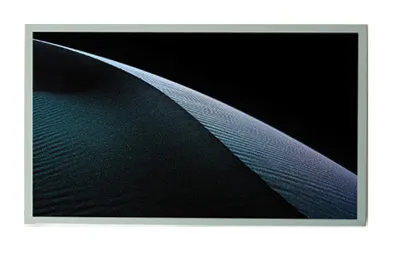 RS156M1L-NE10 15.6" 1000 Nits Sunlight Readable FHD Display
- 15.6"
- 1000 nits
- 800:1
- -20°C ~ 70°C
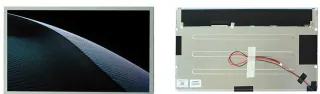
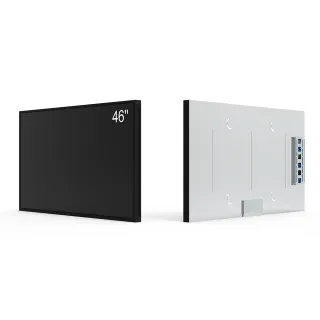
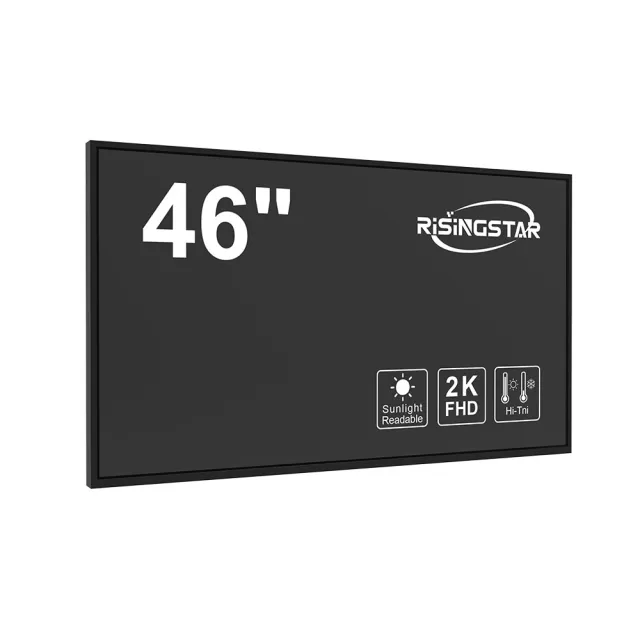 RS460HVN-GD20 46" 2000 Nits Sunlight Readable FHD Display
- 46"
- 2000 nits
- 4000:1
- -20°C ~ 70°C
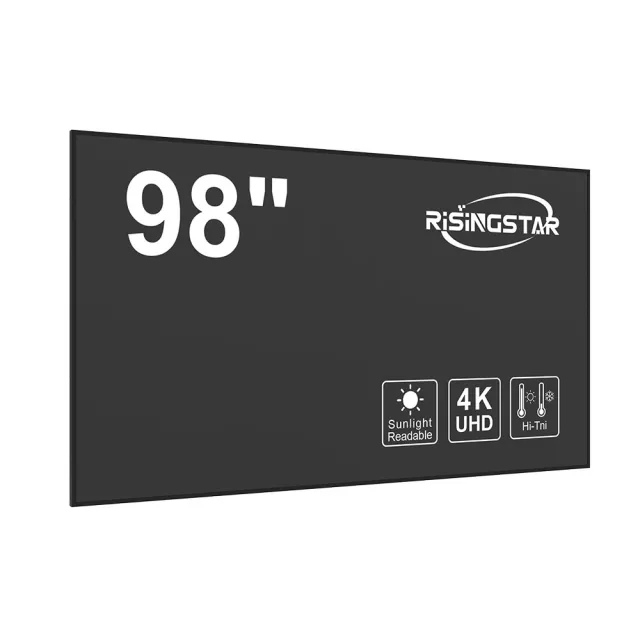 RS980ENT-GD45 98" 4500 Nits Sunlight Readable LCD Display
- 98"
- 4500 nits
- 1300:1
- -20°C ~ 70°C
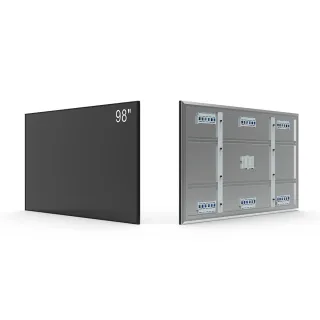
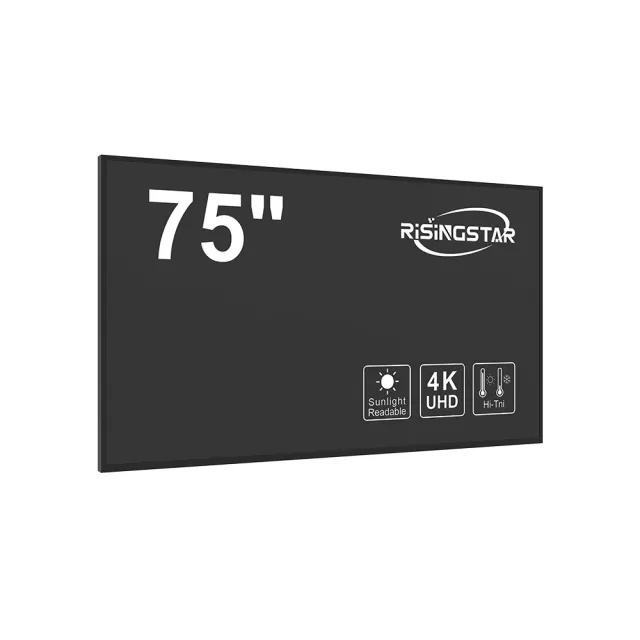 RS750ENT-GD45 75" 4500 Nits Sunlight Readable Signage
- 75"
- 4500 nits
- 1200:1
- -20°C ~ 70°C
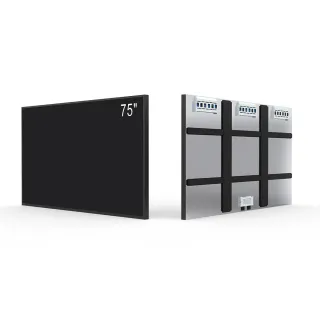
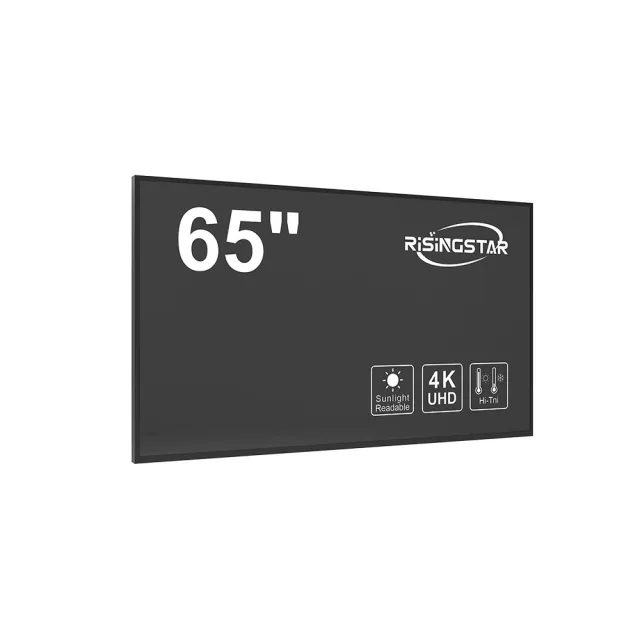 RS650ENT-N25 65" 2500 Nits Sunlight Readable LCD Display
- 65"
- 2500 nits
- 4000:1
- -20°C ~ 70°C
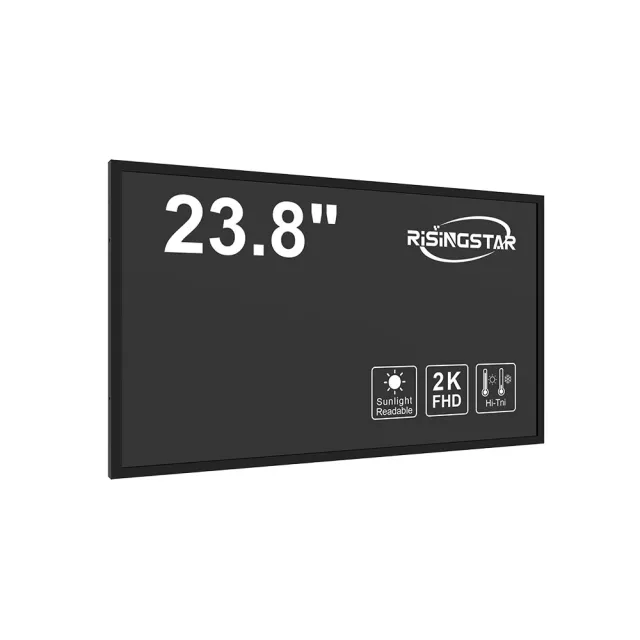 RS238ETN-GE15 23.8" 1500 Nits Sunlight Readable LCD Display
- 23.8"
- 1500 nits
- 1000:1
- -20°C ~ 70°C
What You Are Buying
How to Choose a Sunlight Readable Display
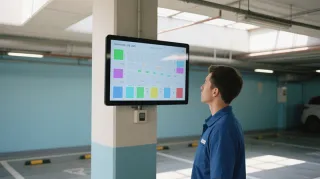
A sunlight readable display is an industrial LCD panel rated to stay legible under ambient light of 5,000 to 100,000 lux. A consumer screen at 300 to 500 nits becomes unreadable within minutes of direct sun, so outdoor signage requires a different class of backlight, glass and polarizer.
Every model on this page is built around three non-negotiable specifications: 500 to 4,500 nits peak luminance, full-lamination optical bonding that removes the internal air gap, and a Hi-TNI liquid crystal with a clearing point above 110°C so the panel never blacks out under solar load.
This catalog lists the finished models we build and stock. For the underlying physics — how optical bonding cuts reflections, why isotropic blackening occurs, and how to specify a panel for a given ambient condition — read our sunlight readable display engineering guide.
500 – 4,500 nits
Four brightness tiers matched to ambient light conditions
10.1" – 98"
21 standard sizes, custom dimensions on request
Optically bonded
OCR or OCA lamination, optional AR and QWP polarizer
-20°C to 70°C
Hi-TNI cell stable to 110°C, IK10 option
Need a Different Build?
We manufacture OEM and ODM units since 2009 — custom sizes, stretched bar formats, and integrated touch. For the full manufacturer profile, see our high brightness display manufacturing capabilities.
Overcoming the Challenges of High-Ambient Environments.
Standard displays fail under extreme conditions. We've engineered solutions for mission-critical visibility.
Sunlight Washout
Standard consumer displays (300–500 nits) become invisible outdoors, rendering information unreadable and wasting operational budgets.
Our high-brightness series delivers up to 4,500 nits—nearly 10x standard panels—ensuring peak legibility in desert or coastal environments.
Solar-Induced Blackening
Intense solar radiation causes standard LCD panels to reach their isotropic state (blackening defects) at 65°C, leading to permanent hardware damage.
Equipped with Industrial Hi-Tni technology, our panels remain stable up to 110°C, preventing image degradation.
Environmental Fatigue
Dust, moisture, and fluctuating temperatures cause internal condensation and electronic failure in non-industrial displays.
Purpose-built for -20°C to 70°C range, utilizing optical bonding to eliminate air gaps and fogging.
Versatile Solutions for Infrastructure and Retail.
Standard displays fail under extreme conditions. We've engineered solutions for mission-critical visibility.
Fully sealed outdoor waterproof display models and window-facing units are specified from the same optical bonding platform. For the full product range, see our high brightness display manufacturer.
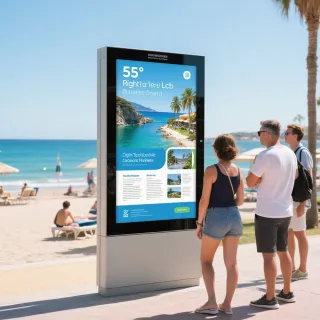
Outdoor Digital Signage
32" – 98"
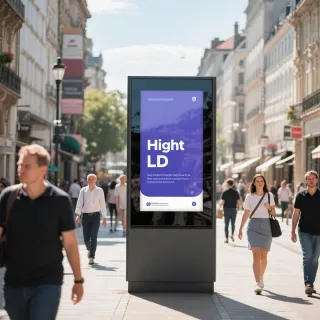
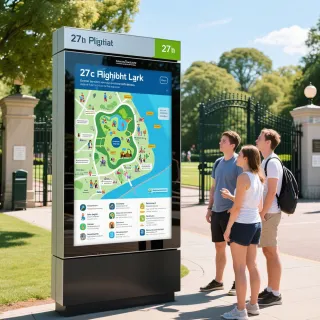
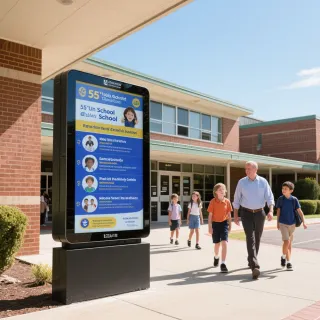
IP65/IP66 sealed enclosures on selected models, designed for continuous 24/7 operation in public squares, transit terminals, and smart city hubs.
Window-Facing Displays
21.5" – 75"
High-contrast, solar-resilient panels that maintain visibility through glass without the risk of thermal shutdown.
Industrial Monitors & Open Frame Modules
7" – 55"
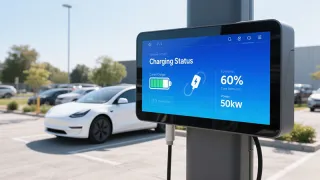
High-brightness industrial monitors and bezel-free open frame modules for flush-mount integration into EV charging stations, ATMs, and self-service kiosks.
Custom Stretched Bar PIDS
Specialized Formats
Specialized ultra-wide ratios designed specifically for Passenger Information Display Systems (PIDS) and retail shelf-edge engagement.
The RisingStar® Engineering Benchmark.
Industrial-grade specifications for mission-critical applications.
500 to 4,500 nits
Auto-dimming sensors included for efficiency
Up to 50,000 Hours
Industrial-grade WLED backlight
Hi-Tni Technology
Anti-blackening technology
IK10-Rated
Or 7H hardness tempered glass options
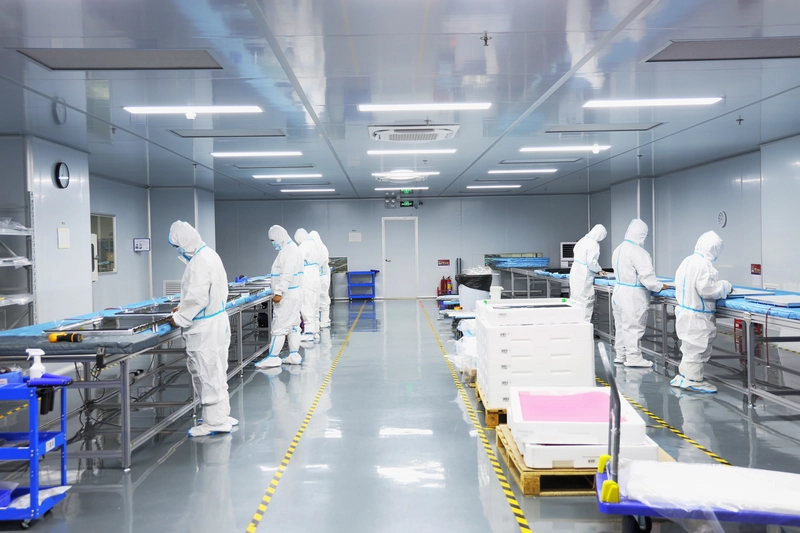
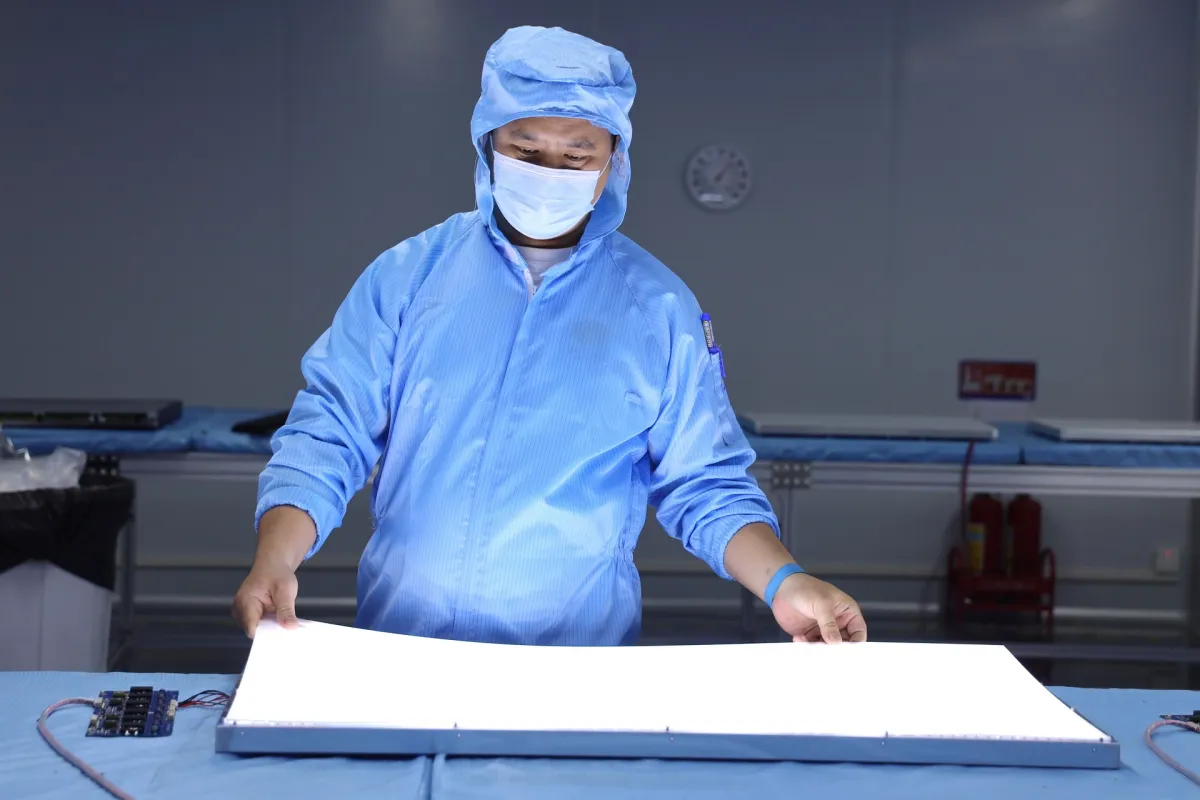
100% Inspected
72-hour high-temperature aging protocols
-20°C to 70°C
Industrial-grade stability
Buying Guide
Sunlight Readable Display Model FAQ
Sizing, brightness and lead-time questions our engineers answer most often.
How many nits do I need for a sunlight readable display?
For covered or shaded installations, 500 to 1,000 nits is sufficient. Semi-outdoor kiosks need 1,500 nits. Direct sunlight on transit platforms, EV chargers and DOOH totems calls for 2,500 to 3,000 nits, while open plazas, coastal sites and highway signage require 5,000 nits.
Which sizes are available in the standard sunlight readable display range?
Standard stocked sizes run from 10.1 inch to 98 inch, covering 10.1, 12.1, 13.3, 15, 15.6, 17, 18.5, 19, 21.5, 23.8, 27, 32, 37, 43, 46, 49, 55, 65, 75, 86 and 98 inch. Custom dimensions and stretched ratios are quoted on request.
Can I order a custom size or aspect ratio?
Yes. As an OEM and ODM manufacturer since 2009 we build custom dimensions, ultra-wide stretched formats, and bespoke brightness tiers, with optical bonding and PCAP touch available on all sizes.
What is the lead time for samples and volume production?
Quotes are returned within 8 hours, functional samples ship in 10 days, and mass production runs 3 to 4 weeks after prototype approval. Every unit passes a 72-hour high-temperature aging test before shipment.
Do outdoor models come with IP65 or IP66 enclosures?
Selected outdoor models are offered in IP65 or IP66 sealed enclosures for 24/7 operation in public squares, transit terminals and smart city infrastructure, with an operating range of -20°C to 70°C.
Global Provider of High-Brightness LCD Modules
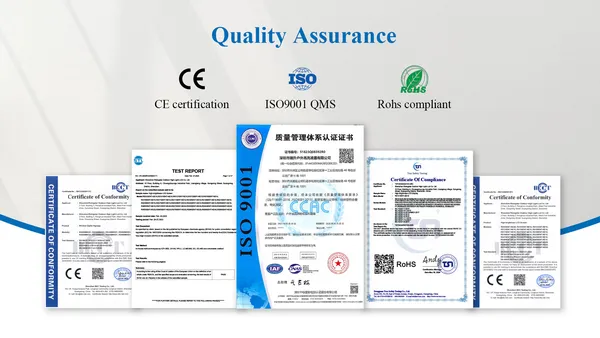
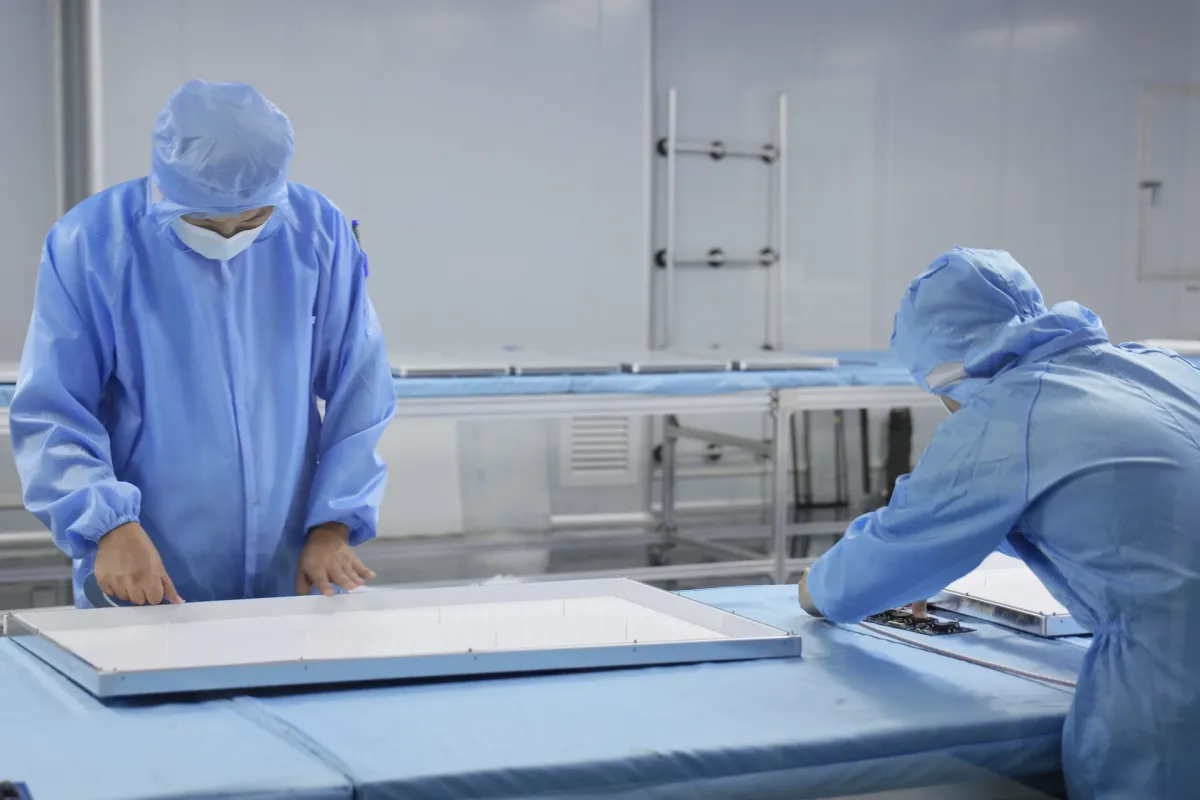
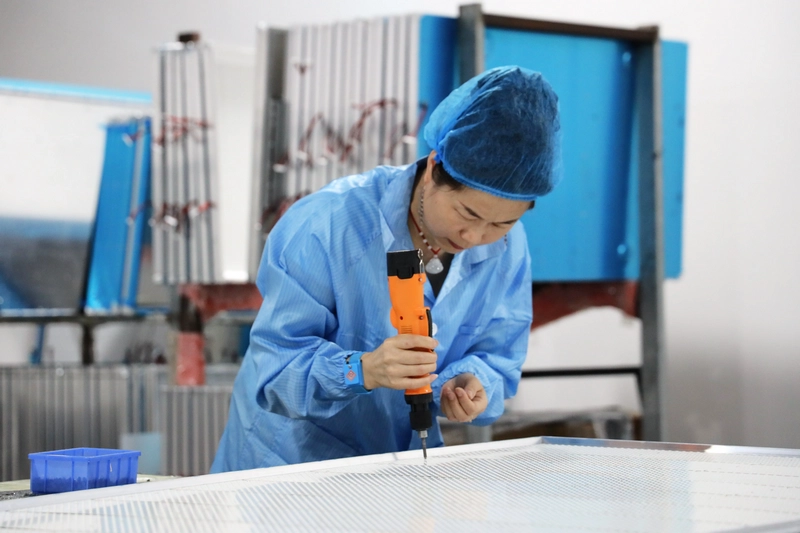
Since 2009, RisingStar has engineered sunlight-readable LCD modules from 10.1" to 110", built on solar-resilient Hi-Tni panels that prevent blackening under direct sunlight. Every unit ships from our ISO-certified Shenzhen facility after 100% factory inspection — trusted by 500+ enterprise clients across 50+ countries.
Why buyers choose RisingStar:
Ready to Deploy in Extremes?
Consult with our senior technical team to customize a sunlight-readable solution for your specific project requirements.
Contact an Engineer Today arrow_forward


