The RisingStar Commitment to Visual Excellence
In the display industry, the difference between a "good" screen and a "premium" screen lies in uniformity. For any professional LCD panel manufacturer, shipping displays with Mura issues is a total disaster. At RisingStar, we eliminate the frustration of the Mura Effect through rigorous engineering, A+ grade sourcing, and industry-leading testing protocols.
What is the Mura Effect?
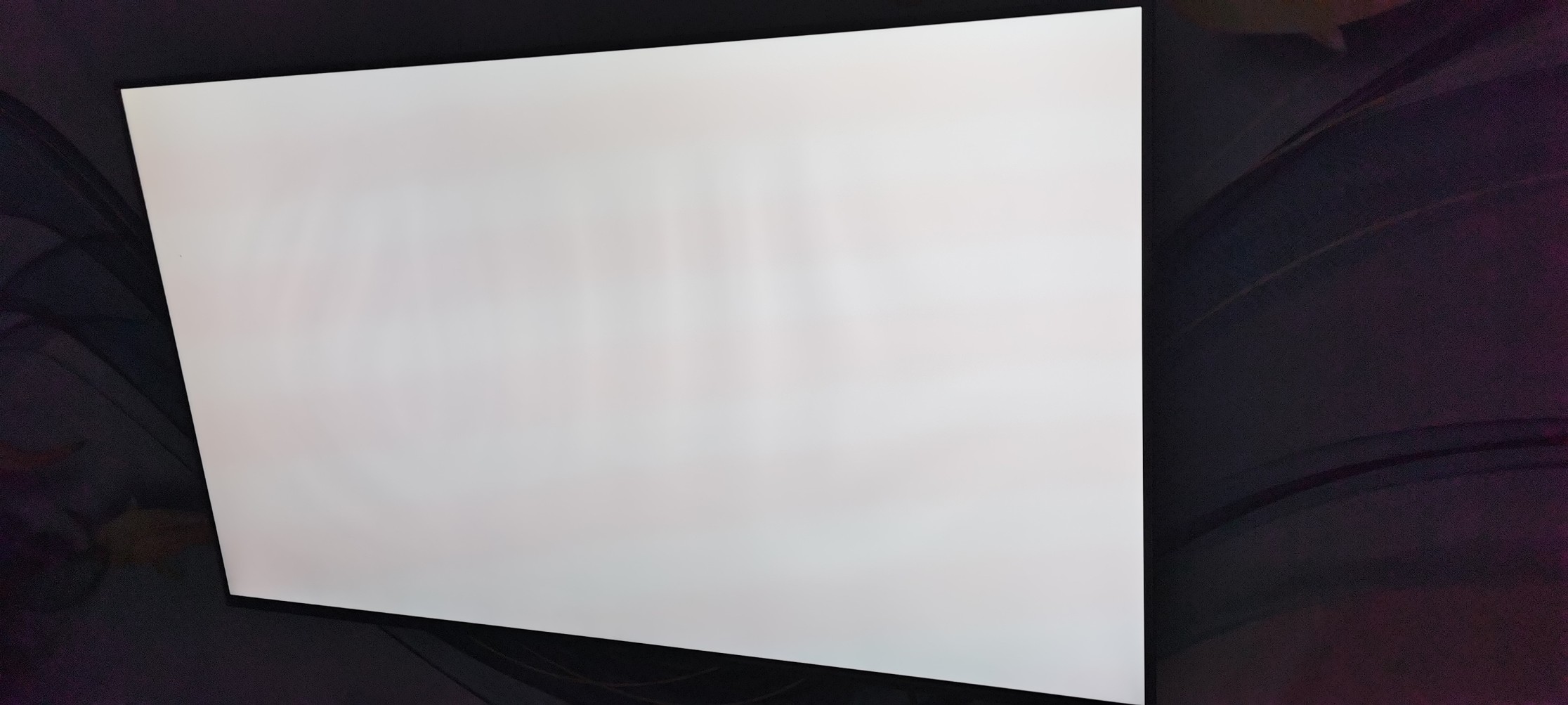
Derived from the Japanese word for "unevenness," Mura refers to visual irregularities in an LCD's luminance, color, or texture. Whether it’s subtle clouding or distinct streaks, Mura ruins the immersion and visual quality of a display.
The Root Causes:
Layer Variance: Microscopic differences in liquid crystal thickness or density.
Backlight Stress: Inconsistent LED distribution or improper light diffusion.
Material Impurities: Trace particles within the LCD cell or non-uniform electric fields.
Our Testing Protocol: The Double-Check Standard
We don't just trust the factory; we verify. Every RisingStar panel undergoes a multi-stage validation process conducted by our expert test engineers to identify and quantify any presence of Mura.
PhaseTimingActionStage 1Arrival of Open-CellsComprehensive inspection of raw panels directly from LG, BOE, and AUO.Stage 2Post-AgingMandatory 72-hour aging cycle to ensure panel stability.Stage 3Pre-ShippingFinal "Double Test" by quality engineers before secure packaging.
Advanced Mura Detection Methods:
Visual Inspection: Trained experts examine the display for visible irregularities. This is the first line of defense for detecting obvious Mura problems.
Gray-Level Analysis: Displaying a series of gray patterns (0–255) to analyze measured luminance values across different regions.
Image Subtraction: Capturing uniform background images and digitally subtracting them to highlight deviations invisible to the naked eye.
Optical Measurement: Utilizing specialized spectroradiometers or colorimeters to provide objective data on color and luminance consistency.
Common Mura Profiles We Eliminate
Clouding: Appearance of uneven backlighting, resulting in cloudy patches or areas of different brightness.
Banding: Horizontal or vertical lines caused by non-uniform pixel response times or voltage variations.
Spotting: Dark or bright spots usually caused by impurities in the liquid crystal material.
Mura Noise: Random fluctuations in color or brightness resulting from microscopic misalignments.
Professional Solutions for Mura Problems
Addressing Mura requires a combination of manufacturing improvements and advanced calibration techniques:
Process Optimization: Refining production to minimize variations in component quality and alignment precision.
Quality Control Testing: Implementing rigorous Mura testing at various stages of production to rectify defects early.
Compensation Algorithms: Developing software that dynamically adjusts display output to mitigate the Mura effect.
Display Uniformity Enhancement Films: Applying specialized films to the surface to better diffuse light and reduce visibility of irregularities.
Why Choose RisingStar?
We take the risk out of your hands by ensuring every display meets the highest industry standards.
Direct Sourcing: 100% genuine panels purchased directly from LG, BOE, and AUO.
A+ Grade Only: We never settle for B-grade or "reworked" stock.
Proven Reliability: Every LCD display is finished with a 72-hour aging test and a final double-test before packaging.