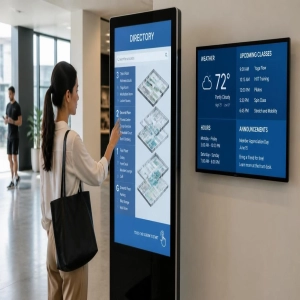
A mall network operator sells ad slots by audience, not screen count. Buyers want to know: how many people passed this screen at 6 p.m., how long they looked, and roughly which segment they represent. The answer comes from audience measurement — sensors and analytics layered on top of the DOOH screen. Measurement is usually framed as a software or data challenge, but it rests on a hardware foundation: the display must carry the sensor cleanly, run reliably enough to keep measurement continuous, and present content consistently so the impressions actually mean something.
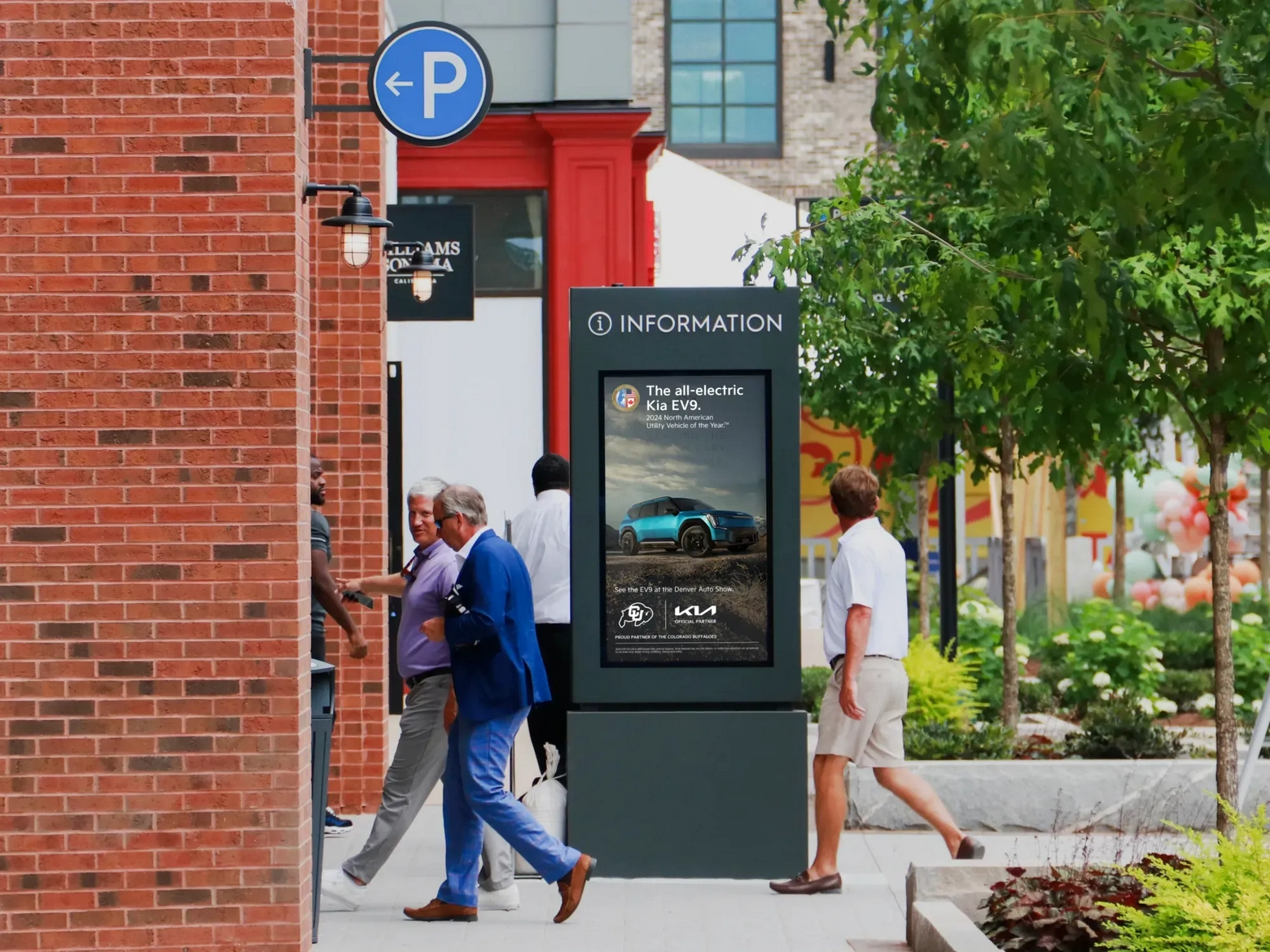
What Audience Analytics Measures in DOOH
Audience measurement in DOOH typically captures three layers of data:
Traffic and dwell. Footfall counters measure how many people pass the screen and how long they remain in the viewing zone. This is the most common and most reliable layer — it establishes the base audience the network sells. Engagement. Cameras with on-device processing estimate how many viewers looked at the screen and for how long, distinguishing a glance from sustained attention. Demographics. Sensor systems classify aggregate viewer characteristics (age band, gender) for audience segmentation, so a network can sell "adults 25-44 in an office district" rather than just "lobby screen."Modern systems are privacy-safe by default: processing happens on the device, individual identities are not stored, and the output is aggregated counts and cohorts. This is an important distinction for media owners — measurement does not require personal data, and the hardware should not be built as if it did.
Where the Sensor Lives: Bezel and Enclosure Design
Audience sensors are mounted on or around the display. The way the display is engineered determines whether the sensor installs cleanly or becomes a retrofit problem:
Sensor mounting above the bezel. Most DOOH audience cameras sit above or beside the panel, angled down at the viewing zone. A display designed for measurement offers a flat, uncluttered bezel and a defined mounting point, with cable routing into the enclosure. Without this, the integrator must mount the camera on a separate bracket, run cables externally, and create a service headache.
Viewing geometry. The camera needs an unobstructed view of the audience zone. The display's mounting height, tilt, and the sensor's placement relative to the panel all affect what the camera can see. This is a layout decision made during enclosure design, not after deployment.
Integrated versus attached. Some networks use displays with integrated sensors; others attach commercial camera modules. Both work, but the specification should state the intended approach so housing, power, and data interfaces are ready.
Reliability Drives Measurement Continuity
Audience data is only as good as its continuity. A footfall counter that drops out for two hours leaves a gap that corrupts the whole day's reporting — buyers cannot tell whether the missing hour was zero traffic or a dead sensor.
Display reliability feeds measurement in two specific ways:
The screen must stay on. When a display fails or goes down for service, measurement stops. Industrial 24/7-rated displays with remote diagnostics cut unplanned downtime and keep the audience data stream intact. The sensor needs clean power and data. The enclosure should supply stable power and network connectivity to the sensor. Sharing a noisy power line with a high-brightness backlight can produce unreliable readings — a well-designed display isolates or conditions power for auxiliary devices.Content Consistency and Measured Impressions
An impression is only meaningful if the creative actually played. Audience analytics measure viewers in front of a screen; the ad server logs what the screen displayed. The two datasets are joined to sell verified impressions. That joining depends on the display playing content as scheduled, which brings us back to the playback-reliability requirements of programmatic DOOH: accurate logging, no drift, no unplanned reboots.
Brightness consistency also affects measurement, though less directly. If a screen washes out in daylight because it was underspecified, passersby do not disappear — but their attention drops, and measured engagement falls. A screen correctly specified for its ambient light — bright enough by day, auto-dimmed at night — preserves both the real audience and the measured engagement.
Matching Measurement to the Venue and Screen
The analytics package a network needs depends on the screen class:
| Screen class | Typical measurement need | Hardware implication |
|---|---|---|
| Indoor lobby / retail screen | Footfall, dwell | Sensor above bezel, clean power, standard mounting |
| Mall corridor network | Footfall by time of day | Multi-screen sync, per-screen data reporting |
| Outdoor street screen | Footfall, limited demographics | IP-sealed sensor housing, sunlight-tolerant optics |
| Transit platform screen | Dwell at high volume | Vibration-resistant sensor mount, continuous power |
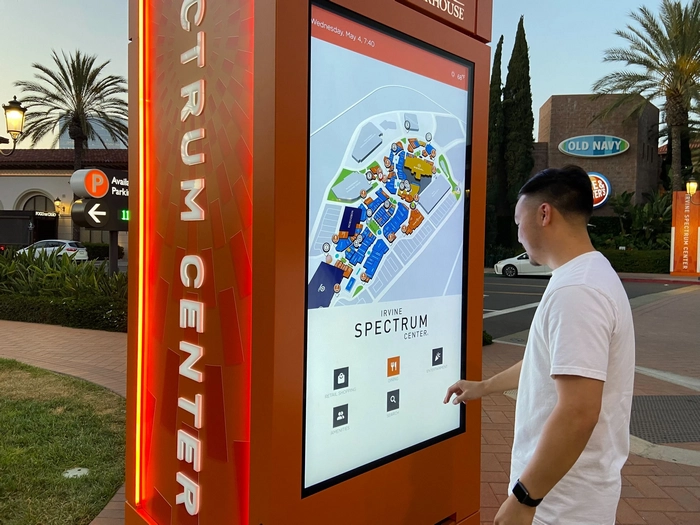
| Interactive kiosk | Engagement + touch behavior | Sensor integrated with touch events, edge processing |
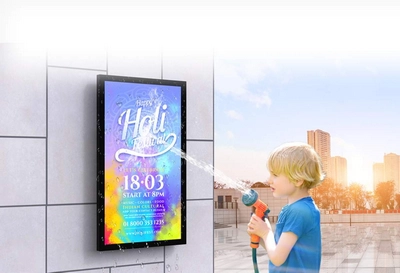
For indoor retail and mall networks, footfall and dwell analytics are the workhorse metrics: they measure the audience advertisers actually buy. Outdoor screens are harder to measure: light changes, weather shifts, and viewers are on the move. Sensor hardware must tolerate the same environment as the display. A sealed, bonded outdoor screen with an IP-rated sensor mount is the configuration that keeps measurement running in any weather.
Choosing a Screen That Measures Well
Media owners should ask three hardware questions before buying:
Does the display offer a clean sensor mount and cable path?Retrofit brackets and dangling cables are a field-maintenance cost that never disappears.
Can the display power and connect the sensor without compromising reliability?A display that cannot supply stable auxiliary power forces a separate power run and a second failure point.
Is the display built for the duty cycle that measurement demands?Measurement continuity requires 24/7 reliability; a commercial-grade screen will create data gaps exactly when the network is selling its best hours.
RisingStar builds analytics-ready LCD displays for DOOH networks from 7 to 110 inches, with clean bezel mounting surfaces, optional sensor integration points, ambient-light auto-dimming, and industrial-grade 24/7 reliability. Every unit is 100 percent factory-inspected and aged 72 hours before shipment. ISO 9001 certified.
If you are adding audience measurement to a screen network and need the enclosure and sensor mount specified together, send your sensor model and mounting plan to ai@risinglcd.com. Review the LCD digital signage product line and discuss your analytics-ready configuration with our engineers.