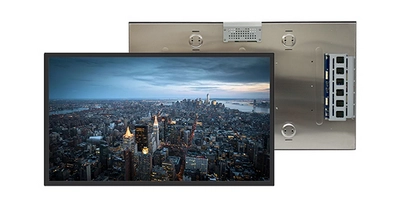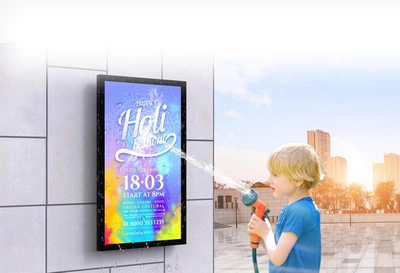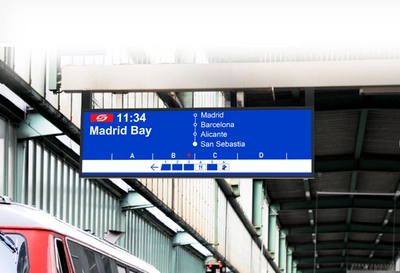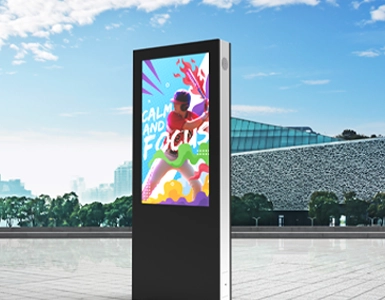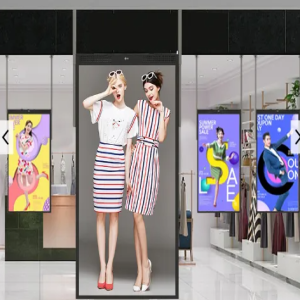
Positioning the right outdoor high-brightness LCD solutions for EV charging, fuel retail, transport, and DOOH networks
Executive overview — why this matters to European distributors
Europe’s outdoor display opportunity in 2025 is not merely an ad-selling market — it is a convergence of smart infrastructure, EV rollout, transportation modernization, and retail digitalization. Distributors who understand the technical tradeoffs (brightness vs. thermal budget), regulatory expectations (IP, CE, energy labeling), and end-customer deployment realities (enclosure choices, anti-glare optics, lifetime support) will capture a disproportionate share of new, recurring business.
Key market context:
The European outdoor display and DOOH markets show robust growth driven by smart city and retail investments.
Europe’s public charging network surpassed the 1-million public charge point milestone in 2024/2025, establishing a large, recurring demand pool for sunlight-readable HMIs on EV chargers.
This guide equips European distributors with: (a) the technology background to evaluate suppliers, (b) procurement and specification templates for tenders and RFPs, (c) deployment and lifecycle management best practices, and (d) go-to-market messaging that resonates with Tier-1 integrators and municipalities.
1. Executive definition: what is a “sunlight readable” display?
Sunlight readable displays are display systems engineered to remain visually legible under high ambient illumination — typically direct sunlight. Practically, this requires a systems-level approach: high peak luminance (nits), optical treatments (anti-reflection, contrast-enhancing coatings), optical bonding, robust backlight drive strategies, and enclosure engineering to limit solar heating and ingress.
Industry practice places meaningful thresholds as follows:
Basic outdoor readable: ~1,000–1,500 nits — acceptable for shaded/semicontrolled exteriors.
True sunlight readable: ~2,500–3,500 nits — suitable for many European outdoor locations, including window-facing and canopy-exposed kiosks.
Ultra sunlight readable: ~3,500–5,000+ nits — required for fully exposed vertical installations and fuel pump / forecourt applications where direct noon sun is expected.
Takeaway for distributors: ask suppliers to specify both peak nits and sustained luminance at defined ambient temps (e.g., 25°C, 45°C). Peak numbers alone often hide thermal throttling behavior under solar load.
2. Market context & commercial rationale for European distributors
2.1 Market size and growth
Europe is a strategic market for outdoor displays: urban renewal programs, retail reinvestment into omnichannel window signage, and structural EV investment are creating a steady demand curve. Independent market sources estimate the broader digital signage/commercial display market in Europe and the outdoor LED segment are both expanding at mid- to high-single digit to mid-teens CAGRs through the rest of the decade. Grand View Research and other regional market trackers document significant growth in the European digital signage and outdoor LED/display sectors.
2.2 EV charging and fuel retail are high-velocity verticals
A critical demand vector for high-brightness HMIs is EV charging infrastructure. With public chargers exceeding one million in Europe in 2024/2025 and EU targets pushing to multiple millions by 2030, charge-point operators and site owners need robust HMIs that survive weather, vandalism, and continuous operation — and that are readable in broad daylight. The IEA and industry reports confirm the scale of charger rollouts and the resulting recurring hardware and service needs.
Commercial note: These verticals are tender-driven. Distributors who can demonstrate compliance (IP rating, CE, extended warranty) and provide local technical services win repeatable framework agreements.
3. Core technologies that make a display “sunlight readable”
Sunlight readability is not a single component spec but a set of engineering patterns. Below are the key technology elements and what to require from suppliers.
3.1 High-efficiency backlight engineering
Direct-lit LED arrays: deliver high luminance while supporting thermal spread. For modules up to 5000 nits, direct LED arrays with tuned phosphor and current regulation are common.
Adaptive drive: PWM or current modulation controlled by ambient sensors reduces power when full brightness is unnecessary, improving lifetime and regulatory energy metrics.
Sustained luminance curves: insist on supplier curves showing luminance versus time at specified ambient temps; ask for throttling thresholds.
3.2 Optical treatments and optical bonding
Anti-reflective (AR) coatings reduce specular reflections from glass.
Anti-glare (AG) surface treatments trade gloss for diffuse scattering; choose AG levels depending on content contrast needs.
Optical Clear Adhesive (OCA) bonding or full lamination removes air gap between cover glass and LCD, reducing internal reflections and improving contrast in high ambient light.
3.3 Contrast management & local dimming
High luminance alone does not guarantee legibility; perceptual contrast matters. Optical bonding + AR coatings + high native contrast LCD technologies (like VA or advanced IPS with high CR) yield better real-world legibility than raw nits numbers alone.
3.4 Thermal system design
Frame & chassis conduction: aluminum structural frames provide low-mass thermal rails that channel heat away from the backlight.
Passive ventilation vs sealed enclosures: many outdoor displays prefer sealed IP65 enclosures to prevent ingress; this increases internal thermal challenges which must be addressed with heat spreaders, thermal pads, or active heat pathing.
Thermal derating specs: get supplier test data showing luminance and lifetime under simulated solar load (e.g., 1,000–1,200 W/m²) and enclosure constraints.
3.5 Environmental protection & mechanical robustness
Ingress protection (IP65 / IP66): IP65 is dust tight and protected against water jets; IP66 improves resistance to high-pressure jets — both are common requirements for outdoor HMIs. Distributors should verify third-party IP test certificates per IEC 60529.
Impact protection (IK rating): IK08 or higher may be needed in high-risk sites.
UV and anti-fog coatings: prevent optical degradation and condensation on internal glass surfaces.
4. Standards, certifications, and regulatory checklist
European distributors must ensure supplier compliance with the following minimum set of standards (ask for certificates and lab reports):
CE marking — mandatory for electronics placed on the EU market (EMC, safety directives).
RoHS / REACH — material compliance for electronic components.
IP rating test per IEC 60529 — verify IP65/IP66 claims with independent lab reports.
EMC testing — particularly important for charging station integrations.
Energy labeling / EcoDesign — check local energy labeling rules for displays and signage (growing importance in EU procurement).
Mechanical & impact testing — IK rating tests where applicable.
Extended lifecycle testing — accelerated aging / thermal cycle / UV exposure reports (often contractually required for long-term maintenance agreements).
Practical tip: request original test reports (PDF) and ensure they are dated within the last 36 months; older tests may not reflect current manufacturing revisions.
5. Specification templates: what to include in an RFP
Below is a condensed RFP template for sunlight readable displays targeting EV chargers, forecourt pumps, or outdoor kiosks. Use this to qualify suppliers and tighten distributor margin by enforcing clear thresholds.
Mandatory technical items
Peak luminance: specify required nits and the condition (e.g., 3500 nits @ 25°C sustained for 1 hour).
Sustained luminance & thermal derating curve: required.
Optical bonding: OCA bonded or equivalent; provide adhesion test results.
Surface treatment: AR + AG spec (Haze %, Gloss units).
IP rating: IP65 sealed front and back with lab report. (Or IP66 if high-pressure cleaning is expected.)
Operating temperature: e.g., −20°C to +70°C (specify for local climate).
Backlight lifetime: L70 or L50 at specified brightness and ambient temp (e.g., L70 > 50,000 hours @ 3000 nits).
Power consumption: W per average luminance level (e.g., 500 W @ 5000 nits — realistic numbers must be supplied).
Interfaces & HMI: HDMI/DP, LVDS/eDP, RS232/RS485 for control, Ethernet for content management.
Mechanical & mounting: VESA or custom mounting pattern, bezel thickness, ingress for cables.
Warranty & service: 3–5 years with replacement SLA and optional on-site RMA.
Optional but high-value items
Ambient light sensor for adaptive brightness.
Anti-vandal glass or Gorilla Glass upgrade.
Integrated content player for turnkey installations.
Mounting & cable harness kits (saves integration time).
6. Technical procurement decisions — engineering tradeoffs explained
6.1 Brightness vs. Thermal & Lifetime tradeoff
High luminance increases power and accelerates backlight degradation. For sustained installations, consider sustained luminance requirement rather than short-term peak. Reliable suppliers will provide L70/L50 lifetime curves at the deployed luminance and ambient temp.
Distributor negotiation point: require luminance verification in a representative enclosure and include a clause for reduced price or replacement if sustained luminance falls below contracted levels after 12 months.
6.2 Optical bonding vs. servicability
Optical bonding drastically improves contrast and durability but complicates field repair (panel replacements require skilled bonding). Balance use: bonded modules for public outdoor kiosks; non-bonded for easily serviceable fleet assets.
6.3 Sealed enclosure vs. ventilation
Sealed IP65/IP66 enclosures protect electronics but require thermal engineering to avoid overheating. Distributed active cooling (e.g., heat spreaders) and smart dimming preserve lifetime. For high-soak applications (e.g., pump islands), prefer sealed solutions with verified thermal pathways.
6.4 Resolution and pixel density choices
For textual HMIs (price, instructions), medium resolution (FHD or 1920×1080) is sufficient. For advertising DOOH or branding, higher PPI and color gamut are important. Evaluate content first, then choose panel specs.
7. Installation & commissioning checklist
Use this checklist to standardise installations and avoid common failure modes that can lead to expensive RMAs.
Pre-install
Confirm site solar orientation and shade cycles (use Google Earth/solar diagrams).
Verify mounting structural integrity and cable routing plan.
Validate power supply quality (surge protection, DC/AC stability).
On site (installation)
Inspect glass and bezel for damage pre-installation.
Use manufacturer-recommended torque on VESA points.
Seal cable penetrations with manufacturer-specified gaskets.
Verify ambient light sensor operation and content scaling.
Commissioning
Run a 72-hour burn-in at target brightness (or at supplier-recommended stage) and log temperatures.
Record luminance measurements using a calibrated lux meter and a spectroradiometer, and archive results in the project file.
Configure adaptive brightness and uptime schedules.
Handover
Provide the client a “Display Handover Pack” containing test reports, warranty, spare parts list, and routine maintenance intervals.
8. Maintenance & total cost of ownership (TCO) modeling
When evaluating supplier offers, European distributors must present customers with a realistic TCO, not just unit price. TCO factors include:
Initial CapEx (unit price, mount, delivery).
Integration CapEx (cabinets, adapters, electrical work).
Operational expenditure (OpEx): energy consumption (kWh), scheduled maintenance, spare parts. Energy can be material: high-nits displays at 3000–5000 nits consume multiples of indoor displays. Consider adaptive brightness and schedule dimming to cut OpEx.
End-of-life / refurbishment: typical outdoor LCD lifetimes are 5–8 years for continuous use; plan for proactive replacement or refurbishment cycles.
Downtime risk & service SLAs: quantify the cost of a non-operational display for ad revenue or passenger information.
Modeling tip: present a 5-year TCO to customers with scenarios (conservative, expected, best case) showing how energy savings and robust warranties offset higher initial purchase price.
9. Case study highlights — what works in Europe
Below are representative deployment patterns and technical choices that consistently work in European projects. (Names and details can be adapted into distributor case decks.)
Case A: EV charging network (Northern Europe, 3,000 chargers)
Requirement: 1500–3000 nits HMI, IP66, integrated payment terminal cutout, −25°C winter operation.
Solution highlights: 21.5” sunlight readable modules (OCA bonded), low-temperature LCD driver engineering, heated frames for anti-condensation, 5-year SLA with spare module stock.
Outcome: >98% uptime, simplified field swaps, extended warranty revenue stream.
Case B: Forecourt digital pumps (Western Europe fuel retailer)
Requirement: vertical price and promotional display readable under direct noon sun; anti-vandal; ATEX considerations inside cabinet.
Solution highlights: 3500–5000 nits ultra-bright stretched LCD, chemically strengthened glass, sealed cabling, integrated backlight current limiting to reduce aging.
Outcome: improved upsell conversion, lower maintenance claims vs older passive glass LCDs.
Case C: Transit PID upgrades (Southern European city)
Requirement: long-life displays for platforms and shelters; wide-angle viewing; uniform brightness across long stretched panels.
Solution highlights: 32:9 stretched modules, high contrast VA panel, robust mounting to resist vibration, centralized CMS integration.
Outcome: consolidated vendor supply, simplified procurement, faster deployment cycle.
How distributors win: present these templates alongside spec sheets during the first engagement; integrators love to see tested reference architectures rather than one-off ideas.
10. Commercial playbook for distributors — go-to-market tactics
10.1 Positioning & value messages
Lead with reliability and TCO, not raw nits. Senior procurement cares about serviceability and predictable costs.
Offer bundle SKUs: display module + sealing kit + power harness for each vertical (EV, pump, transit). Bundles shorten project planning and increase margin.
Provide project readiness documentation: RFP template, technical test reports, and a standard 72-hour commissioning checklist.
10.2 Sales motions by vertical
EV Chargers: target charge-point operators and national installers. Emphasize cold-start performance, payment integration, and IP66 sealing.
Fuel Forecourt: approach fuel retailers and pump OEMs. Emphasize ultra-bright visibility and ATEX-aware integration.
Transit & Municipal: bid on framework tenders; offer extended field support and local stock.
Retail/DOOH: showcase creative content playback demos and window-facing case metrics.
10.3 Service & logistics
Maintain local spare stock for key SKUs in Europe (e.g., Germany, Netherlands). Faster RMAs win deals.
Offer installation training and accredited partner programs to accelerate integrator adoption.
Provide predictive maintenance options tied to brightness decline or heat metrics (requires telemetry/monitoring support).
11. Procurement checklist — red flags and supplier questions
When a supplier responds to an RFP or a quotation, validate these explicit items:
Sustained luminance test report showing luminous output at specified ambient temp and in an enclosed cabinet.
IP certificate per IEC 60529 from an accredited lab (not vendor self-claim).
Thermal derating curve and max allowed ambient temp at full brightness.
L70 / L50 lifetime reports measured at deployed brightness conditions (not at 25°C indoor).
Optical bonding spec & AR/AG metrics (haze %, reflection %).
Warranty scope including front glass, backlight, controller, and labor.
Spares & lead time commitments.
Reference deployments in similar climates and regulatory jurisdictions (Europe preferred).
Red flag examples: claims of “5000 nits” without sustained curve; IP claims without lab report; no field reference for similar EU projects.
12. Pricing & margin considerations for European distributors
Pricing structure options
Unit purchase + integrator markup — common for one-off projects.
Framework pricing + annual service contract — preferred for ongoing charger networks.
Lease or managed displays — increasingly popular for large DOOH networks (distributor acts as service provider).
Margin levers
Value bundling: include installation kits, spare modules, and training to increase effective ASP.
SLA tiers: offer bronze/silver/gold SLAs with tiered pricing for faster RMAs and on-site swap.
Refurbishment & spare revenue: a program for refurbished modules extends revenue after initial sale.
13. Technical annex: measurement & lab testing recommendations
For procurement, implement a standard test harness to verify vendors. Below is a short lab test protocol:
Luminosity measurement: measure peak and sustained luminance with a calibrated lux meter and spectroradiometer at 0°, 30°, and 60° incidence.
Thermal soak test: enclose module in a sealed cabinet, simulate solar load (IR lamps or solar simulator), measure internal temperatures and luminance over 8–72 hours.
Ingress test: verify IP65/IP66 by independent lab per IEC 60529.
Vibration & shock: per relevant transport and installation standards.
UV & salt spray: for coastal or high-UV deployments.
Optical performance: AR/AG and contrast measurements pre/post UV exposure.
14. Recommended partner profile for distributors
When selecting manufacturer partners, prefer those with:
Published lifetime / derating data and open lab reports.
European support footprint (local spares, service partners).
Vertical references in EV, fuel, transit.
Energy-efficient backlight designs supporting adaptive dimming.
Flexible manufacturing for stretch and custom aspect ratios.
A partner that meets these criteria reduces procurement friction and boosts win rates on tenders.
15. Final recommendations & next steps for distributors
Create a verticalized brochure for EV chargers, pumps, transit with TCO tables and RFP templates. Use the spec templates in Section 5.
Stock critical SKUs regionally to lower lead times and increase conversion for RFQs.
Request lab reports and insist on sustained luminance curves — make this non-negotiable in RFPs.
Offer service packages tied to predictive maintenance and brightness guarantees.
Use reference deployments and case packs during pre-bid calls with integrators.
Appendix: selected authoritative sources & further reading
(Selected reading and market datasets to cite in tender annexes and sales decks.)
Grand View Research — Europe digital signage market analysis (2024–2033).
IEA — Global EV Outlook 2025 (charging station and infrastructure analysis).
gridX / industry reports — European EV charging milestones and distribution of charge points (2024–2025).
IEC 60529 — Ingress Protection (IP) Ratings standard (refer to independent IP lab tests).
Industry technical pages explaining brightness classes and sunlight readability.
Closing note
This guide is designed to be operational: copy the RFP template, apply the lab test checklist, and deploy the sales playbook with your sales engineers. For distribution teams focused on Europe, the immediate low-effort wins come from (a) bundling full solutions for EV and fuel retail, (b) keeping local spare stock for the highest-velocity SKUs, and (c) enforcing strict sustained-luminance and IP verification in procurement.
If you’d like, I can:
Convert this guide into a branded 12-page PDF whitepaper with charts and templated RFP inserts for RisingStar;
Produce 3 vertical-specific one-pagers (EV chargers, Fuel Forecourt, Transit) ready for distributor collateral;
Draft an outreach email + LinkedIn sequence for approaching Tier-1 integrators and charge-point operators across Europe.