A sunlight readable LCD is a display panel engineered to maintain clear visibility under direct sunlight and high ambient light conditions. While standard LCD panels produce 250–450 nits — sufficient for indoor use — outdoor environments can reach 7,000–10,000 nits of ambient brightness, rendering conventional screens unreadable.
This guide explains the core technologies behind sunlight readable LCD panels, how to select the right specifications for your project, and the key parameters that determine real-world outdoor performance.
Why Standard LCD Panels Fail Outdoors
Every LCD relies on a backlight that projects light through liquid crystal pixels. Indoors, a 300-nit panel looks clear because ambient light is relatively low. Outdoors, the equation changes completely.
When ambient brightness exceeds the display's output, two things happen:
Sunlight washout — The sun's light overpowers the backlight, making the image appear faded or invisible.
Surface reflection — Light reflecting off the glass creates glare that further obscures the content.
For B2B applications — transit information displays, EV charging interfaces, gas station screens, outdoor kiosks — an unreadable display means failed user interactions and lost revenue.
Core Technologies Behind Sunlight Readable LCD
Achieving true sunlight readability requires a combination of technologies working together. No single feature is sufficient on its own.
High-Brightness LED Backlight
The most direct approach is increasing backlight output. Sunlight readable LCD panels typically start at 800–1,000 nits, with outdoor-rated models reaching 2,500–5,000 nits.
1,000 nits — Readable in most outdoor conditions with partial shade
2,500 nits — Clear visibility under direct midday sun
5,000 nits — Legible in extreme environments such as desert regions or high-reflectance public squares
RisingStar's sunlight readable LCD panels are available from 500 to 5,000 nits, with custom brightness configurations for specific deployment requirements.
Solar-Resilient Panel Technology
One of the most common failure modes for outdoor LCDs is thermal blackening. When standard panels are exposed to intense solar radiation for extended periods, the polarizer layers degrade, causing permanent darkening defects on the screen surface.
Solar-resilient panel technology — sometimes referred to as Hi-Tni technology — uses liquid crystal materials that maintain structural integrity at elevated surface temperatures. This prevents blackening defects even under sustained direct sunlight exposure.
For engineers specifying displays that will operate in full-sun environments, solar-resilient panels are a fundamental requirement, not an optional upgrade.
Optical Bonding
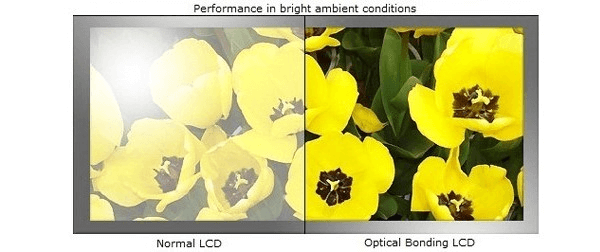
In standard touchscreen assemblies, a small air gap exists between the cover glass and the LCD panel. This gap creates internal reflections that reduce contrast, and allows moisture and dust to penetrate the display over time.
Optical bonding fills this gap with a clear optical-grade adhesive, delivering three benefits:
Reduced internal reflection — Up to 80% less reflected light between layers
Improved contrast ratio — Darker blacks and more vivid colors in bright conditions
Environmental sealing — Prevents internal fogging, condensation, and particle contamination
Anti-Glare and Anti-Reflective Surface Treatments
Surface treatments complement the internal technologies:
Anti-Glare (AG) — A micro-roughened surface that fragments reflected light, reducing mirror-like reflections
Anti-Reflective (AR) — Multi-layer thin-film coatings that reduce the percentage of light bouncing off the glass surface
These treatments are often combined for maximum effect. For public-facing installations where vandalism is a concern, hardened surfaces with 3H or 7H scratch resistance are recommended.
How to Select a Sunlight Readable LCD
Choosing the right sunlight readable LCD panel depends on several interrelated factors. Here is a systematic approach.
Step 1: Determine Required Brightness
Brightness is measured in nits (cd/m²) and is the primary specification for sunlight readability. The right level depends on your installation environment.
| Environment | Ambient Light Level | Recommended LCD Brightness | Typical Applications |
|---|---|---|---|
| Semi-outdoor / Shaded | 500–1,000 nits | 500–1,000 nits | Covered walkways, parking structures |
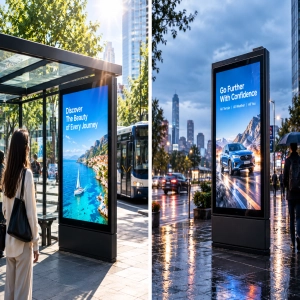
| Standard Outdoor | 1,000–3,000 nits | 1,500–2,500 nits | Retail storefronts, bus shelters, kiosks |
| Direct Sunlight | 3,000–10,000 nits | 3,000–5,000 nits | Digital billboards, transit displays, gas stations |
| Extreme Sun | 10,000+ nits | 5,000 nits | Desert installations, equatorial regions |
Specifying more brightness than needed increases power consumption and cost without meaningful benefit. Specifying too little results in an unreadable display.
Step 2: Choose Panel Technology
For outdoor sunlight readable LCD applications, panel technology affects viewing angle, color accuracy, and long-term reliability.
| Panel Type | Viewing Angle | Outdoor Suitability |
|---|---|---|
| TN (Twisted Nematic) | ~170°/160° | Limited — poor off-angle visibility |
| IPS / ADS / AHVA | 178°/178° | Good — consistent color at all angles |
| Solar-Resilient (Hi-Tni) | 178°/178° | Recommended — prevents thermal blackening |
Solar-resilient panels sourced from Tier-1 manufacturers — such as LG Display, AUO, BOE, Innolux, and Tianma — provide the quality consistency and supply stability that B2B deployments require.
Step 3: Define Environmental Protection Needs
Outdoor LCD panels must withstand more than sunlight. Rain, dust, humidity, and temperature extremes are all real deployment challenges.
| Protection Level | Dust | Water | Typical Use |
|---|---|---|---|
| IP54 | Limited ingress | Splash-proof | Sheltered semi-outdoor |
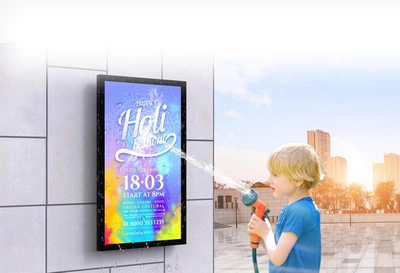
| IP65 | Fully dust-tight | Water jets | Standard outdoor |
| IP66 | Fully dust-tight | Powerful water jets | Heavy rain, coastal, industrial |
Operating temperature range is equally important. A specification of -20°C to 70°C covers the majority of global deployment climates, from cold northern regions to hot desert environments.
Step 4: Select Size and Form Factor
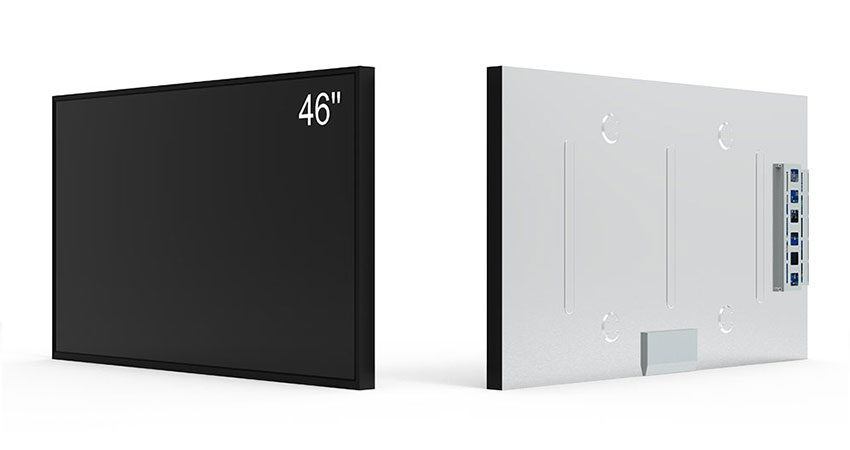
Sunlight readable LCD panels are available from compact 7-inch modules for embedded applications up to 100-inch panels for large-format digital signage. Common form factors include:
Standard 16:9 — Digital signage, kiosks, general outdoor displays
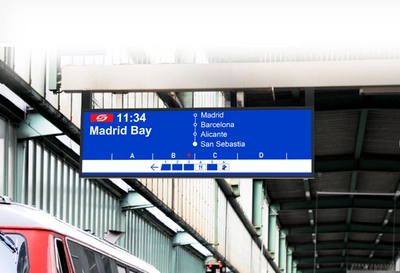
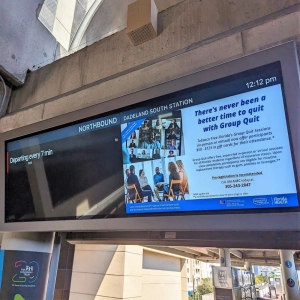
Stretch bar — Metro PIDS, shelf-edge displays, bus stop headers
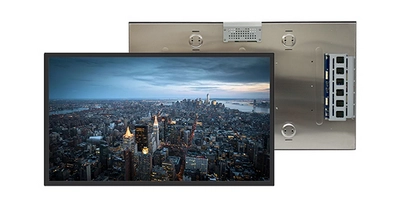
Open frame — Embedded kiosks, ATMs, vending machines
Round / square — Decorative signage, specialty retail
Custom sizes and aspect ratios are available for specialized applications.
Common Applications for Sunlight Readable LCD
Sunlight readable LCD panels are specified across a wide range of industries and use cases:
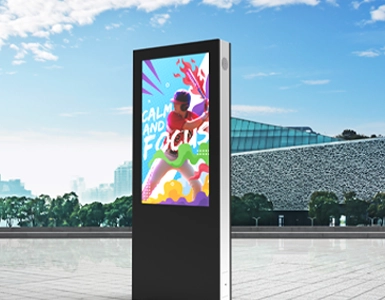
Outdoor digital signage — Advertising billboards, promotional displays, brand communications
Transportation (PIDS) — Bus schedule displays, metro platform information, airport boards
EV charging stations — Payment interfaces, charging status displays, interactive advertising
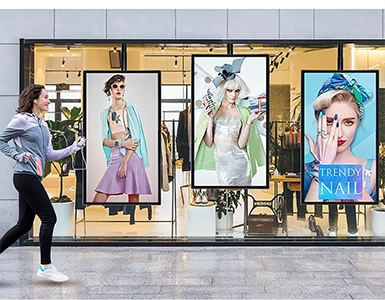
Retail window displays — High-brightness screens behind storefront glass
Gas station pump TVs — Pricing displays and promotional content at fuel dispensers
Industrial HMI — Factory floor monitoring, food processing control panels
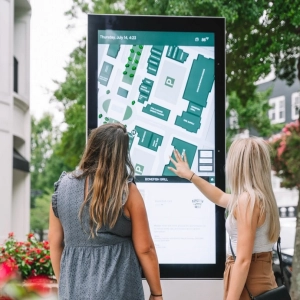
Smart city infrastructure — Public information kiosks, wayfinding, emergency alert systems
Marine and military — Navigation displays, bridge monitors, field communication screens
Each environment presents unique challenges — from extreme temperatures and humidity to vandalism and UV exposure — and each requires a sunlight readable LCD solution engineered for those specific conditions.
Maintenance Considerations for Outdoor LCD
Deploying sunlight readable LCD panels outdoors introduces maintenance considerations that indoor installations do not face.
Preventive maintenance should include periodic inspection of seals and gaskets (particularly for IP65/IP66-rated enclosures), cleaning of anti-glare surfaces, and verification of ambient light sensor calibration.
Thermal management is critical. Displays operating in direct sunlight benefit from passive heat dissipation designs that do not rely on fans or moving parts, which are common points of failure in outdoor environments.
Remote monitoring capabilities — including brightness diagnostics, temperature alerts, and firmware update support — reduce the need for on-site service visits, which is particularly valuable for large-scale deployments across multiple locations.
FAQ
Q: What brightness level is considered sunlight readable?
A: Generally, 800 nits or higher is considered the minimum for sunlight readability. Most professional outdoor LCD panels are rated at 1,000 nits or above, with 2,500–5,000 nits recommended for direct sunlight exposure.
Q: What is the difference between sunlight readable and daylight readable?
A: Daylight readable typically refers to displays rated at 400–700 nits with optical bonding, suitable for indirect sunlight or shaded outdoor areas. Sunlight readable refers to displays rated at 1,000+ nits, designed for direct sunlight exposure.
Q: Can sunlight readable LCD panels be dimmed at night?
A: Yes. Most professional-grade sunlight readable LCD panels include ambient light sensors that automatically adjust backlight brightness based on current lighting conditions. This reduces power consumption and extends backlight lifespan.
Q: How long do sunlight readable LCD panels last?
A: Industrial-grade sunlight readable LCD panels with WLED backlighting are typically rated for up to 50,000 hours of operation, depending on operating conditions and brightness settings.
Q: What causes blackening defects on outdoor LCD panels?
A: Blackening defects occur when standard LCD panels are exposed to intense solar radiation for extended periods. The heat causes the polarizer layers to degrade, resulting in permanent darkening. Solar-resilient panel technology prevents this failure mode.
Q: Do sunlight readable LCD panels require special mounting?
A: Mounting requirements depend on the installation environment. Common options include VESA mount, wall mount, ceiling mount, and panel mount configurations. Outdoor installations typically require sealed enclosures with proper cable management to maintain IP ratings.