The EV charging industry is growing at a pace that demands hardware decisions be made quickly — but the display you choose for your charger will shape user experience, operational reliability, and revenue potential for years to come.
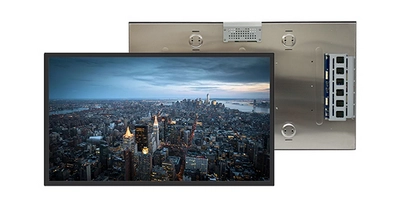
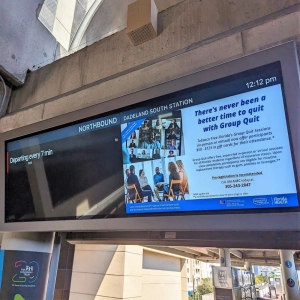
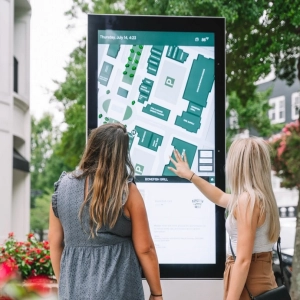
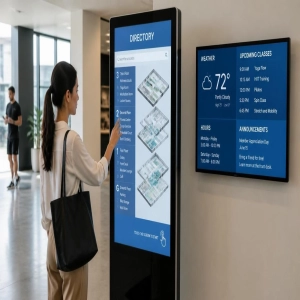
An EVSE LCD module is not just a screen. It is the primary interface between your brand and every driver who plugs in. It handles payment prompts, charging status, advertising content, and wayfinding — often in direct sunlight, driving rain, or freezing temperatures.
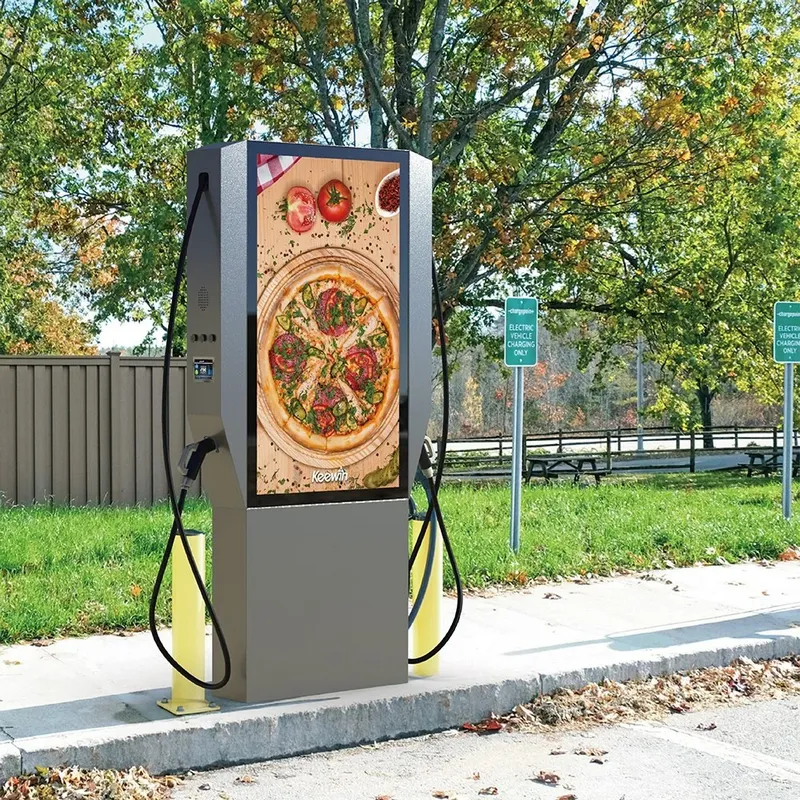
A high brightness EV display rated 1,000–5,000 nits ensures readability in any lighting condition, from covered parking to open-air stations in desert climates. RisingStar specializes in EV charging station displays engineered for 24/7 outdoor operation.
Yet many EVSE (Electric Vehicle Supply Equipment) manufacturers still default to consumer-grade monitors or repurpose tablet panels without fully accounting for the unique demands of outdoor charging environments. The result: washed-out screens, failed touch inputs, and premature hardware failures that erode customer trust and drive up maintenance costs.
This guide walks through the key specifications and design considerations that separate a reliable outdoor ev charging station display from one that will underperform in the field.
Our EV Charging Station Display Solutions page showcases our complete range of sunlight-readable displays purpose-built for EV charging infrastructure.
1. Brightness: The Make-or-Break Specification
Brightness is the single most important factor in outdoor display readability. It is measured in nits (candelas per square meter), and the gap between consumer and industrial-grade displays is significant.
Typical brightness levels:
300–500 nits — Standard consumer monitors and tablets. Adequate for indoor use, but completely washed out under direct sunlight.
1,000–1,500 nits — Minimum threshold for semi-outdoor installations such as covered parking structures or shaded carports.
2,500–3,000 nits — Suitable for open-air charging stations exposed to direct sunlight during most of the day.
5,000 nits — Required for extreme solar environments: desert regions, high-albedo surfaces (concrete plazas), or sites with no shade coverage at all.
A display that looks bright in a showroom can become unreadable at noon on a summer day. When selecting an ev charging station display, match the brightness rating to your site's solar exposure — not just the geographic latitude, but the specific orientation, surrounding surfaces, and canopy coverage.
RisingStar's EV charging displays offer brightness options from 1,000 to 5,000 nits, with integrated ambient light sensors that automatically adjust output based on real-time conditions. This means the screen runs at full power during peak sunlight and dims at night — reducing energy consumption and extending backlight lifespan without manual intervention.
2. Sunlight Resilience: Beyond Brightness
High brightness alone doesn't guarantee outdoor readability. Two additional factors determine whether a display performs well under sustained solar exposure:
Optical Bonding
Standard displays use "air bonding" — the touch panel and LCD are separated by an air gap. This gap causes internal reflections that can reduce perceived contrast by up to 50%, and creates a surface where condensation and fogging develop over time.
Optical bonding fills this gap with a layer of optically clear adhesive, eliminating internal reflections and dramatically improving contrast. The result is a display that remains sharp and vivid even at acute viewing angles in bright sunlight.
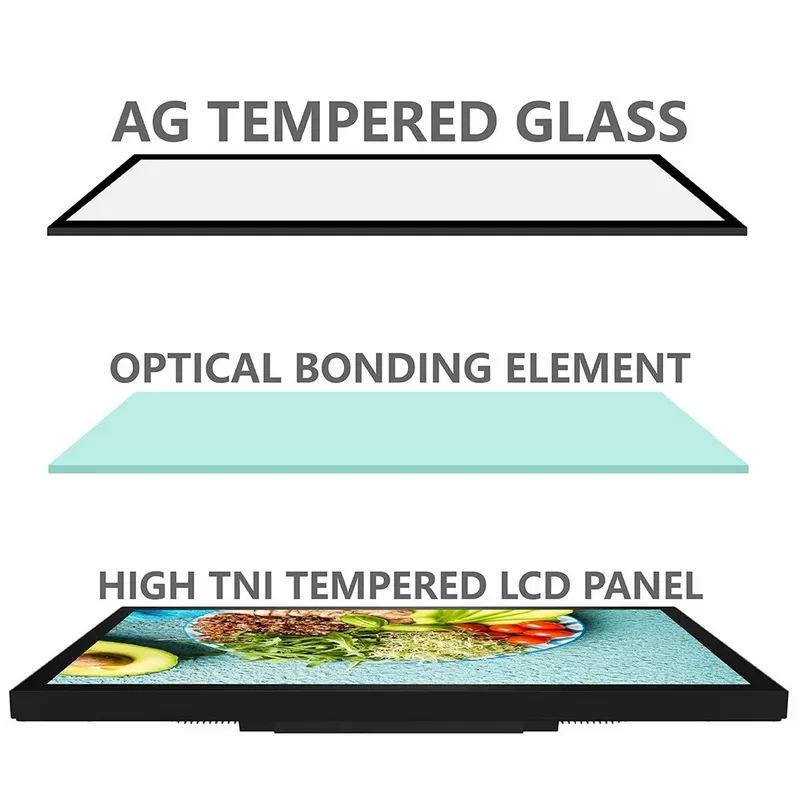
For ev charging station displays installed outdoors, optical bonding is not a luxury — it is a baseline requirement. RisingStar applies optical bonding across its EV charger display range as standard.
Solar-Resilient Panel Technology
In high-temperature, high-solar-radiation environments, conventional LCD panels are prone to a defect known as "thermal blackening" — where the liquid crystal layer degrades under sustained heat exposure, creating permanent dark spots on the screen.
Solar-resilient panels (using high-Tni liquid crystal materials) are engineered to withstand prolonged exposure to intense solar radiation without degradation. This technology is particularly critical for charging stations in tropical, desert, and Middle Eastern installations where panel surface temperatures can exceed 80°C.
When evaluating an ev charging station display for hot-climate deployments, ask specifically about the panel's solar resilience and Tni rating — not just the brightness specification.
3. Environmental Protection: IP65 and IP66
Outdoor EV charging displays are exposed to the full spectrum of weather conditions: heavy rain, dust storms, coastal salt spray, humidity, and industrial pollutants. Without proper sealing, moisture ingress leads to fogging, circuit corrosion, and premature component failure.
IP rating overview:
IP65 — Protected against low-pressure water jets from any direction and complete dust ingress. Suitable for most outdoor EV charging applications.
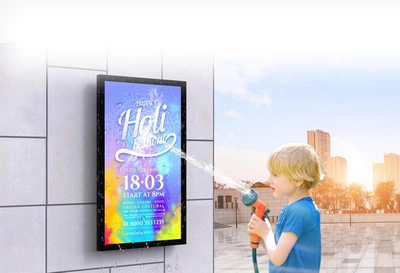
IP66 — Protected against powerful water jets. Recommended for coastal locations, areas with heavy monsoon rainfall, or sites subject to direct pressure washing during maintenance.
RisingStar's ev charging station display products are available in both IP65 and IP66 configurations with fully sealed enclosures. No additional weatherproof cabinet is required — the display itself is the enclosure.
For installations in coastal or high-humidity regions, specify models with anti-corrosion coatings and sealed cable entry points to prevent salt spray damage to internal electronics.
4. Touch Technology: Works With Gloves, Works in Rain
If your charger includes an interactive touchscreen — for payment, session control, or content browsing — the touch technology must perform reliably in real-world outdoor conditions.
Projected Capacitive (PCAP) touch is the industry standard for modern EV charging interfaces, offering multi-touch support, fast response times, and a smartphone-like user experience. However, standard PCAP controllers are designed for indoor use and struggle with two common outdoor scenarios:
Wet fingers or rain on the screen — causes phantom touches and input errors
Work gloves — standard PCAP requires direct skin contact and won't register gloved input
Advanced PCAP controllers solve both problems through firmware tuning and sensitivity optimization. RisingStar's EV charging touchscreen displays support reliable multi-touch input with work gloves and wet hands as standard — no additional hardware or configuration required.
For charging stations in unattended public areas, also consider the protective glass specification:
Tempered glass (4–10mm) — impact-resistant and cost-effective. Standard for most EV charger displays.
IK10-rated glass — withstands high-impact vandalism attempts. Recommended for unsupervised installations.
Anti-glare (AG) coating — reduces surface reflections without sacrificing optical clarity.
5. OCPP Integration and System Connectivity
The Open Charge Point Protocol (OCPP) is the de facto communication standard between EV chargers and central management systems. An ev charging station display that supports OCPP natively simplifies integration with:
Payment gateways (credit card terminals, QR code scanning, NFC)
Charging management platforms (session control, pricing, load balancing)
Remote content management systems (advertising, wayfinding, alerts)
Fleet management software
RisingStar's EV charging display solutions run on Android or Linux platforms with built-in OCPP 1.6 and 2.0 support. This means your display hardware can handle the full software stack — from payment processing to remote content updates — without requiring a separate computing module.
Interface options for system integration:
LVDS — low-power, high-speed signaling for 7"–15" panels. The most common interface for compact EV charger displays.
eDP (Embedded DisplayPort) — supports higher resolutions (up to 4K) with advanced power-saving features.
HDMI — plug-and-play compatibility with standard computing hardware.
6. Operating Temperature and Lifespan
EV charging stations are permanent outdoor infrastructure. The display must operate reliably across the full range of ambient temperatures encountered in your target market — not just during mild spring days.
Critical temperature considerations:
Operating range: A display rated for 0°C to 50°C will fail in a Canadian winter or a Saudi Arabian summer. Look for a range of at least -20°C to 70°C.
Thermal management: Passive cooling (heat conduction) is preferred over fan-based systems for outdoor installations. Fans introduce noise, require filter maintenance, and create potential failure points.
Backlight lifespan: Industrial-grade WLED backlights rated for up to 50,000 hours (approximately 5.7 years of continuous 24/7 operation) significantly reduce long-term replacement costs.
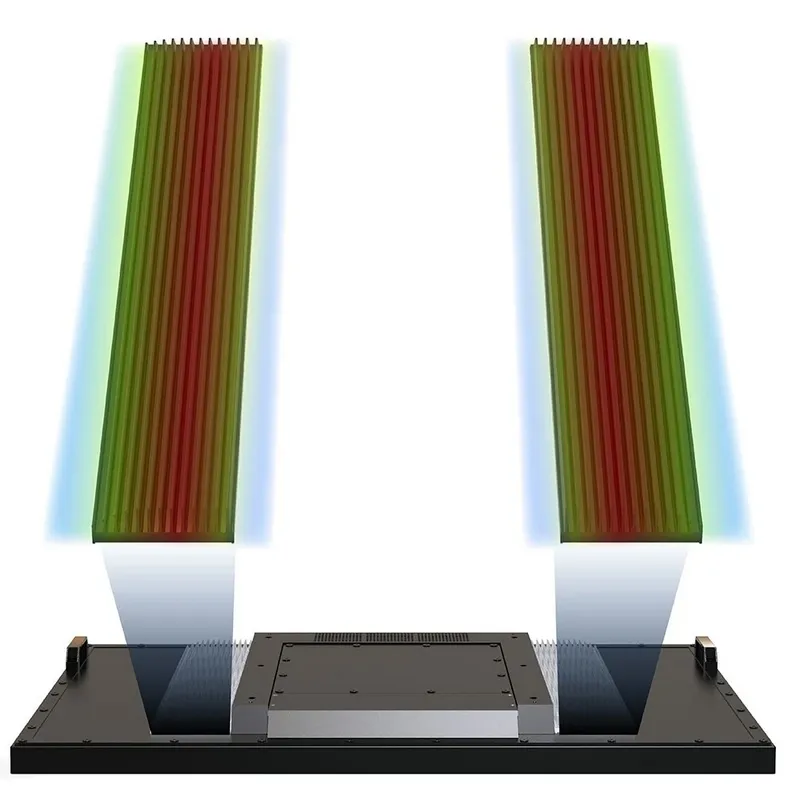
RisingStar's ev charging station display products are engineered for 24/7 continuous operation across a -20°C to 70°C range, using passive thermal management and industrial-grade backlighting for a verified up to 50,000-hour system lifespan.
7. Size and Form Factor Selection
The right display size depends on the charger design and the information density required at the point of interaction.
Common size ranges for EV charging applications:
| Display Size | Typical Use Case |
|---|---|
| 7"–10" | Compact wallbox chargers, basic status display |
| 12"–15" | Interactive payment terminals, session control |
| 21.5"–27" | Public station interfaces with payment + advertising |
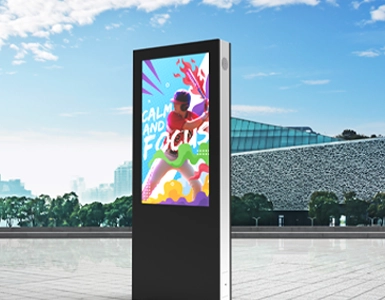
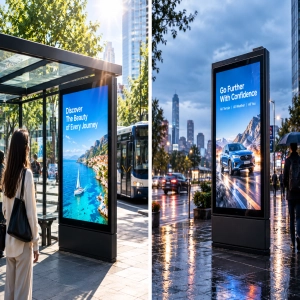
| 32"–55" | Canopy-mounted advertising displays, large-format wayfinding |
For interactive payment terminals, displays in the 15"–27" range offer the best balance of readability, touchscreen usability, and physical footprint. Larger formats (32"–55") are typically used for advertising displays mounted on charging canopies or nearby structures.
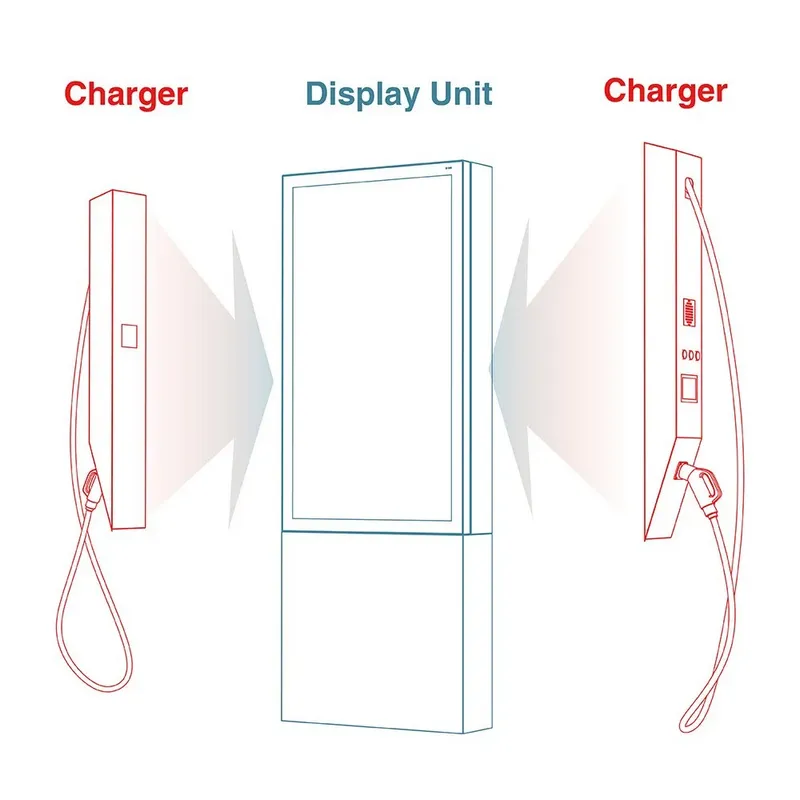
RisingStar offers the full range from 7" to 55", including custom stretch-bar formats for space-constrained installations such as slim charger posts or metro-adjacent charging points.
8. Customization and OEM/ODM Support
Most EV charger manufacturers need displays tailored to their specific hardware design — not off-the-shelf monitors retrofitted into a charger housing.
Key customization areas to discuss with your display supplier:
Custom dimensions and aspect ratios
Brightness level matched to installation environment
Touch controller tuning (glove mode, wet-hand mode, thick glass support)
Housing material and mounting configuration (stainless steel, aluminum, open-frame)
System platform (Android/Linux) with pre-installed OCPP client and CMS agent
Surface treatment (anti-glare, anti-reflective, UV-protective coating)
RisingStar operates a 4,000㎡ ISO 9001-certified facility in Shenzhen with in-house optical bonding, panel assembly, and system integration capabilities. As authorized partners of LG Display, AUO, INNOLUX, BOE, and Tianma, we guarantee Grade A panel quality and long-term supply stability — from first sample to mass production.
Quick Reference: EV Charging Station Display Selection Checklist
Before finalizing your display specification, verify the following:
Brightness — matched to site solar exposure (1,000–5,000 nits)
Optical bonding — eliminates air gap, prevents fogging
IP rating — IP65 minimum; IP66 for coastal or high-rainfall sites
Touch capability — PCAP with glove/wet-hand support
Protective glass — tempered 4–10mm, AG coating, IK10 if unattended
OCPP support — 1.6 or 2.0, native on Android/Linux platform
Operating temperature — -20°C to 70°C minimum
Backlight lifespan — up to 50,000 hours (industrial-grade WLED)
Thermal management — passive cooling preferred (no fans)
Interface — LVDS/eDP/HDMI matched to your mainboard
Certifications — CE, FCC, RoHS, UL (for target market access)
Warranty — 2-year minimum with spare parts availability
Conclusion
Selecting the right ev charging station display is a decision that affects every driver who interacts with your charger — and every month of operational uptime over the display's lifetime.
The best outdoor EV charger displays combine industrial-grade brightness (1,000–5,000 nits), full environmental sealing (IP65/IP66), advanced touch technology (glove and wet-hand capable), and native OCPP integration — all within a display system engineered for 24/7 operation across extreme temperatures.
RisingStar has been manufacturing high-brightness, sunlight-readable LCD displays since 2009, serving 500+ enterprise clients across 50+ countries. Our EV charging display range covers 7" to 55" with full OEM/ODM customization, backed by a 4,000㎡ ISO-certified facility and Tier-1 panel partnerships.
Recommended EV Charging Display Products
| Product | Key Specs | Best For |
|---|---|---|
| 24" Shopping Mall Fast EV Charging Display | 24", 1500 nits, FHD, IP65 | Public charging hubs, commercial complexes |
| 10.1" Open Frame Monitor | 10.1", 1000 nits, 600-5000 nits configurable | Compact wallbox chargers |
| 21.5" Sunlight Readable Display | 21.5", 2500 nits, High-Tni, IP65 | Kiosks, outdoor installations |
| 27" EV Charging Display | 27", 300-5000 nits, AMVA, IP66 | Large-format charging stations |
Explore our full EV Charging Station Display solutions to find the perfect display for your project.
Whether you're designing a new charger from scratch or upgrading an existing fleet, our engineering team can help you select — or custom-build — the right EVSE LCD module for your project.
Ready to get started? Request a custom quote or reach us directly at ai@risinglcd.com. We respond within 8 hours.