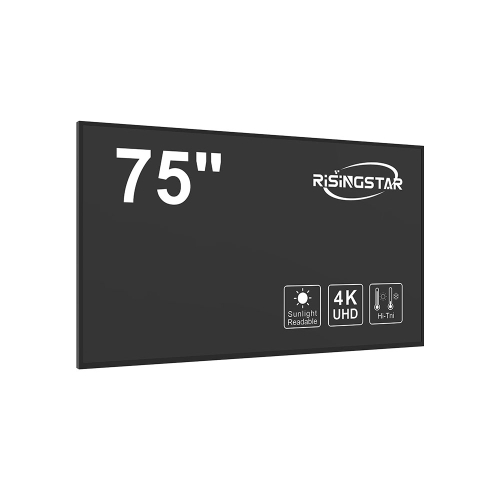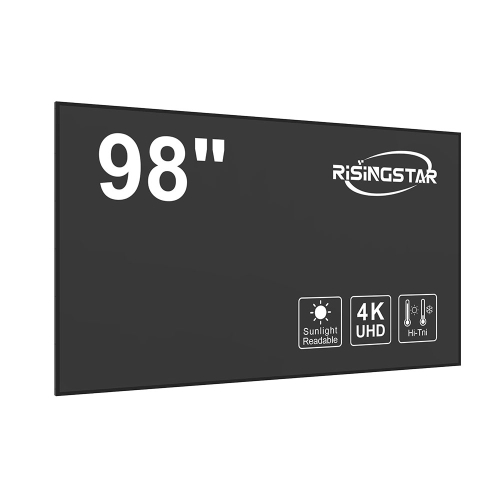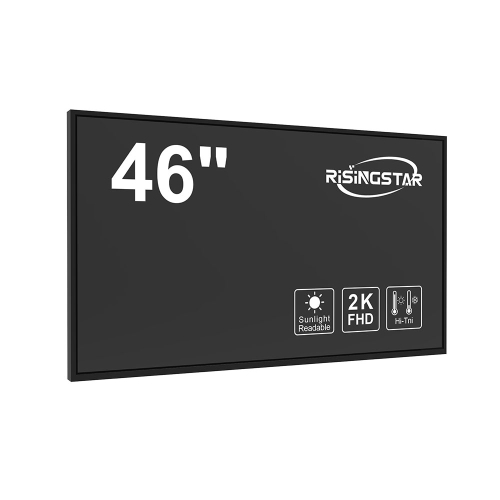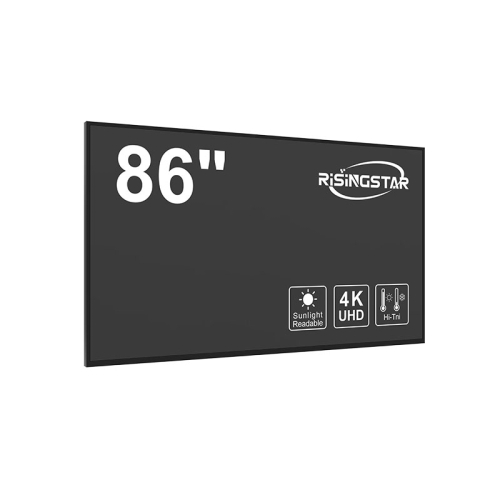
The outdoor high-brightness display sector is entering a period of structural expansion. In 2025, the market is projected to reach USD 8.7 billion, driven by global investments in EV infrastructure and smart city deployments.
I. Market Scale & Regional Distribution
According to consolidated data, the APAC region leads the growth due to rapid urbanization and EV network expansion.
| Region | 2025 Market Size (USD) | Projected CAGR |
|---|---|---|
| Europe | 2.45B | 13.8% |
| North America | 2.12B | 12.3% |
| APAC | 3.62B | 16.9% |
II. Core Technology Trends
1. Luminance Standards Elevation
To ensure sunlight readability under >100,000 lux, 2025 benchmarks have shifted. The 3500–5000 nits segment is now the fastest-growing category, representing 27% of new deployments.
2. Thermal Architecture & Heat Mitigation
High-brightness systems face dual heat stress. RisingStar employs high-conductivity aluminum structures and CFD-driven simulation to reduce thermal load by 18–27%, preventing TNI blackening failure.
3. Reliability Engineering
Optical Bonding: Eliminates air gaps to prevent internal condensation and improve contrast ratio.
Wide-Temp LCD: Validated for continuous operation from -20°C to +70°C.
Ingress Protection: Standardized IP65/IP66 sealing for harsh environments.
III. Strategic Application Landscape
The transition to digital interfaces in rugged environments is accelerating across three primary sectors:
EV Charging: Demand for 2500+ nits HMI terminals with anti-vandal protection.
Fuel Retail: High-noon visibility for next-gen digital fuel pump systems.
Smart Transit: Stretched LCDs for Passenger Information Displays (PID) in rail and metro hubs.
IV. Market Forecast (2025–2028)
| Year | Market Size (USD) | YoY Growth |
|---|---|---|
| 2025 | 8.7B | - |
| 2026 | 9.9B | 13.8% |
| 2027 | 11.2B | 13.2% |
Conclusion
The industry is shifting from hardware manufacturing to providing high-efficiency, robust digital interfaces. For integrators, choosing modules with advanced thermal management and 3000+ nits luminance is essential for decadal reliability.