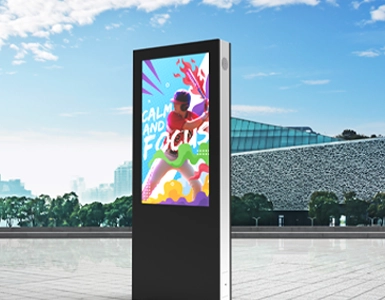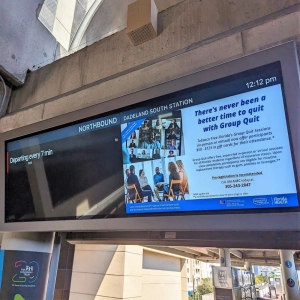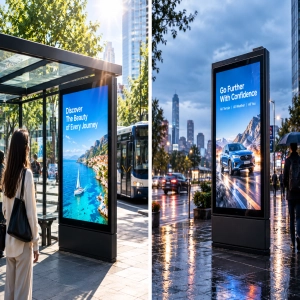
Two audiences walk past two screens. At an airport lounge, a traveler settles into a seat ten meters from a display and watches it for several minutes while waiting for a flight. At a highway-adjacent urban pillar, a driver passes the screen at 60 km/h and has under three seconds of usable attention. Both are digital out-of-home placements, yet their dwell time — how long a viewer stays within sight of the screen — differs by two orders of magnitude. Dwell time is not a footnote in the media plan; it is the variable that should determine which LCD panel you buy, at what brightness, with what content structure, and how you measure success.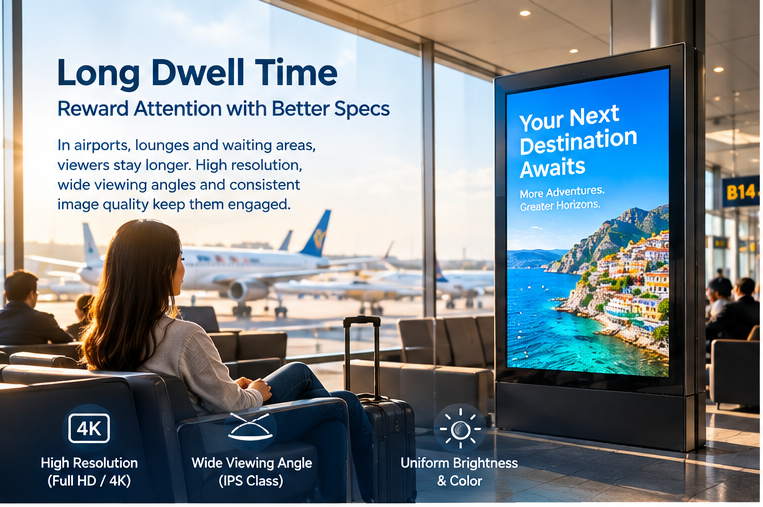
What Dwell Time Actually Controls
The advertising industry often reduces dwell to a single number: a viewer's average time in front of a screen. That average obscures the real structure of the opportunity. Dwell time breaks into two components that matter to hardware buyers:
Total dwell — how long a person stays in the viewing zone (a six-minute bus wait versus a thirty-second elevator ride).
Viewing opportunity — how much of that time the person actually spends looking at the screen (a queue-facing screen is watched; a lobby screen behind a seated visitor is only partially attended).
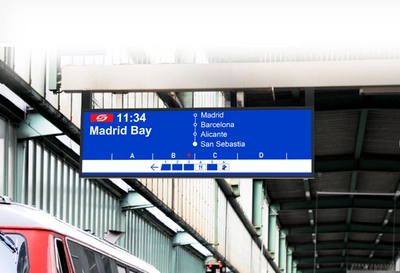
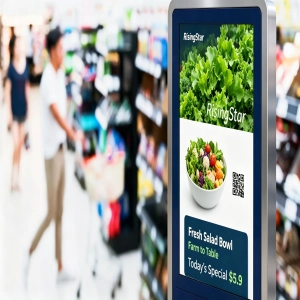
LCD-based DOOH networks concentrate where dwell is long and predictable: elevator banks, office lobbies, gyms, transit waiting areas, QSR dining rooms, and lounges. These closed, structured environments are exactly where LCD excels, because the viewer has time to read, engage, and act.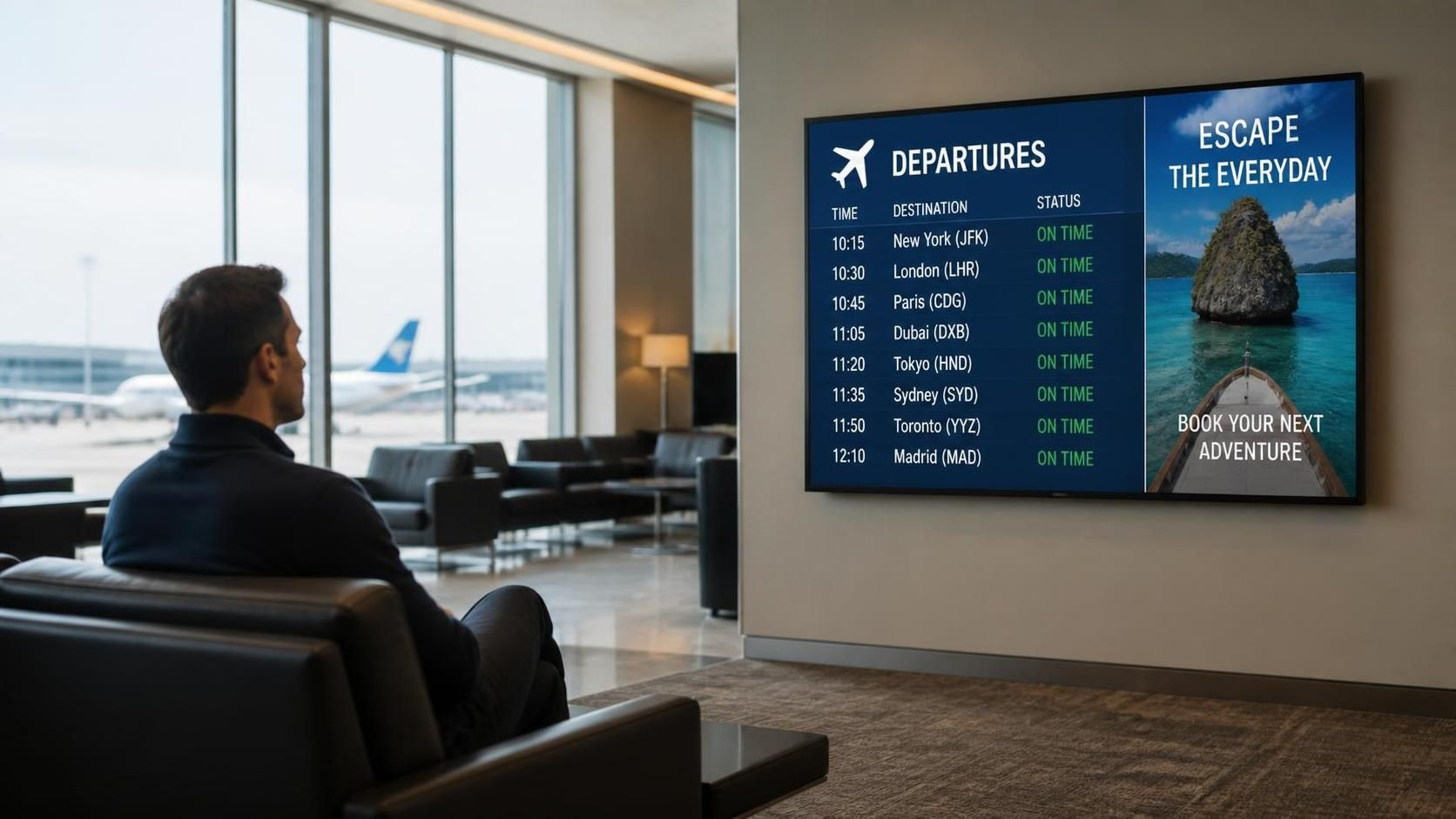
When Dwell Is Long: The Screen Must Reward Attention
Long dwell shifts the hardware conversation from "bright enough to be seen" to "good enough to watch for minutes." The failure mode of a long-dwell screen is not washout; it is fatigue. A viewer staring at a screen for three minutes will notice:
Resolution limits. Text and detail that looked fine in a five-second glance turn visibly soft over a sustained look. Full HD is the floor; 4K pays for itself in high-dwell settings where content includes maps, schedules, pricing, or fine product detail.
Viewing angle. In a lounge or waiting area, viewers sit at angles to the screen — often 30 to 60 degrees off-axis. A panel with a narrow viewing cone loses contrast and color for viewers on the sides. LCD panels with wide viewing-angle technology (IPS-class) hold color across the full seating arc, keeping content legible for the whole room, not just the viewer directly in front.
Image quality drift. Content looped for hours — a common pattern in long-dwell venues — makes any uniformity flaw (brightness banding, backlight bleed) visible and repetitive. Panels binned for brightness uniformity keep the loop looking clean.
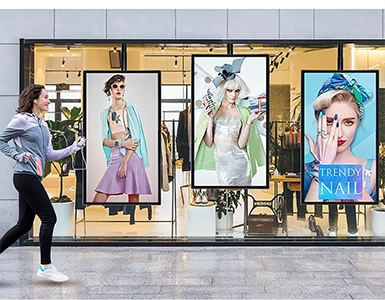
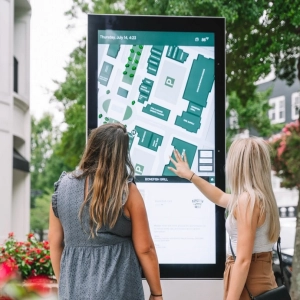
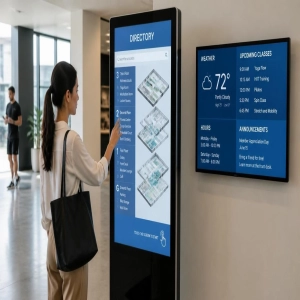
In venues where viewers also interact — directories, ordering kiosks, check-in screens — longer dwell naturally converts into touch. Specify these as interactive units: optically bonded PCAP, hardened glass, and firmware tuned for the repeated, deliberate touches of a viewer who is not in a hurry. For storefronts and street-facing windows where dwell is measured in a few seconds but attention still matters, a dedicated retail window display is engineered to cut through glass reflection and tinting.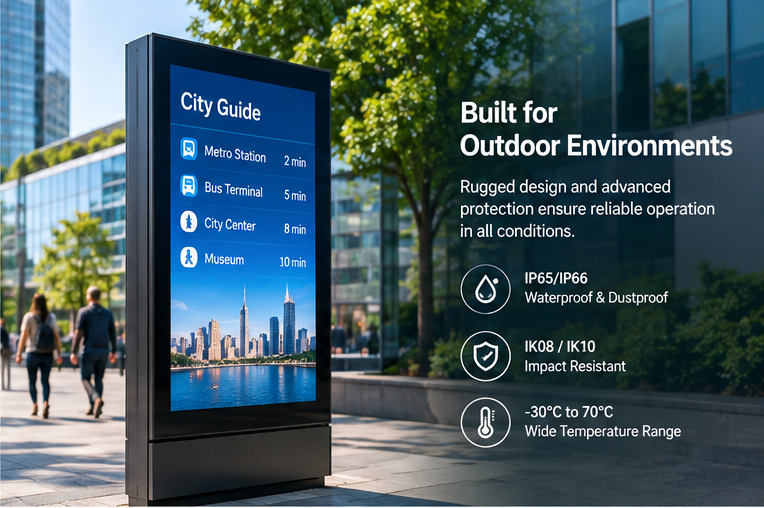
When Dwell Is Short: Brightness and Instant Legibility Win
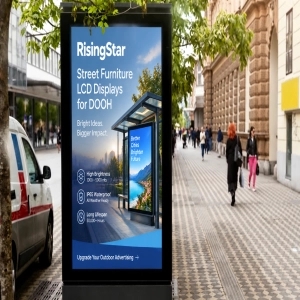
Short-dwell DOOH — urban pillars, gas-pump toppers, transit-platform ends seen from a moving train — is a different discipline. The viewer has seconds, the screen is often in daylight, and the content must read in a single glance.
| Dwell profile | Typical venue | Dominant screen requirement | Typical LCD spec |
|---|---|---|---|
| Very short (<3 s) | Street pillar, drive-past | Peak brightness, high contrast | 2,500-5,000 nits, high-contrast panel |
| Short (3-10 s) | Elevator doors, queue approach | Instant legibility, single message | 1,000-2,500 nits, FHD |
| Medium (10-60 s) | Elevator ride, transit wait | Clean multi-frame loops | 1,000-2,000 nits, FHD |
| Long (1-5 min) | Lounge, gym, QSR dining | Resolution, viewing angle, low fatigue | 500-1,500 nits, FHD/4K, IPS-class |
| Interactive (self-paced) | Directory, ordering, wayfinding | Touch accuracy, bonded glass | 700-2,500 nits, PCAP bonded |
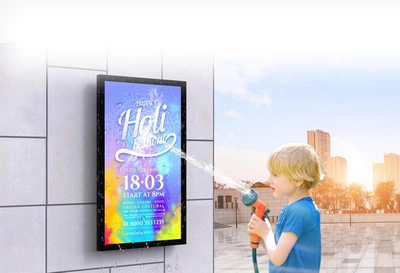
In short-dwell venues, brightness and contrast ratio dominate because the viewer never gets a second look. In long-dwell venues, those same specs can be relaxed — and should be, because blasting 4,000 nits at a viewer for five minutes is uncomfortable and wasteful. A gym screen at 1,200 nits with a wide viewing angle outperforms a 4,000-nit panel aimed at the same wall. Where rain, dust, and washdown are part of the environment, an outdoor waterproof display keeps the same legibility standard without sacrificing service life.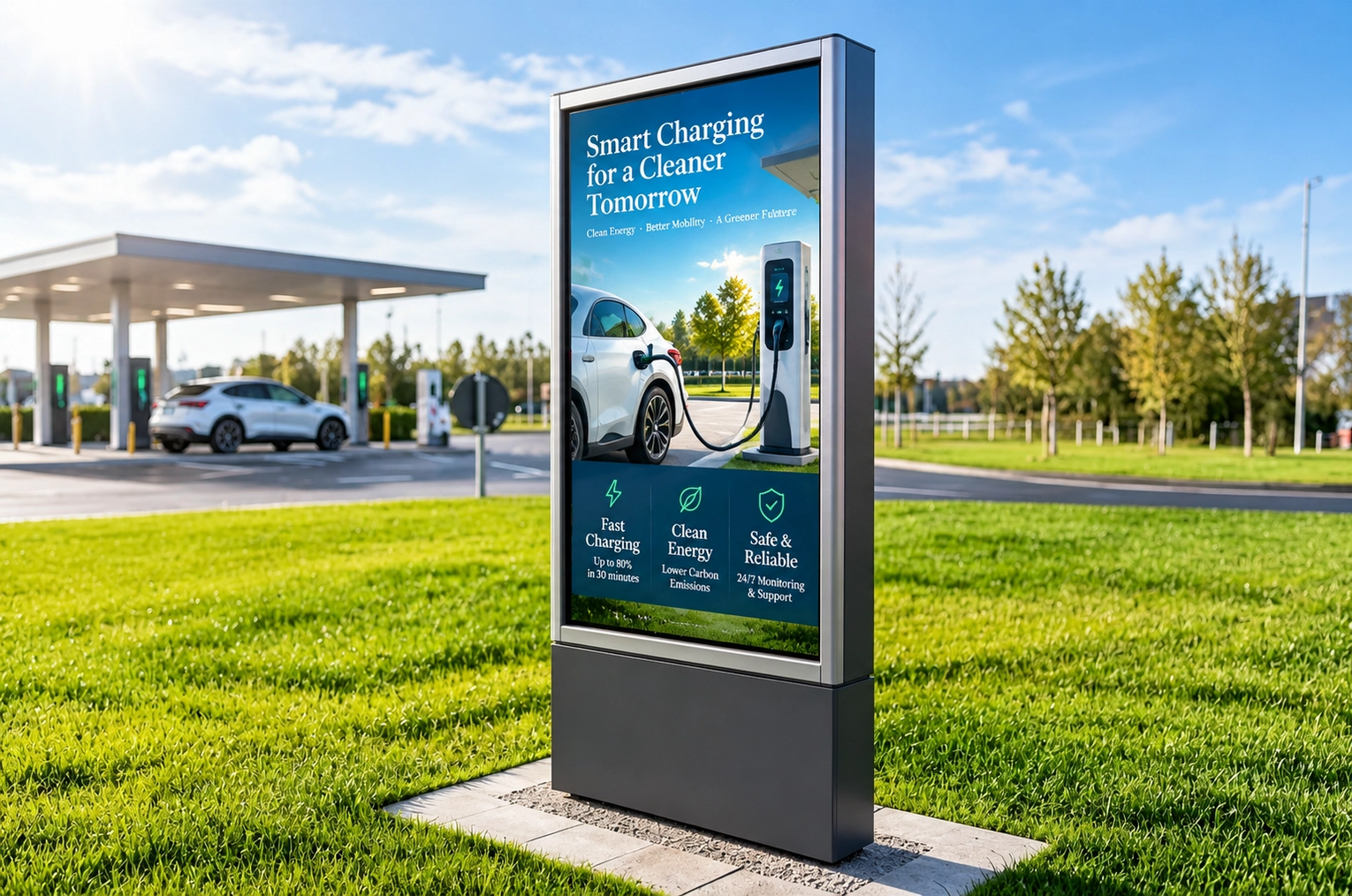
Matching Content Structure to Dwell
Dwell time dictates how much content a screen can carry, which in turn dictates loop length and player requirements:
Short dwell, single message. One message per loop, held long enough to read once. The screen acts as a digital poster; the player is simple and the content cycle is short.
Medium dwell, tight rotation. Two to four messages in a 15- to 30-second loop. Requires a player with clean dayparting and per-screen playlists.
Long dwell, rich loops. Five to fifteen frames, QR-driven interactions, and even scheduled utility content — flight status, gym class times, office events — between ad frames. The screen becomes a hybrid of advertising and service, which is why long-dwell LCD networks command higher CPMs — the audience chooses to watch.
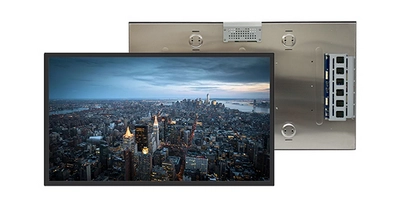
For content scheduling that responds to dwell, screens should support ambient-light auto-dimming — so brightness matches the room, not the noon spec — and network-wide CMS control with proof-of-play. A long-dwell network measured by dwell time needs the screen to report when it is actually on and running the scheduled loop. Whether the panel is a standard High-Brightness Display or a custom stretch format, the same reporting discipline applies.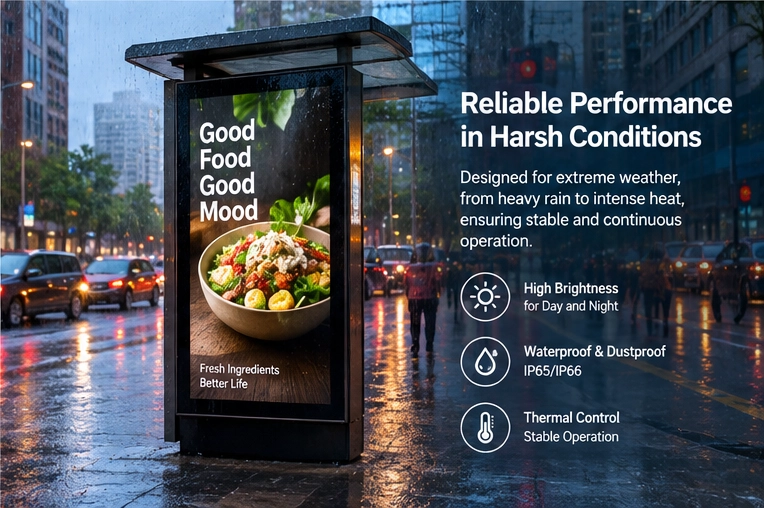
Measuring Dwell: The Hardware Must Be There
Dwell-time analytics rely on the screen being a reliable measurement platform. Two hardware facts decide whether dwell data is trustworthy:
The screen must run continuously and predictably. A unit that goes dark, dims at the wrong hour, or drops off the network corrupts dwell measurement for its entire location. Industrial reliability — 24/7-rated backlight, remote diagnostics, thermal management — keeps the measurement clean.
The sensor and the panel must be integrated cleanly. Cameras or people-counters are typically mounted above or beside the panel bezel. Spec the enclosure with sensor mounts, cable routing, and computing provision designed in from the start, rather than retrofitted with dangling hardware.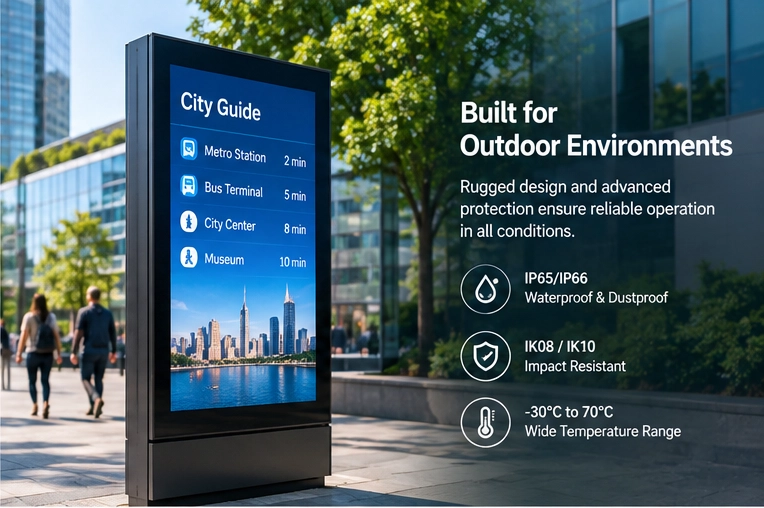
Sourcing Screens by Dwell Profile
RisingStar builds LCD displays across the full dwell spectrum — from 2,500- to 5,000-nit outdoor panels for short-dwell street placements to 500- to 1,500-nit indoor units with IPS-class viewing angles and optically bonded PCAP for long-dwell interactive venues. As a high-brightness LCD manufacturer operating a 4,000㎡ ISO-certified facility in Shenzhen, RisingStar engineers displays from 7" to 110" with brightness up to 5,000 nits, IP65/IP66 protection, and -20°C to 70°C operation. Every panel is sourced from LG Display, AUO, Innolux, or BOE, 100 percent factory-inspected, and aged 72 hours before shipment. ISO 9001 certified.
Tell us your venue and dwell profile — lounge, elevator, gym, or street pillar — and our engineers will recommend the brightness tier, viewing-angle class, and touch configuration that match the audience's actual attention. Write to ai@risinglcd.com. Explore our sunlight readable display line for outdoor short-dwell placements and our sunlight readable digital signage line for long-dwell indoor venues.