An authoritative, technical, and practical guide for engineers, specifiers, and buyers — covers units and measurements, human perception, recommended brightness ranges, technologies that make displays sunlight-readable, international measurement standards, real-world case studies, power/thermal tradeoffs, testing protocols, and a practical checklist for procurement and deployment.
Executive summary (TL;DR)
“Nit” is the unit of luminance; 1 nit = 1 candela/m². For indoor use 200–400 nits is common; for semi-outdoor 400–1,000 nits; and for direct bright sunlight, 1,500–5,000 nits (or higher) is commonly required depending on enclosure reflections, viewing angle, and content contrast.
Brightness alone does not guarantee readability — anti-reflection coatings, optical bonding, contrast ratio, content design (text size, colors), ambient light sensors, and placement matter.
High-brightness displays require careful thermal design, power management, and lifetime tradeoffs; dynamic dimming and adaptive control are critical to balance visibility vs. lifetime & energy.
1) Units, measurement and why “nits” matter
Nits measure emitted luminance (cd/m²) — how much light the display emits toward the viewer. It’s the standard metric used by display manufacturers and spec sheets. For context: a typical office monitor is ~200–400 nits; HDR TVs may state 1,000–4,000 nits peak for highlights. BenQ and other display manufacturers use this metric when advising customers.
Why nits are only part of the story. Outdoor readability depends on:
Display luminance (nits).
Ambient illuminance (lux) — sunlit scenes can exceed tens of thousands of lux.
Surface reflections (glass reflectance, anti-glare coatings).
Display black level (how close to “0” the display can get).
Effective Weber or Michelson contrast seen by the eye under ambient light.
Viewing distance, fonts, and content contrast.
A display with high nits but poor anti-reflective glass can still be unreadable.
2) Ambient light: numbers you need to know
Real outdoor illuminance ranges (approximate):
Typical indoor office: 300–500 lux.
Overcast daylight: 1,000–5,000 lux.
Direct sun on a clear day: 30,000–100,000 lux depending on conditions and surface orientation. Several industry white papers use these ranges when calculating required display luminance.
Crucially, ambient lux is not the same as display nits — nits quantify emitted light while lux quantifies incident light on a surface. A display must emit enough light and overcome specular reflections from its cover glass to deliver readable contrast.
3) Recommended nit ranges — practical guidance
Multiple industry sources converge on broadly similar ranges — the final choice depends on exact site conditions and enclosure properties.
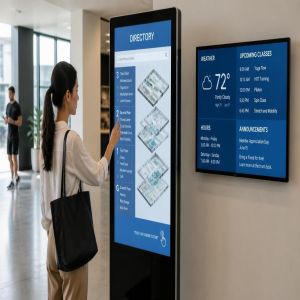
Indoor (office, retail, kiosks in malls): 200–400 nits (standard).
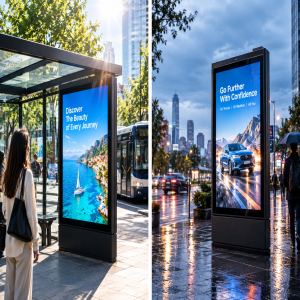
Semi-outdoor / shaded outdoors / covered bus shelters: 400–1,000 nits. Useful when direct sun rarely hits the screen.
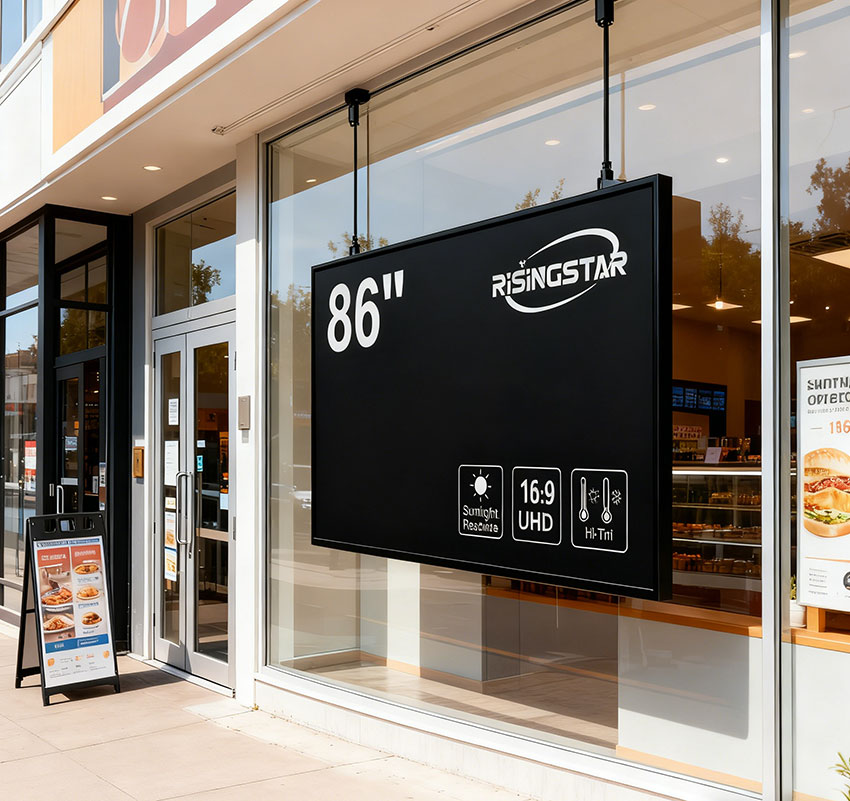
Direct sunlight / exposed outdoor signage: 1,500–5,000 nits is a practical window; many outdoor signage solutions target 2,000–5,000 nits. Some mission-critical and military applications push higher.
Extreme direct sunlight with high reflections or white content (very small text): consider 3,500–6,000 nits combined with optical bonding and aggressive anti-reflective coatings. Industry engineering whitepapers and vendor datasheets commonly recommend this range for fully exposed units.
Notes:
Many vendors quote “1000 nits = sunlight readable” as a conservative marketing baseline, but in fully exposed midday sun a 1,000-nit display will be hard pressed unless glass reflections are very low and content is optimized.
A commonly used practical spec for broad-use outdoor totems is 2,000–3,000 nits (good balance of visibility, cost, and thermal/power demands).
4) How human vision and contrast shape the numbers
Human perception of contrast depends on luminance ratio between the display and the ambient scene reflected/backscattered light. When ambient reflections increase the effective “black level” seen by the eye, perceived contrast collapses.
Approximate relationship:
If the display emits L_display nits and the glass reflects L_reflected (due to sun, sky, surroundings) toward the viewer, the perceived maximum contrast for any bright content becomes roughly L_display / (L_reflected + black_level).
So doubling display nits helps, but halving reflection (via AR coatings, matte glass, optical bonding) is often equally or more effective in improving legibility.
This is why design is holistic: brightness, reflection control, content contrast and viewing geometry together determine real readability.
5) Technologies that make displays readable in sunlight
Brightness is one lever — but modern sunlight-readable displays combine multiple technologies:
5.1 High-output LED backlights / edge or direct LED arrays
Creating 2,000–5,000 nits requires robust LED backlighting, often with thermal management and current drive control. These backlights use high-power LEDs and sometimes multiple drive zones. Vendors describe LED backlight designs and dynamic control as standard for outdoor displays.
5.2 Optical bonding
Optical bonding fills the air gap between LCD panel and cover glass with an index-matched adhesive. Benefits:
Reduces internal reflections (air-glass and glass-LCD interfaces).
Increases contrast and robustness (less condensation / ingress).
Improves ruggedness for outdoor use.
Many suppliers recommend optical bonding to reduce reflection losses and improve perceived contrast.
5.3 Anti-reflective (AR) and anti-glare coatings / etched glass
AR coatings cut specular reflections. Matte etched glass diffuses light reducing glare but can slightly lower peak contrast. A tailored AR + low-haze approach is common for high-brightness signage.
5.4 Transflective designs (for some low-power use cases)
Transflective displays use ambient light to improve brightness in sunlight; often used in small signage and instrument panels where power is constrained. For large-format commercial signage, high-power emissive backlights remain dominant.
5.5 High native contrast panels & improved black levels
Higher native contrast ratios (e.g., VA or advanced IPS with local dimming strategies) help keep text legible in bright conditions.
5.6 Ambient light sensors and adaptive brightness control
Automatic brightness adjustment saves power and extends lifetime while maintaining visibility in changing conditions. Dynamic control also enables lower brightness at night to reduce glare and energy use.
5.7 Content and UI strategies
Design content with high contrast, larger fonts, bold strokes, and reduced low-contrast elements when the screen will be viewed in bright light. Use dark backgrounds with bright accents for best readability under high ambient light.
6) Standards and measurement: how to specify and verify
There are international standards and measurement best practices you should reference when specifying high-brightness displays:
IEC family of display standards — standards such as IEC 62715 (measuring optical performance of flexible displays and related methods) define controlled measurement procedures and test conditions. Consult the IEC document collection for measurement conditions and definitions.
Vendor measurement protocols — be sure to get brightness numbers measured at full white, in cd/m² (nits), under a standard test (e.g., 25°C, defined driving pattern). Confirm whether the quoted brightness is typical or minimum guaranteed and whether it is measured at panel level or for a finished product (with glass/enclosure — which affects real output).
Contrast under ambient light — vendors rarely quote "contrast under X lux with Y glass reflectance" unless you ask. For reliable procurement, request measurements showing perceived contrast with the intended cover glass and enclosure in simulated ambient lighting (or ask for sample onsite measurements).
7) Real-world examples & case studies
Example A — City totem advertising in a sunny plaza
Site: large square, direct midday sun between 11:00–15:00 for much of the year.
Requirement: readable at 3–20 m, mixed content with fine text and faces.
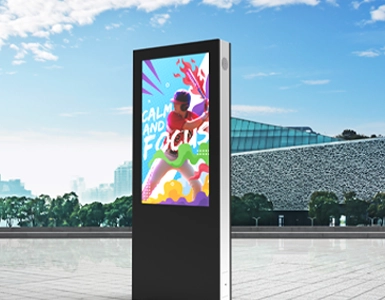
Solution: 3,500-nits LCD, optical bonding, low-reflectance AR glass, ambient sensor + dynamic content switching (larger fonts in direct sun). Result: legible across day with acceptable power/thermal envelope. (Many signage integrators recommend 2,000–5,000 nits for this application.)
Example B — EV charging kiosk with canopy
Site: partially shaded by canopy; sun angles vary seasonally.
Requirement: text interaction (touch), long lifetime, moderate cost.
Solution: 1,000–1,500 nits with capacitive touch, AR glass, and adaptive brightness. A 1,000–1,500 nit unit offers good readability under the canopy and saves power relative to ultra-high brightness solutions. Vendors of kiosk displays often position 1,000–1,500 nits as a sweet spot for semi-exposed installations.
Example C — Passenger information displays (rail, bus)
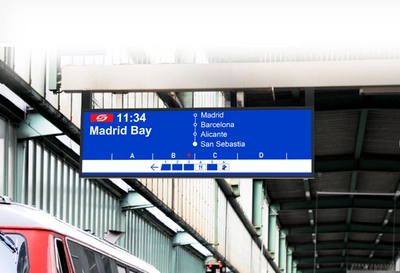
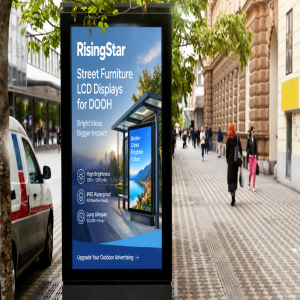
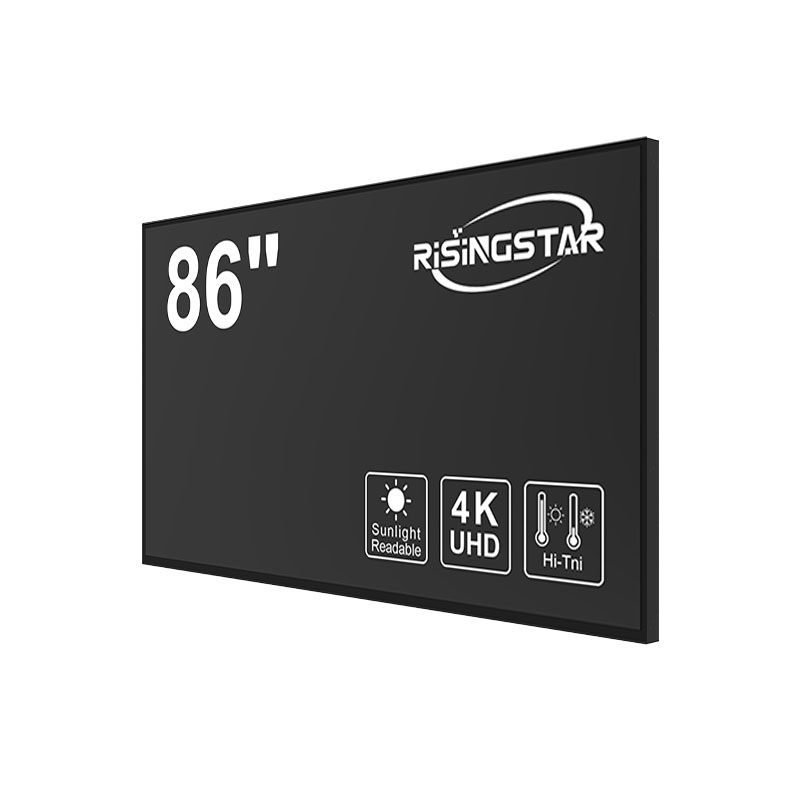
Passenger information displays near platforms can be exposed to indirect daylight and reflections; recommended brightness often ranges 1,500–3,000 nits depending on exposure. RisingStar and other industrial suppliers publish high-brightness transport displays targeted at these environments.
8) Power, thermal and lifetime tradeoffs
High nits imply higher LED drive currents → more heat and higher power draw:
Power: a 3,000–5,000 nit display can consume many times more power than a 300-nit indoor panel. Plan for adequate supply and energy budgets.
Thermal: LED lifetime and color stability degrade with temperature. Outdoor displays require active cooling (fan, heat pipes, or even air conditioning in sealed enclosures) or thermal design that ensures junction temperatures remain within spec. Vendors often specify operating temperature ranges and life hours at given brightnesses.
Lifetime: higher backlight current reduces LED lifetime; dynamic brightness strategies (ambient sensing, content aware dimming) can reduce average stress and extend life.
Design tip: specify brightness at end-of-life (e.g., guaranteed ≥ X nits after 25,000–50,000 hours at a defined duty cycle), not just initial peak brightness.
9) Procurement checklist — what to ask vendors
When buying displays for sunlight environments, request explicit answers to these:
Measured luminance (nits) for the finished product (including cover glass & enclosure), not just the bare panel. Is it typical or guaranteed minimum? Provide measurement report.
Black level & contrast ratio measured under the same finished product conditions.
Glass reflectance / haze / AR coatings — specify maximum specular reflectance.
Optical bonding — is the unit bonded? If not, what is the expected reflection increase?
Ambient light sensor and dimming profile — is automatic brightness included?
Power consumption at target brightness (W) and at night (dimmed).
Thermal management — how does brightness scale with temperature? Are there thermal cutbacks?
Ingress protection (IP/NEMA) for outdoor deployments and anti-fogging measures. Armagard and other enclosure vendors offer IP-rated totems — confirm compatibility.
Lifetime / Lumen maintenance — L70 or L50 hours at specified ambient conditions and brightness.
Onsite testing & samples — request sample units to test in the target location (most reliable).
10) Test protocol (do this before mass deployment)
Site visit lux mapping — measure lux at proposed screen surfaces at different times & seasons. Build a sun path analysis.
Install a sample display (final enclosure & glass) and test with realistic content at the location during peak sun. Measure perceived legibility at the typical viewing distances and angles.
Record power and surface temperature during prolonged high brightness operation (simulate worst case).
Measure reflectance & haze of the installed cover glass (portable spectrometer or standardized method).
Content test — verify small fonts, thin lines, and colors for the intended audience at the intended viewing distances.
11) Design patterns: matching brightness to use-case
Kiosk or interactive terminal under canopy: 800–1,500 nits + AR glass + optical bonding.
Bus shelter or partially shaded totem: 1,200–2,500 nits + AR + ambient sensor.
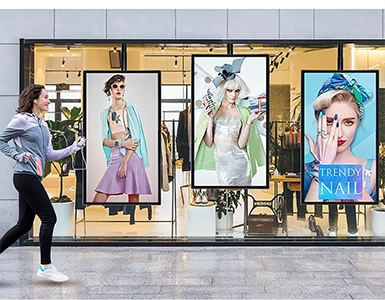
Exposed roadside advertising / outdoor totem / sports venue displays: 2,500–5,000+ nits + optical bonding + robust cooling and IP rated enclosure.
12) Cost and ROI considerations
Higher brightness means higher BOM, more advanced thermal systems, higher power and potential maintenance. But in many outdoor advertising, transit and retail applications increased visibility drives substantially higher engagement — so total cost of ownership must be balanced against revenue uplift. Vendors and case studies from outdoor signage integrators show that investing in 2,000–5,000 nit systems can produce substantially better impressions and reduced downtime vs. consumer displays housed outdoors.
13) Common myths and pitfalls
“More nits always equals better readability.” Not true — reflections and poor contrast kill legibility before brightness helps. Optical bonding and AR coatings often yield bigger gains than simply increasing nits.
“1000 nits is enough for all sunlight situations.” 1,000 nits can be workable in some shaded or controlled outdoor conditions, but for fully exposed direct sun, higher levels (1,500–5,000+) plus anti-reflective measures are typically needed.
“You can run ultra-high brightness 24/7 without consequence.” Sustained testing shows thermal stress reduces LED lifetime and color stability unless thermal management is well engineered. Dynamic dimming can extend life.
14) Future trends and what to watch
MicroLED and miniLED backlights promise higher brightness with better thermal characteristics and longer life — expect more outdoor offerings using these technologies.
Smarter adaptive algorithms that combine ambient sensing, content awareness and predictive dimming will let systems deliver optimum visibility with less power.
Improved AR coatings and hybrid glass chemistries that lower reflectance without sacrificing scratch resistance will continue to improve perceived contrast.
15) Practical specification template (for a direct-sun totem)
Use or paste into RFPs:
Target environment: Fully exposed public plaza, direct sun 11:00–15:00.
Minimum daylight brightness (finished product): ≥ 3,500 nits (measured on full-white, cd/m²), guaranteed minimum at 25°C and after 5,000 hours of operation.
Black level: < 0.5 nits (measured on finished product).
Glass reflectance: ≤ 1.5% specular (AR coated), haze ≤ 5%.
Optical bonding: Required (index-matched adhesive).
Ingress protection: IP65 (front).
Thermal management: Passive + forced convection with thermal cutback algorithm; operating range -20°C to +60°C.
Power: Specify W at 3,500 nits and at night (dimmed to 200 nits).
Measurement reports: Provide IEC-style measurement lab report and on-site sample test results.
16) Short annotated bibliography (selected sources & further reading)
BenQ — “How Many Monitor Nits Do You Need...” — practical ranges for indoor vs outdoor usage and definition of nits.
Things-Embedded — “Key Features for Choosing a Sunlight Readable Display” — whitepaper discussing recommended brightness (3,500–6,000 nits for strongly exposed sites) and technologies.
IEC 62715-5-1 and related IEC standards — measurement methods for display optical performance (for formal verification).
RisingStar / RisingLCD technical notes — real product examples and advice (industrial/high-brightness offerings targeted for transport, kiosks, fuel pumps). Useful for sizing products for transport and outdoor signage.
Armagard and Crystal Display resources (system integrators/enclosure vendors) — practical field systems and enclosure considerations.
17) Final practical checklist (quick)
Map lux levels at the site, including seasonal extremes.
Choose target nit range based on exposure: semi-exposed (800–1,500); exposed (1,500–3,000); extreme (3,500–6,000+).
Require finished-product measurements (nits, contrast, black level, reflectance).
Specify optical bonding & AR glass when possible.
Include ambient sensor & dynamic brightness dimming.
Validate with on-site sample in full sun and record power/thermal behavior.
Negotiate guaranteed lumen/luminance maintenance (L70/L50 hours) and warranty terms.
18) Conclusion
There is no single “correct number of nits” that universally guarantees sunlight readability. Instead, a robust specification combines appropriate luminance (nits) with reflection control (optical bonding + AR glass), contrast optimization, thermal & power management, and application-specific testing. For many fully exposed outdoor scenes, the practical working range is 1,500–5,000 nits, with 2,000–3,500 nits being a common sweet spot for balance of visibility, cost and lifetime. However, the most cost-effective improvements often come from reducing reflections and optimizing content — not only by increasing raw brightness.