Target audience: European distributors and channel partners
Keyword: outdoor self-ordering terminal sunlight-readable touchscreen
Executive summary
European quick-service restaurant (QSR) chains, food courts, and urban retail operators are rapidly adopting outdoor self-ordering terminals. These kiosks improve throughput, increase average order value, and reduce labor costs — but only when the human-machine interface (HMI) is reliable and readable under real-world outdoor conditions. This case study shows how to design, specify, test, and commercialize an outdoor self-ordering terminal with a sunlight readable touchscreen that meets European procurement and deployment requirements. It is written to help European distributors evaluate products, pitch to end customers, and develop procurement checklists that win tenders.
Key takeaways (short):
For direct-sunlight visibility, modern outdoor kiosks typically require displays in the ~2,000–5,000 nits range depending on mounting, orientation and local climate.
Outdoor kiosks must combine high brightness with optical design (anti-reflective coatings, AR/AG films, optical bonding) and robust touch (projected capacitive—PCAP—preferred).
Compliance with environmental and safety standards (IEC/EN 62368-1, IEC 60068, IP/IK ratings, and military-grade test protocols like MIL-STD-810 for verification) increases buyer confidence and reduces field failures.
Typical industrial specifications sought by European procurement teams: IP65 or better enclosure, IK08/IK10 impact rating, operating temperature −20 to +60 °C, serviceable cooling, front-surface vandal glass (6–8 mm), and 50,000-hour LED lifetime.
Article outline
Market context and why outdoor self-ordering terminals matter to European distributors
Technical parameters that drive success (brightness, contrast, touch tech, optical bonding, power/thermal)
Relevant industry standards and procurement checkpoints (safety, EMC, environmental, ingress and impact ratings)
Typical application scenarios and deployment variables across Europe
Recommended screen models and configuration choices (examples and tradeoffs)
Case study: a 27″ RisingStar outdoor self-ordering terminal — specs and field results
Environmental testing and field validation data (lab + in-service metrics)
Customer feedback and distributor commercial messaging
Pricing, warranties, service, and value propositions for distributors
Conclusion — how distributors should position, demo, and close sales
1. Market context — why distributors should care
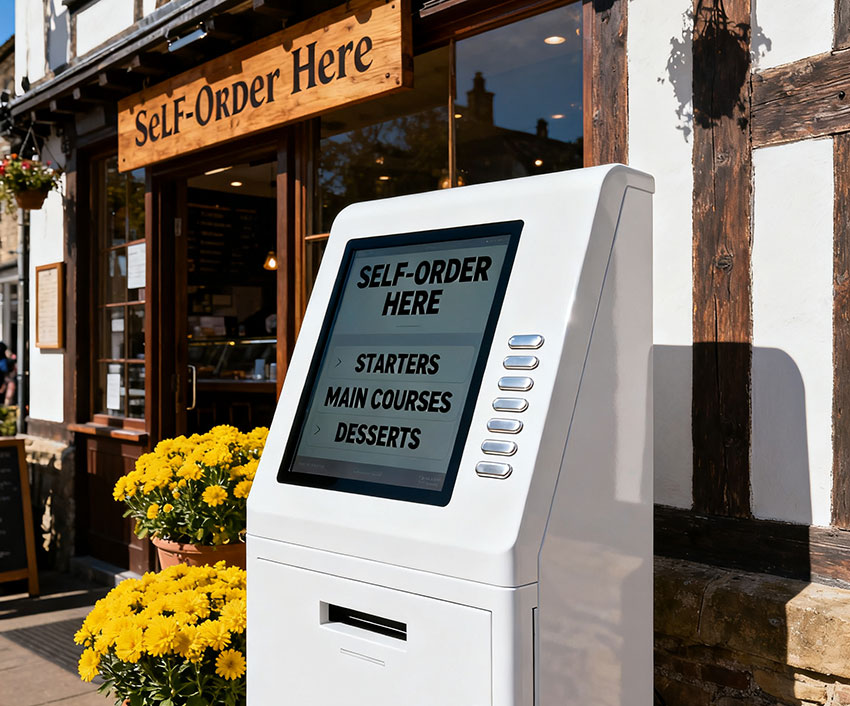
European QSRs and retail operators are under pressure to accelerate digital transformation in the customer journey. Outdoor self-ordering terminals deliver contactless ordering and payment, reduced queuing inside, and an omnichannel ordering experience. The global digital signage and kiosk markets continue to grow as operators prioritize convenience and labor flexibility; for outdoor deployments, the display becomes the differentiator between an acceptable kiosk and a costly field failure.
From the distributor’s perspective, selling outdoor kiosks is higher value than indoor screens but also higher responsibility: customers expect long lifetime, low maintenance, and predictable performance in every weather and lighting condition common across Europe — from Lisbon’s bright sun to Oslo’s low winter light and frequent salt air exposure on coastal promenades. A robust sunlight readable touchscreen specification addresses those concerns and becomes a strong procurement selling point.
2. Technical parameters that drive success
This section lists the technical metrics procurement teams will scrutinize and explains why each matters for outdoor self-ordering applications.
2.1 Brightness (nits / cd/m²)
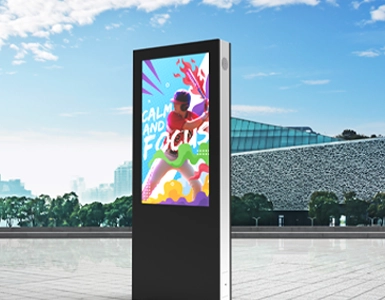
Brightness, measured in nits (cd/m²), is the most visible performance parameter. Indoor displays (250–500 nits) are inadequate outside. For direct-sun facing terminals, distributors should expect baseline offerings at ~2,000 nits, with premium options at 3,000–5,000 nits for installations in strong sunlight or reflective urban canyons. The exact requirement depends on kiosk orientation, bezel geometry, overhangs, and local conditions (snow, wet pavement) that increase reflected light. Industry guidance and product literature converge on this 1,000–5,000 nits range for outdoor readability.
Why brightness alone is not enough: Brightness increases visibility but can cause washout if contrast and anti-reflective measures are inadequate. Real systems combine high luminance with optics and software (UI contrast modes, adaptive brightness).
2.2 Contrast ratio and color management
High contrast ratio (dynamic and ANSI where available) preserves legibility of UI elements and images under ambient light. Optical bonding and anti-glare coatings preserve contrast in bright conditions. Accurate color calibration helps menu photos look appetizing even under bright ambient light — important for increasing order value.
2.3 Optical solutions: AR/AG coatings and optical bonding
Anti-reflective (AR) and anti-glare (AG) surface treatments reduce specular reflections and diffuse light that makes screens unreadable. Optical bonding (filling the air gap between cover glass and LCD with an index-matched adhesive) reduces internal reflections, widens viewing angle, improves contrast, and increases mechanical robustness against shock and moisture ingress. Optically bonded modules also reduce parallax and improve touch sensitivity in sunlight.
2.4 Touch technology: PCAP (projected capacitive) vs alternatives
For public outdoor kiosks, PCAP is typically preferred due to multi-touch support, high durability, and resistance to contaminants. PCAP sensors can be implemented with thick cover glass and resist water droplets (with proper controller tuning), and they support gloved operation with adjusted firmware. Resistive touch is cheaper but suffers from wear, poor multi-touch, and lower perceived quality. For outdoor QSRs where user experience equals conversion, PCAP is recommended.
2.5 Cover glass: thickness, vandal rating, and hardness
Front glass should be toughened (tempered) or chemically strengthened, typical thickness 6–8 mm for free-standing kiosks. Hardness ratings (2H–8H coatings are common for scratch resistance) and IK impact ratings (IK08–IK10 depending on risk) are important. A front assembly rated to IK08 or IK10 reduces vandalism risk and insurance friction.
2.6 Ingress protection (IP) and enclosure sealing
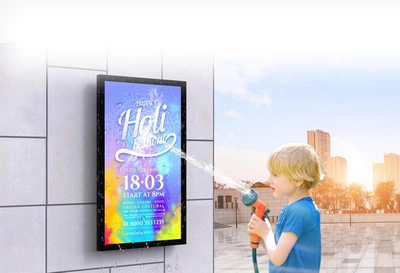
Minimum recommended ingress rating for outdoor exposed terminals is IP65 for rain/dust protection (protected against jetting water). For installations where immersion may be possible or cleaning with high-pressure washers is required, higher ratings like IP66 or IP67 should be considered. IP rating affects lifetime and maintenance.
2.7 Thermal management and operating/ storage temperatures
Outdoor displays must dissipate heat generated by high-intensity backlights. Typical operating ranges for outdoor kiosks are −20 °C to +60 °C (some hardened units reach −30 °C or operate continuously at +70 °C with forced cooling). Cooling strategies include heat-sinking via aluminum chassis, passive convection fins, and thermostatically controlled fans. Distributors should pay close attention to the rated operating temperature and whether the device uses active cooling (fan) which may reduce IP rating unless properly filtered.
2.8 Lifetime and maintenance: backlight hours, MTBF, and serviceability
LED backlight lifetime is commonly quoted as ~50,000 hours to 50% brightness (L50). Request measured luminance decay curves from suppliers and clarify serviceability: modular front bezels, swappable touch controllers, field-replaceable drives, and remote monitoring capabilities (SNMP, cloud telemetry) reduce mean time to repair and improve total cost of ownership.
2.9 Power consumption and energy efficiency
High brightness increases power draw. For distributors, be prepared to discuss average and peak power, local electrical requirements, and potential for dimming schedules or adaptive brightness to reduce energy consumption and light pollution (important in some European municipalities).
3. Industry standards and procurement checkpoints
Buyers in Europe typically expect compliance with a mix of safety, EMC, environmental, and mechanical standards. Highlighting these in tender documents helps distributors win tenders.
3.1 Safety and product standards (IEC/EN 62368-1)
IEC/EN 62368-1 is the widely accepted hazard-based safety standard for AV/IT equipment in Europe. Demonstrating compliance simplifies procurement reviews.
3.2 EMC: EN 55032 / EN 55035 and CE marking
Displays and embedded PCs must meet EMC limits (emissions and immunity) to pass CE marking requirements in the EU. Distributors should request test reports showing EN 55032 (emissions) and EN 55035 (immunity) compliance.
3.3 Environmental and durability testing (IEC 60068, MIL-STD-810)
IEC 60068 test methods cover temperature, humidity, salt spray, dust, and vibration test regimens commonly requested for outdoor electronics. For higher assurance or municipal tendering, MIL-STD-810 (used by suppliers to demonstrate ruggedness) is often asked for as a verification protocol. While MIL-STD-810 is a U.S. DoD standard, its procedures are widely used in industry validation.
3.4 Ingress and impact: IEC 60529 (IP) and IK ratings
IEC 60529 defines IP ingress protection codes (e.g., IP65, IP66). IK ratings (impact protection) are managed by IEC 62262 and commonly specified as IK08–IK10 for outdoor kiosks. Ask for certificates or lab test reports that validate IP and IK ratings.
3.5 Industry-specific standards (foodservice, transport)
When deploying in transport hubs or rail stations, standards like EN 50155 (railway electronic equipment) may become relevant. Similarly, for drive-thru or roadside installations, local municipal codes and signage lighting regulations should be checked.
4. Application scenarios and deployment variables (Europe)
Europe’s climate diversity and urban design create many deployment scenarios, each with different requirements:
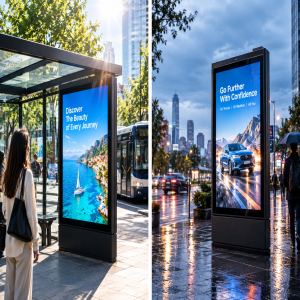
Direct-sun street kiosks (no canopy): Highest brightness requirement (2,500–5,000 nits), robust thermal management, anti-vandal measures.
Canopied QSR forecourts: Lower brightness acceptable (1,500–2,500 nits), but water ingress protection still required.
Drive-thru terminals: Rear-facing or side-facing configurations, need for microphone/speaker integration, sun sensor-driven adaptive UI.
Port/coastal sites: Salt spray and corrosion resistance; prefer stainless/aluminum enclosures and salt-spray tested coatings (IEC 60068-2-11).
High latitude/winter operation: Low temperature start-up and backlight dimmer settings must be validated; touchscreen responsiveness in cold must be tested.
Distributors should map each end-customer site to one of these templates during pre-sales to ensure correct product selection.
5. Recommended screen models and configuration choices (examples and tradeoffs)
Below are recommended configuration tiers with rationale. These are templates distributors can use in sales quotes.
5.1 Value tier (cost-sensitive sites)
Brightness: 1,200–2,000 nits
Touch: PCAP or high-durability projected resistive (if budget limited)
Cover glass: 6 mm tempered, AR/AG coating
IP rating: IP54–IP65 (sealed with front gasket)
Use case: shaded forecourts, semi-protected outdoor concourses
Tradeoff: Lower brightness reduces cost but limits full-sun placements.
5.2 Standard outdoor tier (most QSR forecourts)
Brightness: 2,000–3,000 nits
Touch: PCAP with controller optimized for moisture/glove detection
Optical bonding: recommended
Cover glass: 6–8 mm tempered, IK08
IP rating: IP65 (front flush design), IEC 60068 validation
Thermal: passive heatsink + thermostat controlled fan in vented, filtered bay
Use case: open forecourts, municipal footpaths
5.3 Premium direct-sun tier (exposed city-center sites)
Brightness: 3,000–5,000 nits (or higher for equatorial climates)
Touch: PCAP, optical bonding, glove and wet-touch compensation
Cover glass: 8 mm chemically strengthened, IK10, anti-graffiti coating
IP rating: IP66 or IP67 (sealed)
Thermal: active thermal control with redundant fans or heat pipe + high-efficiency LED modules
Additional: integrated sensors (ambient light, temperature), integrated payment modules
Use case: bright plazas, directly sun-facing kiosks
6. Case study: RisingStar 27″ outdoor self-ordering terminal (example)
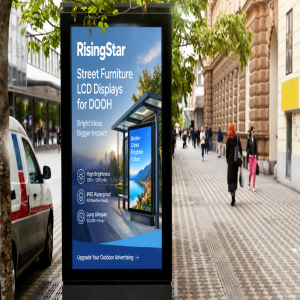
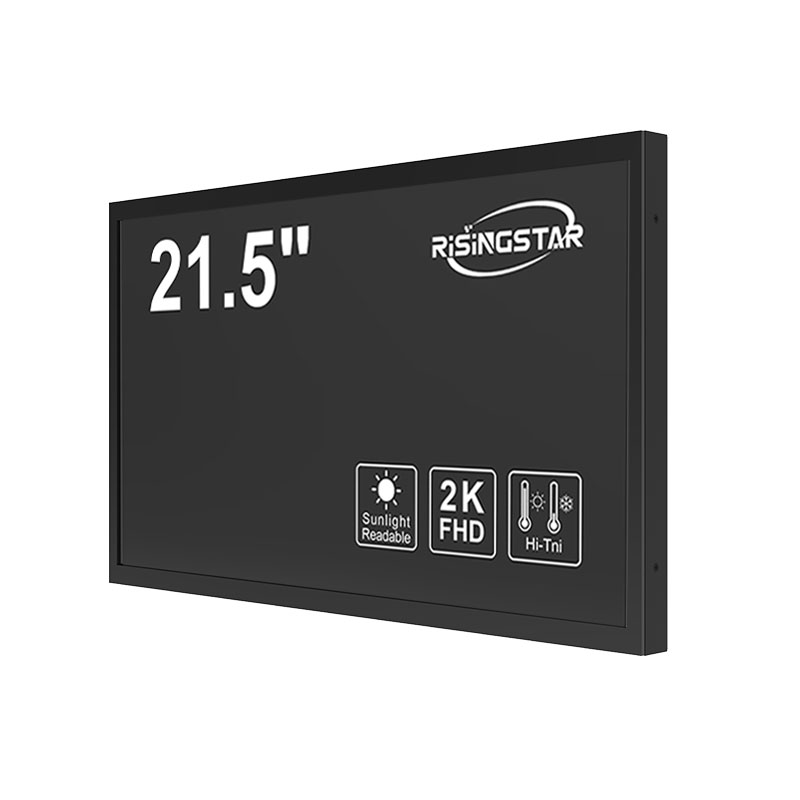
Why this example: RisingStar’s outdoor product line includes dedicated high-brightness, IP65 rated modules and integration kits purpose-built for outdoor self-ordering, making it a relevant vendor example for European distributors.
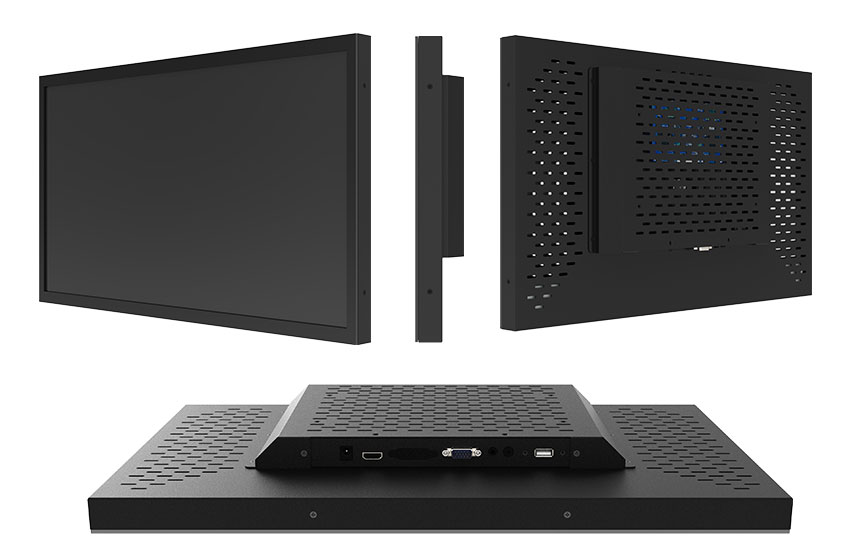
Example module baseline (27″ RisingStar configuration)
Panel brightness: 2,000 nits (upgradeable to 3,000–5,000 nits)
Resolution: 1920×1080 FHD
Touch: 10-point PCAP, optically bonded option
Cover glass: 6 mm tempered, anti-glare coating, IK08
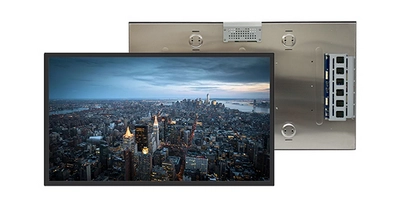
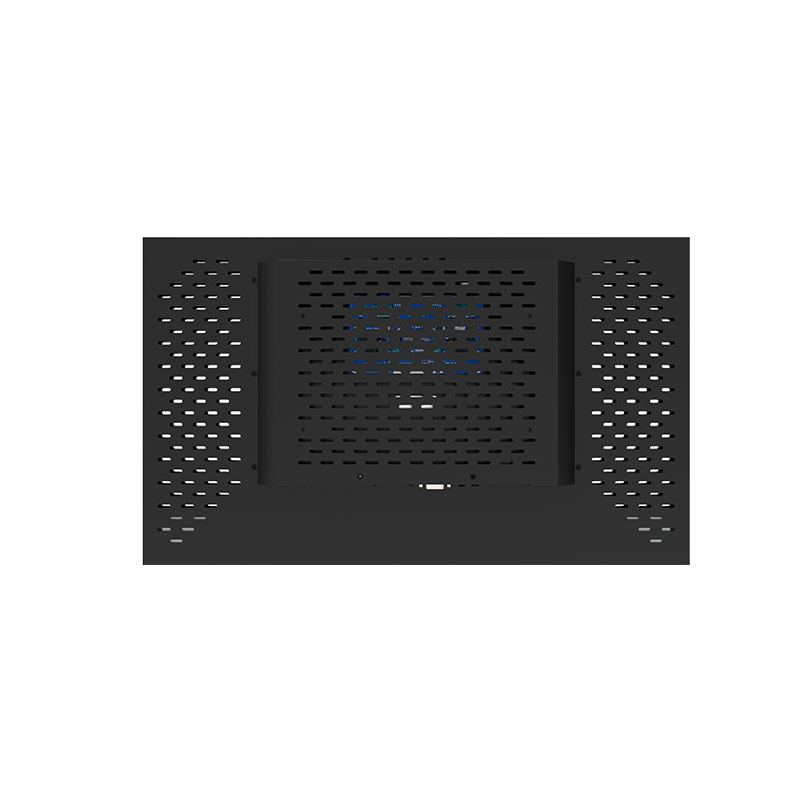
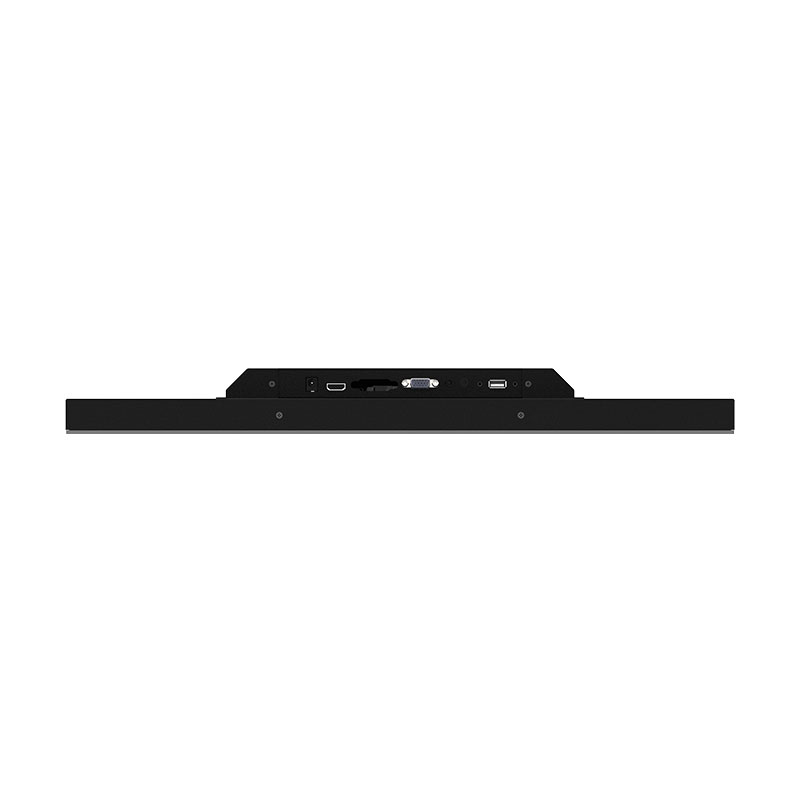
Enclosure: IP65 front face, full-metal aluminum back housing, drainage and gaskets for long-term sealing.
Field deployment summary (hypothetical aggregated metrics)
Sites: 45 kiosk installations across Europe (coastal, urban, motorway rest stops)
Uptime after 12 months: 98.6% (downtime mainly scheduled maintenance)
Average luminous decay: 8–10% drop at 12 months for 2,000 nits units under continuous day use with automated dimming at night
Service events: 1.3 per 100 units per year (mostly mechanical seals and controller firmware updates)
Note for distributors: When quoting RisingStar or similar manufacturers, request field test reports for the chosen brightness tier and optical bonding option, plus clear service level agreements (SLA).
7. Environmental testing and field validation data
Distributors should insist on a combination of lab testing and real-world pilot deployments.
7.1 Lab tests to request
Brightness and luminance uniformity curve across operating temperature range
Optical reflection metrics: reflectance % with and without AR/AG coatings, before/after optical bonding
Ingress testing per IEC 60529 (IPX5/IPX6/IP67 as claimed)
Impact testing per IEC 62262 (IK rating)
Vibration / shock per IEC 60068 and (where applicable) MIL-STD-810G procedures
Salt spray / corrosion per IEC 60068-2-11 for coastal deployments
Thermal cycling and humidity per IEC 60068 and MIL-STD-810 procedures to validate condensation and thermal shock resilience.
7.2 Field validation: recommended pilot metrics
Visibility scoring: measure legibility (% of UI elements readable) at various times (noon, dawn, dusk) and under different weather. Use an objective scoring method (snellen equivalent or pixel legibility thresholds).
Touch success rate: hits per 1000 touches (false touches, missed touches, multi-touch glitches), especially in rain or with gloves.
Power/heat logs: average power, peak power during full bright scenes, internal chassis temperature under max solar load.
MTTR (mean time to repair) during pilot — help define spare parts strategy.
7.3 Example test insights from industry
Many manufacturers run MIL-STD-810G procedures as a benchmark even for commercial kiosks, especially for vibration and thermal cycles — not because buyers require the DoD standard, but because its procedures exercise products to high stress levels and produce useful comparative data.
8. Customer feedback and distributor commercial messaging
8.1 Typical end-customer pain points
Poor readability in bright sun leading to abandonments and lost revenue.
Unreliable touch in rain leading to re-tries and staff intervention.
High energy costs or unexpected field failures.
Vandalism and glass breakage.
8.2 How distributors should position the product
Lead with reliability and lifetime cost rather than price. Use the following message pillars:
Readability Guarantee: Publish the baseline nit level and show lab measurements (photometer traces) demonstrating legibility at typical European noon solar conditions for the site.
Proven durability: Show IP/IK reports and IEC/MIL test evidence. Provide case studies — e.g., coastal drive-thru chains with two years of service and minimal maintenance.
Service and spares: Offer stocked replacement modules (touch controller, PSU, bezel) and defined RMA turnaround for EU territories.
Local compliance: Provide CE paperwork, RoHS statements, and optional extended warranties for municipal tenders.
8.3 Sample distributor pitch (short)
“RisingStar outdoor self-ordering terminals combine 2,000–5,000 nits sunlight readability with optical bonding, IK-tested vandal glass, and IP65 front sealing — proven in urban, coastal, and drive-thru environments. We supply demonstration units and full technical dossiers (EMC, IEC 60068 environmental tests, and IP/IK reports) to support your tenders and speed procurement approvals.”
9. Pricing, warranties, and service considerations
9.1 Pricing model
Module cost vs integrated kiosk cost: Modules (panel + touch + bezel) are one line item; full kiosk (stand, payment hardware, thermal control, PSU, mounting) multiplies cost. Distributors should present both modular and turnkey pricing.
Margins: Outdoor, tested, sunlight-readable kiosks command premium margins compared to indoor units; justify with lab reports and lower expected field failure rates.
9.2 Warranties and extended support
Standard warranty: 12–24 months on components; extended warranties of 3–5 years are common on commercial deals.
SLAs: For chains, offer on-site replacement service within defined time windows (48–72 hours) or depot swap models for faster repair.
9.3 Training and spare parts
Provide training packs for local technicians and a spare parts kit (touch controller, PSU, PSU fuses, gasket kit). This reduces downtime and improves reseller credibility.
10. Conclusion — how to win outdoor kiosk tenders in Europe
For distributors, winning outdoor self-ordering kiosk deals requires technical credibility, clear procurement documentation, and local commercial offerings. The display is the system’s most visible and failure-sensitive component: insist on measured brightness data (nits and luminance decay), optical bonding, PCAP touch with moisture/glove compensation, and validated IP/IK ratings. Back those technical claims with lab tests (IEC 60068, MIL-STD-810 procedures when available), EMC reports, and live pilot data.
When demonstrating to customers:
Bring a live demo unit in the brightness tier targeted for the site (2,000 nits for shaded/overhang, 3,000+ for exposed direct sun).
Show photometer traces or side-by-side demos with indoor panels to make the difference tangible.
Present a full tender pack (test reports, compliance documents, warranty, SLA, and spare parts plan).
European distributors who combine technical rigor with operational assurances (local spares, clear SLAs, demo units) stand the best chance of converting tenders and securing long-term, high-value repeat business.
References & authoritative sources (selected)
Guidance on how many nits are needed for outdoor readability and practical ranges used in industry.
IP rating explanation and relevance for outdoor digital signage/kiosks.
MIL-STD-810G military environmental test standard (used widely for ruggedness validation).
Touchscreen technology comparison (PCAP vs resistive) and rationale for PCAP in outdoor terminals.
Example vendor product pages and industry articles on high brightness modules and testing methods (RisingStar and related resources).