 English
 Deutsch
 Français
 Español
 Italiano
 한국어
한국어
 日本語
日本語
 Português
 Suomi
Suomi
 Dansk
Dansk
 Polski
A visitor arrives at a large city park. They need to find the nearest restroom, the amphitheater, and the parking lot they parked in. There is no information desk in sight. Their phone battery is at 12 percent. An outdoor wayfinding kiosk at the entrance solves this — but only if the screen is readable in direct sun, responsive to touch in light rain, and built to survive the weather.
Outdoor wayfinding kiosks are appearing in more locations every year. Parks, shopping centers, transit stations, hospital campuses, and civic plazas all use them to help people navigate without relying on a phone or printed map. But each environment places different demands on the display hardware.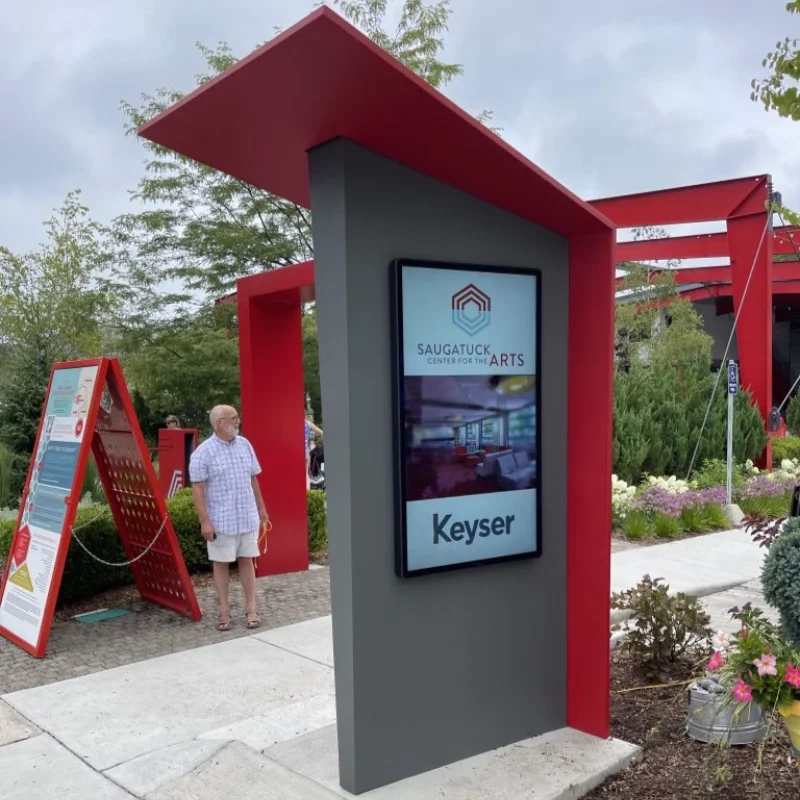
Parks and Recreation Areas
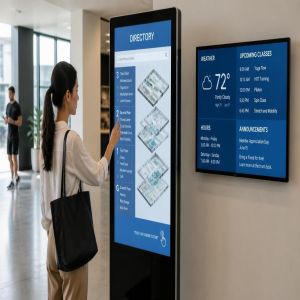
City parks, botanical gardens, and national park visitor centers are among the fastest-growing users of outdoor wayfinding kiosks. Visitors arrive without local knowledge. They need to find trails, facilities, parking, and points of interest. While a static entrance map provides basic guidance, it lacks real-time updates for trail closures, event locations, or parking availability. A weatherproof wayfinding kiosk bridges this gap, combining a ruggedized outdoor display with live data integration.
The main challenge for park kiosks is sun exposure. Most parks have no overhead cover. The kiosk sits in full sun from mid-morning to late afternoon. The display needs 1,500 to 2,500 nits of brightness to remain readable under direct sunlight. Optical bonding between the LCD panel and the cover glass eliminates internal reflections that would otherwise wash out the image.
Parks also present a vandalism risk. Kiosks in unsupervised areas need IK10-rated tempered glass to withstand impact. IP65 front sealing protects against rain, dust, and humidity. The touch sensor must work with wet fingers — visitors will use the kiosk in light rain or reach out with damp hands after touching wet surfaces.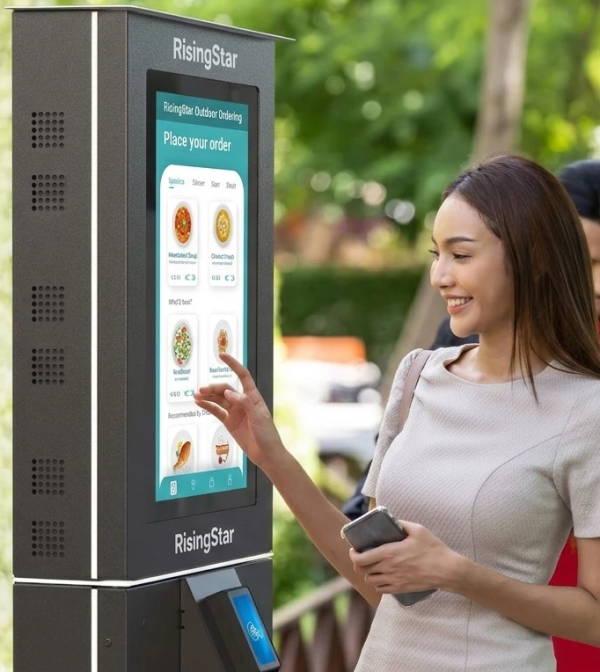
Shopping Centers and Retail Districts
Outdoor shopping plazas, lifestyle centers, and pedestrian retail districts use wayfinding kiosks to help shoppers find stores, restaurants, parking, and restrooms. These kiosks serve a different purpose than park units: they are promotional as much as informational. Many display advertising, event calendars, and digital coupons alongside the directory.
The challenge in retail environments is aesthetic integration. The kiosk must look clean and modern, not like an industrial control panel. A flush-mounted display with no visible bezel or protruding housing achieves this. The touch interface must be responsive and accurate — a shopper who mis-taps and has to start over is a shopper who walks away. A well-designed outdoor wayfinding kiosk becomes part of the retail environment rather than an eyesore.
Retail kiosks also need higher brightness than park units because they compete with storefront window displays and reflected light from glass facades. A semi-outdoor location under a covered walkway still receives 10,000 to 30,000 lux of indirect light. The display needs 1,500 to 2,500 nits with anti-reflective glass to stay readable.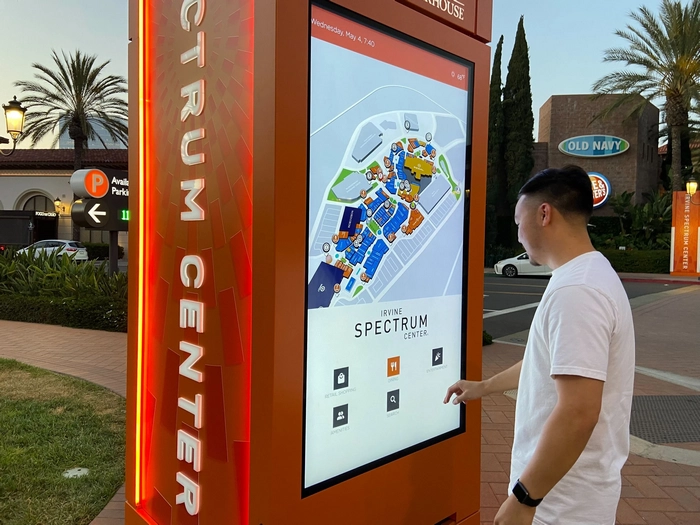
Public Transportation Hubs
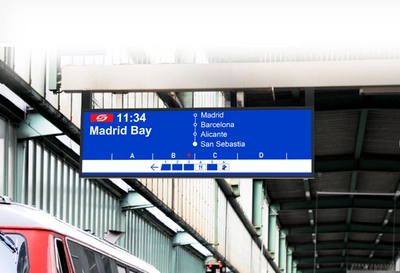
Bus terminals, train stations, and ferry terminals use outdoor wayfinding kiosks to direct passengers to platforms, exits, ticket offices, and connections. These kiosks operate 24/7 and must be reliable in all weather conditions.
The main difference between transit kiosks and other deployments is data integration. Transit kiosks pull real-time data from the station's passenger information system — departure times, platform changes, service alerts, and emergency notifications. The display must handle dynamic content updates without freezing or lagging.
Beyond data integration, transit environments demand hardware capable of enduring exceptionally high touch frequencies. A kiosk at a busy terminal can see hundreds of touches per day. The PCAP touch sensor must be calibrated for continuous duty with firmware that rejects phantom touches from rain droplets and registers input through gloved hands in winter.
Vibration resistance matters for transit kiosks installed on platforms or near tracks. The display assembly must use locking connectors and vibration-dampening mounts to prevent loosening over time.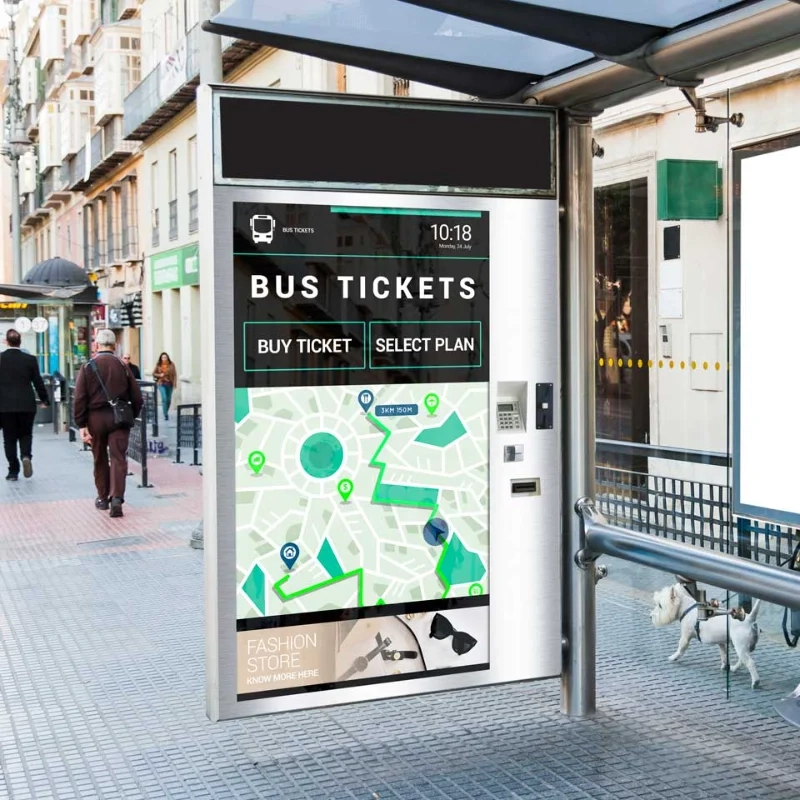
Municipal and Civic Spaces
City government buildings, libraries, community centers, and public plazas deploy outdoor wayfinding kiosks to provide information about services, events, and facilities. These kiosks serve a broad demographic — residents, visitors, and non-English speakers — and must be accessible to all users.
Municipal kiosks often include accessibility features as a requirement. The touch interface must be reachable from a wheelchair. The display must support high-contrast text and screen reader output. The kiosk must comply with local accessibility standards, which in many regions follow WCAG guidelines.
Security is another consideration for municipal kiosks. The display and enclosure must resist tampering. IK10-rated glass, tamper-proof fasteners, and sealed cable entry points prevent unauthorized access to the internal components.
5 Core Elements of a Reliable Outdoor Wayfinding Kiosk
Regardless of the deployment environment, every outdoor wayfinding kiosk shares the same core requirements:
Brightness. The display must be readable in direct sunlight. 1,500 to 2,500 nits with optical bonding and AR coating is the minimum for any outdoor installation. A weatherproof wayfinding kiosk without adequate brightness will be unreadable for most of the daylight hours.
Sealing. IP65 front protection against rain and dust is the baseline. The seal between the display and the kiosk enclosure must use EPDM gaskets rated for continuous outdoor exposure. Without proper sealing, moisture enters the display assembly and causes internal fogging or component corrosion within months.
Touch. PCAP touch with firmware tuned for wet-hand operation and glove mode. The touch sensor must be calibrated for the specific cover glass thickness and bonding process used in the assembly. A kiosk that does not register touch in rain frustrates users and defeats its purpose.
Impact protection. IK10 tempered glass for any kiosk accessible to the public. The glass must be optically bonded to the LCD panel so impact force distributes across the full surface. A cracked cover glass takes the kiosk offline until a service technician arrives.
Temperature range. The display must feature robust thermal management to operate from -20°C to +70°C, covering both cold winter starts and summer heat buildup inside a sealed enclosure.
As a direct manufacturer of industrial-grade display solutions, we build outdoor wayfinding kiosks ranging from 7 to 110 inches. Engineered with 500 to 5,000 nits of brightness, PCAP touch, IP65/IP66 sealing, and IK10 vandal-resistant glass, our hardware is designed for deployment in any environment. To ensure field reliability, every unit undergoes a 100 percent factory inspection and a 72-hour burn-in process before shipment.
Browse RisingStar's outdoor display solutions or contact us to discuss your wayfinding kiosk requirements.