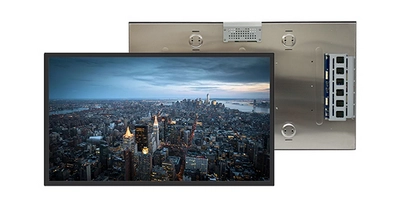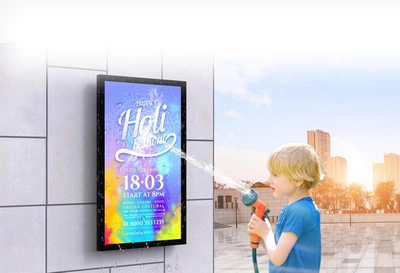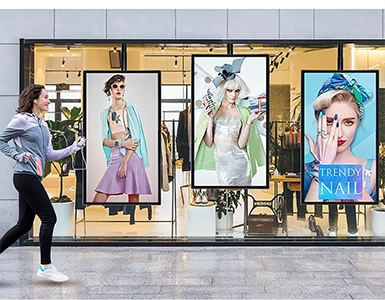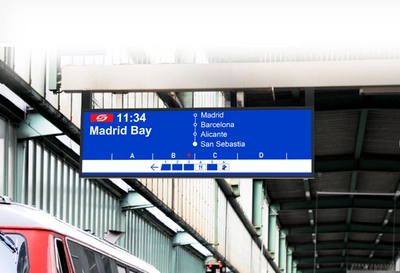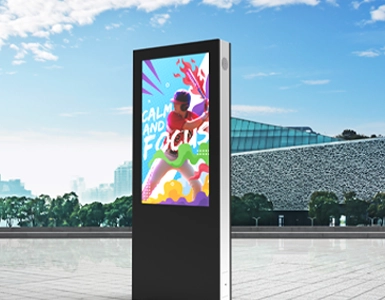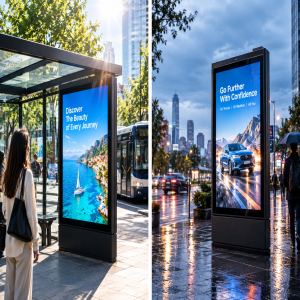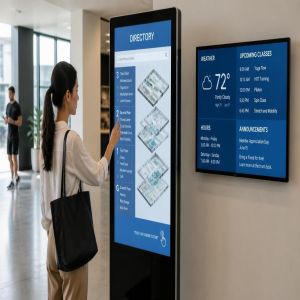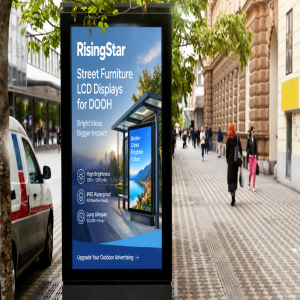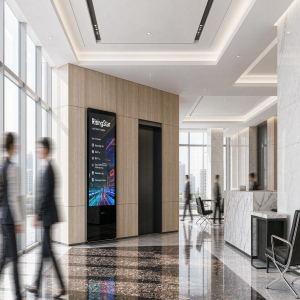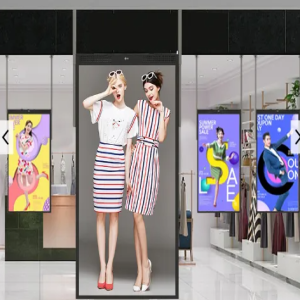
When a project team specifies a high nits display, the required brightness depends on the deployment environment.
This guide is a decision framework, not a manufacturer ranking. It walks engineering, integration, and procurement teams through three stages — diagnose the site, map the application, decide and validate — that translate a real-world outdoor environment into a specification sheet that does not waste money, does not burn out in 18 months, and does not get returned from the field.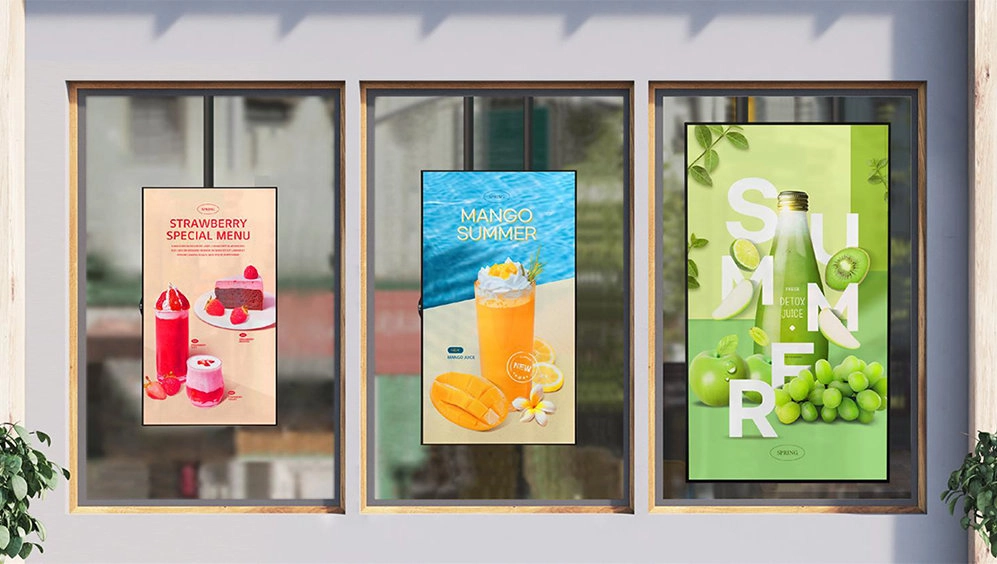
If you only have ten minutes, jump to the Decision Matrix in §2 and the 5-Year TCO Worksheet in §3.
1. Diagnose the Site and the Stack
The brightness number is downstream of the environment, not upstream of it. Get the site diagnosis wrong and no panel on the market will save the project.
Environment and Brightness Tier
Before a brightness number goes into a brief, answer five questions about the deployment site.
For reference, the table below gives typical outdoor surface illuminance. The numbers come from standard photometric literature and are useful as a sanity check against what your supplier reports.
| Site condition | Approx. ambient illuminance on the screen |
|---|---|
| Indoor office / mall interior | 300-500 lux |
| Overcast daylight | 1,000-5,000 lux |
| Direct sunlight | 30,000-100,000 lux (depending on surface orientation and latitude) |
| Question | Why it matters |
|---|---|
| What is the peak ambient lux at the screen surface (noon, mid-summer)? | A shaded train platform and a south-facing parking pillar may differ by a factor of 10. |
| Does the screen face direct sun, indirect light, or backlit glass? | Each case requires a different optical stack, not just more nits. |
| What is the maximum surface temperature the enclosure will see in operation? | Above roughly 70 °C a standard liquid-crystal layer begins to suffer thermal blackening, which is why the Hi-Tni tier exists. |
| What is the duty cycle — 8 h/day kiosk or 24/7 PIDS? | A short duty cycle can survive with a smaller thermal budget. |
| What regulatory and IP requirements apply (EN 12966, IK rating, IP65/66)? | These often dictate enclosure and bonding choices more than nits do. |
The nits you need are driven by exposure class, not by a single lux ratio. The widely cited ranges are: shaded or semi-outdoor at 800-1,500 nits; exposed sunlight at 1,500-3,000 nits; extreme (tropical midday, high reflectance) at 3,500-5,000+ nits. If a supplier cannot quote a real ambient figure for the site, the spec is not done yet.
A useful self-test: write down the worst-case hour of sun on the panel. If the answer is "I do not know," the brightness line in the RFQ is premature.
The industry has settled into four brightness tiers. Choosing a tier above the actual need does not future-proof the project; it burns power, generates heat, shortens LCD life, and inflates the cooling budget. The wrong tier also tends to fail faster, for reasons the table makes explicit.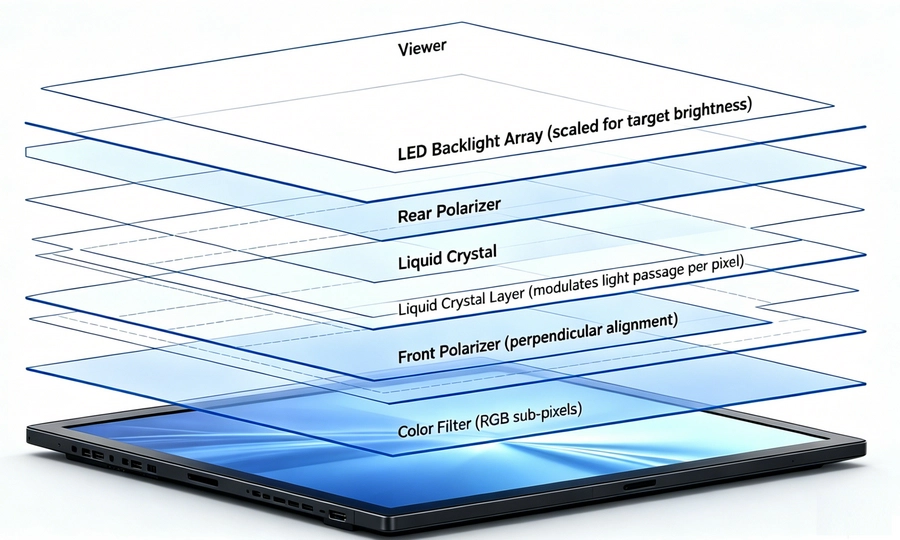
| Tier | Typical output | Suitable environments | Common failure mode if misapplied |
|---|---|---|---|
| Indoor commercial | 350-700 nits | Malls, airports (interior), backroom | Washed out near any window — content becomes unreadable, especially in afternoon sun. |
| Window-facing / semi-outdoor | 1,000-2,500 nits | Shopfronts, QSR menu boards, transit concourses | Thermal blackening after 6-12 months if installed in direct sun, because the backlight runs beyond its design ambient. |
| Outdoor shaded / covered | 2,500-4,000 nits | EV charging bays (with canopy), gas-pump canopies, bus shelters | Acceptable visually; thermal-driven defects appear after roughly 20,000 hours if the enclosure has no conduction path to ambient. |
| Outdoor full-sun / extreme | 4,000-5,000+ nits | Airports, motorway gantries, stadium concourses, tropical DOOH | Over-driven LEDs at 100 % duty cycle; warranty exposure if thermal headroom is undersized. |
A 4,000-nit panel is not automatically a better 2,500-nit panel. The decision is driven by the deployment environment and the operating ambient, not by the headline number on the data sheet. Also worth noting: not every "5,000-nit" product on the market is rated for full-sun 24/7 duty — many peak at that figure for short bursts and derate quickly under sustained load.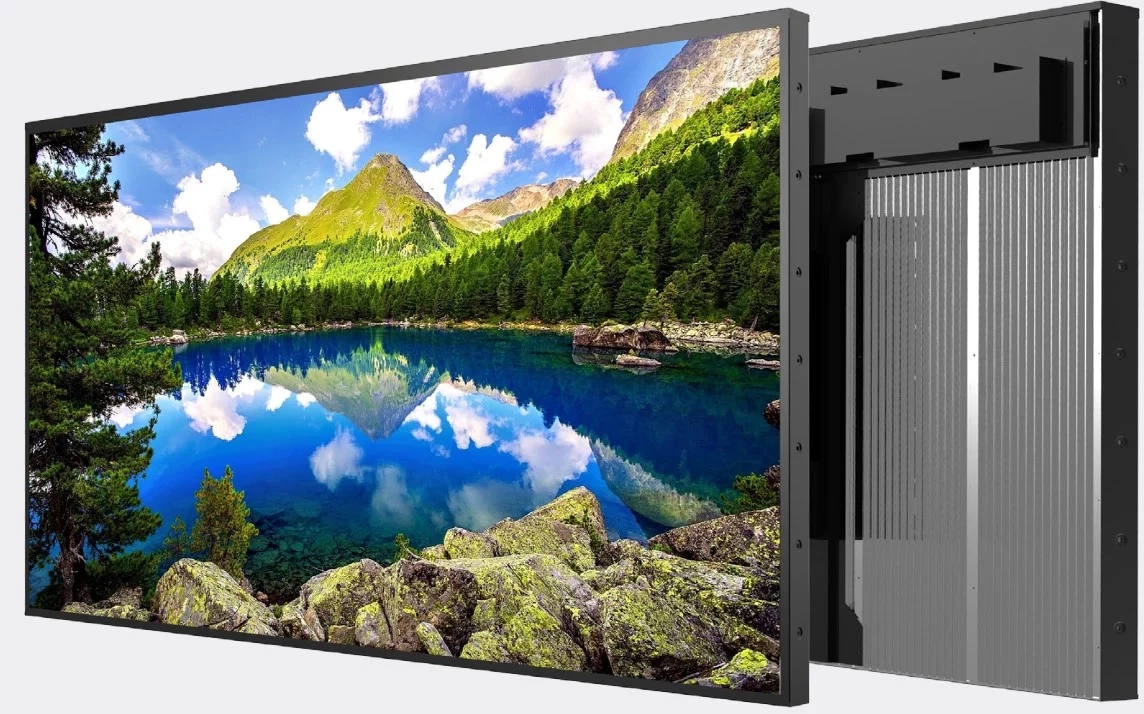
Optical Stack
Nits only matter if the light that leaves the panel reaches the viewer's eye. That depends on what sits between the LCD and the world. There are three layers, and they compound.
Optical bonding eliminates the air gap between the cover glass and the LCD cell. This is the single highest-leverage upgrade for any outdoor installation. Internal-reflection reduction through optical bonding typically sits in the 60-80 % range, boosting effective perceived contrast several times over without adding a single nit. Bonding also prevents condensation fogging between glass and cell (a frequent field return) and adds impact resistance, raising the achievable enclosure rating when paired with an appropriate cover glass. For any outdoor or window-facing deployment, optical bonding is not optional.
stretched-lcd-optical-bonding-exploded-view.webp
AR and AG coating matter differently. AR (anti-reflection) reduces specular reflection, which matters when the screen is opposite a bright window or vehicle headlights. AG (anti-glare) diffuses the reflection so it does not form a mirror image, which matters in shopping streets and queueing areas. Best-in-class stacks apply AR on the outer surface and AG on a sub-layer; expect a noticeable cost step versus a single-layer treatment.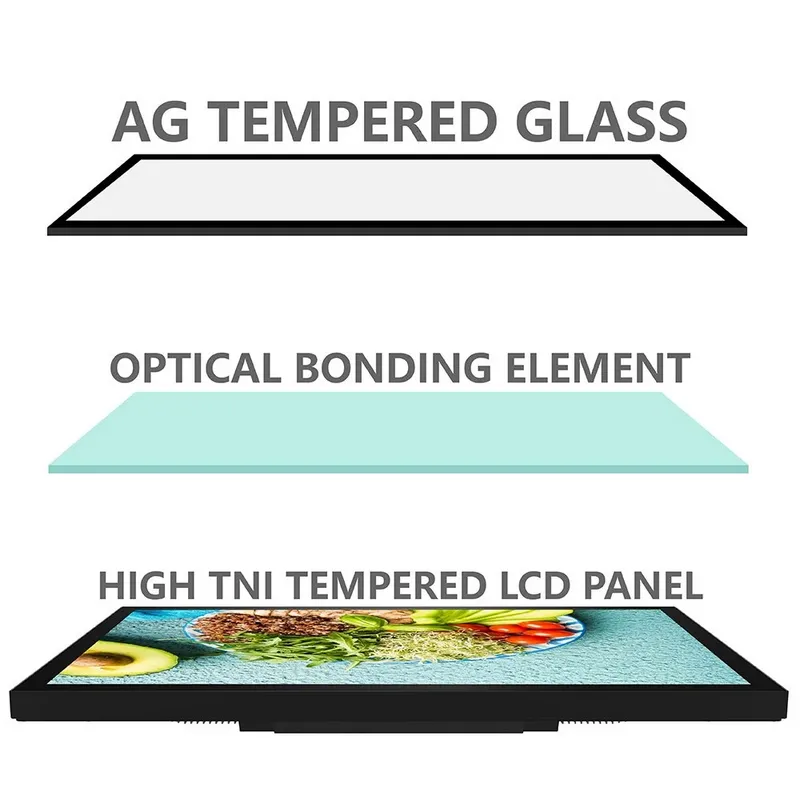
Cover glass depends on vandal risk (IK rating requirement), touch requirement, and optical clarity versus cost. IK08 is a typical industrial baseline; IK10 is specified where glass is within reach of the public. Laminated glass pairs with projected-capacitive touch; tempered glass is cheaper but reduces optical clarity slightly.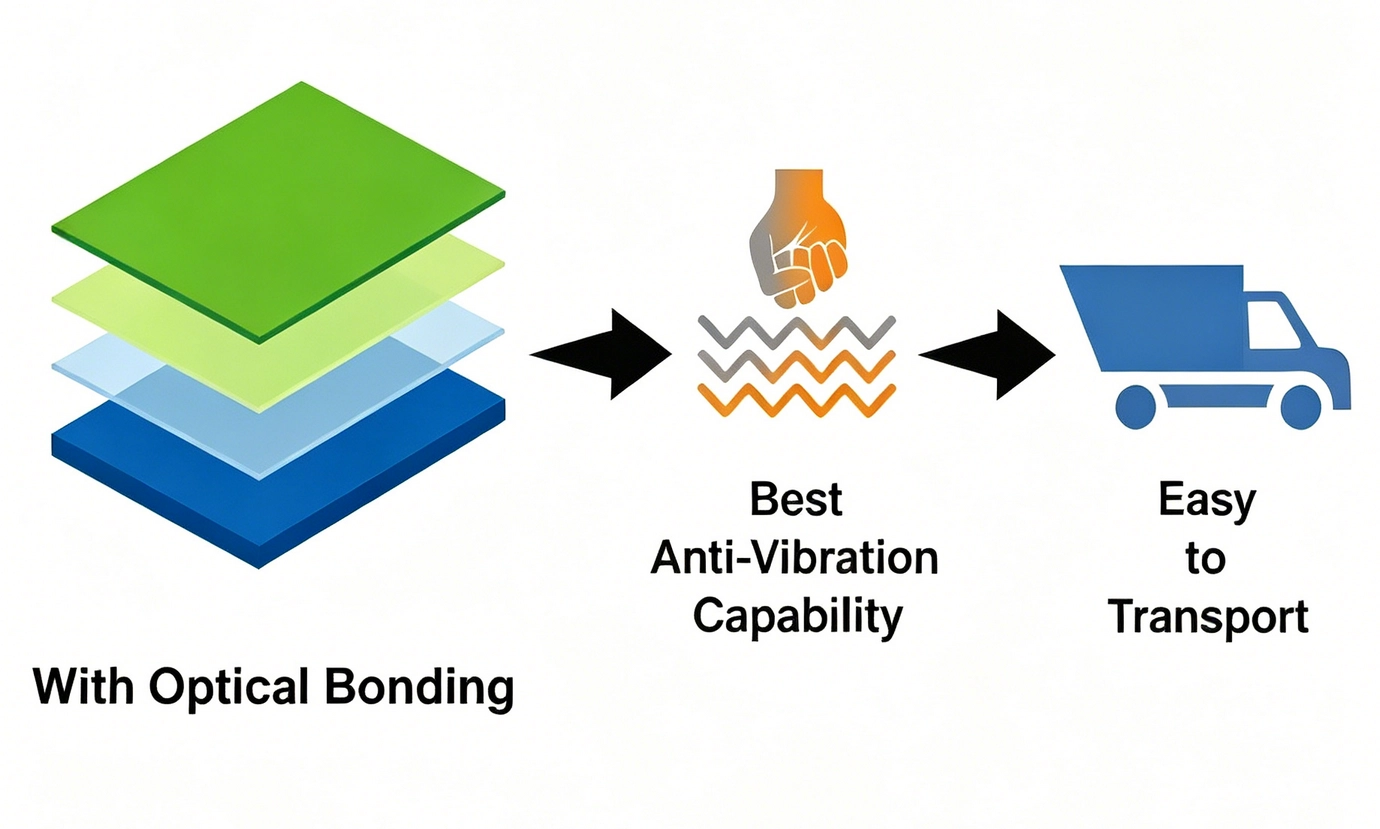
A practical note on RFQ wording: specify bonding and coating together, not separately. Two screens at "2,500 nits" can perform like 1,500 nits versus 4,000 nits depending on the optical stack behind them. If the supplier's quote does not name the bonding adhesive, the cover-glass treatment, and the AG/AR sub-layer explicitly, ask for the data sheet before signing.
Thermal Budget
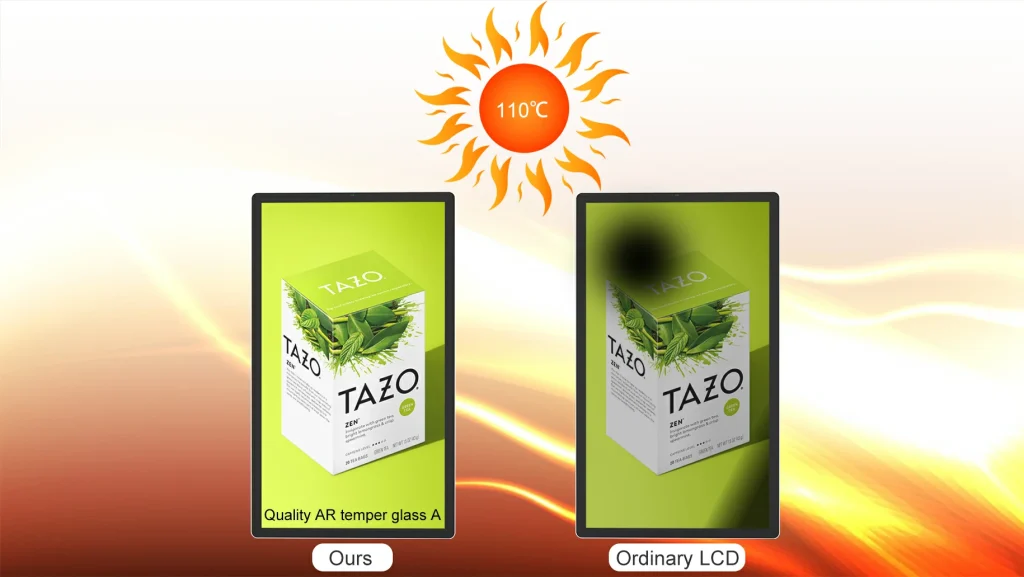
Field data across outdoor commercial deployments is consistent: heat, not brightness, is the dominant cause of field failure. A panel that is too dim gets replaced after 5 years; a panel that has cooked itself gets returned in 14 months.
The three heat loads are: solar gain on the enclosure surface (often 600-1,000 W/m² at noon in summer), backlight waste — every LED emits heat as well as light, and an outdoor LCD's backlight typically consumes roughly two to three times the power of a comparable consumer-grade panel of the same size (verify exact figures on each supplier's datasheet), and internal electronics — driver boards, media players, and touch controllers each add their own thermal load. These three combine additively, not linearly. Under-sizing any one of them collapses the whole system.
What "good" looks like: industrial-grade Hi-Tni liquid crystal with a clearing point of 110 °C or higher (per current product spec, against roughly 70-80 °C for consumer-grade panels); passive finned-aluminium back where duty cycle permits — fans are the most common service call and are best avoided; forced-air cooling only as a last resort, and only with serviceable dust filters; operating range verified at −20 °C to +70 °C internal, with a meaningful thermal margin at peak load.
What "cheap" looks like (and why it returns): consumer-grade panels where the LC mixture's blackening point is reached in direct sun; sealed enclosures with no conduction path — heat soaks into the LCD glass; touch controllers mounted directly behind the backlight; 12-month warranties and no field-replacement strategy.
2. Map the Application and Verify the Spec
Once the site is diagnosed, the next stage is to map the deployment to a configuration and check the spec against decision rules before any quote lands.
Application Mapping
The four most common commercial configurations have meaningfully different spec profiles. Use this mapping as a starting point for the RFQ.
| Application | Typical size | Tier | Optical bonding | Thermal approach | Typical lifetime target |
|---|---|---|---|---|---|
| EV charging station screen | 21.5″-32″ | 1,500-2,500 nits | Required | Conduction-cooled chassis | 7 years, 24/7 |
| Window-facing retail / QSR | 32″-75″ | 1,000-2,500 nits | Required (touch) | Fan-assisted | 5 years, 16/7 |
| Transport PIDS / wayfinding | 32″-55″ | 2,500-4,000 nits | Required | Conduction-cooled chassis | 10 years, 24/7 |
| Outdoor billboard / DOOH | 43″-100″ | 4,000-5,000+ nits | Required | Forced air + service loop | 7 years, 18/7 |
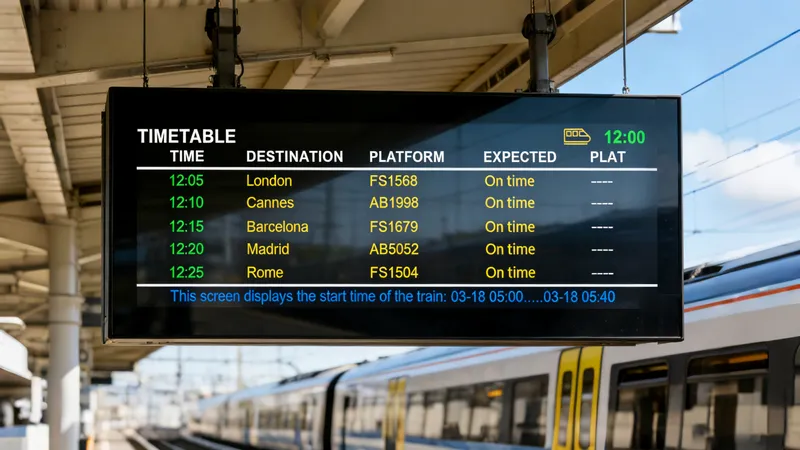
When shortlisting for any of these segments, comparing the actual product line — for example, the high brightness display families offered across 21.5″ / 32″ / 43″ / 49″ / 55″ / 65″ / 75″ panels — helps validate that a single supplier can support the full size spectrum the deployment plan needs.
A practical note on lifetime: in outdoor commercial settings, lifetime almost always refers to LED-backlight L70 (time to 70 % of initial brightness). Push suppliers on the L70 figure at the actual operating temperature, not at the marketing-room figure. A panel rated 50,000 h L70 at 25 °C will give a fraction of that at 60 °C internal ambient.
Decision Matrix
The matrix below is a one-page summary. Use it to sanity-check the spec the engineering team is about to release.
| If your deployment is … | Default to … |
|---|---|
| Indoor, ambient-controlled | Indoor commercial tier; no optical bonding required |
| Semi-outdoor or back-to-window | Window-facing tier + optical bonding + AR outer surface |
| Outdoor, shaded or covered, −10 °C to +50 °C | Outdoor shaded tier + Hi-Tni LC + conduction cooling |
| Outdoor, full sun, tropical or desert | Full-sun tier + Hi-Tni LC + conduction cooling + L70 ≥ 50,000 h at operating temperature |
| Any application with public-facing touch | Optical bonding mandatory; specify IK08+ cover glass |
Quick Answers (FAQ-style, AEO-optimised)
What nits are needed for a sunlight readable LCD? Roughly 2,500-5,000 nits depending on direct-sun exposure. Shaded or canopy-covered deployments can sit at 1,500-2,500 nits.
Is optical bonding worth the cost for an outdoor display? Yes, for any outdoor or window-facing deployment. It cuts internal reflection by 60-80 % and removes the most common field failure (internal condensation).
What is Hi-Tni LCD and why does it matter? A higher clearing-point liquid crystal (≥110 °C, against 70-80 °C for consumer panels) that resists thermal blackening under direct solar load.
Can a 1,000-nit display ever be used outdoors? Only in shaded / covered sites. Direct sun requires 2,500+ nits combined with optical bonding.
How long should an outdoor display last? Industrial deployments target 5-10 years depending on tier; backlight L70 at operating temperature is the right figure to compare, not headline hours.
3. Decide, Quote, and Validate Over 5 Years
The diagnostic and mapping stages set up the actual decision: quote, validate, and account for total cost over the deployment lifetime, not just the unit price on the RFQ.
5-Year TCO Worksheet
Nits and unit price drive the conversation in the RFQ. They should not. Here is the worksheet finance teams actually use:
TCO5y = Hardware + Install + (Power × Hours × Tariff × 5) + (Maintenance visits × Cost per visit × 5) + (Failure rate × Replacement cost) + (Content downtime cost)The cheapest acceptable outdoor high nits display is roughly 1.4 to 1.6 times the cheapest indoor screen, not 2.5 times as some RFQs assume. If the delta is much wider, the project is either buying too much or too little. To model the choice realistically, populate the formula with the local tariff and an honest field-failure rate for the cheaper unit — substitution of guesswork for these two inputs is where most TCO arguments lose credibility with finance.
Common Procurement Mistakes
Specifying nits without specifying optical bonding. Brightness is paid for that never reaches the viewer's eye.
Buying on panel price, not on L70 at operating temperature. A 30 % cheaper panel often fails twice as fast in the field.
Ignoring the enclosure's thermal headroom. A sealed box that looks IP66 can still cook a 5,000-nit panel to failure.
Treating touch as a checkbox. Outdoor projected-capacitive touch without optical bonding fails within 18 months in most climates.
No service-loop strategy. Outdoor screens fail. Plan for who fixes them, how fast, and from where, before buying.
Pre-RFQ Checklist
Peak ambient lux at the actual installation site, with season considered.
Tier selected from the brightness table, not from a data-sheet headline.
Optical bonding mandatory in the spec.
Hi-Tni LC and thermal headroom documented.
L70 figure stated at operating temperature, not at 25 °C.
IP and IK rating matched to the regulatory environment.
5-year TCO model populated with the local tariff, not a rounded guess.
Service-loop plan with a named regional service partner.
How to Choose Suppliers
Suppliers worth shortlisting will engage with the decision matrix above. Suppliers worth disqualifying are the ones who only quote a brightness number when asked. The right partner pushes back on a 5,000-nit brief the same way they push back on a 1,000-nit one — because the answer is in the environment, not in the catalogue.
For a current reference product family covering sizes from 21.5″ up to 100″ and brightness tiers from 1,000 to 5,000 nits, the high nits display lineup cited throughout this guide is a useful benchmark to validate supplier quotes against, particularly on the brightness tier and optical-bonding prerequisites for outdoor applications.
Reference framework. Brightness bands align with the outdoor-LCD tier conventions cited in RisingStar's "How Many Nits Do You Need" guide and with the optical-bonding literature published by industrial-LCD integrators. Application to your project should be validated against local regulations, site-survey data, and operational duty cycle. Spec figures (Hi-Tni ≥110 °C, −20 °C to +70 °C operating range, 50,000 h backlight life, IP65/IP66, IK10) reflect the current RisingStar product line; substitute your supplier's actual datasheet where conflicting.