In the world of outdoor digital signage, there is a common misconception: that high brightness is the only metric that matters. However, deploying the wrong specification often leads to overspending on energy, or worse, a display that fails within months due to "blackening," moisture, or UV damage.
This guide explores the critical factors—from thermal resilience to environmental protection—that ensure your display remains vibrant and functional in any condition.
1. Context is Everything: Defining Your Environment
The environment dictates every technical requirement. A display inside a retail window faces very different challenges than one installed on a bus shelter in a coastal city.
Direct vs. Indirect Sunlight: This determines your required luminance. Direct sun typically requires 3,000–5,000 nits, while indirect light or shaded areas may only need 1,000–2,500 nits.
Thermal Extremes: Standard panels often fail in high heat. Industrial-grade solutions must operate reliably between -20°C and 70°C.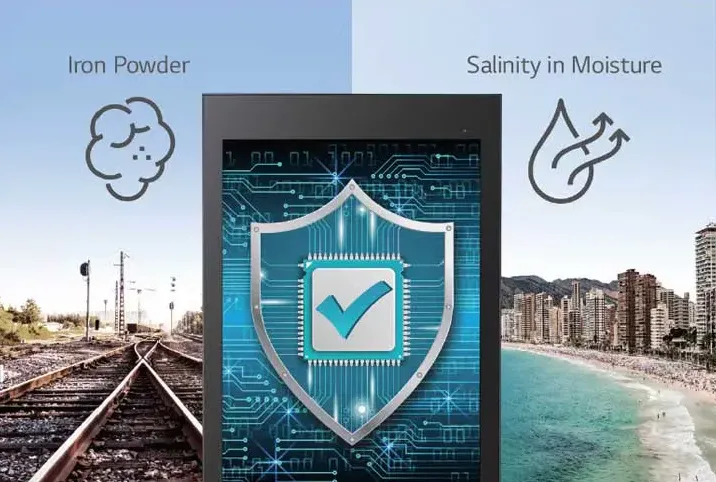
Corrosive Elements: Coastal or industrial areas require specialized housings—such as 304/316 stainless steel—to prevent salt spray from destroying the internal circuits.
2. The Science of Visibility: Finding the "Nit" Sweet Spot
Brightness (measured in nits) is the soul of a sunlight-readable screen, but more isn't always better. The goal is to match the light output to the ambient conditions to balance visibility with energy efficiency.
| Use Case | Lighting Condition | Recommended Brightness |
|---|---|---|
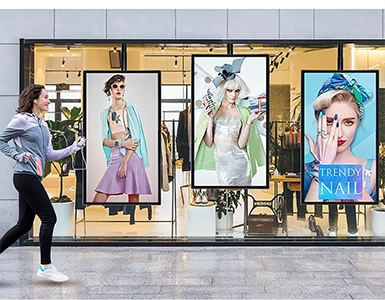
| Retail Windows | Behind glass / Indirect sun | 1,500–2,500 nits |
| Standard Outdoor | Open-air / Partial sun | 2,500–3,000 nits |
| Extreme Environments | High-noon sun / Desert / Equator | 4,000–5,000 nits |
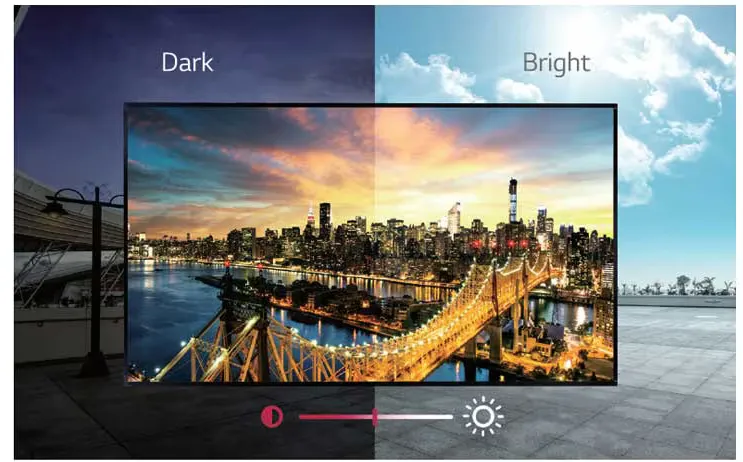
Efficiency Tip: Look for displays with integrated ambient light sensors. These automatically dim the screen at night, reducing energy consumption by up to 60% and significantly extending the lifespan of the LED backlight.
3. Why Ordinary Screens "Go Black" in the Sun
Have you ever seen an outdoor screen with ugly black splotches? This is thermal blackening. When the surface of a standard LCD panel hits a certain temperature, the liquid crystals lose their orientation.
To prevent this, RisingStar utilizes Hi-Tni solar-resilient panels to ensure the screen remains crystal clear even under intense solar radiation. By partnering with Tier-1 manufacturers like LG Display, AUO, BOE, and INNOLUX, we ensure every panel is Grade A/A+ for maximum longevity.
4. Built Like a Fortress: IP66 Protection
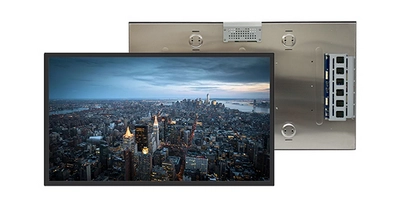
Outdoor displays must survive more than just light. They must withstand rain, dust, and humidity. While many indoor-rated screens claim "weather resistance," true outdoor durability requires a sealed enclosure.
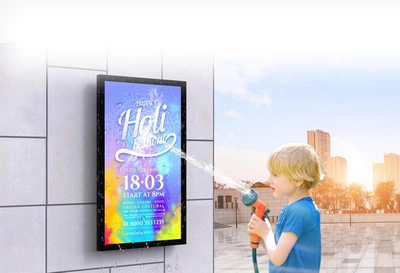
IP65/IP66 Rating: This is the gold standard for outdoor reliability. It ensures the unit is completely dust-tight and protected against powerful water jets from any direction.
UV Resistance: Specialized tempered glass prevents the yellowing of touch layers and polarizers caused by long-term UV exposure.
Vandalism Protection: For public areas, an IK10-rated or 7H hardness protective glass is essential to prevent physical damage.
5. Interaction and Integration
Modern displays are often more than just "passive" screens. They are interactive hubs for users.
PCAP Touch Technology: For outdoor use, Projected Capacitive (PCAP) touch is the clear winner. It supports multi-touch, offers high clarity, and—most importantly—can be tuned to work with gloves or wet hands, which is critical for EV charging stations or kiosks.
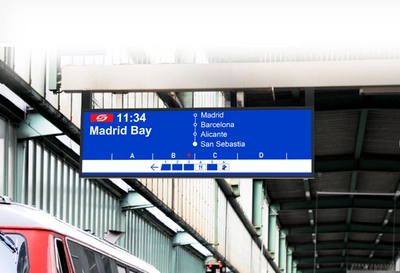
Specialized Form Factors: Not every project fits a 16:9 ratio. Stretch bar formats are becoming the standard for metro PIDS and shelf-edge displays where space is at a premium.
6. The Bottom Line: Total Cost of Ownership (TCO)
Choosing a display based solely on the initial purchase price is a common pitfall. For mission-critical outdoor signage, the real value lies in long-term reliability.
Factory-Direct Advantage: Working directly with a manufacturer like RisingStar can be 40–60% more cost-effective than international resellers while offering deeper OEM/ODM customization.
Extended Warranty: While industry standards vary, we provide a 3-year standard warranty (extendable) and a system lifespan of up to 50,000 hours, ensuring your investment is protected.
Rigorous Testing: Every unit should undergo a 100% factory inspection and 72-hour high-temperature aging before shipment to guarantee performance in the field.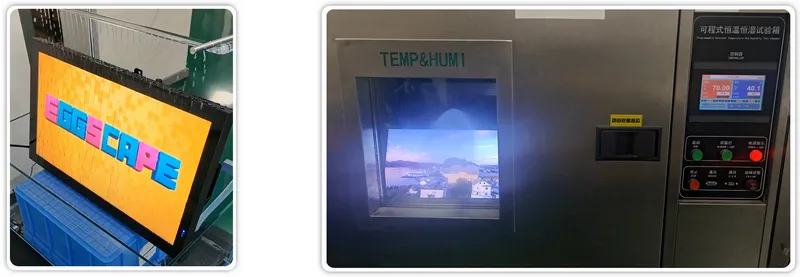
About RisingStar
Founded in 2009, RisingStar operates a 4,000㎡ ISO-certified facility in Shenzhen, China. We specialize exclusively in high-brightness LCD technology for the most demanding environments on Earth. From transit hubs in freezing climates to retail windows in tropical deserts, our displays are Sunlight Readable and Built for Extremes.
Ready to find the right display for your project?
📧 Email: ai@risinglcd.com
💬 WhatsApp: +86 158 8946 9208
🌐 Website: www.risinglcd.com
📍 Address: 5/F, Hengshou Technology Building, Area B, Shangcun Liantang Industrial Zone, Guangming District, Shenzhen, China