
At a Glance
PCAP touch in open frame monitors faces two primary failure vectors in outdoor and industrial environments: Electromagnetic Interference (EMI) from LCD backlight inverters and nearby high-power electronics, and physical vandalism requiring IK08–IK10 impact resistance.
EMI mitigation relies on three layers: high-voltage Tx driving (18V+ charge pump controllers), active shield layers between the LCD and touch sensor, and firmware-based Frequency Hopping Spread Spectrum (FHSS) that shifts scanning frequencies away from noise bands.
Vandal resistance is achieved through chemically strengthened aluminosilicate glass (≥600 MPa compressive surface stress) in thicknesses of 4–6mm for IK10 rating, combined with refractive-index-matched optical bonding that maintains touch sensitivity and prevents internal reflection loss.
Water rejection firmware differentiates rain droplets from finger touches by switching rapidly between mutual-capacitance and self-capacitance scanning modes — water couples Tx-Rx differently than a finger.
Abstract
The integration of Projected Capacitive (PCAP) touch screens into open frame monitors represents the industry standard for industrial, medical, and public-facing interactive kiosks. However, operating in unconstrained environments introduces critical failure vectors: severe Electromagnetic Interference (EMI) and deliberate or accidental kinetic vandalism. This article provides a rigorous technical analysis of the electro-physical and mechanical challenges inherent to PCAP open frame integration. We examine the physics of parasitic capacitive coupling, common-mode noise injection from LCDs, and radio-frequency interference (RFI). Furthermore, we detail the materials science and structural engineering required to harden these systems, focusing on chemically strengthened aluminosilicate glass, refractive-index-matched optical bonding, and high-voltage Signal-to-Noise Ratio (SNR) tuning algorithms.
RisingStar integrates these hardening techniques across its outdoor open frame monitor product line, applying optical bonding in a Class 10,000 cleanroom and specifying touch controllers with charge-pump high-voltage drivers for industrial EMI environments. The same engineering applies to RisingStar's open frame monitor configurations for outdoor kiosks, EV charging stations, and transit information terminals.
Introduction to the Architecture
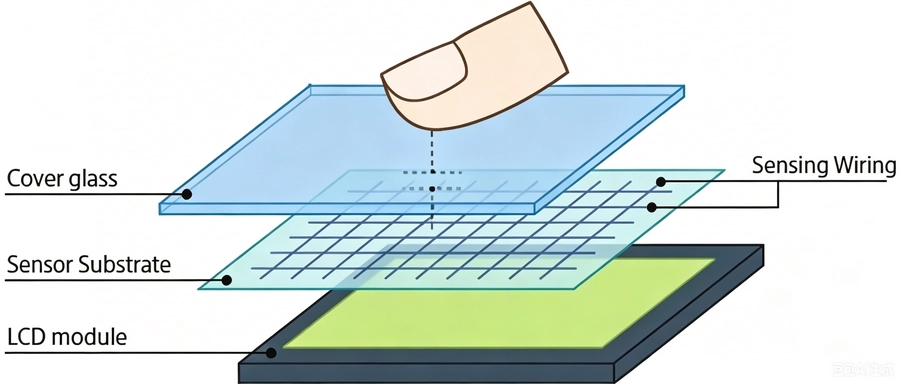
An open frame monitor is essentially a display sans its outer bezel, comprising a bare metal chassis that houses the LCD panel, backlighting module, display controller board (AD board), and power supply. This structural minimalism is purposeful: it allows integrators to flush-mount the display directly into custom enclosures, ATMs, industrial control panels, or gaming cabinets.
When mated with a PCAP touch sensor, the system achieves a flat edge-to-edge glass aesthetic, zero-bezel design, and IP65/IP66 front-panel ingress protection potential. PCAP technology relies on an invisible grid of conductive material — typically Indium Tin Oxide (ITO) or metal mesh — layered on a glass or PET substrate. The system measures changes in capacitance at the intersections of Transmit (Tx) and Receive (Rx) electrodes.
However, the fundamental operating principle of PCAP — detecting minute femtofarad (fF) changes in an electric field — makes it inherently highly susceptible to environmental noise. Furthermore, its deployment in unsupervised environments necessitates physical resilience far exceeding consumer-grade tablets.
Technical Note // RisingStar — RisingStar specifies industrial-grade PCAP touch controllers with charge-pump circuitry for outdoor-rated open frame monitors. The higher Tx drive voltage compensates for the signal attenuation caused by thicker cover glass (4–6mm for IK10-rated vandal resistance), maintaining reliable touch registration while preserving the mechanical durability required for public-facing deployments.
The Electromagnetic Interference (EMI) Challenge
EMI in PCAP systems is not merely a software annoyance; it is a fundamental hardware-level disruption of the analog-to-digital conversion process. Noise can be introduced through conducted emissions (via shared power supplies) or radiated emissions (via RF antennas, motors, or the LCD panel itself).
The Physics of Capacitive Sensing and Noise Injection
In a mutual capacitance PCAP system, the touch controller continuously pulses the Tx lines and reads the resulting charge on the Rx lines. The mutual capacitance (C_m) at any given intersection is defined by the dielectric material and the geometry of the electrodes.
When a conductive object (a human finger) approaches, it steals a portion of the fringing electric field, shunting it to the earth ground. This reduces the mutual capacitance at that node:

The controller detects this \Delta C_m to register a touch. The signal is highly delicate, often in the range of 0.1 to 1.0 pF.
Noise enters this system primarily through parasitic capacitance (C_p). If the noise voltage (V_n) fluctuates at frequencies overlapping the touch controller's scanning frequency, the resulting noise current (I_n) injected into the Rx lines can easily mask the touch signal:

If the injected I_n is large enough, the firmware cannot distinguish between a voltage drop caused by a finger and a voltage fluctuation caused by noise, resulting in "ghost touches" (false activations) or "dead zones" (desensitization).
LCD-Generated Noise (Internal EMI)
The most persistent source of EMI in an open frame monitor is the LCD panel itself. LCDs utilize Thin-Film Transistors (TFTs) to switch liquid crystal pixels. To prevent liquid crystal degradation, the polarity of the voltage applied to the crystals is continuously inverted (VCOM inversion).
This inversion generates a high-amplitude, high-frequency square wave. Because the PCAP sensor is mounted mere millimeters above the LCD, the VCOM plane acts as an unintentional transmitter, capacitively coupling directly into the PCAP Rx lines.
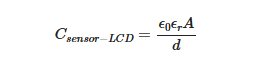
Where:
\epsilon_0 is the vacuum permittivity (8.854X10^{-12} F/m)
\epsilon_r is the relative permittivity of the gap (air or optical adhesive)
A is the overlapping area
d is the distance between the LCD and the sensor
Because the area A is large (the entire screen size) and d is very small, the parasitic capacitance C_{sensor-LCD} is significant, allowing massive noise injection.
External EMI Sources
In industrial and public environments, open frame monitors are subjected to external noise:
Variable Frequency Drives (VFDs): Produce wide-band harmonic noise via power lines.
RFID/NFC Readers: Often integrated into kiosks right next to the screen, transmitting at 13.56 MHz, which can saturate the touch controller's analog front end (AFE).
Switching Power Supplies (SMPS): Low-quality external power supplies inject common-mode noise into the system ground.
Hardened Countermeasures for EMI Immunity
Overcoming EMI requires a multi-layered approach, combining mechanical stack-up adjustments, electrical shielding, and advanced Digital Signal Processing (DSP).
Hardware-Level Mitigation: Active Shield Layers
The most direct way to reduce LCD noise coupling is to increase the distance (d) between the LCD and the sensor, as capacitance is inversely proportional to distance. Implementing a 1.0 mm to 2.0 mm air gap using perimeter double-sided tape (DST) significantly reduces C_{sensor-LCD}.
However, air gaps introduce optical parallax and internal reflections. If an air gap is not viable or sufficient, an Active Shield Layer must be introduced.
An additional solid layer of ITO is deposited on the bottom of the PCAP sensor (facing the LCD). This shield layer is connected to the ground. It acts as a Faraday cage, intercepting the electric fields from the LCD VCOM and routing the noise to the system ground before it can reach the Rx lines. When combined with optical bonding — where the shield layer is embedded within the OCA (Optically Clear Adhesive) laminate — the assembly maintains optical clarity while providing full EMI protection.
High Voltage Tx Driving
To improve the Signal-to-Noise Ratio (SNR), modern industrial touch controllers utilize high-voltage driving circuits.
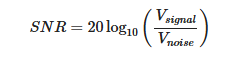
Consumer-grade controllers drive Tx lines at 3.3V to 5V. Industrial controllers designed for open frame integration incorporate charge pumps to drive Tx pulses at 18V to 35V. By exponentially increasing the amplitude of the intended signal (V_{signal}), the relative impact of the noise floor (V_{noise}) is minimized, drastically improving the SNR without altering the mechanical stack.
This is particularly important for open frame monitors with thick (4–6mm) chemically strengthened cover glass for IK10 vandal resistance, where the increased distance between the finger and the ITO sensor grid attenuates the raw touch signal.
Frequency Hopping Spread Spectrum (FHSS) and DSP
Hardware defenses are supplemented by firmware-level active noise cancellation:
Spectrum Analysis: The controller periodically halts touch scanning to perform a passive listen, conducting a Fast Fourier Transform (FFT) on the Rx lines to identify the peak frequencies of ambient noise.
FHSS: If the current scanning frequency falls within a high-noise band, the controller dynamically shifts its Tx driving frequency to a "clean" channel.
Hardware Filters: Implementation of low-pass and band-pass filters in the Analog Front End (AFE) to reject high-frequency transients before ADC conversion.
Vandalism and Physical Integrity Challenges
Open frame monitors deployed in ticketing machines, public kiosks, and outdoor wayfinding terminals face frequent physical abuse. The challenge is ensuring structural integrity without compromising the capacitive coupling required for the touch sensor to operate.
The Mechanics of Kinetic Impact
Impact resistance is measured in Joules of kinetic energy (E_k):
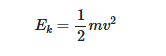
The industry standard for impact resistance is the IK Rating (IEC 62262). A standard consumer monitor might withstand IK04 (0.5 Joules). For unmonitored public spaces, IK08 (5 Joules, equivalent to a 1.7 kg steel ball dropped from 300 mm) or IK10 (20 Joules, 5 kg from 400 mm) is strictly required.
Glass failure under impact is primarily a tensile failure. When a projectile strikes the surface, the top face experiences compression, while the bottom face bows outward, experiencing extreme tensile stress. Glass is strong in compression but weak in tension. Micro-flaws on the bottom surface propagate rapidly into catastrophic web fractures when the tensile limit is exceeded.
Environmental Extremes: Water and Contaminants
Water is a highly polar, conductive fluid. When rainwater or spilled liquids pool on a PCAP screen, they behave similarly to a human finger, coupling the Tx and Rx lines and drawing away charge. If untreated, pooling water will cause massive multipoint ghost touches, paralyzing the system.
Furthermore, outdoor deployments face UV degradation, which can yellow adhesives, and extreme thermal cycling, which can cause delamination due to differing Coefficients of Thermal Expansion (CTE) of glass, metal, and plastic. Optical bonding using OCA materials with UV-resistant formulations prevents yellowing and maintains bond integrity over the display's operational lifetime.
Engineering the Vandal-Resistant PCAP Stack
To achieve IK10 ratings and environmental immunity, the standard Cover Glass / Sensor Glass (CG/SG) stack must be heavily engineered.
Glass Chemistry: Chemical vs. Thermal Tempering
Simply making standard soda-lime glass thicker (6 mm to 10 mm) achieves impact resistance but severely degrades touch sensitivity (increasing d lowers the capacitance signal) and adds massive weight. The solution is advanced glass strengthening.
Thermal Tempering: Glass is heated to approximately 600°C and rapidly cooled. The outer surfaces shrink faster than the core, locking the surface into a state of compressive stress (\sigma_{cs}). While effective for architectural glass, it is difficult to control on thin substrates and can cause optical distortion.
Chemical Strengthening (Ion Exchange): The glass is submerged in a molten potassium salt (KNO₃) bath at around 400°C. Smaller sodium ions (Na⁺) in the glass structure diffuse out, and larger potassium ions (K⁺) from the salt bath diffuse in. The larger K⁺ ions occupy the same lattice sites as the original Na⁺ ions, but their larger ionic radius creates a "stuffing" effect, generating a high compressive stress (\sigma_{CS}) layer approximately 40–50 \mum deep on the glass surface.
The surface compressive stress can reach 600–900 MPa. To fracture the glass, an external tensile force must first overcome this pre-compressed layer — effectively raising the fracture threshold. This allows 4mm chemically strengthened glass to achieve IK10 impact resistance without the weight or signal degradation of 10mm thermally tempered glass. The trade-off: chemically strengthened glass is more vulnerable to edge damage than thermally tempered glass of equivalent thickness.
Optical Bonding for Mechanical and Optical Enhancement
The PCAP sensor must be bonded to the LCD panel to eliminate the internal air gap. This bonding can be structural adhesive (OCA — Optically Clear Adhesive sheet) or liquid resin (OCR — Optically Clear Resin). The mechanical advantages of bonding for vandal resistance are substantial:
Load Distribution: In a bonded assembly (Cover Glass + OCA + LCD), the three layers behave as a laminated composite. Impact energy is distributed over a wider area rather than concentrated at the strike point. This significantly reduces localized tensile bowing that causes glass failure.
Optical Clarity: Air has a refractive index of n \approx 1.0. Glass and LCD polarizers have an index of n \approx 1.5. The mismatches cause internal reflections at every boundary interface, washing out the screen in direct sunlight. The OCA/OCR is index-matched (n \approx 1.48), eliminating internal reflections, increasing contrast ratio, and eliminating the "greenhouse effect" of trapped heat.
Advanced Firmware: Water Rejection and Gloved Touch
Thick vandal-proof glass (>4 mm) attenuates the touch signal. To read touches through thick glass and reject water, complex firmware is necessary:
Mutual and Self-Capacitance Scanning: Water couples Tx to Rx lines (increasing mutual capacitance) but also couples lines to ground. By rapidly switching the controller between Mutual-Capacitance scanning (measuring intersections) and Self-Capacitance scanning (measuring entire rows/columns to ground), the DSP algorithms can mathematically differentiate the capacitive footprint of a finger from a pool of water.
Water Rejection Algorithms: Once water is identified, the controller locks out the affected nodes. If the water forms a continuous stream, the controller shifts to a "single-touch tracking" mode, searching for a high-intensity signal moving independently of the stationary water mass.
Mechanical Integration Strategies for Open Frame Monitors
The final stage of ensuring reliability is how the open frame is physically mounted into the end-product chassis.
Gasketing and Grounding
To achieve IP65/IP66 (dust tight, water jet resistant) ratings, a closed-cell EPDM foam gasket must be compressed between the front cover glass of the open frame and the customer's outer bezel. Closed-cell EPDM foam does not absorb water and maintains its sealing memory over thousands of thermal cycles between -20°C and 70°C.
Grounding is the most critical electrical integration step. A floating ground is the primary cause of touch failure in the field.
The PCAP controller board's ground loop must be strapped directly to the open frame's metal chassis.
The open frame chassis must be bolted tightly to the main machine enclosure using star washers to bite through any anodized or painted coatings, ensuring a continuous, low-impedance path to the Earth Ground.
Separate signal grounds and power grounds to prevent SMPS noise from looping back into the touch controller.
RisingStar's open frame modules are pre-configured with grounding terminals and shielded FPC cables designed for single-point star grounding integration, reducing the OEM's field engineering burden.
Thermal Management
High-brightness LCDs (1,000+ nits) used in outdoor kiosks generate significant heat. Because the PCAP sensor is bonded to the front, heat must be dissipated rearward. The open frame chassis must utilize an aluminum alloy backplate (typically 140–160 W/m·K for 6061-grade alloy used in display chassis) to conduct heat away from the LED backlight and LCD panel. If passive convection is insufficient, active cooling or thermal gap pads coupling the display T-CON board to the heavy outer metal enclosure is required to prevent the liquid crystals from reaching their clearing point (≥110°C for Hi-Tni industrial panels), which would cause TNI blackening — irreversible isotropic blotches on the screen.
Making the Right Specification
When specifying an open frame monitor with PCAP touch for outdoor or industrial deployment, verify these points against the supplier:
Touch controller type: Industrial-grade with charge-pump high-voltage drive (3.3V consumer controllers cannot penetrate 4mm+ vandal-resistant glass reliably).
Glass strengthening: Chemically strengthened aluminosilicate glass (≥600 MPa CS, ≥40 µm DOL) per IEC 62262 IK10 rating, not standard thermally tempered soda-lime.
Bonding method: Optical bonding (OCA/OCR, index-matched to glass) — not air-gap tape bonding, which creates condensation cavities and weaker impact distribution.
EMI mitigation: Active shield layer between LCD and touch sensor, plus FHSS-capable controller firmware.
Water rejection: Confirm the controller firmware supports mutual/self-capacitance hybrid scanning for rain and condensation handling.
FAQ
Q: What causes ghost touches on outdoor open frame monitors?
Ghost touches are typically caused by EMI coupling from the LCD VCOM inversion plane into the PCAP touch sensor's receive lines. The parasitic capacitance between the LCD and sensor allows noise to be injected into the touch signal. Solutions include increasing the distance between LCD and sensor, adding an active shield ITO layer, and using high-voltage charge-pump touch controllers that improve the signal-to-noise ratio.
Q: How is IK10 impact resistance achieved without sacrificing touch sensitivity?
IK10 (20 Joules) is achieved using chemically strengthened aluminosilicate glass at 4–6mm thickness, which generates 600–900 MPa compressive surface stress through ion exchange. This provides impact resistance without the weight penalty of thicker glass. Touch sensitivity is maintained by pairing this with high-voltage charge-pump touch controllers (18–35V Tx drive) that compensate for the signal attenuation from the thicker cover glass.
Q: Why does an open frame monitor need optical bonding for outdoor use?
Optical bonding (OCA/OCR lamination) eliminates the air gap between the touch glass and LCD panel. This provides three benefits: (1) internal reflections are reduced from ~8% to below 1%, improving sunlight readability; (2) impact energy is distributed across the laminated composite, increasing vandal resistance; (3) the internal air cavity where condensation forms during temperature cycling is eliminated, preventing fogging.
Q: What is the difference between mutual-capacitance and self-capacitance touch scanning?
Mutual-capacitance scans the intersections of Tx and Rx electrode grids to detect individual touch points, supporting multi-touch gestures. Self-capacitance scans entire rows and columns to ground, detecting proximity but not multi-touch. Outdoor PCAP controllers switch between both modes rapidly — the difference in capacitance profiles allows the firmware to distinguish a finger touch from a rain droplet or puddle of water.
Q: What grounding strategy prevents touch failure in outdoor open frame monitors?
Single-point star grounding: the PCAP controller board ground, the open frame metal chassis, and the host enclosure all connect to a single earth ground point through a low-impedance path using star washers to penetrate anodized coatings. Separate signal and power grounds prevent SMPS noise from looping into the touch controller. A floating ground is the most common field cause of touch failure in outdoor installations.
8. Conclusion
Integrating PCAP technology into open frame monitors for harsh environments is not a plug-and-play endeavor. It requires a combination of disciplines: electrical engineering to manage parasitic capacitances and RF noise via high-voltage drivers and FHSS; materials science to strengthen the physical boundary using ion-exchanged aluminosilicate glass and index-matched optical bonding; and mechanical engineering to ensure a watertight, thermally stable, and earth-grounded chassis.
RisingStar manufactures outdoor open frame monitors with integrated PCAP touch in a 4,000 m² ISO 9001-certified facility with Class 10,000 cleanroom assembly — the same facility where optical bonding and touch controller integration are performed as standard manufacturing steps. Panel sourcing through direct partnerships with LG Display, AUO, BOE, Innolux, and Tianma ensures Grade A/A+ quality and long-term supply stability.
For technical inquiries, integration support, or custom PCAP touch configurations: ai@risinglcd.com.


