In the modern era of smart transportation, the user experience hinges on one crucial element: swift access to accurate information. As travelers move through departure halls, boarding gates, and arrivals around the clock, providing up-to-date and clearly visible information has become a basic necessity. However, traditional indoor screens often fail when moved outdoors. This article explores the technical requirements for outdoor transit displays and how the latest innovations are solving the industry's biggest challenges.

1. The Challenges of Outdoor Environments
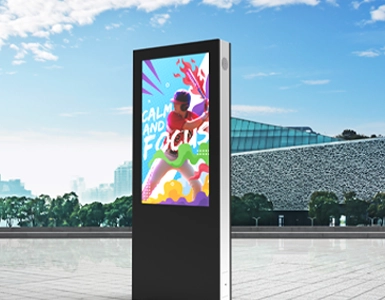
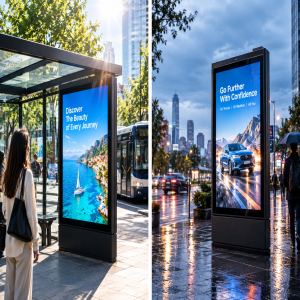
Unlike indoor displays, outdoor passenger information screens must contend with extreme variables that can quickly degrade performance or cause total system failure.
Sunlight Washout: Standard screens are no match for direct sunlight. To maintain readability, a display must feature a high-bright screen, typically exceeding 3000 nits, ensuring clarity even during peak daylight.
Thermal Extremes: Outdoor temperatures can fluctuate from freezing winters to scorching summers. A professional display requires an integrated controller board to manage automatic heating and cooling, protecting the unit in ranges from -30°C to 55°C.
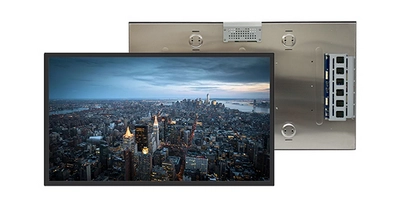
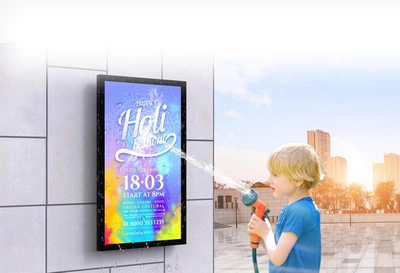
Environmental Threats: Dust, heavy rain, and physical impact are constant risks. Digital signage must carry an IP54, IP56, or IP65 rating to seal out moisture and debris, while a powder-coated mild steel body protects against vandalism.
2. Common Application Scenarios
Investing in stable transportation digital signage is essential for long-term economic use and IT infrastructure compatibility. These systems are ideal for:
Arrivals and Departures Boards: Critical for organizing high-traffic transport hubs.
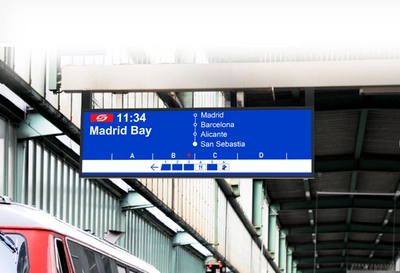
Electronic Timetables: Providing reliable, real-time schedules at bus terminals and train stations.
Live Passenger Information Screens: Keeping travelers informed at every corner of the transit journey.
3. The RisingLCD Innovation: 3000+ Nits with "Green" Efficiency
While many manufacturers offer high brightness, RisingLCD has introduced two breakthrough technologies that solve the problem of high power consumption in outdoor displays.
Advanced Black Non-Glare Technology
Traditional high-brightness screens often consume massive amounts of energy to maintain contrast. Our latest Black Non-Glare Technology ensures that the "black" areas of the screen remain truly dark and unlit. This significantly increases the contrast ratio—making text much sharper—while drastically reducing the power draw.
Low Refresh Rate Driving
Most passenger information (like timetables) is relatively static. By implementing Low Refresh Rate driving technology, our screens minimize unnecessary pixel updates. This results in an absolute energy advantage over competitors, making our displays more eco-friendly and reducing long-term operational costs.
4. Technical Specifications
Our Outdoor LCD Passenger Information Displays are designed for 24/7 reliability and easy integration into existing network systems.
| Feature | Specification |
| Screen Size | 24" to 75" |
| Brightness | 3000+ nits (Ultra-High Visibility) |
| Material | Powder-Coated Mild Steel |
| IP Rating | IP54, IP56, or IP65 |
| Temperature Range | -30°C to 55°C |
| Mounting Options | Wall, Pole, Ceiling, or Canopy |
5. Longevity and After-Sales Guarantee
Choosing the right hardware is a 10-year investment. We ensure your peace of mind through:
Security: Improved key-operated locks to prevent unauthorized access or theft.
Serviceability: Easy-access design for quick repairs or upgrades, maximizing uptime.
Warranty: A comprehensive five-year warranty and lifetime technical support.
Elevate your transport hub with the next generation of energy-efficient outdoor displays. For more information and custom solutions, visit us at www.risinglcd.com.