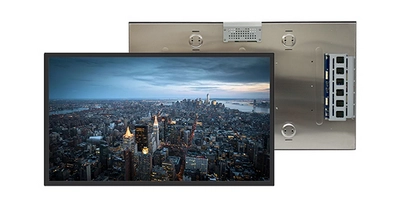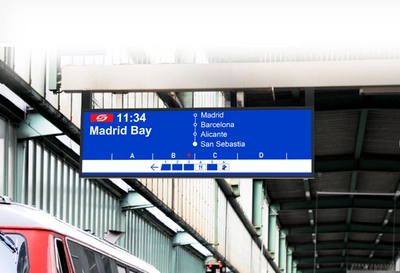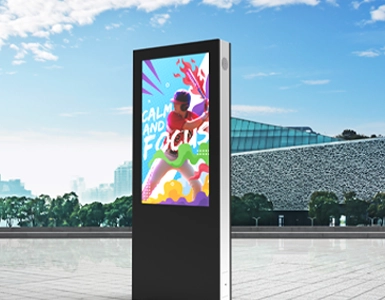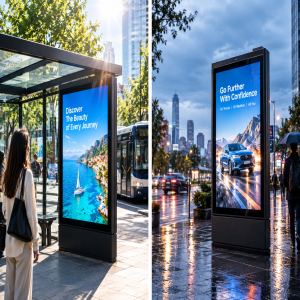
More and more transit agencies have been making the switch from static signage to ePaper, a solar-powered eco-friendly solution. This new technology has become an effective way to display passenger information at any location whether it be a bus stop, rail platform or multiple other locations. Its durability in all climates helps make ePaper a front runner to transit agencies around the globe.
Solar-Powered, Low Consumption
A main attribute that makes ePaper so popular is its ability to run only on solar power while maintaining a long-lasting charge. This new technology is bistable; in other words, it can hold any screen on it without using any power. This feature means that ePaper has an extremely low energy consumption since it is only needed when updating a screen. In some cases, ePaper displays can run up to 30 days on a single charge. Not only does that make them eco-friendly but also dependable.
Wireless Connectivity
Many transit agencies are leaning towards ePaper because it reduces the uncertainty that can happen while using public transportation thanks to wireless connectivity. Through wireless connection, such as 4G, existing Wi-Fi or ethernet, ePaper displays can be remotely managed and updated 24/7. This allows transit agencies to give their riders real-time information through their content management system to keep them updated about arrivals, departures, service alerts and more. Transit agencies have complete control over each individual screen and what is displayed on it since ePaper displays are not “device-dependent.” Although each screen may display different information, they are all controlled using a single backend through cloud-based software.
Rugged and Can Withstand All Weather
ePaper displays are fully functional in all environments, whether that be extreme heat or freezing cold. In robust housing, displays may withstand temperatures as low as -4 degrees and up to 140 degrees. The rugged displays are lightweight, flexible and shatterproof, making them good candidates for public transportation since the ability to damage them is low. This also allows the displays to be easily mounted on poles or in shelters. Since solar-powered ePaper displays have lower energy consumption, they can go days and even weeks without sun, allowing them to be effectively utilized in snowy and rainy climates just as well as in sunny ones.
Easy Readability
ePaper differs from other screens because instead of having backlighting and being an emissive display, it uses ambient light from the environment around it to present a reflective display. This allows the ePaper displays to be easier on the eyes and prevent fatigue since the screen naturally adjusts to the appropriate brightness from its environmental surroundings, day or night. For ePaper displays in isolated areas without much environmental light, some companies offer LED lighting to allow riders to view information just as easily as they would during the daytime. ePaper’s clarity makes it possible to view the displays from wider angles and further distances, making them more visible to a larger number of riders at once.
Customizable with Easy Installation
It is important for transit agencies to have displays that can accommodate many different areas with different amounts of space. The flexibility and ability to customize ePaper is an advantage for transit agencies that need various sizes to display their information. ePaper displays can range in size from a 10-inch display to a 42-inch display.
This new technology is ideal for both the rider and transit agency. Delivering updated and accurate passenger information is a key priority in public transportation that is supplemented by ePaper’s ability to use a cloud-based content management system to ensure all screens are reliably updated. ePaper’s environmental durability and customization allow it to be used in all settings, climates and orientations, which is a significant factor for public transportation agencies. ePaper displays are the future of digital signage in the transit sector, formulating a symbiotic relationship between the rider and transit agency.