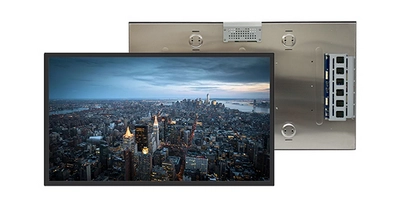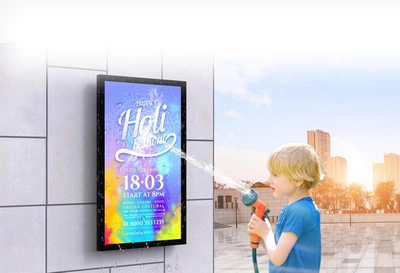
EV charging stations place displays in demanding outdoor environments: direct sun exposure, rain and dust, temperature swings, and frequent touch interaction from users with wet or gloved hands. A standard indoor monitor fails within weeks under these conditions.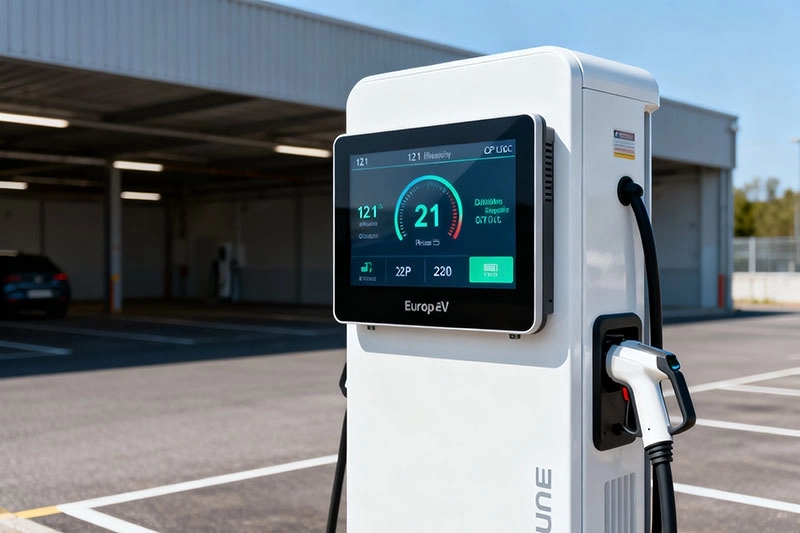
Display Requirements for EV Charging Kiosks
Brightness. An EV kiosk installed at an uncovered charging bay faces full direct sunlight. The display needs 1,500 to 2,500 nits for reliable readability — enough to overcome direct sun washout without being uncomfortably bright at arm's-length viewing distance. Standard indoor displays at 250–350 nits become unreadable mirrors under these conditions.
Touch calibration. EV kiosk users interact with the screen during every charging session — starting the charge, checking status, and completing payment. The touch sensor must register accurately with wet fingers, rain droplets on the surface, and winter gloves. Standard PCAP touch sensors not calibrated for outdoor use develop phantom touches from rain or fail to register inputs through gloves. Custom firmware tuned for wet-hand rejection and glove mode is the baseline for EV charging applications.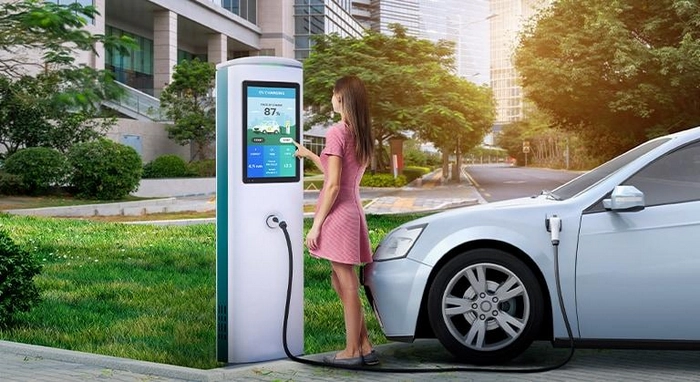
Sealing. Outdoor charging stations face rain, snow, and occasional cleaning. IP65 front sealing (dust-tight, protected against water jets) covers these conditions. The seal between the display and the kiosk enclosure is the most common failure point. EPDM gaskets rated for continuous outdoor exposure provide reliable long-term sealing, unlike generic foam seals that degrade under UV within a single season.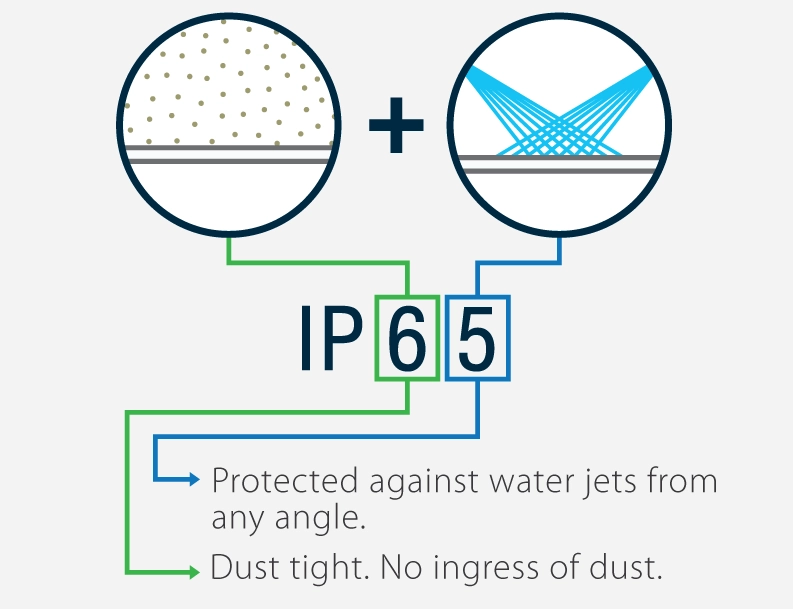
Temperature range. EV charging stations operate across varied climates. The display is rated for operation from –20°C to 70°C, covering cold winter starts and the internal heat buildup inside a sun-exposed enclosure during summer. Hi-Tni panel technology with a liquid crystal clearing point of 110°C or higher prevents thermal blackening when the panel temperature rises past 70°C under direct solar loading.
Impact resistance. Public charging stations are unattended and accessible to all. IK10-rated tempered glass (20-joule impact resistance) protects against vandalism and accidental damage from luggage, bicycles, or cleaning equipment. Optical bonding between the glass and LCD panel distributes impact force across the full surface, improving effective impact resistance beyond the glass rating alone.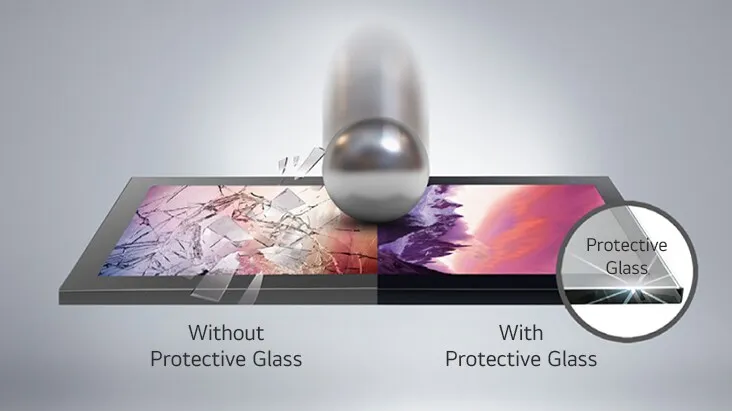
Common Failure Points in EV Kiosk Displays
Internal fogging. An unbonded display develops condensation between the LCD panel and cover glass within weeks of outdoor deployment. The day-night temperature cycle traps moisture in the air gap, creating a permanent haze layer that no external wipe can remove. Optical bonding eliminates the air gap and prevents this failure entirely.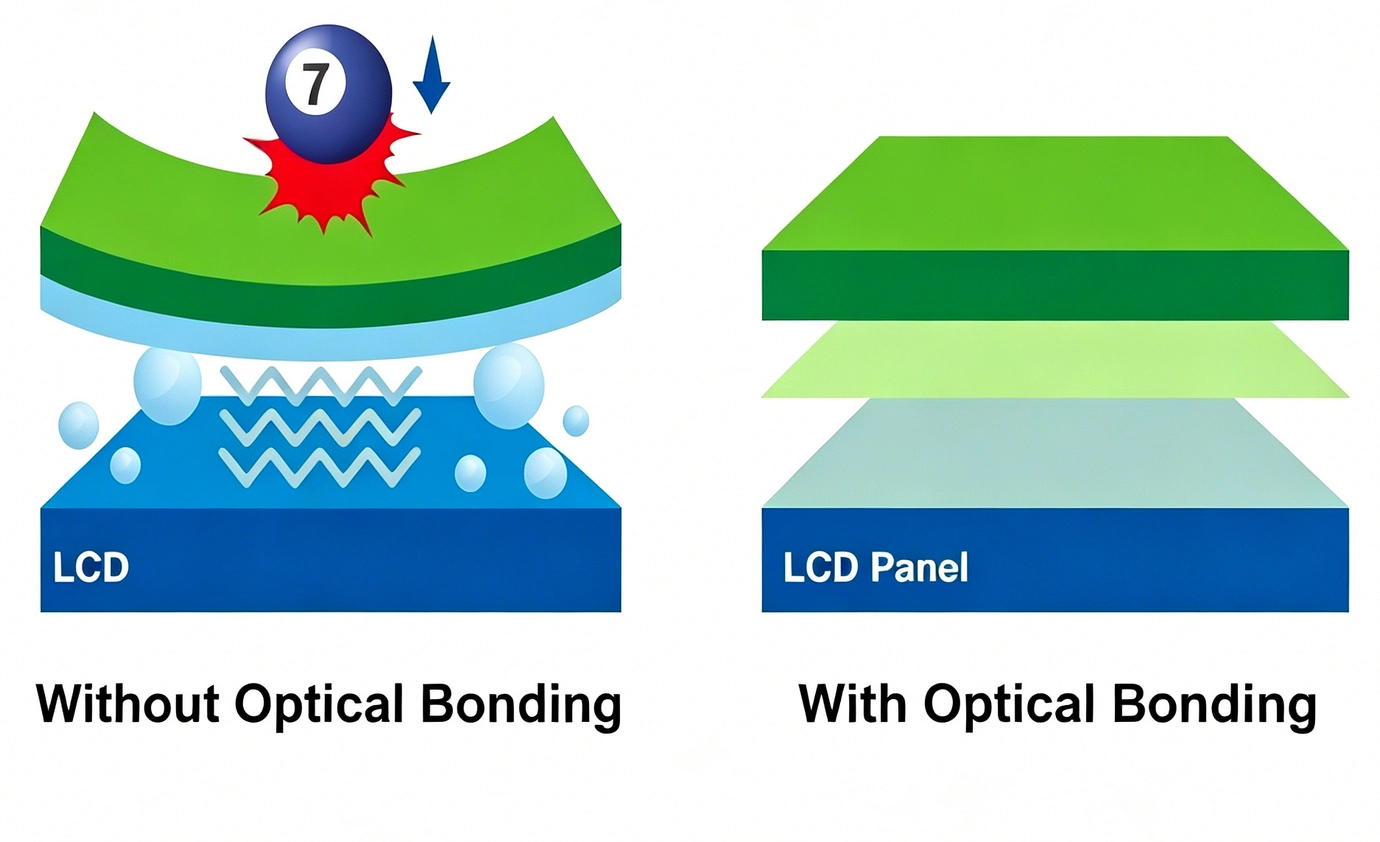
Backlight decay. A display running at full brightness 24 hours per day burns through its backlight lifespan unnecessarily. Ambient light sensors with auto-brightness adjustment reduce backlight output at night and in low-light conditions, extending the useful life toward the rated 50,000-hour threshold. Without auto-dimming, the backlight reaches 70% of initial brightness roughly 1.7 years sooner than with adaptive brightness control.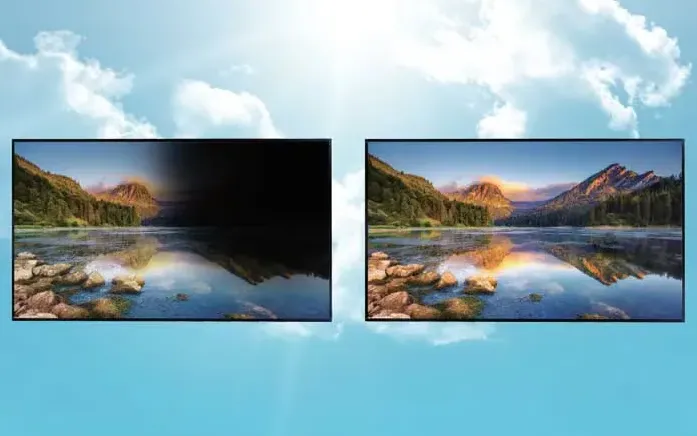
Touch degradation. Standard touch sensors not calibrated for wet conditions develop phantom touches from rain droplets or fail to register inputs through gloves. PCAP firmware with wet-hand rejection and glove mode, calibrated at the factory for the specific cover glass thickness and bonding process, prevents these issues. Touch firmware tuning also accounts for the optical bonding adhesive layer, ensuring touch accuracy matches the displayed content with no parallax offset.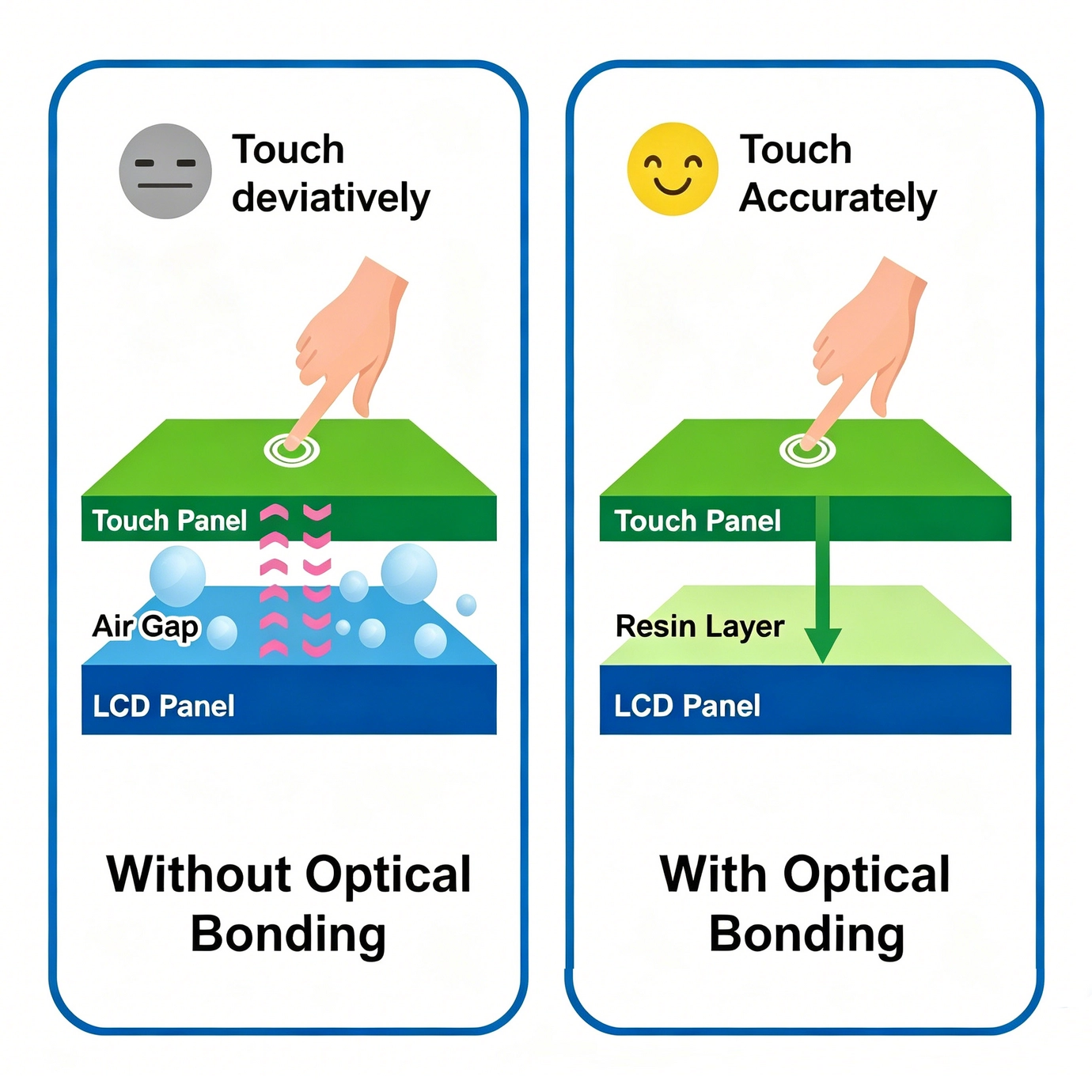
RisingStar EV Kiosk Display Solutions
RisingStar manufactures EV kiosk displays from 7" to 110" with brightness from 500 to 2,500 nits for kiosk configurations, PCAP touch with wet-hand and glove mode firmware, IP65/IP66 front sealing with EPDM gaskets, IK10 tempered glass, and Hi-Tni panel technology.
Custom configurations are available for OEM and integrator projects, including custom mounting patterns, connector placement, cover glass specifications, and touch firmware tuning. Sample delivery within 10 working days, volume production at 15–25 working day lead time.
Browse our EV charging station display product line or explore sunlight readable display solutions and the TFT LCD display product line for more configuration options.