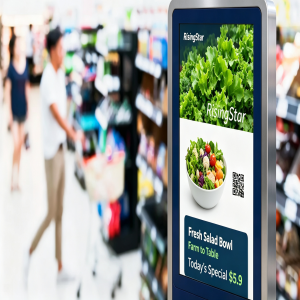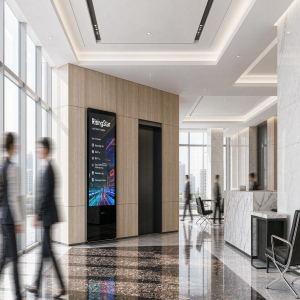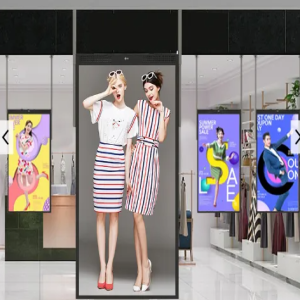
You pull out your phone on a sunny sidewalk. The screen is a dark mirror. You squint, angle it, shade it with your hand — and still can't read the text. Now imagine the same problem, but on a screen that's 55 inches wide, mounted at a train station entrance, showing departure times that 300 people need to read right now.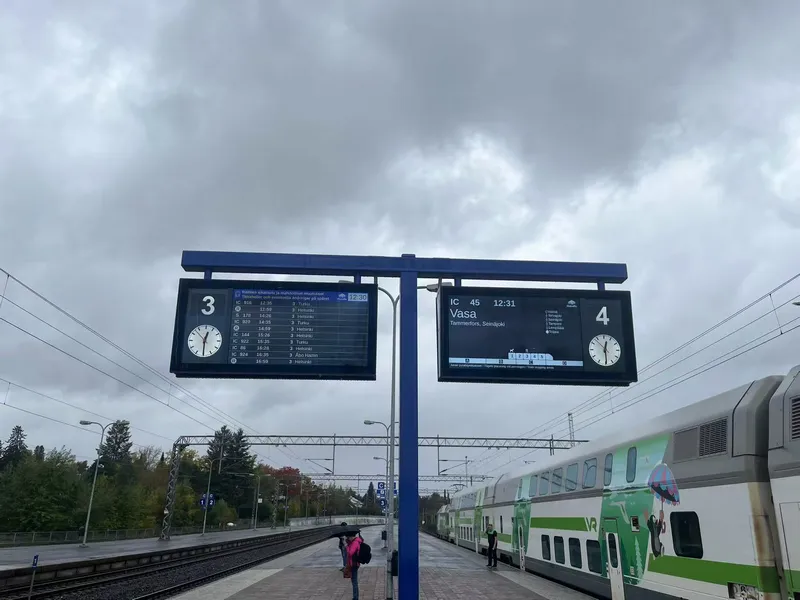
That is the problem a sunlight readable display exists to solve. And it's not solved by just making the screen brighter — though that's where it starts.
💡 Quick Answers — Sunlight Readable Displays
What is a sunlight readable display?
A sunlight readable display is an LCD engineered to stay visible in high ambient light — typically 1,000 nits or brighter, compared to 250–350 nits on a standard indoor monitor. The extra brightness overcomes the ambient light washing out the screen, making text and images readable even in direct sun.What's the difference between LCD and LED?
An LCD uses a liquid crystal panel with a backlight behind it. An LED display is made of individual light-emitting diodes — each pixel is its own light source. When people say "LED screen," they usually mean an LCD with an LED backlight. The two terms are not interchangeable, but the industry has blurred them so thoroughly that most "LED displays" you see in stores are actually LED-backlit LCDs.How does RisingStar make an LCD visible in direct sunlight?
Three things: high-brightness backlights (1,000–5,000 nits), optical bonding to eliminate internal reflections, and AR/AG coated cover glass to cut surface glare. Each of these addresses a different layer of the visibility problem.Doesn't high brightness shorten the display's life?
It can — if you don't manage heat and run the backlight at full power 24/7. RisingStar uses aluminum alloy chassis passive cooling, local dimming to reduce the backlight load on dark content areas, and ambient light sensors to auto-dim the display at night or in low light. These three measures together extend the practical lifespan to 50,000+ hours.
1. What Is a Sunlight Readable Display?
A sunlight readable display is an LCD module designed to stay readable when the ambient light around it is stronger than the light coming out of it. That's the core physics: if the sun hitting the screen is brighter than the backlight pushing through the LCD, the screen washes out.
Standard indoor monitors run at 250–350 nits. Office lighting is 300–500 lux. The math works.
Outdoors, the math breaks. A cloudy day is 1,000–3,000 lux. Direct sunlight is 100,000+ lux. The screen needs to punch through that — which means the backlight needs to be many times brighter than a standard monitor.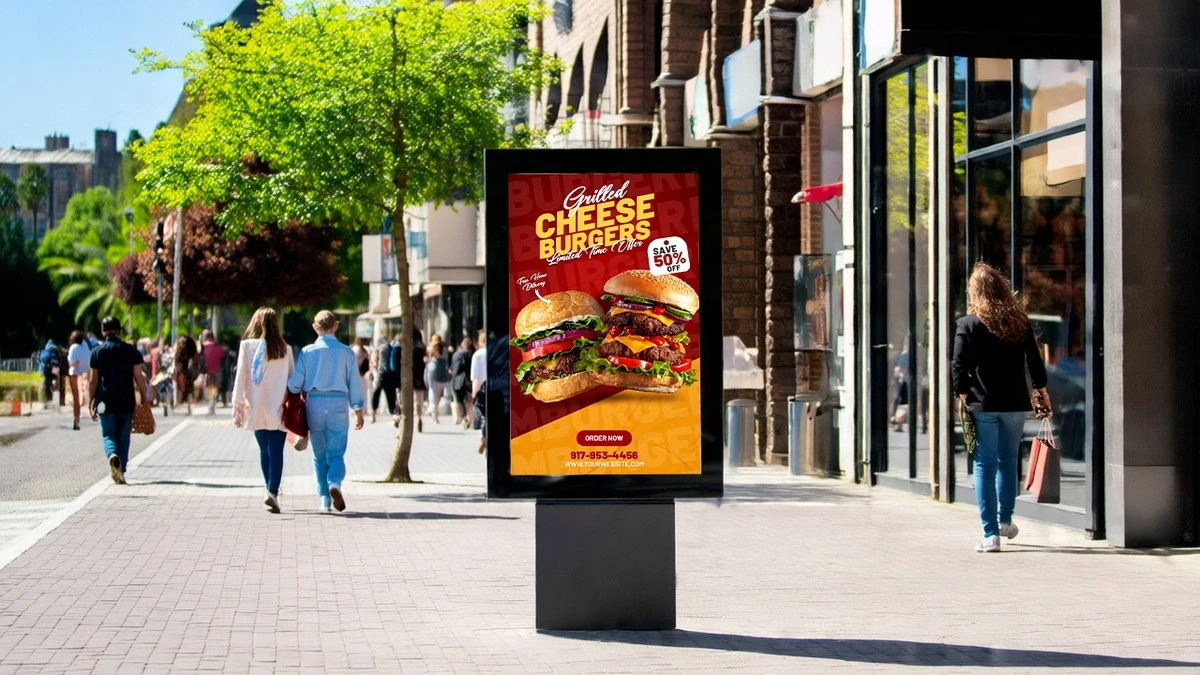
Sunlight readable displays start at 1,000 nits and go up to 5,000 nits for the most demanding outdoor deployments. But brightness is just the first ingredient. A truly sunlight readable display also needs optical bonding (to kill internal reflections), anti-reflective glass (to cut surface glare), and a panel that can survive the heat that comes with all that brightness.
Browse RisingStar's sunlight readable display solutions — from 7" to 110", 500 to 5,000 nits, with custom brightness calibration and optical bonding.
2. LCD vs LED: The Confusion That Won't Die
Walk into any electronics store. Every TV is labeled "LED TV." But open one up, and what's inside? An LCD panel with an LED backlight.
Here is the actual difference:
| LCD | LED Display | |
|---|---|---|
| How it works | Liquid crystal panel modulates light from a backlight | Each pixel is a self-emitting diode |
| Light source | Separate backlight unit (LED, CCFL, etc.) | The pixel itself is the light source |
| Typical brightness | 250–5,000 nits (depending on backlight) | 1,000–10,000+ nits |
| Outdoor use | Yes, with high-brightness backlight + optical bonding | Yes, but pixel pitch limits close viewing |
| Typical pixel pitch | Fine (100–200 PPI) | Coarse (1.5–10mm pitch for outdoor) |
The confusion exists because the industry calls LED-backlit LCDs "LED displays." When RisingStar says "sunlight readable LCD," we mean an LCD with a high-brightness LED backlight — not a direct-view LED wall. The distinction matters because the viewing distance, resolution, and maintenance profile are completely different. An LED wall at 4mm pitch is illegible at arm's length. A 21.5" LCD at 1,000 nits is sharp and readable at the same distance.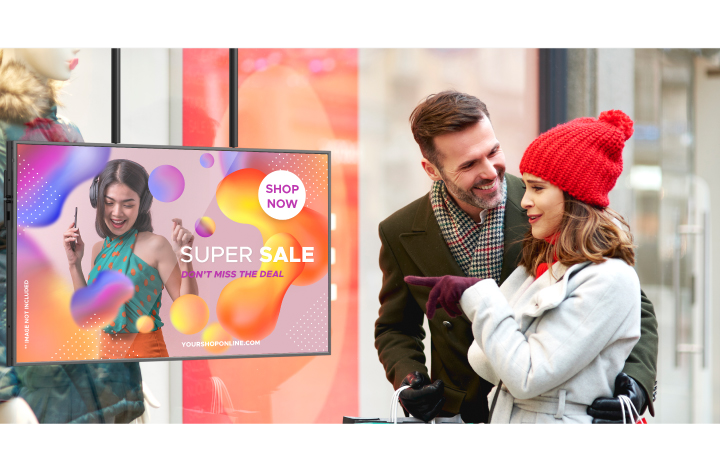
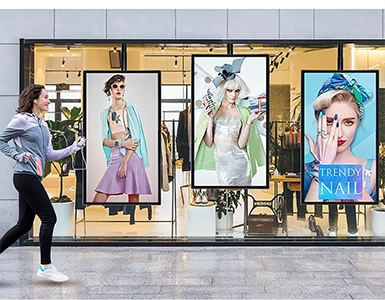
For most outdoor kiosks, EV chargers, and digital signage, a high-brightness LCD is the right tool for the job. RisingStar's TFT LCD display product line covers these applications from 7" to 110".
3. How RisingStar Makes an LCD Visible Outdoors
There are three layers to the problem, and each needs a different fix.
Layer 1: The Backlight — More Light Through the Panel
The first and most obvious fix: make the backlight brighter. A standard indoor monitor pushes 250–350 nits. A sunlight readable display pushes 1,000–5,000 nits.
RisingStar achieves this with high-density LED backlight arrays, driven at higher current with precision current regulation per zone. The backlight is calibrated at the factory — brightness uniformity is measured across the full panel surface, and each zone is adjusted to within ±5% of the target luminance. This matters because a departure board with a 10% brightness dip in the center is visibly uneven and triggers passenger complaints.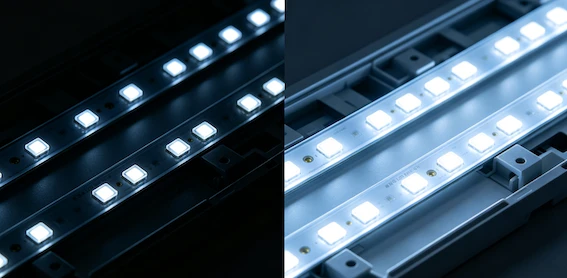
| Environment | Ambient Light | Recommended Brightness |
|---|---|---|
| Indoor, controlled lighting | 200–500 lux | 300–500 nits |
| Bright indoor / overcast sky | 1,000–3,000 lux | 800–1,000 nits |
| Semi-outdoor, indirect sun | 3,000–7,000 lux | 1,000–1,500 nits |
| Full sun, blue sky | 7,000–100,000+ lux | 1,500–5,000 nits |
Layer 2: Optical Bonding — Kill the Internal Reflections
An unbonded LCD has an air gap between the LCD panel and the cover glass. At each air-glass interface, about 4% of the incident light reflects back. With two interfaces (LCD-to-air and air-to-glass), that's roughly 8% reflection — creating a mirror effect under bright light.
Optical bonding fills the air gap with optical-grade adhesive (OCA sheet or OCR liquid resin). The adhesive matches the refractive index of the glass, eliminating the internal reflections. The result: internal reflectivity drops from ~8% to below 1%, and the display gains roughly 40% more perceived contrast without adding a single nit of backlight power.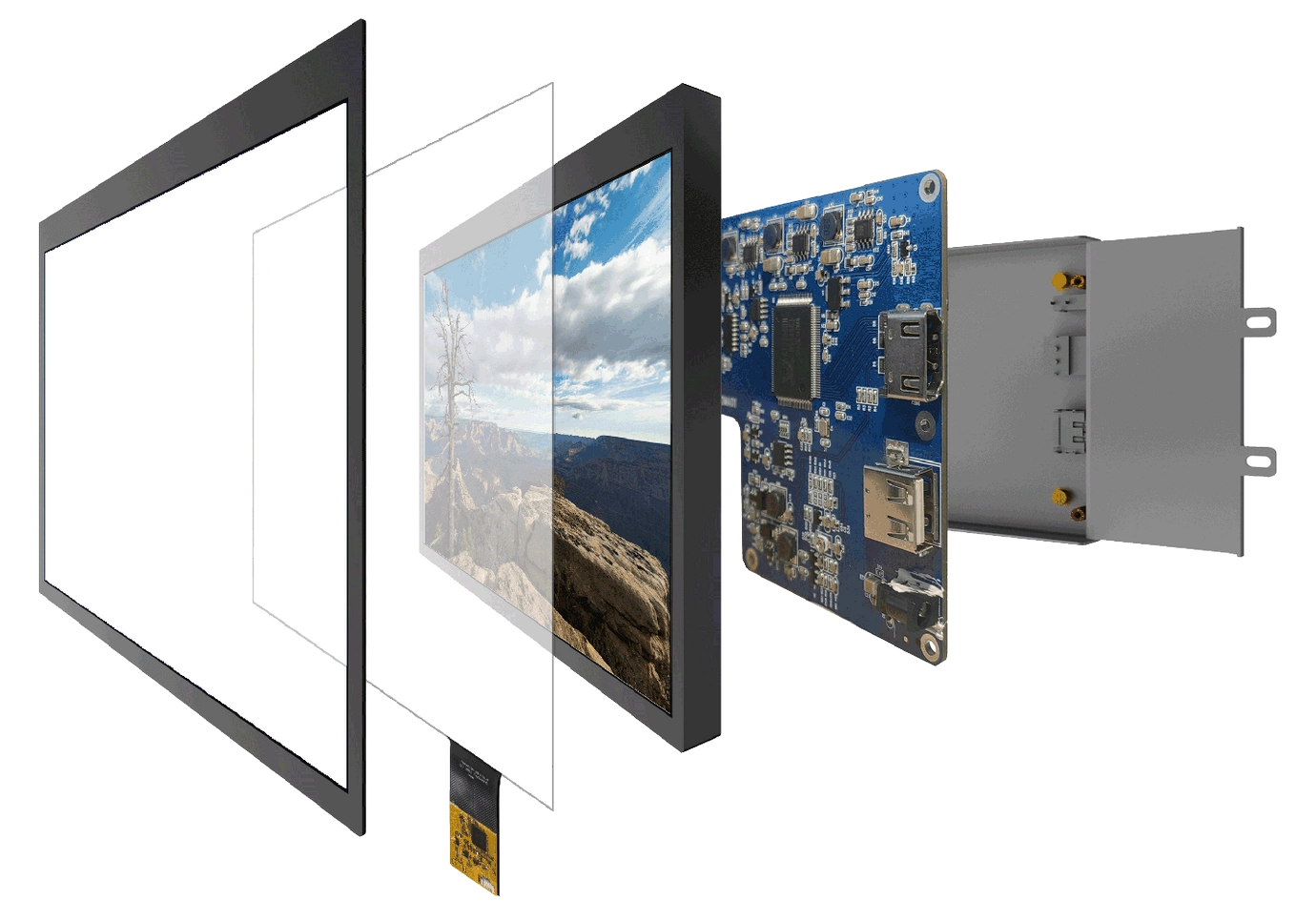
Optical bonding also eliminates the air gap where condensation forms during day-night temperature cycles. An unbonded outdoor display fogs internally within weeks — a haze layer no external wipe can reach.
Layer 3: AR/AG Glass — Cut the Surface Glare
Anti-reflective (AR) coating on the outer glass surface reduces specular glare from direct light sources. Premium AR coatings achieve >93% light transmissivity with <2% surface reflectivity.
Anti-glare (AG) finish diffuses surface reflections across the glass, preventing the bright reflection spots that make a display unreadable from certain angles. RisingStar uses a medium AG finish (gloss 80–120 GU) for outdoor displays — enough diffusion to cut glare without sacrificing sharpness.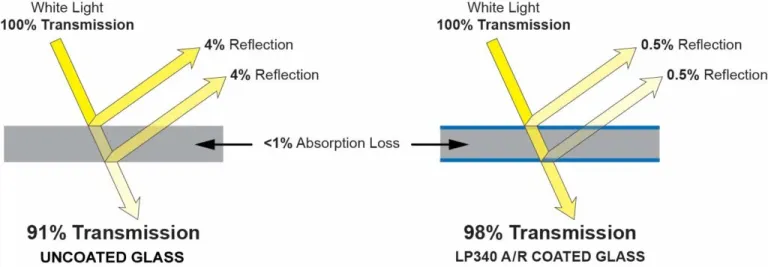
4. High Brightness, High Heat, and What That Does to Lifespan
Every extra nit of brightness comes from more current through the LED backlight. More current means more heat. More heat means shorter LED life and a higher risk of the LCD panel exceeding its clearing point — the temperature at which the liquid crystal loses its ordered structure and the screen permanently darkens.
RisingStar addresses this with three measures that work together.
Heat Dissipation: Aluminum Chassis Passive Cooling
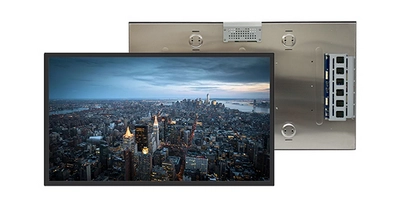
The simplest and most reliable approach: use the display chassis itself as a heat sink. RisingStar's open frame displays use aluminum alloy (6061, thermal conductivity 140–160 W/m·K) chassis that pulls heat from the LED backlight and spreads it across the full panel surface. The chassis then radiates and convects heat to the enclosure or ambient air.
No fan. No liquid cooling. No moving parts. This is the mainstream approach used across the industrial display industry — it works because aluminum is a good conductor and the large surface area of a display chassis provides sufficient passive cooling for backlights up to 2,000–3,000 nits. For 4,000–5,000 nit operation, the enclosure design must provide additional ventilation or active cooling — but the thermal path starts with the aluminum chassis.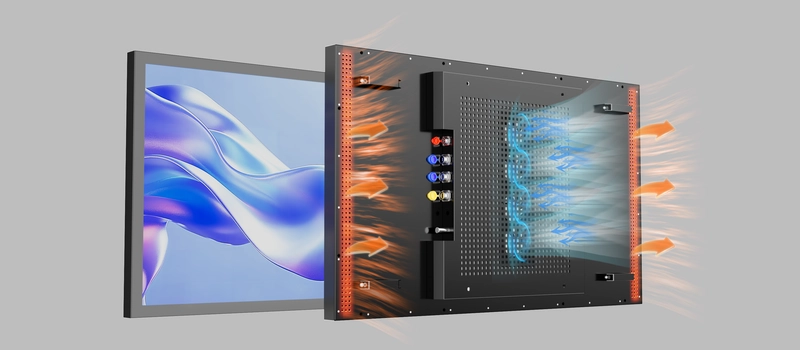
Lifespan Protection 1: Local Dimming
A standard LCD backlight runs at full power regardless of content. On a departure board showing white text on a black background, the 60–80% of the screen that's dark still draws full backlight power. All of that power becomes heat.
Local dimming divides the LED backlight into independently controlled zones. A real-time content analysis maps each frame to the zone layout. Zones behind dark content are dimmed or turned off. Zones behind bright content run at full brightness.
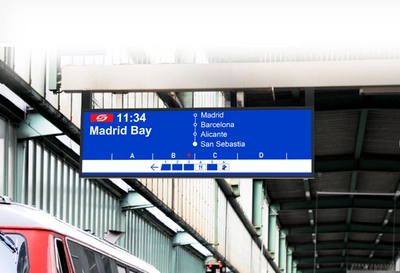
For outdoor signage with dark-background content — train schedules, menu boards, directory listings — local dimming reduces total backlight power by 20–40%. Less power means less heat. Less heat means longer LED life and a lower risk of panel clearing. The practical effect: the display reaches its L70 threshold (70% of initial brightness) significantly later than a constant-backlight equivalent.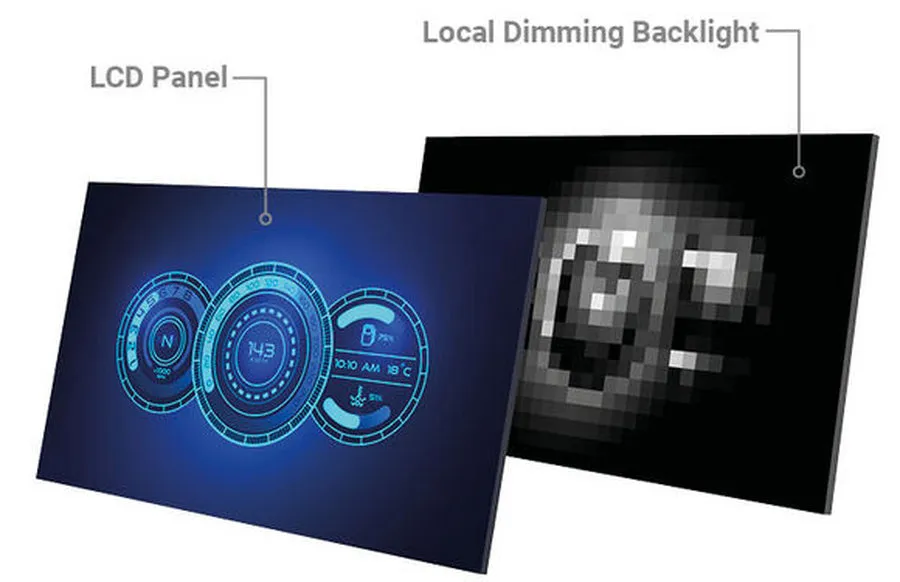
Lifespan Protection 2: Ambient Light Auto-Dimming
A 2,500-nit display running full blast at 2 a.m. on an empty platform is burning through its backlight lifespan for no reason. It's also wasting electricity and creating light pollution.
RisingStar integrates ambient light sensors with auto-brightness adjustment. The sensor reads the ambient lux level in real time and adjusts the backlight output accordingly. At night, the display drops to 300–500 nits — readable, energy-efficient, and extending the backlight toward its rated 50,000-hour lifespan. At dawn, as ambient light rises, the backlight ramps up smoothly. The transition is invisible to passengers; the power savings are real.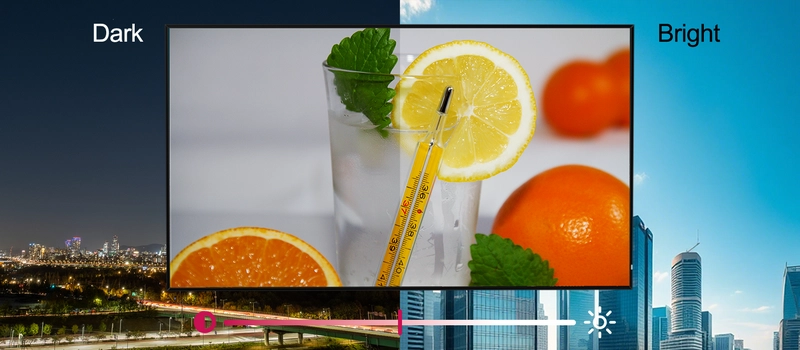
5. The Outdoor Gauntlet: Water, Impact, and Solar Heat
Brightness gets the screen readable. Heat management keeps it running. But outdoor deployment also means rain, dust, vandalism, and hours of direct solar radiation heating the panel surface past 70°C.
Waterproofing: IP65/IP66 Front Sealing
The most common failure point in outdoor displays is not the display face — it's the seam where the panel meets the enclosure. Water enters through the gasket joint, not through the glass.
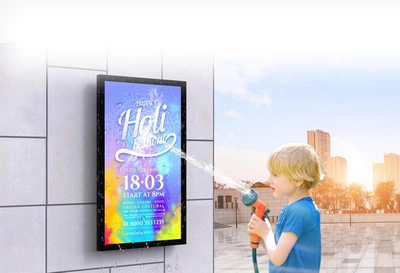
RisingStar uses EPDM gaskets at the panel-to-enclosure interface. EPDM is rated for continuous outdoor exposure — it doesn't degrade under UV like generic foam seals. The gasket is compressed between the display chassis and the enclosure frame, creating a seal verified under IP65 (water jet) or IP66 (powerful water jet) testing. This is not a datasheet claim — it's a physical assembly that must be specified and installed correctly at the enclosure level.
The display itself is rated IP65/IP66 on the front face only. The rear of the panel — where the controller board and connectors live — sits inside the enclosure. The enclosure provides the rear protection. This is the standard architecture for open frame outdoor displays.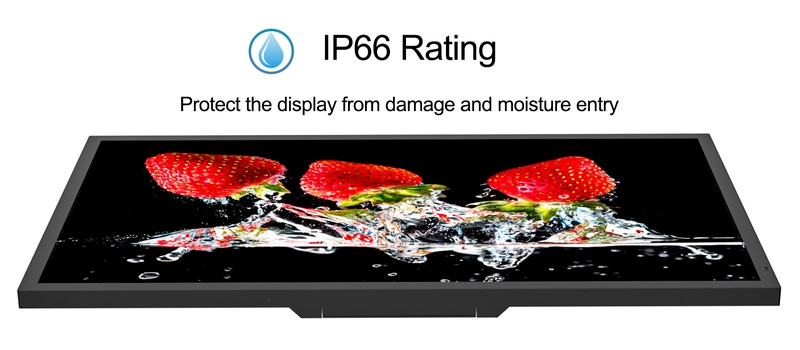
Impact Protection: IK10 Tempered Glass
Any display within reach of the public needs impact protection. IK10 means the glass survives a 20-joule impact — roughly a 5kg mass dropped from 400mm. For ground-level kiosks, ticket machines, and platform-edge displays, IK10 is not optional.
RisingStar uses 4–6mm chemically strengthened tempered glass with IK10 rating. The glass is optically bonded to the LCD panel, so the impact resistance of the bonded stack is higher than the glass alone. Optical bonding distributes impact force across the full panel surface rather than concentrating it at the point of contact.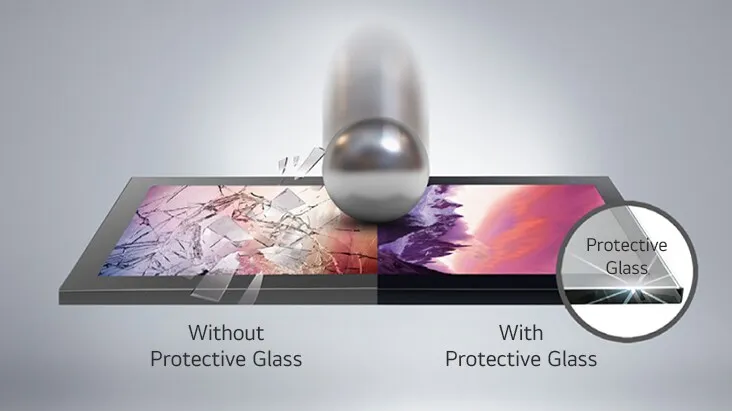
Solar Heat: Hi-Tni Panel Technology
A standard LCD panel uses liquid crystal with a clearing point of 70–80°C. When direct sun heats the panel surface past that temperature, the liquid crystal loses its ordered structure — the screen goes permanently black. This is called thermal blackening, and it's irreversible.
RisingStar uses Hi-Tni (High-Temperature Nematic) liquid crystal with a clearing point of ≥110°C. That's a 30–40°C safety margin above the maximum ambient operating temperature of 70°C. For a display mounted in an unshaded outdoor enclosure — a street-level totem, a park entrance kiosk, a platform edge strip — Hi-Tni is the difference between surviving a summer afternoon and returning as an RMA in August.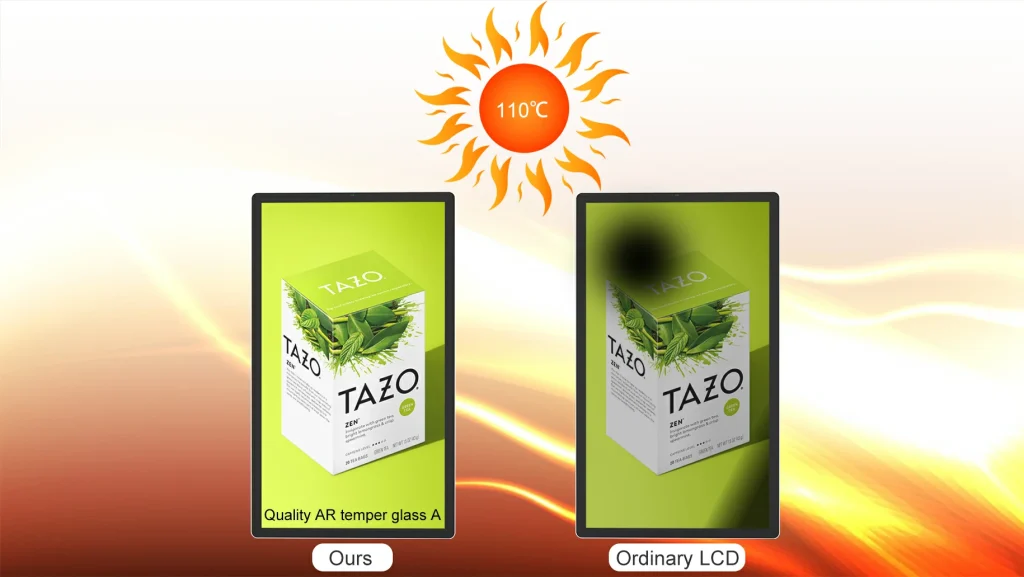
RisingStar Sunlight Readable Display Manufacturing
RisingStar manufactures sunlight readable displays from 7" to 110" in a 4,000 m² ISO 9001-certified facility in Shenzhen with Class 10,000 cleanroom assembly. Grade A/A+ panels are sourced directly from LG Display, AUO, BOE, Innolux, and Tianma.
| Capability | Specification |
|---|---|
| Brightness | 500–5,000 nits, factory-calibrated |
| Panel technology | Hi-Tni (≥110°C), IPS, TN |
| Optical bonding | OCA sheet and OCR liquid resin — in-house |
| Local dimming | Multi-zone FALD with real-time content analysis |
| Surface treatment | AR coating + AG finish |
| Front sealing | IP65/66 with EPDM gaskets |
| Cover glass | IK08–IK10 tempered, 4–6mm |
| Auto-brightness | Integrated ambient light sensor |
| Thermal management | Aluminum 6061 alloy passive cooling |
| Interfaces | LVDS, eDP, HDMI |
| Operating temp. | –20°C to +70°C |
| Backlight life | ≥50,000 hours L70 |
| Supply | 3–5 year model availability |
Sample in 10 working days. Engineering response in 8 hours. 24/7 technical support with 2-year standard warranty.
📧 ai@risinglcd.com · 💬 +86 158 8946 9208 · 🌐 www.risinglcd.com