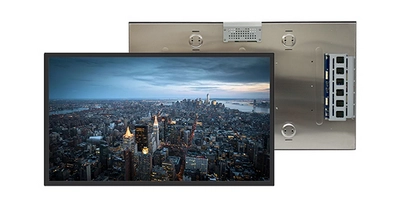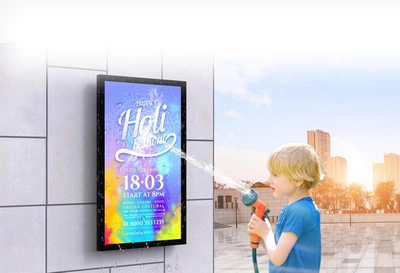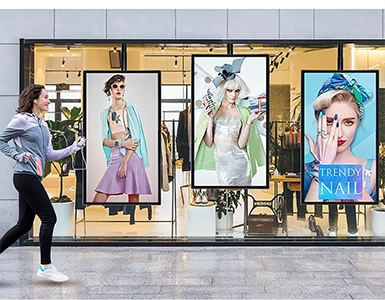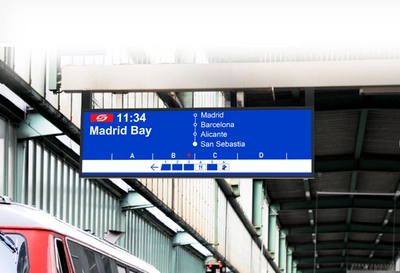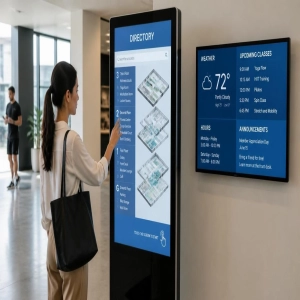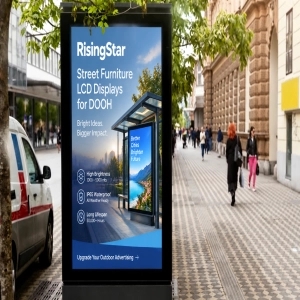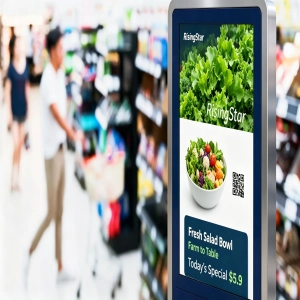
The last screen a shopper sees before deciding is often the smallest one in the campaign. In a supermarket aisle, a digital shelf-edge display sits forty centimeters from the hand that reaches for a product. At checkout, a screen looms over the card reader at arm's length. In a drive-thru, the menu board is the only media in the lane for the ninety seconds before the order is placed. These are point-of-purchase (POP) displays — the part of DOOH where LCD's close-viewing strengths decide whether a campaign converts or gets ignored by a passing shopping cart.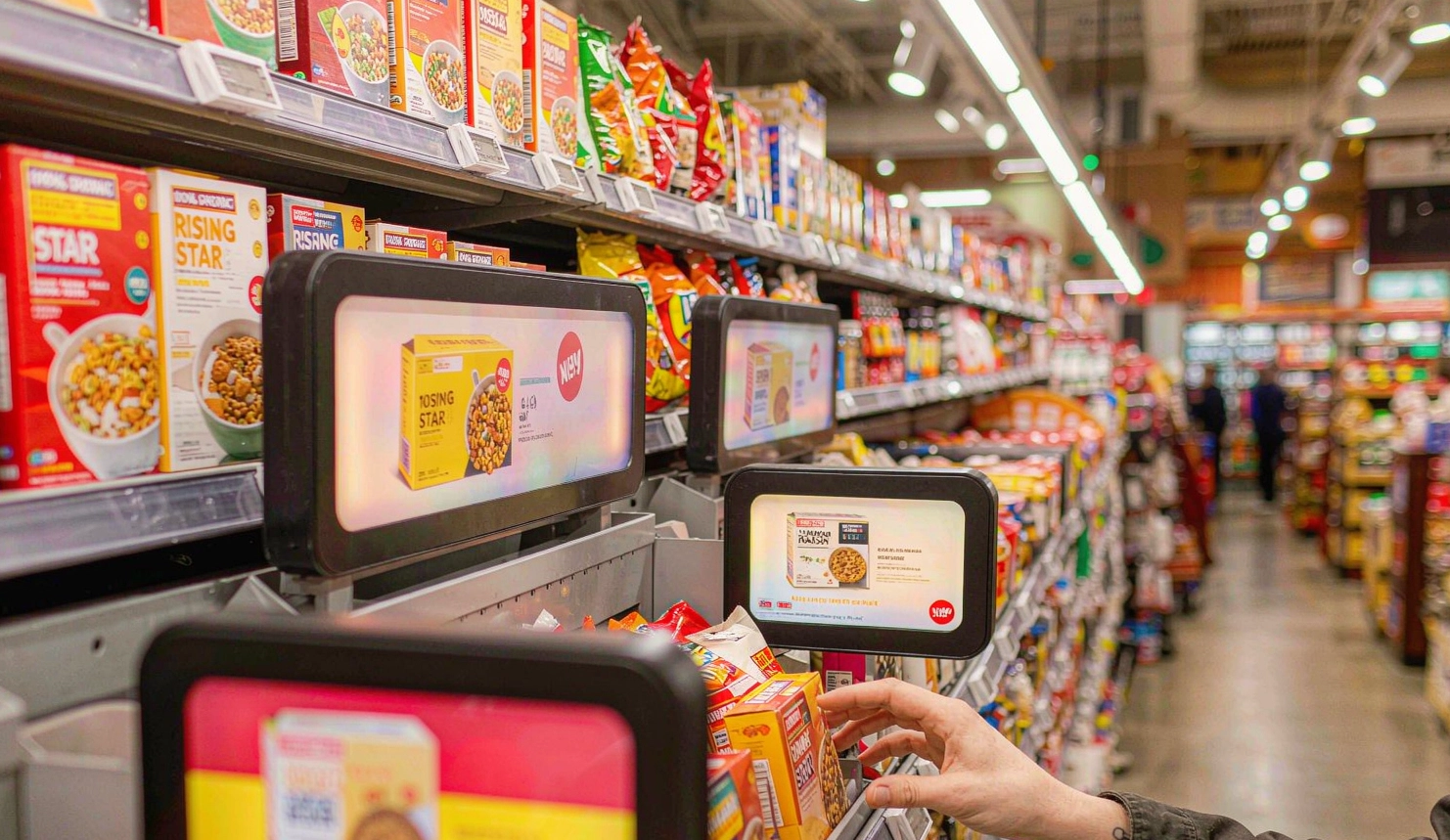
Why LCD, Not LED, Owns the Aisle
The case for LCD at the point of purchase is the same case that applies across all close-range DOOH, only sharper. A shelf-edge or checkout screen is viewed from 0.3 to 1.5 meters. At that distance the human eye resolves roughly 60 pixels per degree, and any pixel pitch above about 1 mm becomes visibly coarse. Direct-view LED panels with typical indoor pitches (P1.5 to P2.5) are built for viewing from several meters. Place them at arm's length and the image breaks into a visible grid; text anti-aliasing collapses and small pricing numerals turn fuzzy.
LCD panels in the same footprint deliver full-HD or 4K resolution on a surface with no perceivable pixel structure at reading distance. For product shots, ingredient callouts, and weight-based pricing that must be legible at a glance, that resolution is not cosmetic — it is the difference between an offer that reads instantly and one that demands a second look.
Brightness and Reflections at Eye Level
Indoor retail lighting is more aggressive than most planners assume. Supermarkets run 750 to 1,500 lux under general lighting, but a shelf-edge screen directly beneath a track-light row or facing a refrigerated-case glass door picks up specular reflections that bury a low-brightness panel.
A practical brightness tier for POP depends on position:
| POP position | Viewing distance | Typical ambient | Recommended brightness | Notes |
|---|---|---|---|---|
| Shelf-edge / rail display | 0.3-0.6 m | 600-1,200 lux | 600-1,000 nits | Small format, high resolution, wide viewing angle |
| Checkout / counter display | 0.4-1 m | 500-1,000 lux | 700-1,200 nits | May face glass-door fridges behind the counter |
| Digital menu board (QSR) | 1-4 m | 800-2,000 lux | 1,000-2,500 nits | Read from queue and drive-thru lane |
| Drive-thru menu (window-facing) | 2-6 m through glass | direct sun possible | 1,500-4,000 nits | Must hold against sun glare on the pane |
| Window display facing street | 3-10 m | daylight | 2,500-4,000 nits | This is DOOH proper; see street-level series |
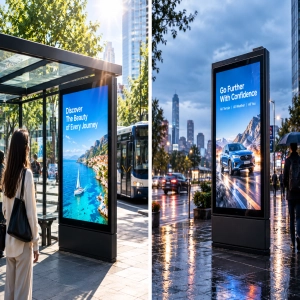
Anti-glare (AG) surface treatment matters more at the point of purchase than almost anywhere else, because screens sit directly under light sources. An AG coating diffuses ceiling-light reflections that would otherwise sit on top of the offer copy. For window-facing POP positions — a menu board visible through the storefront — optical bonding plus a high-nit panel is the configuration that survives afternoon sun.
Touch at the Moment of Decision
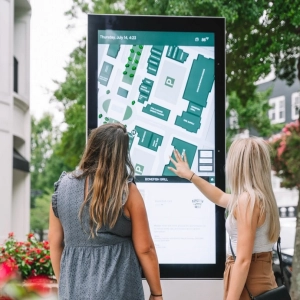
Not every POP display needs touch, but where it is specified, the interaction follows a distinct pattern: quick, one-handed, often while the other hand holds a product or a phone. Two PCAP behaviors decide whether the screen feels responsive:
Fast tap response with accidental-touch rejection. The user taps once and expects an immediate result. Firmware tuned for rapid single taps, with palm rejection, keeps the interaction clean.
Glove and wet-hand support. In a QSR kitchen-facing screen or a frozen-food aisle, operators and shoppers may interact with gloves or after touching a cold, wet surface. A PCAP sensor with dedicated glove/wet firmware maintains registration where a consumer-grade touch panel would drop the input.
Because the glass surface is constantly touched, POP touch screens should be optically bonded. Bonding removes the air gap that creates parallax — the user's finger lands on glass while the touch coordinate registers behind a visible offset. At reading distance, un-bonded parallax is noticeable and erodes trust in the interface. Bonded glass also eliminates the condensation layer that forms between glass and panel in refrigerated aisles, a failure mode unique to retail environments.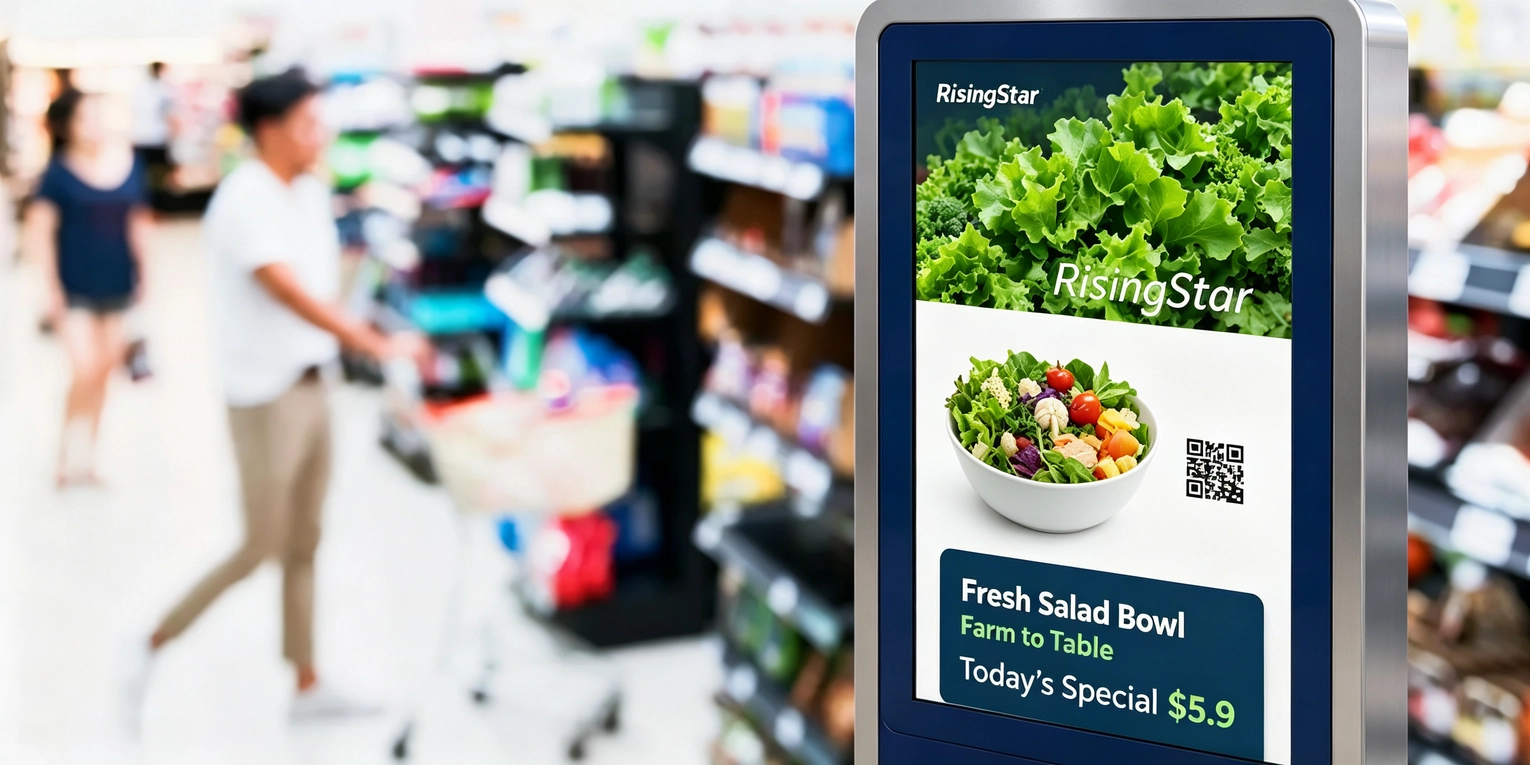
Form Factors the Aisle Demands
Point-of-purchase hardware is rarely a generic monitor in a generic housing. The space dictates the shape:
Shelf-edge strips run 7 to 12 inches, often with an ultra-wide aspect to follow the shelf rail. Resolution, not brightness, is the binding constraint at this size — the panel must hold readable text at 40 cm.
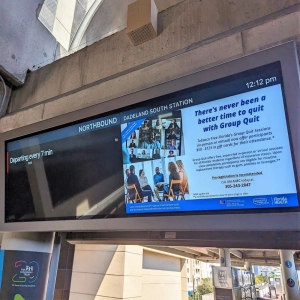
Stretch bar displays (ultra-wide, e.g. 3840×360 or similar long-format ratios) fit menu boards over a counter or a rail above the checkout. They present a continuous band of offers in the natural line of sight.
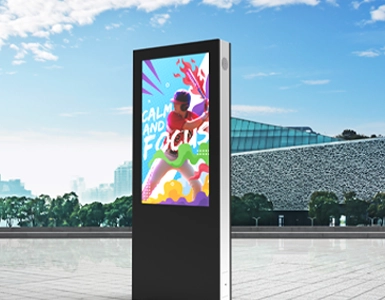
Freestanding totems and counter units carry the full product story: video, pricing, and a QR code that bridges the physical shelf to the shopper's phone.
Retail integration teams should also verify the mounting and thermal budget of the housing. A sealed enclosure behind a grill or above a heat-producing counter accumulates heat; panels rated for continuous operation in a -20°C to 70°C envelope survive those pockets where consumer displays thermally throttle or dim.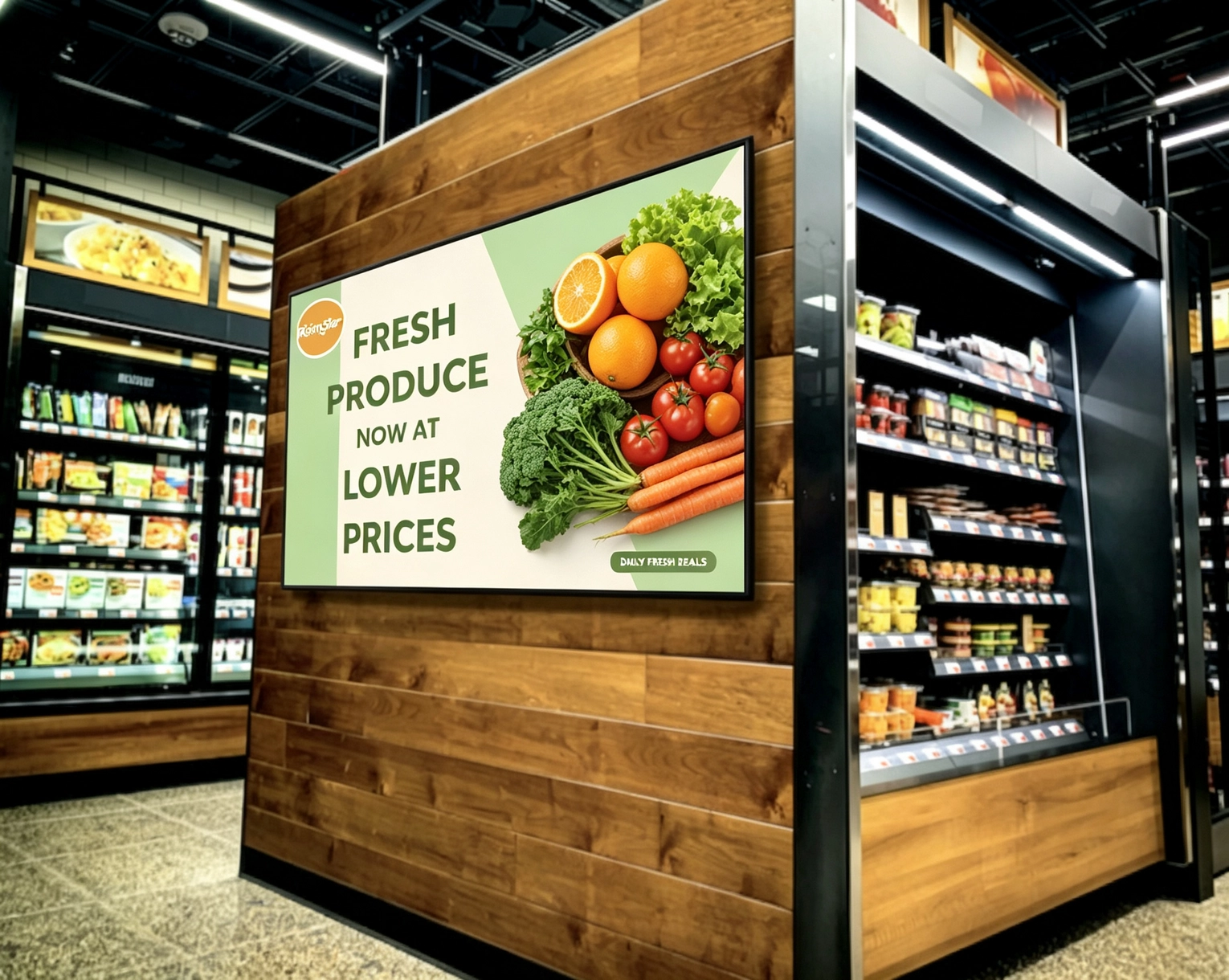
Content Playback and Network Management
A POP network may have three different aspect ratios and five content zones per screen. The playback hardware must handle per-screen playlists, daypart scheduling (breakfast menu in the morning, value menu at night), and remote proof-of-play. The display itself should expose a standard interface — LVDS, eDP, or HDMI — so the media player is a clean integration rather than a proprietary lock-in.
Two content realities at the point of purchase:
The creative is small and dense. Price, product, and a QR code compete in a compact frame. Screens need full-HD minimum; 4K is justified for close reading of fine print and for zoomable product detail.
The screen is seen by the same people repeatedly. Employees, regular customers, and staff walk past a menu board dozens of times a day. Consistent brightness and color across the network keep the media from looking tired — and keep advertisers willing to pay for the placement.
Sourcing POP Displays from a Direct Manufacturer
RisingStar builds point-of-purchase and digital menu board displays from 7 to 100 inches, with brightness from 500 to 5,000 nits, optically bonded PCAP touch, and IP65/IP66 options for window-facing and drive-thru positions. Panels come from LG Display, AUO, INNOLUX, and BOE; every unit is 100 percent factory-inspected and aged 72 hours before shipment, and custom stretch-bar ratios are produced in-house to match your housing. ISO 9001 certified.
For a spec matched to your aisle or checkout position — including lux readings from the actual store — contact ai@risinglcd.com with your store layout. Browse our LCD digital signage and stretch bar display product lines for current options.