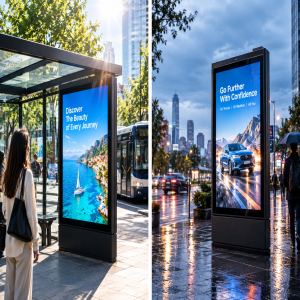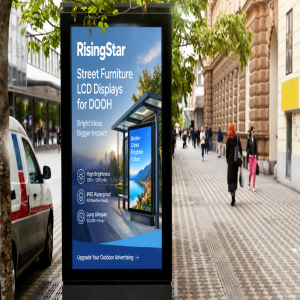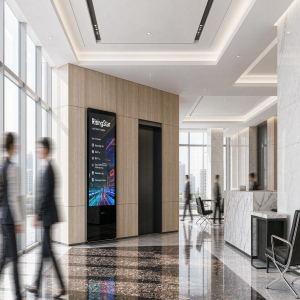
A display rated at 2,500 nits should be readable outdoors. It has the brightness. It has the high-efficiency backlight. It checks every box on the spec sheet.
And yet, three months after installation, it looks hazy. Colors are washed out. The text that used to pop now looks like it's behind a layer of fog. Passengers at the train station squint at the departure board. Customers at the gas pump tilt their heads trying to read the price.
The problem isn't the brightness. It's the air.
Between the LCD panel and the cover glass, there's a gap — about the thickness of a credit card. That tiny pocket of air is quietly destroying your display's outdoor readability.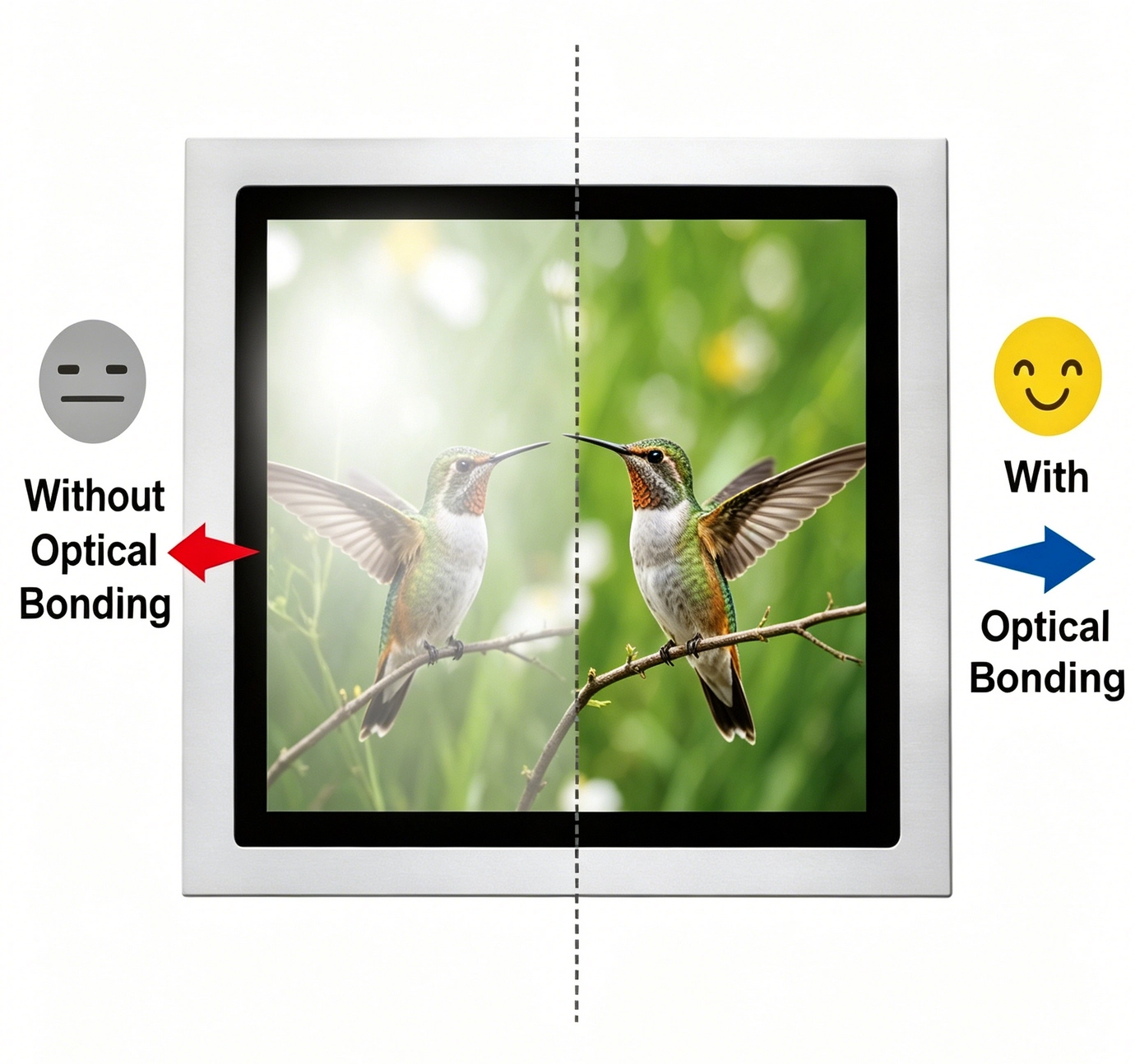
The Air Gap Problem in One Number
Every air-glass interface in a display reflects roughly 4% of incoming light. In a standard outdoor display without optical bonding, there are two such interfaces inside the stack (glass-to-air and air-to-LCD). Combined with the front surface of the glass itself, that's 12–16% of ambient light reflecting back at the viewer.
In direct sunlight — 100,000 lux — those reflections wash out the image. The display still works. The backlight is still on. But the human eye cannot separate the content from the glare bouncing off the internal surfaces.
The fix is optical bonding: filling that air gap with an optically clear adhesive. No gap, no internal reflections. Perceived contrast jumps by 40–50% without changing the backlight.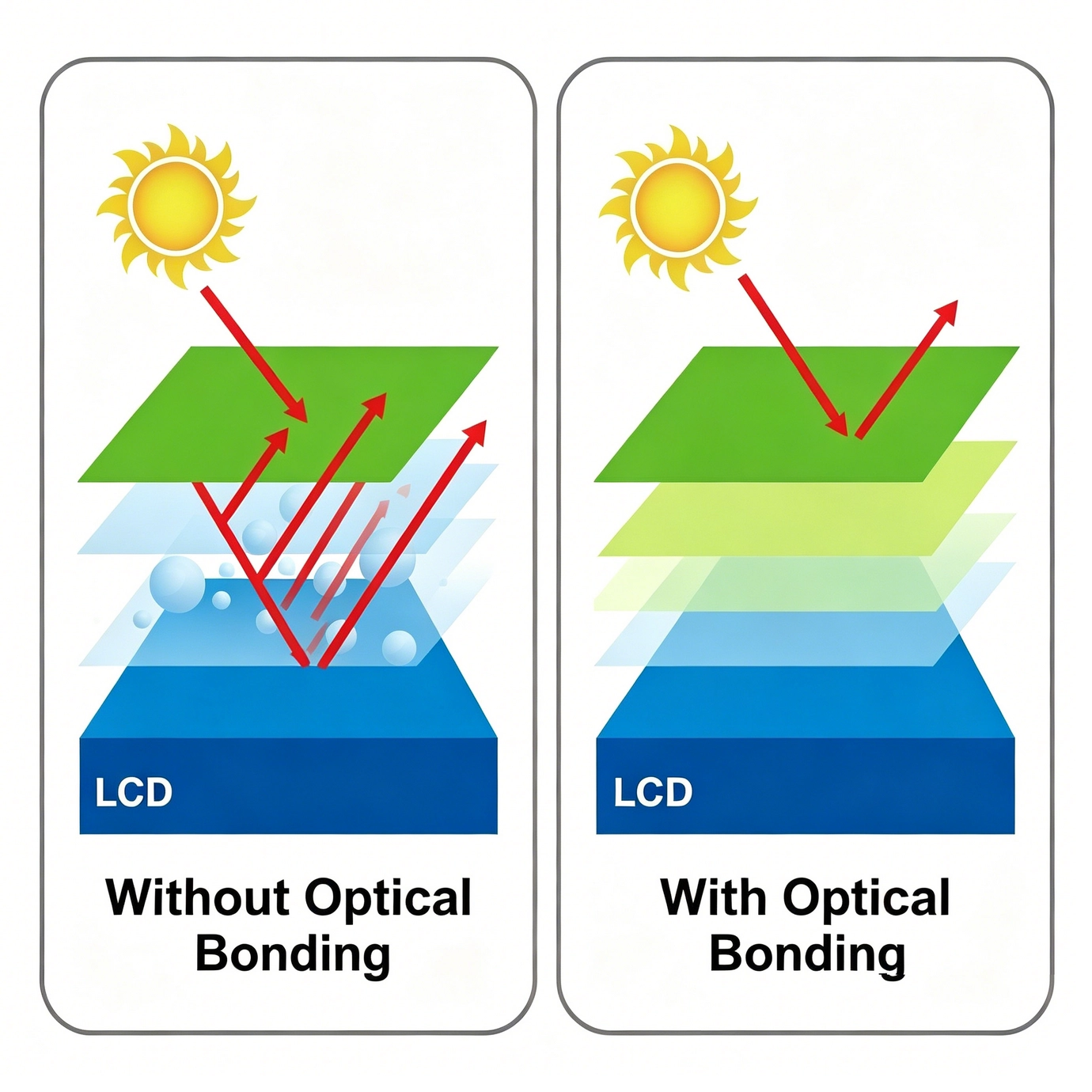
The Fogging Problem Nobody Warns You About
Internal reflections degrade the image during the day. But the air gap causes a different failure at night — one that gets worse every single day.
Here's what happens: during the day, the sun heats the display surface to 50–60°C. The air trapped inside the gap expands and absorbs moisture. At night, the panel cools below the dew point. That moisture condenses on the inner surfaces — inside the display, where nobody can wipe it.
Day after day, the condensation pattern becomes permanent. The display looks foggy. Not because the backlight has degraded, not because the LCD panel has failed — because there's a layer of mineral deposits and micro-droplets on the inside of the glass.
Optical bonding eliminates the air gap. No gap = no trapped air = no condensation = no fogging. This is the single most common failure mode in outdoor displays, and optical bonding is the only fix.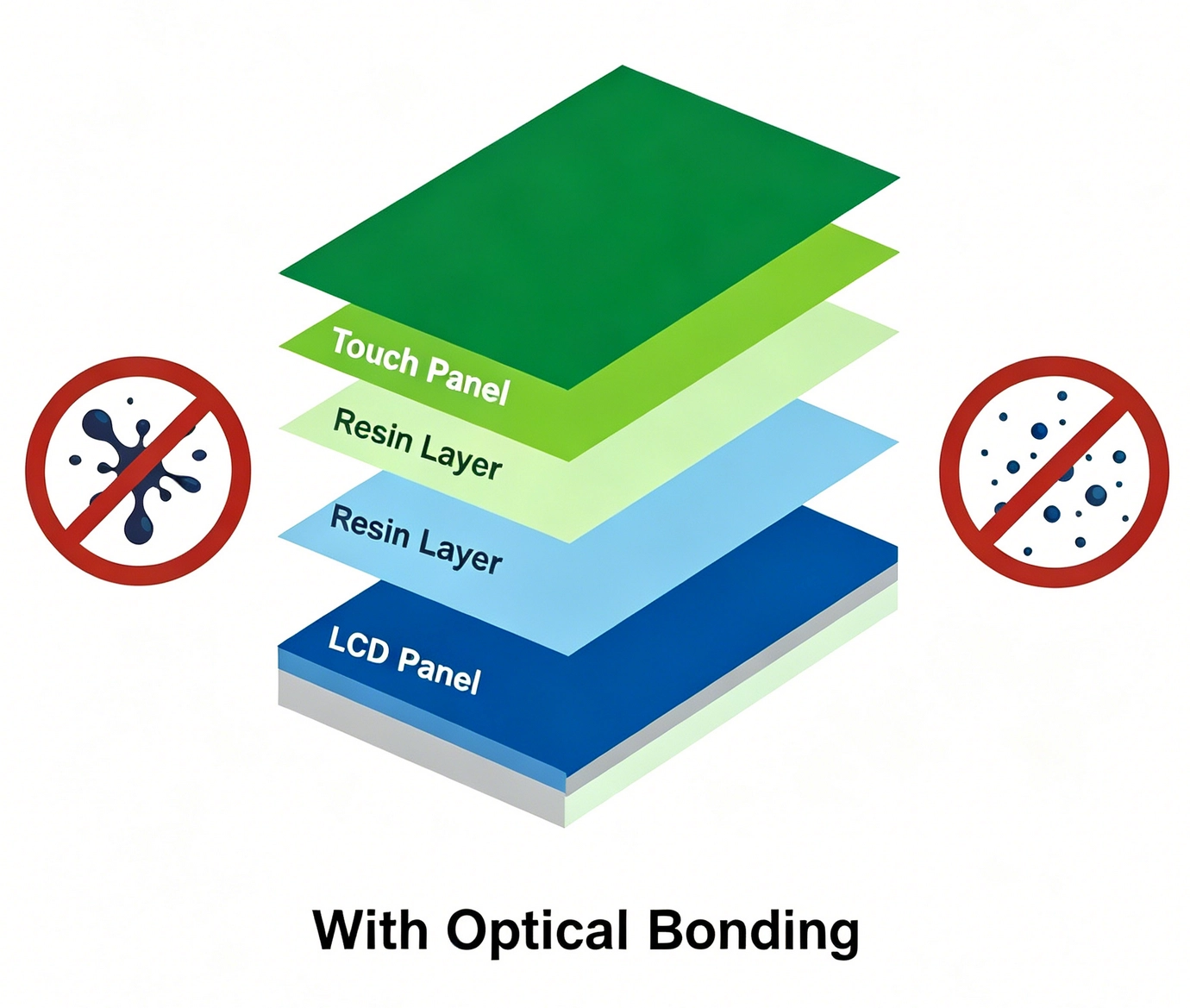
OCA vs OCR: Two Ways to Do It
There are two processes for optical bonding, and which one you need depends on the size of your display:
OCA (Optically Clear Adhesive) uses pre-cured adhesive sheets. The sheet is placed between the LCD and the cover glass, and the assembly goes through a vacuum laminator. It's fast, clean, and produces a consistent bond line. Ideal for standard sizes up to about 55 inches.
OCR (Optically Clear Resin) uses liquid resin dispensed onto the panel surface. The cover glass is placed on top, the resin flows to fill the gap, and UV light cures it solid. OCR handles larger panels (up to 110 inches), curved glass, and non-standard sizes without requiring custom-cut adhesive sheets.
RisingStar delivers tailored optical bonding solutions based on your project requirements, utilizing both OCA for standard production runs and OCR for large-format or custom configurations. Every bonded unit undergoes 100% visual inspection and luminance uniformity measurement to ensure flawless optical performance.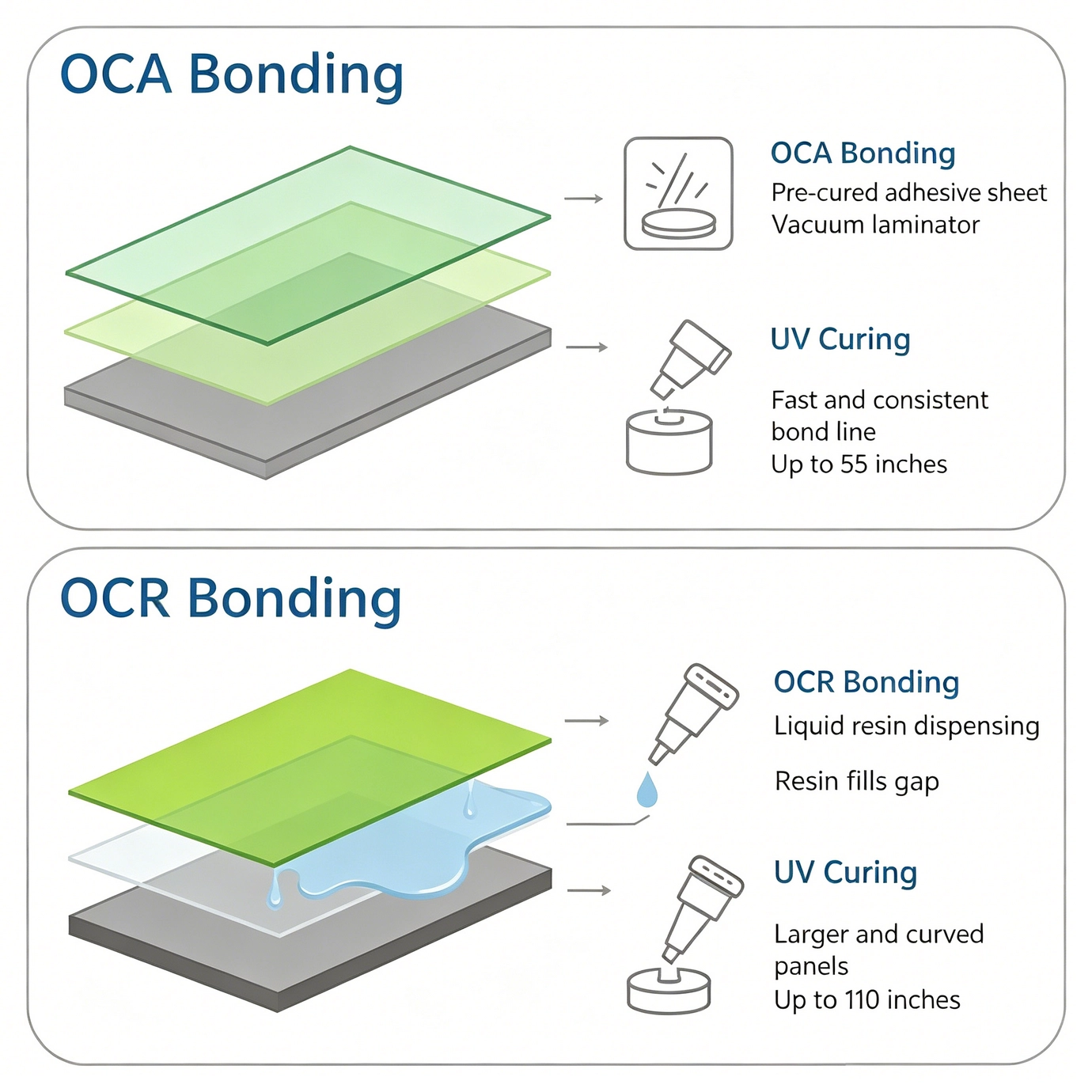
Beyond Readability: Three More Reasons to Bond
Optical bonding doesn't just fix the glare and the fogging. It also makes the display mechanically better:
Impact resistance. A bonded assembly distributes impact force across the full surface. The same 4mm tempered glass that rates IK07 when unbonded achieves IK10 when bonded — without adding thickness or weight.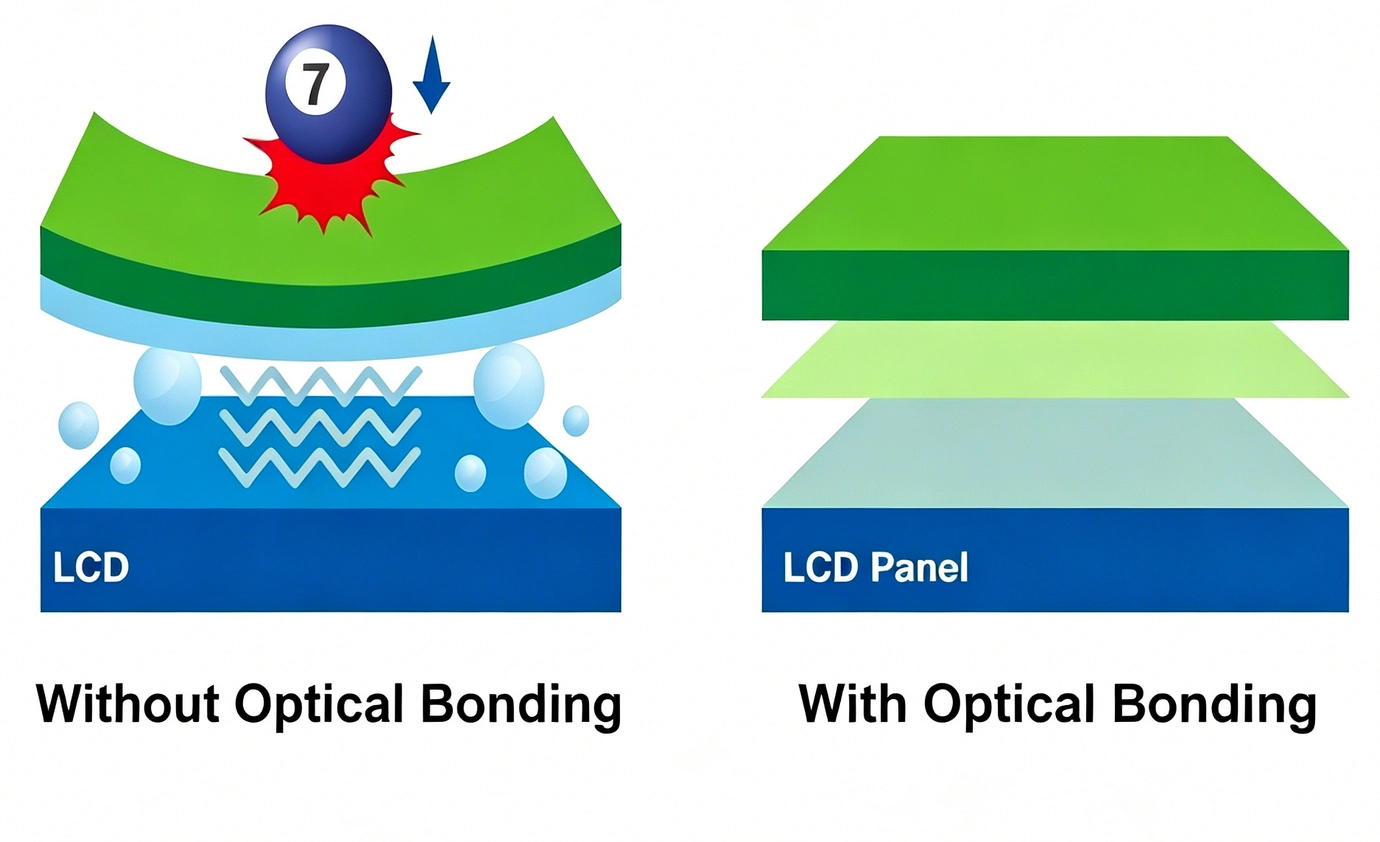
Vibration resistance. In transit and rail environments, train vibration loosens unbonded assemblies over time. The bonded glass-and-LCD stack moves as one piece — no relative motion, no rattling, no dust ingress at the edges.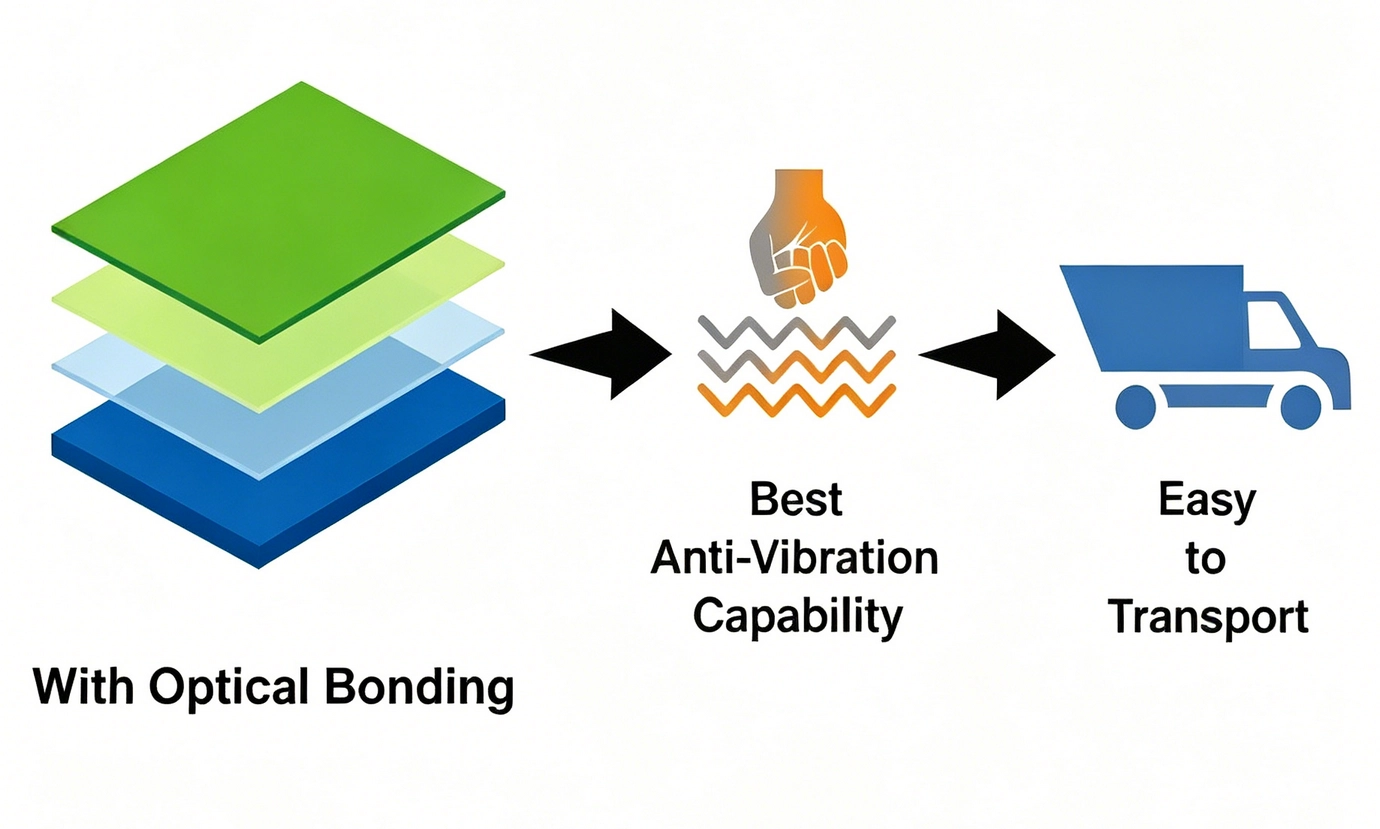
Touch accuracy. PCAP touch screens suffer from parallax error when there's an air gap between the touch sensor and the displayed image. Bonding eliminates the gap, making touch targeting more accurate — especially at the screen edges where the error is largest.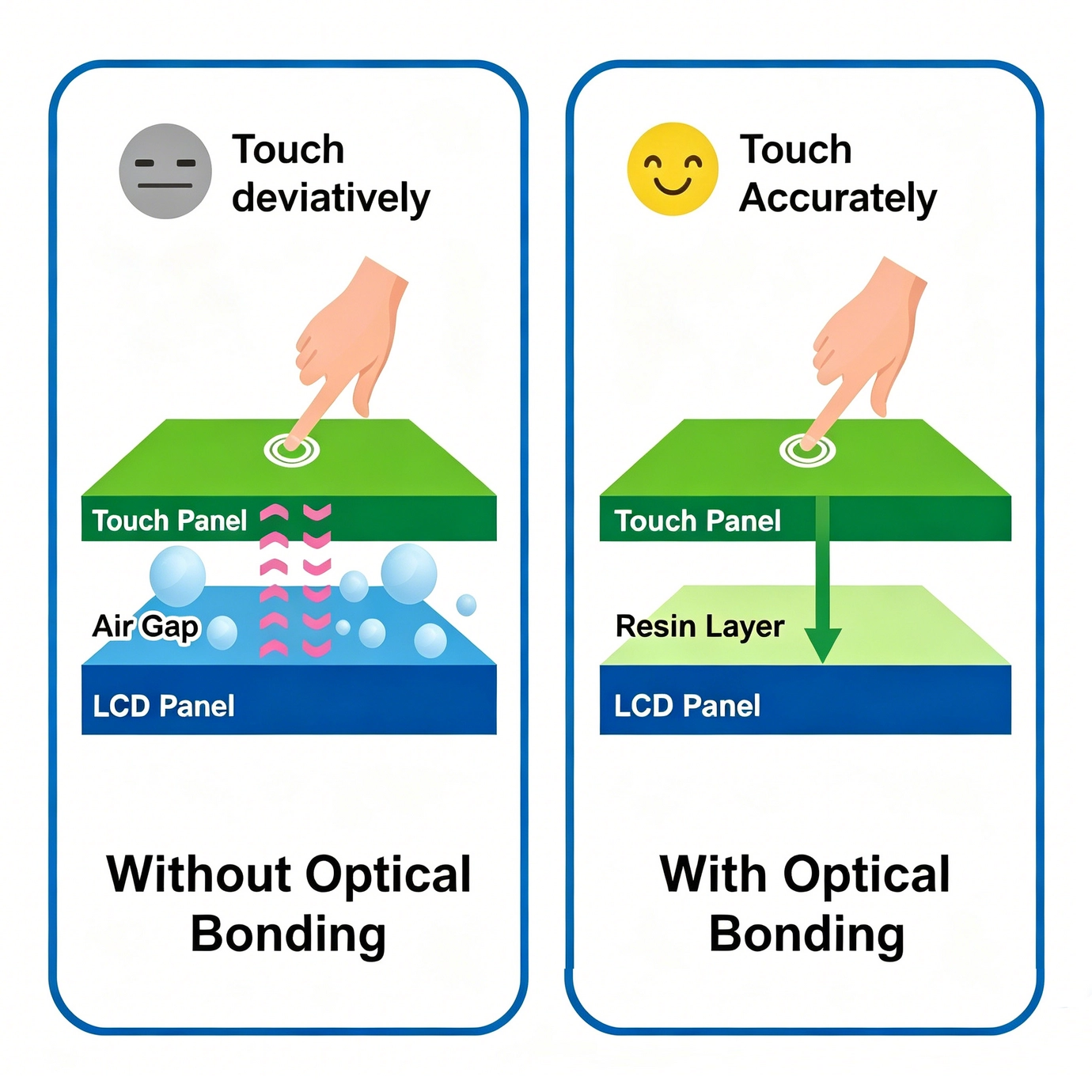
When Is Bonding Non-Negotiable?
| Environment | Need Bonding? |
|---|---|
| Indoor, air-conditioned | Optional |
| Near windows or glass facades | Recommended |
| Covered outdoor (canopy, transit concourse) | Recommended |
| Full outdoor (direct sun) | Mandatory |
| Marine / coastal | Mandatory |
| Rail / transit platforms | Mandatory |
| EV charging stations | Mandatory |
The cost adder for optical bonding is typically 8–15% of the display cost. The cost of replacing a display that fogs up in the field is the full unit, the service call, the downtime, and the lost customer trust. For any outdoor installation, bonding pays for itself before the first failure would have happened.
RisingStar integrates optical bonding as a standard part of our high brightness display custom solutions — not an optional upgrade. Browse our TFT LCD display product line or contact us to discuss your application.
Related articles in this series:
Sunlight Readable Display: LCD vs LED vs OLED — An Engineering Comparison
Why Outdoor Displays Fail After Year One: 5 Preventable Engineering Errors
How to Choose the Right IP Rating for Your Outdoor Display
📧 ai@risinglcd.com · 💬 +86 158 8946 9208 · 🌐 www.risinglcd.com